This site is supported by our readers. We may earn a commission, at no cost to you, if you purchase through links.
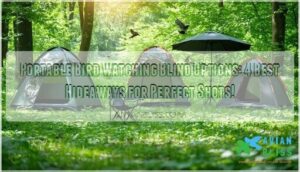 You’ll find four main portable bird watching blind options for your field adventures.
Pop-up tents offer quick setup and takedown, perfect for spontaneous outings.
Umbrella blinds provide lightweight coverage when you’re traveling light.
Chair blinds combine seating and concealment for comfortable extended watching.
Portable photography hides feature specialized camera ports for capturing clear shots without disturbing your subjects.
The best choice depends on your specific environment and how far you’ll need to carry it.
Remember that staying perfectly still is just as important as your camouflage—birds often notice movement before they spot unfamiliar shapes in their habitat, which requires quick setup and the right choice of blind to ensure clear shots and comfortable extended watching.
Table Of Contents
- Key Takeaways
- Bird Watching Blind Options
- Choosing Portable Hides
- Top 4 Portable Bird Blinds
- Using Portable Bird Hides
- Bird Photography With Blinds
- Selecting The Right Blind
- Frequently Asked Questions (FAQs)
- What is the most appropriate optical device for bird watching?
- Can you use a monocular for bird watching?
- What is the best magnification for a bird watching scope?
- How do you make a bird blind?
- How to photograph birds in flight from blinds?
- Where to position blinds for maximum effectiveness?
- Can portable blinds be used in water environments?
- Do blinds affect bird behavior over time?
- How to clean and maintain portable blinds?
- Conclusion
Key Takeaways
- You’ll find four main portable blind types: pop-up tents for quick setup, umbrella blinds for lightweight travel, chair blinds that combine seating with concealment, and photography hides with specialized camera ports.
- Your choice of blind should match your specific environment, with features like waterproofing, camouflage pattern, and portability weight being crucial factors that determine your success in the field.
- You’ll need to position your blind before sunrise and remain perfectly still inside, as birds notice movement before unfamiliar shapes and need time to habituate to your presence.
- You’ll get better results by investing in quality materials that provide weather protection, with options ranging from budget-friendly models under $100 to premium photography blinds like the Tragopan V5 for over $200.
Bird Watching Blind Options
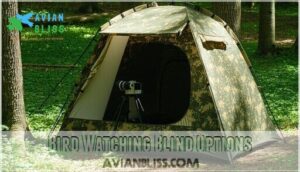
You’ll find portable bird blinds essential for capturing close-up wildlife photos without disturbing your feathered subjects.
These camouflaged hideaways come in various styles including pop-up tents, bag hides, and net covers that help you blend into natural surroundings while protecting your equipment from the elements, which makes them a crucial tool for wildlife photos.
Importance of Camouflage
In the wild, birds have remarkable eyesight that can spot even the smallest movements.
Effective camouflage is your gateway to successful bird watching and photography.
Three main stealth advantages of proper camouflage include:
- Environmental blending prevents birds from detecting your presence
- Pattern effectiveness mimics natural surroundings, reducing disturbance to bird behavior
- Proper concealment lets you observe natural interactions without altering them
Camouflage isn’t just helpful—it’s essential for meaningful wildlife encounters, providing an opportunity for successful bird watching and allowing you to experience natural interactions.
Types of Portable Blinds
Just as good camouflage keeps you hidden, choosing the right portable bird blind type makes all the difference.
You’ll find several options: bag hides that drape over your body for mobility; pop-up blinds for quick setup; lightweight net blinds for minimal transport; vehicle blinds that transform your car into a photography blind tent; and floating blinds for water birds.
Each camouflage blind serves different bird watching needs based on your location and target species.
Consider exploring different portable blind products for the best fit.
Key Features to Consider
When selecting a portable bird blind, five key features deserve your attention.
Look for strong material quality that withstands weather while checking portability weight—lighter means easier field carrying.
Window visibility determines your viewing range, while setup ease affects your experience.
Don’t overlook camouflage effectiveness; birds spot poor patterns quickly.
The best lightweight blinds offer quick setup without sacrificing durability, giving you more time watching and less time struggling.
Choosing Portable Hides
You’ll need to match your portable hide to your specific bird watching goals, considering factors like weight, setup time, and viewing windows for the best wildlife encounters.
When you select the right portable blind, you can stay comfortable longer and capture better photos, as birds won’t notice your presence and will display their natural behaviors.
Material and Durability
Now that you’ve seen the variety of blinds available, let’s look at what they’re made of.
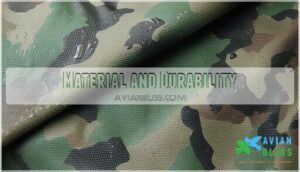
Your portable hide needs to stand up to Mother Nature’s challenges. The best bird watching blinds combine high Denier Strength fabrics (150+ Denier polyester) with sturdy frame materials like fiberglass or steel.
Selecting the right bird blind material is essential for effective concealment.
Look for waterproofing options that offer true weather resistance, while maintaining breathability factors so you don’t feel like you’re in a sauna. Mold resistance treatments are a bonus for frequent outdoor use.
Ease of Setup and Use
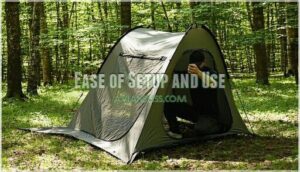
Most portable bird watching blinds feature user-friendly pop-up mechanisms that deploy in minutes.
When choosing a quick setup blind, you’ll want one that unfolds with minimal effort.
The best pop up blinds take under 60 seconds to assemble, letting you focus on spotting birds rather than wrestling with folding techniques.
For various models, consider available pop up options for enhanced concealment.
Portability concerns are also addressed through smart design that simplifies the setup time and overall user experience.
Size and Comfort
Now that you can set up your blind quickly, let’s talk size.
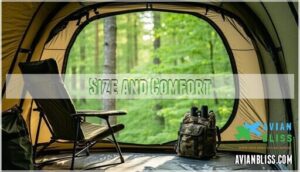
You’ll need enough space inside your portable bird watching blind for you and your gear. Internal dimensions matter—make sure there’s room to move your arms freely.
For extended use, consider seating options like birdwatching chairs. Your height and the blind’s weight capacity are critical factors too.
Nobody wants cramped legs during a three-hour wait for that perfect shot! The portable bird watching blind should accommodate your needs for an extended period.
Top 4 Portable Bird Blinds
You’ll find these top portable blinds offer the perfect balance of concealment and comfort for your bird photography adventures.
Each option combines lightweight materials with easy setup features, helping you capture stunning images while staying hidden from your feathered subjects, which is crucial for a successful bird photography experience with comfort.
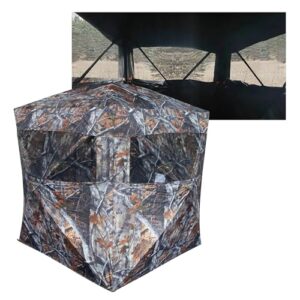
1. THUNDERBAY SPUR 3 Person Hunting Blind
 View On Amazon
The ThunderBay Spur stands out as a premium option for serious bird watchers.
With its spacious design accommodating 2-3 people, you’ll have plenty of room for your equipment and companions.
Its 270° silent sliding windows give you nearly full visibility while the black interior PU coating prevents birds from spotting you inside.
Setup takes under two minutes thanks to the five-hub design, and the fiberglass frame offers sturdy support in various weather conditions.
At 5.77 kilograms, it’s portable enough for field trips yet durable enough to withstand multiple seasons.
A good pair of binoculars is essential, so consider the magnification power needed for ideal viewing.
Best For: Outdoor enthusiasts, hunters, and bird watchers seeking a portable and spacious ground blind for concealment and versatility.
- Setup can be challenging for some users.
- Material may be prone to damage with rough handling.
- Customer service and warranty support reported as inconsistent.
- 270° silent sliding windows provide excellent visibility and stealth.
- Quick setup and takedown with five-hub design.
- Durable fiberglass frame and 210D polyester fabric withstand harsh conditions.
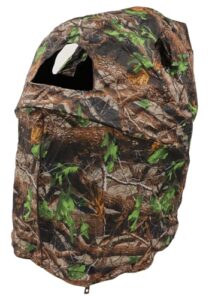
2. Nitehawk Pop Up Hunting Tent
 View On Amazon
Anyone looking for a quick setup option will appreciate the Nitehawk Pop Up Hunting Tent. This lightweight polyester blind weighs 6.4kg and measures 116cm x 140cm x 132cm, giving you plenty of room for your gear.
The 180-degree view with five windows lets you track birds from multiple angles. You’ll stay comfortable with the included chair that even has a drink holder.
Getting within 10 feet of a Kingfisher is possible with this hide’s effective camouflage pattern. It’s shower-proof but not fully waterproof, so check the weather forecast before heading out.
Best For: Nature enthusiasts and photographers who need a portable and effective hide for wildlife observation and photography.
- Lightweight and easy to transport with a carry bag
- 180-degree view with adjustable windows for versatile use
- Camouflage design allows for close proximity to wildlife
- Material may snag during folding or packing
- Limited waterproofness in heavy rain
- Carry bag durability could be improved
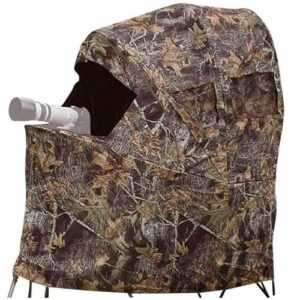
3. Stealth Gear 2 Person Camo Tent
 View On Amazon
The Stealth Gear 2 Person Camo Tent offers six windows for complete 360° viewing, making it a perfect hideaway for serious wildlife watchers.
You’ll appreciate the heavy-duty waterproof polyester construction that stands up to various weather conditions.
It sets up in seconds thanks to its spring steel design, and comfortably fits two adults plus equipment.
The dark interior lining prevents reflections while the Camo-Tree pattern blends seamlessly into UK countryside settings.
With an integrated cup holder in the chair and support for up to 500 pounds, you can stay hidden in comfort for hours.
Best For: Wildlife photographers and nature enthusiasts seeking an easy-to-set-up, durable, and discreet hide for capturing or observing wildlife in comfort.
- Limited to two adults with gear at maximum capacity.
- Relatively heavy at 17 pounds, which may hinder portability.
- Specific camouflage pattern may not be suitable outside UK countryside.
- Quick setup with durable spring steel construction.
- Dark interior lining minimizes reflections for stealth.
- Supports up to 500 pounds with a comfortable integrated chair.
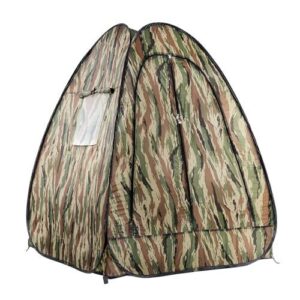
4. Walimex Pop Up Camouflage Tent
 View On Amazon
Within minutes, you can transform your birdwatching experience with the Walimex Pop Up Camouflage Tent. At just 3.7 pounds and dimensions of 110x110x140cm, this lightweight hide offers excellent value for money.
A well-chosen portable blind becomes your invisible doorway into the secret world of birds.
The water-repellent polyester construction features two side windows with mosquito nets that can be modified for camera access. While some users report difficulty folding it back into its carrying bag, the quick setup makes this an attractive option for photographers on the move.
The black waterproof floor adds comfort during those long waits for the perfect shot.
Best For: Nature photographers, animal observers, and ornithologists seeking a lightweight, portable hide for outdoor use.
- Difficult to fold back into the carrying bag.
- Reports of durability issues with zippers and tent pins.
- Mixed effectiveness of camouflage design in certain environments.
- Quick and easy setup with pop-up design.
- Lightweight and water-repellent construction.
- Modifiable mosquito net windows for camera access.
Using Portable Bird Hides
You’ll need to position your portable hide before sunrise when birds are most active and haven’t yet spotted your presence.
Once set up, stay patient and still inside your blind, allowing nearby birds to become comfortable with this new addition to their environment, and remember to stay still.
Setting Up The Hide
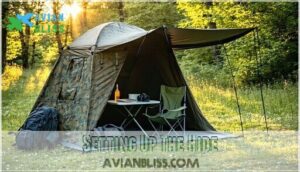
Now that you’ve chosen your ideal portable blind, let’s talk about setting it up properly.
Good setup makes all the difference between spotting rare birds and going home disappointed.
Setting up your bird photography hide requires careful planning:
- Scout your location before sunrise to find active feeding areas
- Position viewports facing the sun’s path for ideal lighting
- Allow an acclimation period of 20-30 minutes after setup
- Bring comfortable seating for long observation sessions
- Prepare for weather changes with appropriate clothing layers
Consider adding compact binoculars to your kit for enhanced spotting.
Concealing Equipment and Personnel
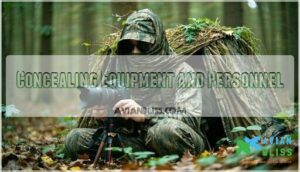
Now that your hide is set up, let’s focus on making you and your gear invisible to birds.
You’ll need to mask both yourself and your equipment using proper concealment techniques.
Different environments call for different approaches to stay hidden.
| Concealment Element | Techniques |
|---|---|
| Camo patterns | Match to season and habitat |
| Equipment covers | Use camouflage netting for cameras/tripods |
| Clothing | Wear dark, non-reflective fabrics |
| Movement | Stay slow and deliberate when shooting |
| Sound | Muffle equipment noise with cloth covers |
Remember, birds can spot the slightest movement or unusual shape in their environment, so it’s crucial to stay hidden and use camouflage effectively.
Waiting for Birds to Habituate
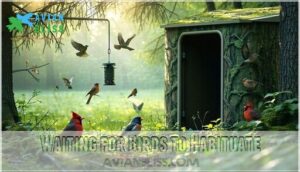
After setting up your gear, patience becomes your best tool.
Birds need time to get used to your hide. Plan to arrive early and wait at least 30 minutes before expecting natural behavior.
Some photographers leave their hides in place overnight for better hide acclimation. This minimizing disturbance approach leads to authentic behavior observation.
For birdwatching success, remember: the longer your bird blind stays put, the better your shots will be.
Bird Photography With Blinds
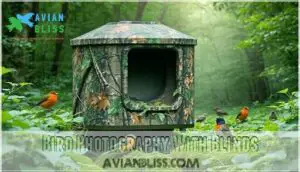
You’ll get closer to wildlife and capture stunning bird photos when you use specialized blinds that keep you hidden from view.
These portable shelters let you observe natural behaviors while protecting your equipment from weather, making them essential tools for both beginner and experienced bird photographers.
Benefits of Using Blinds
Bird blinds offer you a stealth advantage that’s impossible to match in the open.
You’ll gain undisturbed observation of natural behaviors as birds forget you’re there. The strategic vantage points let you capture intimate moments without disturbing wildlife.
Portable blinds also provide weather protection during long waits and support ethical birding practices by minimizing your impact.
They’re the difference between seeing birds flee and witnessing their authentic lives.
Choosing The Right Blind for Photography
Now that you understand the benefits of blinds, let’s pick the right one for your camera gear.
Photography blinds differ from standard hunting blinds by featuring specialized lens sleeves and strategically placed viewports.
When selecting your hide, consider lens compatibility, tripod stability, camouflage effectiveness, and weather protection.
A good tripod is essential, especially when using heavy telephoto lenses for bird photography.
Dedicated photography blinds offer shaped holes for long lenses, while options like the Tragopan V5 provide customizable windows worth the $239 investment compared to basic $80 hunting blinds.
Tips for Successful Bird Photography
With your portable blind in place, capturing stunning bird photography becomes much easier.
Here are 5 essential tips for success:
- Use ideal lighting during golden hours for warm, dimensional shots
- Apply composition techniques like the rule of thirds for balanced images
- Confirm focusing accuracy by pre-focusing on likely perches
- Study bird behavior to anticipate movement and action
- Follow ethical considerations by maintaining proper distance from nests
Selecting The Right Blind
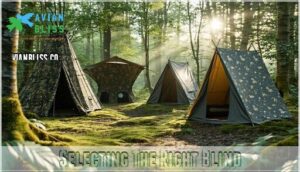
You’ll need to match your blind to your specific needs, considering both your budget and the features that matter most for your bird photography adventures.
The right blind combines portability with quality materials, giving you a comfortable hideaway that won’t scare away those perfect shot opportunities, providing you with the best chance to capture stunning images in your bird photography adventures.
Considering Budget and Portability
While good photography equipment helps you capture stunning bird photos, your choice of blind matters just as much.
When selecting a portable hide, balance your budget against how often you’ll use it and where you’ll take it.
A key consideration involves magnification power for ideal viewing.
| Budget Range | Best Option | Weight |
|---|---|---|
| Under $100 | Ameristep Doghouse | 11-14 lbs |
| $100-200 | Rhino 75 | 11 lbs |
| $200+ | Tragopan V5 | 4-6 lbs |
Remember, lightweight designs are worth the investment if you’re hiking to remote locations.
Compact storage and quick setup time (under 2 minutes) should be non-negotiable features for your birdwatching gear.
Evaluating Features and Quality
While looking at price tags matters, quality is what keeps you dry when clouds burst.
Check Material Quality by examining seam stitching and Weather Resistance ratings.
A good hunting blind needs effective Camouflage that matches your surroundings.
Inspect Viewport Design for clear sightlines without exposing yourself.
Don’t overlook Structural Integrity—your bird watching accessories deserve protection from collapsing frames.
As photographers often say, "The best bird photography happens when you’re comfortable enough to wait.
Frequently Asked Questions (FAQs)
What is the most appropriate optical device for bird watching?
Binoculars are your best companion for bird watching, offering the perfect balance of magnification and field of view.
You’ll appreciate their portability, clarity, and ability to bring distant birds into focus.
Can you use a monocular for bird watching?
Yes, you can use a monocular for bird watching.
It’s lighter and more compact than binoculars, making it convenient for quick spotting, though you’ll sacrifice some depth perception and field of view.
What is the best magnification for a bird watching scope?
For most bird watching, you’ll want a scope with 20-60x magnification.
You can use lower power (20-30x) for clarity and wider field of view, higher power (40-60x) for distant birds.
How do you make a bird blind?
You can make a simple bird blind using camouflage fabric stretched over a PVC pipe frame.
Add viewing slits, make certain it’s waterproof, and position it where birds naturally gather.
Set it up before sunrise.
How to photograph birds in flight from blinds?
Practice patience and position properly in your blind.
Set a swift shutter speed, use continuous autofocus, and keep camera ready.
Pre-focus on areas where birds typically fly for better flight shots.
Where to position blinds for maximum effectiveness?
Position your blind near water sources, along flight paths, or near feeding areas.
You’ll want to set up downwind from birds, arrive before dawn, and make certain your blind blends with the natural surroundings.
Can portable blinds be used in water environments?
Yes, you can use floating blinds in water environments.
These specialized portable blinds are designed to keep you dry while observing waterfowl.
They’re anchored or drifting options for lakes, marshes, and shallow waterways, which can be considered portable.
Do blinds affect bird behavior over time?
Like a shadow in the wilderness, blinds initially make birds cautious.
However, they gradually acclimate to stationary blinds, returning to natural behaviors as they accept these structures as part of their environment.
How to clean and maintain portable blinds?
Clean your portable blind with mild soap and water, then air dry completely before storage.
Remove mud promptly.
Store in a dry place away from sunlight.
Check for tears regularly and repair with adhesive patches.
Conclusion
Looking for the right portable bird watching blind options?
Whether you choose a pop-up tent, umbrella blind, chair blind, or photography hide, your selection should match your specific needs and environment.
Remember that patience and stillness are just as essential as your equipment.
With the proper portable bird watching blind, you’ll enjoy comfort, concealment, and the perfect opportunity to capture those breathtaking shots of wildlife in their natural habitat.
Happy birding!