This site is supported by our readers. We may earn a commission, at no cost to you, if you purchase through links.
 If your bird’s battling Giardia, you’ve got effective treatment options to help.
Medications like metronidazole, ronidazole, or even dimetridazole (Emtryl) can fight off the parasite. These antiprotozoal drugs target Giardia directly, but dosing must be precise—always consult an avian vet before starting.
Treatment usually lasts 5–10 days, depending on your bird’s response.
Prevent re-infection by switching to a water bottle (bowls can harbor the parasite), and clean cages thoroughly with a disinfectant.
It’s a team effort: proper hygiene, good nutrition, and probiotics can also speed recovery. Want to keep those pesky parasites from coming back? A clean, organized space works wonders.
Table Of Contents
- Key Takeaways
- Bird Giardia Symptoms
- Giardia Treatment Options
- Medications for Giardia
- Preventing Giardia Reoccurrence
- Supporting Bird Health
- Frequently Asked Questions (FAQs)
- What is the best medication for giardia in birds?
- How do you treat Giardia spp?
- How to get rid of giardia in birds?
- Can Giardia cause diarrhea and stomach cramps in birds?
- What causes giardiasis in birds?
- What medications are used to treat giardiasis?
- What is the most effective treatment for Giardia?
- Can I get rid of Giardia without antibiotics?
- Can ivermectin get rid of Giardia?
- How can I treat my yard for Giardia?
- Conclusion
Key Takeaways
- Treat Giardia in birds with effective medications like metronidazole or ronidazole, and always follow your vet’s precise dosage instructions for safety and success.
- Clean and disinfect your bird’s environment thoroughly, including cages, perches, and water bottles, to prevent reinfection from Giardia cysts.
- Support your bird’s recovery by providing a balanced diet, probiotics to boost gut health, and fresh, boiled or filtered water.
- Monitor your bird closely for signs of improvement, retest after treatment, and maintain strict hygiene to ensure the parasite is completely eliminated.
Bird Giardia Symptoms
You’ll notice several specific symptoms when your bird has giardia, including chronic diarrhea, weight loss despite proper feeding, feather picking, and unusual lethargy.
These warning signs often appear gradually, with infected birds showing malodorous stools containing mucus before developing more severe conditions like depression and anorexia.
Diarrhea and Stomach Cramps
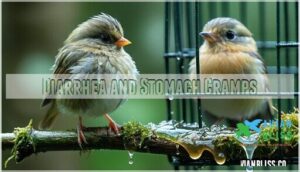
When your bird contracts giardia, you’ll notice watery, malodorous droppings that signal trouble brewing.
These intestinal parasites wreak havoc on your pet’s digestive system, causing uncomfortable stomach cramps and persistent diarrhea.
Stool consistency changes dramatically, often accompanied by mucus, and the protozoal infection can lead to serious dehydration risks if left untreated.
Birds may show appetite changes and appear visibly uncomfortable, sometimes hunching over due to abdominal pain, which can be a clear sign of abdominal pain.
Malnutrition and Weight Loss

Those digestive issues can quickly escalate to malnutrition and weight loss, even with good diet quality.
You’ll notice your pet looking thinner as bird giardia disrupts dietary absorption and causes vitamin deficiencies.
Giardia invades the intestines, blocking nutrient uptake which explains why your birds aren’t thriving despite proper care.
Bird giardia treatment must address this digestive disruption that leads to growth impairment and anorexia effects in infected birds.
Feather Picking and Skin Problems
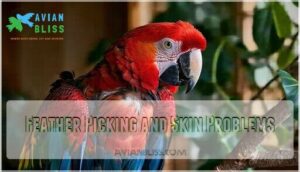
When giardia infections take hold, you’ll often notice your bird engaging in feather picking behaviors alongside developing skin problems.
The itchiness and irritation from this protozoal infection can drive your bird to destructive grooming habits.
Here’s what to watch for:
- Excessive preening, particularly around the abdomen
- Dry, flaky skin despite adequate humidity
- Red, irritated patches where feathers have been removed
- Secondary skin infections in damaged areas
- Bald spots, especially on easily reached body parts
Feather abnormalities like patchy feather loss can also indicate parasitic feather mites.
Lethargy and Poor Appetite
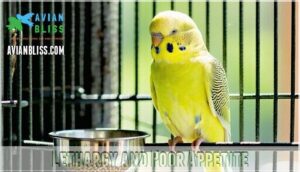
A noticeable decline in your bird’s energy levels often signals giardia infection.
You’ll observe your once-active pet becoming increasingly lethargic and showing little interest in food.
This appetite suppression causes nutritional deficiency signs that further drain their energy.
Activity level decline is particularly concerning in younger birds, where behavioral changes observed include reduced interaction and playtime.
Giardia bird medicine should be administered promptly when these symptoms appear alongside other digestive issues.
Giardia Treatment Options
When your feathered friend battles Giardia, you’ll need an effective treatment plan. Veterinarians typically recommend antiparasitic medications as the foundation of giardia bird treatment.
These medications target the protozoan parasite directly, with treatment efficacy varying based on the specific drug and bird species. You’ll find that combination therapies often yield better results, especially in stubborn cases where drug resistance may develop.
Alternative therapies like herbal remedies can supplement conventional giardia bird medicine but shouldn’t replace it. Most treatment plans require 5-7 days of medication, though severe infections might need extended courses.
Supportive supplements can help strengthen your bird’s immune system during recovery. Remember that treating giardia birds isn’t just about medication—environmental cleaning is equally essential to prevent reinfection.
Ivermectin is one of the versatile medications available for such treatments. Your vet will determine the most appropriate giardia bird medication based on your pet’s specific condition.
Medications for Giardia
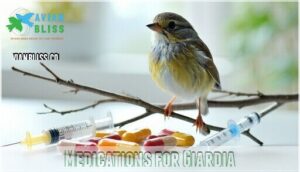
When treating Giardia in birds, you’ll need effective medications to target the stubborn parasite.
Options like metronidazole, ronidazole, and other antiprotozoal drugs work quickly and are carefully dosed to guarantee safety and success.
Metronidazole and Ronidazole
Metronidazole and Ronidazole are go-to options when treating giardia in birds.
These medications tackle the infection quickly, though resistance development is a concern.
Here are benefits of each:
- Metronidazole: High efficacy, but watch for drug interactions.
- Ronidazole: Safer, with faster action.
- Both offer cost-effective solutions.
- Five-day courses often restore your bird’s health.
Carnidazole and Ipronidazole
Though not as common as metronidazole, carnidazole and ipronidazole are effective antiprotozoal medications for treating avian giardia infections.
Carnidazole offers a one-dose option, though its efficacy may be lower. Ipronidazole is considered safer with fewer side effects, making it useful in resistant cases.
These alternative drugs can be paired in combined therapies to tackle resistance development and guarantee effective parasite elimination. Selecting the correct medication requires veterinary guidance for proper dosage.
Antiprotozoal Drugs and Dosage
Don’t guess bird dosages—get them right! Antiprotozoal medications like metronidazole (25 mg/kg twice daily) or ronidazole (5-day regimen) fight Giardia effectively.
Watch for side effects like lethargy or appetite loss.
- Dosage accuracy avoids resistance and supports recovery.
- Tailor plans for each bird’s age and weight.
- Collaborate with avian vets to avoid drug interactions and maximize treatment efficacy.
Treatment Duration and Frequency
Finding the right treatment duration for giardia bird treatment takes care and precision.
Typically, antiparasitic medications like metronidazole or ronidazole span 5–14 days, but dosage adjustment may be needed.
Some birds require retreatment due to drug resistance.
Here’s a quick overview:
| Medication | Frequency | Duration |
|---|---|---|
| Metronidazole | Every 12–24 hours | 5–7 days |
| Carnidazole | Daily | 1–2 days |
| Ronidazole | Daily | 7–14 days |
Monitor closely for bird medication sensitivity!
Preventing Giardia Reoccurrence
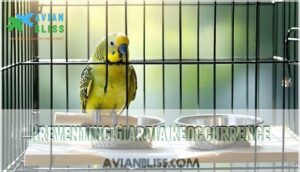
You can stop Giardia from coming back by focusing on proper hygiene and a clean environment for your bird.
Disinfect cages, replace porous materials, and treat water sources to eliminate potential reinfection risks.
Environmental Disinfection and Cleaning
Bird environment cleaning importance can’t be overstated when addressing giardia.
Use bleach solutions weekly for non-porous surfaces, and replace porous surfaces like wooden perches.
Feather contamination spreads cysts, so disinfect thoroughly.
Retesting birds confirms treatment success, but without strict bird environment disinfection, reinfection’s likely.
To maintain a sanitary environment, consider using a specialized aviary disinfectant spray.
Keep the aviary environment dry and sanitized with proper bird disinfection protocols to protect your flock.
Cage Maintenance and Hygiene
Keeping your bird’s cage pristine prevents Giardia from sticking around.
Use Cage Disinfection Methods like weekly bleaching and daily cleaning. Opt for grates over paper to limit droppings exposure, and prioritize Toy Cleaning using bird-safe products.
Maintain Water Bottle Hygiene to avoid contamination. Regular Perch Sanitation guarantees a germ-free resting spot.
Consistent bird cage cleaning keeps their environment safe and healthy! Daily maintenance should include removing uneaten food to prevent parasite breeding.
Water Treatment and Quality Control
Clean water’s key for stopping Giardia in birds.
Regularly test your water source to guarantee it’s free from cysts.
Use these strategies to enhance water sanitation:
- Boil water or use filtration methods like reverse osmosis.
- Add bird-safe disinfectants, such as Sanicleans, to drinking water.
- Frequently clean water dishes.
- Replace untreated or stagnant water daily.
Consider using a specialized filtration system for ideal results.
Reliable practices guarantee healthier birds, which is the ultimate goal.
Quarantine and Isolation Procedures
Separate any new birds or those showing symptoms right away to curb giardia bird transmission.
A proper isolation setup with a quiet space helps with stress reduction.
Stick to a 30-day quarantine duration, monitoring protocols for signs, and clean daily using giardia bird disinfectants.
Maintain bird cage hygiene rigorously—prevention beats bird reinfection challenges every time!
Supporting Bird Health
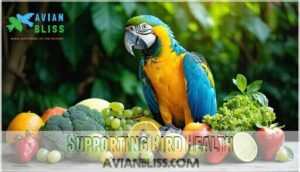
To help your bird recover from giardia, you’ll need to focus on strengthening its overall health through proper care and nutrition.
By providing a balanced diet, probiotics, and maintaining a clean environment, you’ll also support recovery as well as prevent future infections, which is crucial for the bird’s overall health.
Diet and Nutrition for Recovery
A balanced bird diet promotes recovery from giardia and malnutrition symptoms.
Focus on easily digestible diets to aid absorption.
Boost healing with these steps:
- Include Nutritional Supplements: Support energy and vitamin intake.
- Switch to Water Bottles: Prevent fecal contamination.
- Soothe Skin with Aloe Vera: Help with dryness caused by feather picking.
Proper nutrition guarantees your bird bounces back faster!
Probiotic Therapy and Benefits
Boosting Digestive Health, probiotics restore your bird’s Gut Microbiome, helping with natural giardia treatment in birds.
Probiotic Strains like Lactobacillus aid the bird immune system, cut parasite loads, and support recovery.
Species Specificity matters!
Check out this quick guide:
| Benefit | Key Probiotics | Target Outcome |
|---|---|---|
| Immune Support | Lactobacillus spp. | Healthier Responses |
| Digestive Health | Bifidobacterium | Reduced Shedding |
| Bird Diet Recovery | Saccharomyces | Enhanced Absorption |
For specialized options, consider exploring probiotics for birds.
Could probiotics be your bird’s secret weapon to achieve Healthier Responses and Enhanced Absorption?
Sanitation and Husbandry Practices
Consistency keeps your bird healthy and giardia-free.
Follow these steps:
- Cage Cleaning: Remove droppings daily and sanitize surfaces weekly with a mild bleach solution—don’t miss toys and perches.
- Water Sanitation: Use fresh, clean water daily, boiling it if necessary.
- Aviary Hygiene: Prevent overcrowding, and follow strict quarantine protocols for new birds.
Sanitation helps break giardia’s cycle.
Monitoring and Follow-up Care
After thorough cleaning, you’ll want to monitor your bird for signs of Giardia recovery—firm stools, better appetite, and energy.
Retesting is key to confirming treatment success and preventing reinfection. Often birds appear well yet remain carriers.
Use this table to track progress:
| Test Stage | Timing | Purpose | Actions to Take |
|---|---|---|---|
| Initial Testing | Before treatment | Confirm infection | Start prescribed medication. |
| Mid-Treatment | Day 3-4 | Check improvement | Adjust dosage if needed. |
| Post-Treatment | 2 weeks after | Confirm recovery | Retest, clean environment. |
| Follow-Up Tests | Monthly | Prevent relapse | Continue probiotic support. |
Long-term effects vary, so stay vigilant!
Frequently Asked Questions (FAQs)
What is the best medication for giardia in birds?
Giardia’s grip on birds calls for careful care—metronidazole or ronidazole are top choices.
They’re safe, effective, and target the parasite.
Follow your vet’s dosage advice exactly, and always disinfect the environment to avoid reinfection, using ronidazole as an alternative.
How do you treat Giardia spp?
To treat Giardia spp., vets prescribe antiprotozoal meds like metronidazole or ronidazole.
Combine medication with cleaning cages, boiling drinking water, and disinfecting.
Consistency matters—re-test after treatment since protozoa can be stubborn hitchhikers in your bird’s world, and treatment should be thorough to ensure complete recovery.
How to get rid of giardia in birds?
Getting rid of Giardia in birds is like evicting a stubborn tenant—start with vet-prescribed meds like metronidazole, sanitize cages daily, and boil drinking water.
Quarantine infected birds, and retest to confirm they’re parasite-free, using methods that ensure the birds are completely parasite-free.
Can Giardia cause diarrhea and stomach cramps in birds?
Yes, it can! Infected birds often show symptoms like loose stools, diarrhea, and even stomach cramping.
These signs occur because the parasite disrupts digestion and nutrient absorption, making your bird’s tummy feel like it’s hosting a party.
What causes giardiasis in birds?
Imagine a sneaky intruder causing chaos—giardiasis in birds happens when they ingest Giardia cysts from contaminated water, feces, or surfaces.
These hardy cysts survive in tough environments, infiltrating intestines and disrupting nutrition.
What medications are used to treat giardiasis?
You’ll typically use medications like metronidazole or ronidazole to treat giardiasis in birds.
These antiprotozoal drugs are effective, but don’t skip re-testing—protozoa can play hide-and-seek, making reinfections a real challenge!
What is the most effective treatment for Giardia?
In the battle against Giardia, metronidazole is your MVP, taken orally at 25-50 mg/kg every 12-24 hours for 5-7 days.
Pair it with proper cage cleaning; otherwise, those pesky cysts will stage a comeback!
Can I get rid of Giardia without antibiotics?
You can’t fully eliminate Giardia without antibiotics, but improving hygiene, boiling drinking water, and addressing environmental contamination helps control it.
Probiotics and a digestible diet support recovery while reducing re-infection risks.
Prevention is key!
Can ivermectin get rid of Giardia?
While ivermectin is effective against many parasites, it’s not the go-to for Giardia.
This pesky protozoan requires specific antiprotozoal medications like metronidazole or ronidazole.
Always consult your vet for the best treatment plan!
How can I treat my yard for Giardia?
Treat your yard for Giardia by removing feces promptly, avoiding standing water, and using a disinfectant effective against protozoa like bleach (diluted).
Keep contaminated areas dry, and consider fencing off high-traffic zones for recovery to prevent the spread of Giardia.
Conclusion
Funny how tiny parasites can cause such big problems, isn’t it? Luckily, bird Giardia treatment options are effective when tackled early.
By combining the right meds, like metronidazole or ronidazole, with proper hygiene, you’re setting your feathered friend on a path to recovery.
Be diligent—sanitize cages, switch to water bottles, and use probiotics to boost health.
Keep an eye on symptoms and work with an avian vet to guarantee your bird stays parasite-free and thriving.