This site is supported by our readers. We may earn a commission, at no cost to you, if you purchase through links.
 Spotting an avian mite infestation early can save your feathered friend a world of discomfort.
Watch for restless scratching, feather loss, red bumps on skin, or sudden behavioral changes—birds might act like unseen mosquitoes are at play.
For treatment, consult your vet about antiparasitic options like ivermectin.
Deep-clean the cage, remove droppings, and disinfect thoroughly to break the mites’ cycle.
Prevention is key—regularly clean habitats, use natural remedies like diatomaceous earth, and steer clear of wild birds or old nests.
Think of it as spring cleaning for your bird’s health! A well-maintained environment keeps these pesky invaders at bay.
Table Of Contents
- Key Takeaways
- Avian Mite Infestation
- Identifying Bird Mites
- Mite Infestation Treatment
- Preventing Mite Infestations
- Managing Mite Infestations
- Frequently Asked Questions (FAQs)
- How do you treat a bird mite infestation?
- What is the best treatment for mite infestation?
- What is the best mite treatment for birds?
- How do you tell if you have bird mites?
- How do bird mites affect egg production?
- Can bird mites transmit diseases to humans or birds?
- Are specific bird species more resistant to mites?
- Is there a risk of bird mites infesting furniture?
- Conclusion
Key Takeaways
- Watch for early signs like restless scratching, feather loss, red bumps, or behavioral changes to catch infestations quickly.
- Your vet can prescribe effective antiparasitic treatments, like ivermectin, to eliminate mites and keep your bird comfortable.
- Deep-clean cages, disinfect surfaces, and remove old nests or droppings to break the mites’ lifecycle.
- Prevent infestations by maintaining a clean habitat, monitoring humidity, and keeping wild birds away from your bird’s comfortable space.
Avian Mite Infestation
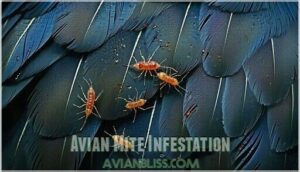
You mightn’t see them at first, but bird mites can quickly become a big problem for your feathered friends.
Tiny but troublesome, bird mites can swiftly turn into a significant challenge for both birds and their human companions.
These tiny pests thrive in warm weather and can cause serious discomfort for birds and even irritating bites for humans, making them a significant issue to address with serious discomfort.
Risk Factors for Mite Infestation
How can you avoid mite infestation risks? Start by keeping an eye on bird nests near your property.
Nest proximity, especially from wild birds, raises chances of infestation. Warm weather and human-made structures attract birds and mites.
Pet birds can also carry mites, so maintain strict hygiene practices. Certain bird species are more susceptible, so extra care during summer months is essential.
Prevention is easier than dealing with mites later, which is why prevention and being aware of mite infestation risks are crucial.
Signs of Mite Infestation in Birds
You might notice increased scratching or restless behavior in your bird as one of the first bird mite infestation signs.
Look out for feather loss, especially around the face or wings, as well as behavioral changes like reduced activity or vocalizing more than usual.
Appetite decrease can also signal trouble, and you should check for skin lesions or scabs.
These bird mite symptoms often show as visible irritation, making your feathered friend uncomfortable, and can include signs of restless behavior.
Symptoms of Mite Bites in Humans
Feeling itchy after handling birds? Avian mite bites can bother you with these symptoms:
Feeling itchy after handling birds? Nighttime itching and red bumps could mean bird mites are causing discomfort—act fast for relief.
- Itch intensity worsens at night, interfering with sleep.
- Red bump appearance at bite sites can mimic flea or scabies bites.
- A crawling sensation on your skin adds to the unease.
- Persistent scratching may lead to secondary infections with redness or pain.
- Sleep disruption from itching leaves you drained the next day.
These symptoms may also point to external parasite signs.
Quick relief: Wash thoroughly and use antihistamines.
Identifying Bird Mites
You can spot bird mites by looking for tiny, moving specks that resemble pepper flakes. They thrive in warm, humid environments and often live near birds or their nests.
Physical Characteristics of Bird Mites
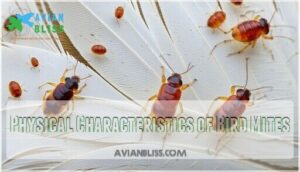
Bird mites are tiny, about 1/32 of an inch (mature mites are easily spotted).
Their oval body shape features six legs for young mites, while adults have eight.
Before feeding, they’re brown or gray; after, they turn reddish.
Spot these mites as “walking pepper flakes.”
Use visual identification to check for their color changes.
Their small size and shifting shades make them noticeable, even to the naked eye.
Behavior and Habitat of Bird Mites
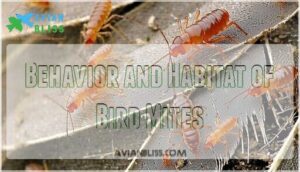
Once you spot tiny "walking pepper flakes" on birds, understanding their behavior is key.
Mites thrive in warm climates, sticking close to nests for easy access to hosts. Their nocturnal activity peaks at night, with host-seeking behavior intensifying as they venture for blood meals.
Mite survival depends on moisture, so they struggle in dry environments. Without birds, mites live just weeks, highlighting their reliance on host proximity for reproduction and life cycles.
You can prevent infestations by focusing on bird mite prevention, which is crucial for maintaining a healthy environment and avoiding the negative impacts of mite infestations and their effects on bird health.
Common Types of Bird Mites
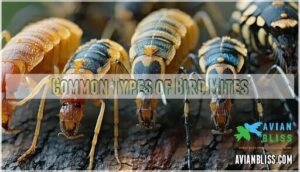
Recognizing the common types of avian mites is key to effective mite identification.
Northern Fowl Mites often feed on chickens, while Chicken Mites, infamous for their resilience, can survive without feeding longer.
American Bird Mites frequently infest homes after birds leave nests.
These bird mites aren’t host-specific, meaning they can affect various birds.
Understanding their habits improves bird mite identification and helps you choose the right mite treatment to protect your birds.
Mite Infestation Treatment
Treating a mite infestation starts with identifying the problem and acting quickly to protect your birds.
Use veterinary advice, antiparasitic medications, or soothing topical treatments to keep your flock healthy and comfortable.
They should be used to keep your flock healthy.
Veterinary Examination and Diagnosis

In the context of identifying avian mites, don’t play guessing games—partner with your avian veterinarian.
They’ll perform a microscopic analysis of skin scrapings, feather examinations, or even blood tests to pinpoint mite species ID.
Diagnosis is critical, as avian mites can mimic other conditions.
A proper evaluation makes certain targeted treatment and healthier birds.
Think of it as giving your feathered friend the VIP medical care they deserve.
Antiparasitic Medications for Birds
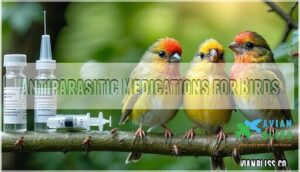
Getting rid of bird mites requires safe, effective treatments.
Antiparasitic medications like ivermectin and fipronil are trusted options. Always consult an avian veterinarian for proper usage.
Here are your tools:
- Ivermectin Dosage: Carefully calculated for each bird to avoid overdosing.
- Mite Resistance: Rotate medications to prevent reduced effectiveness.
- Safe Alternatives: Moxidectin and albendazole work well, too.
- Administration Methods: Spot-on solutions or water additives guarantee easy application.
Many owners seek Ivermectin for bird mites to combat infestations.
Topical Treatments for Human Mite Bites
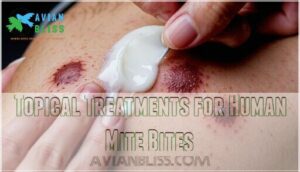
Dealing with mite bites? Those red bumps and endless itch can be maddening.
Try calamine lotion or tea tree oil for natural relief. Aloe vera soothes irritated skin, while antihistamine lotions calm allergic reactions.
For stubborn cases, a topical steroid cream helps reduce swelling. Oral antihistamines tackle severe itching from the inside.
Don’t scratch—it makes things worse! Instead, cleanse the area and keep it moisturized for faster healing. Consider using a specialized cream for relief and apply topical treatments as needed to soothe the irritated skin.
Preventing Mite Infestations
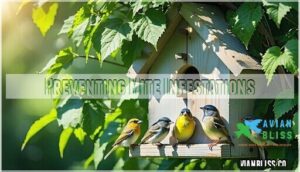
Keeping bird mites at bay starts with a clean, well-maintained environment for your birds.
Regularly removing old nests, sanitizing their space, and managing humidity go a long way in preventing infestations, which is a complete concept in maintaining a healthy environment for your birds.
Removing Empty Nests and Dead Birds
Empty nests and dead birds might seem harmless, but they’re invitations for mites to spread.
Timing matters—always inspect during cooler seasons when birds aren’t nesting. For nest removal safety, wear gloves and a mask to avoid contact.
Check legal considerations first, as some bird species are protected. Dispose of nests in sealed bags to prevent mites from escaping.
If unsure, professional assistance guarantees proper pest control without harming local wildlife.
Cleaning and Sanitizing Bird Environments
Keeping your bird’s environment clean helps with bird mite treatment while promoting their health.
Regularly sanitize cages, swap out bedding, and scrub perches. Toys accumulate grime too—disinfect them to stop mites from spreading.
Fresh water is essential, so see that dishes stay hygienic. Cleaning and sanitizing tackle current mites and make their comeback harder.
A spotless space is your bird’s best defense against these tiny, unwanted guests. You can also use desiccant dusts in hard-to-reach areas to help control mites and support overall health and prevention.
Reducing Humidity and Maintaining Ventilation
A healthy bird environment needs more than cleaning—it requires controlled airflow and moisture levels.
High humidity invites mites by creating the perfect breeding ground.
Focus on these steps:
- Set up ventilation systems to keep air circulated and fresh.
- Use drying agents like silica to reduce moisture in humid spots.
- Maintain airconditioned buildings, especially during warm seasons, ensuring a dry environment to stop mite infestation.
Managing Mite Infestations
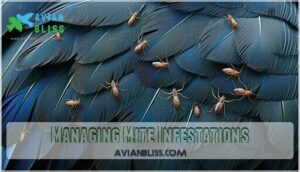
You can manage mite infestations by taking simple, effective steps to protect your birds and home.
From cleaning routines to professional help, these actions keep mites under control and your birds healthy.
Fumigation and Pest Control Services
Professional extermination is the gold standard for tackling bird mite outbreaks.
Home fumigation with insecticides like permethrin or deltamethrin wipes out infestations fast. For bird mite fumigation, various products are available.
Verify that pest control services use chemical miticides suited to stubborn mites. Compare service costs and ask about follow-ups for guaranteed results.
Here’s a quick comparison:
| Service | Cost | Effectiveness |
|---|---|---|
| DIY Insecticides | Low | Moderate |
| Professional Extermination | Medium-High | High |
| Home Fumigation | Medium-High | Excellent |
Quarantining New Birds and Monitoring Nests
When bringing in new birds, quarantine them for at least 30 days to spot potential issues.
Isolation protocols help with early detection of mites, reducing risks before reintroduction.
Monitor nests weekly, as bird nests can hide mites looking for new hosts.
Understanding respiratory distress symptoms can also be critical during this period.
Stick to a reintroduction process after confirming they’re mite-free.
These bird mite prevention tips are simple steps to safeguard your flock and avoid serious mite infestations.
Maintaining Good Hygiene and Reducing Mite Risks
If you want to keep mites at bay, focus on clean spaces and healthy habits.
Pay attention to:
- Bird hygiene: Regularly groom your birds for better health.
- Bedding sanitation: Replace bedding often to stop mites from flourishing.
- Cage maintenance: Clean and sanitize cages weekly to eliminate hidden pests.
- Environmental control: Keep humidity low and allow proper ventilation.
These small actions make a big difference in mite prevention.
Frequently Asked Questions (FAQs)
How do you treat a bird mite infestation?
Treat bird mite infestations by removing nests, cleaning thoroughly, and using insecticides like permethrin.
Wash affected birds and consult a vet for medication.
For humans, cleanse skin, use antihistamines, and consider professional pest control for severe cases, including the use of permethrin.
What is the best treatment for mite infestation?
Banish bird mites quickly by cleaning thoroughly, vacuuming daily, and disposing of bags immediately.
Use insecticides like permethrin on nests, bedding, and crevices.
Relieve bites with topical steroids or antihistamines, and keep humidity low.
What is the best mite treatment for birds?
Use ivermectin for safe and effective treatment of mites in birds.
Apply paraffin oil to affected areas for relief.
Regularly clean cages, replace nesting materials, and consult a vet to guarantee proper care and prevention.
How do you tell if you have bird mites?
You might’ve bird mites if you notice tiny, moving specks resembling pepper flakes on your skin, unexplained red bites, or intense itching, especially at night.
These pests often cause a crawling sensation on your skin.
How do bird mites affect egg production?
Up to 10% drops in egg production can happen when bird mites stress and weaken hens.
Mites drain energy, distract from laying, and irritate birds, causing discomfort.
Healthy, stress-free birds lay better and stay productive, as they are not weakened by the presence of mites.
Can bird mites transmit diseases to humans or birds?
Bird mites don’t spread diseases to humans, but they can cause itchy bites and discomfort.
For birds, heavy infestations might stress them, weaken their immune systems, or lead to bacterial infections if left untreated.
Are specific bird species more resistant to mites?
Ironically, nature doesn’t play favorites—no bird species is truly immune to mites.
However, healthier birds with strong grooming habits and preen oils tend to resist infestations better, making cleanliness and nutrition their best defense.
Is there a risk of bird mites infesting furniture?
Yes, bird mites can infest furniture if they’ve migrated from birds or nests nearby.
They don’t live long on furniture but may linger, causing discomfort.
Frequent cleaning and vacuuming helps keep them at bay.
Conclusion
Picture your bird’s habitat as a fortress—strong, clean, and secure against tiny invaders.
Spotting avian mite infestation signs early, like scratching or feather loss, helps you take fast action. Consult your vet for treatment, using options like ivermectin for lasting relief.
Deep-clean cages, remove droppings, and sanitize thoroughly to stop mites in their tracks.
Prevention is simpler than you think: regular cleaning, avoiding wild birds, and keeping humidity low. A little effort keeps your feathered friend happy and healthy, and it’s key to providing a secure environment, which is essential for their overall well-being!