This site is supported by our readers. We may earn a commission, at no cost to you, if you purchase through links.
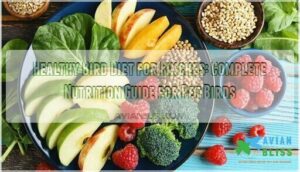 A healthy bird diet for finches requires more than just seeds from the pet store shelf.
You’ll want to offer high-quality pellets as the foundation, making up about 75% of their daily intake.
Fresh fruits like apples and berries, plus vegetables such as leafy greens and carrots, provide essential vitamins.
Small seeds like nyjer and canary seed work as treats, not main meals.
Fresh water should always be available, and you’ll need to avoid toxic foods like avocado, chocolate, and caffeine.
Think of it as building a colorful plate—variety keeps your feathered friends thriving.
Timing and portion control make all the difference.
Table Of Contents
- Key Takeaways
- Finch Nutritional Basics
- Wild Finch Diet
- Recommended Finch Diet
- Food Preparation Guidelines
- Diet Transition Strategies
- Pellets and Supplements
- Suitable Foods for Finches
- Foods to Avoid
- Life Stage Nutritional Needs
- Feeding Pointers
- Frequently Asked Questions (FAQs)
- What is a healthy diet for finches?
- What is the best bird feed for finches?
- What foods can finches not eat?
- Do finches need a cuttlebone?
- How often should I feed my finches daily?
- Can finches eat sprouted seeds and grains safely?
- What feeding schedule works best for finches?
- How do I store finch food properly?
- Should I provide separate dishes for different foods?
- Conclusion
Key Takeaways
- You’ll need to make high-quality pellets the foundation of your finch’s diet, comprising 60-70% of their daily intake, while limiting seeds to treats rather than main meals.
- You should provide fresh fruits and vegetables daily, making up about 20% of their diet, but remove any uneaten portions within 10 hours to prevent spoilage and bacterial growth.
- You must avoid toxic foods like avocado, chocolate, caffeine, and onions completely, as these can cause organ damage, seizures, or even death in finches.
- You’ll want to transition your finch’s diet gradually over 4-6 weeks when making changes, reducing old foods by 10% weekly while monitoring their weight and behavior closely.
Finch Nutritional Basics
Your finch’s health depends on getting the right balance of proteins, carbohydrates, fats, vitamins, and minerals every day.
**Balanced nutrition isn’t optional—it’s the foundation of your finch’s vibrant health and longevity.
Understanding these basic nutritional needs helps you provide proper care and prevents common health problems that come from poor diet choices.
Importance of Balanced Diet
Your finch’s health hinges on proper nutrition more than most pet owners realize.
A balanced diet prevents nutrient deficiency and malnutrition, which can cut your bird’s lifespan short.
Poor finch nutrition leads to weakened immunity, dull feathers, and behavioral problems.
Weak nutrition steals your finch’s vibrant colors and playful spirit—don’t let poor diet dim their brilliance.
Investing in a healthy finch diet isn’t just about feeding—it’s about ensuring finch wellbeing and longevity through careful dietary balance.
Essential Nutrients for Finches
Your finch’s body works like a well-oiled machine, requiring specific nutrients to keep everything running smoothly.
Understanding finch nutrition means recognizing how each component supports your bird’s health and liveliness.
Essential nutrients your finch needs include:
- Protein Sources – Build strong muscles and develop vibrant feathers
- Carb Importance – Fuel daily activities and metabolic processes
- Fat Benefits – Support brain function and hormone production
- Vitamin Needs – Boost immunity and maintain colorful plumage
Water Requirements
Everyone knows water is essential, but many finch owners overlook proper hydration.
You’ll need fresh water daily – filtered water prevents harmful chemicals from tap sources.
Watch for dehydration risks like lethargy or sunken eyes as hydration signs.
Change water containers daily since finches often drop food inside.
Consider separate dishes for drinking versus bathing needs, as clean water supports your finch diet perfectly, ensuring overall health with proper hydration.
Wild Finch Diet
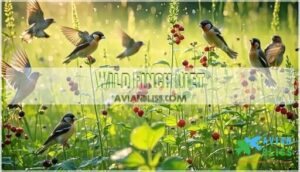
Understanding what finches eat in their natural habitat helps you create a better diet for your pet birds.
Wild finches primarily consume grass seeds, seasonal fruits, and insects, with their food choices changing throughout the year based on what’s available in their environment, which is crucial for creating a natural diet.
Natural Feeding Habits
Wild finches showcase remarkable foraging behavior as natural granivores, spending daylight hours searching for plant seeds from grasses and weeds.
Their wild finch diet includes diverse options beyond seeds – insects provide essential protein, while berries offer seasonal nutrition.
This granivore diet demonstrates how wild seed variety meets their nutritional needs through instinctive foraging patterns across different habitats.
Seasonal Dietary Changes
Like clockwork, finches adjust their wild finch diet throughout the year to match nature’s rhythm.
During breeding season, they increase protein intake through insects for reproduction. Summer fruits provide essential vitamins, while winter diet shifts toward high-fat seeds for warmth.
Molting season demands extra nutrients for feather development. Understanding these seasonal dietary changes helps you create better finch feeding guide strategies that mirror their natural finch dietary needs, which is crucial for their overall health and reproduction.
Seed Availability
Throughout nature, finch food options change as plants mature and produce seeds at different times.
Your pet finch’s wild cousins adapt to these seasonal variations, switching between grass seeds, wildflower varieties, and other available options.
This natural seed diversity explains why quality finch seed mix should include multiple types like millet and varied seeds, mimicking the urban availability wild finches experience, with a focus on complete concepts.
Recommended Finch Diet
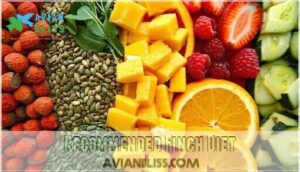
You’ll need to provide your finch with a balanced diet that includes high-quality seed mixes, pelleted food, and fresh fruits and vegetables to guarantee proper nutrition.
A well-planned finch diet consists of 60-70% pelleted food, quality seeds in moderation, and 20% fresh produce to support your bird’s health and longevity.
High-Quality Seed Mixes
Your finch deserves more than basic birdseed from the grocery store.
Quality seed mixes combine millet, canary seed, and Niger thistle for ideal seed diversity and nutrient density.
Look for organic options when possible, and consider sprouting seeds to boost nutritional value.
You can purchase specialized blends online for finches.
Store your finch seed mix in airtight containers to maintain freshness and prevent spoilage.
Pelleted Food Requirements
Quality pellets form the backbone of your finch’s health.
These formulated diets should comprise 60-70% of their daily intake, providing complete nutrition without guesswork.
- Pellet Composition: Choose natural finch pellets without artificial colors or preservatives
- Pellet Size: Select appropriately sized pellets that match your finch’s beak capacity
- Feeding Frequency: Offer fresh pellets daily, discarding uneaten portions before refilling
- Storage Guidelines: Keep pelleted diets in cool, dry containers to maintain nutritional integrity
Fresh Fruits and Vegetables
Fresh produce provides essential nutrients your finch needs for peak health.
Offer safe produce like kale, broccoli, and colorful vegetables daily, comprising 20% of their diet. Chop finch safe foods into beak-sized pieces using proper preparation methods.
Remove uneaten fresh food within 10 hours for spoilage prevention.
Nutrient variety from different colored fruits guarantees balanced nutrition and prevents deficiencies, ensuring your finch receives a diet rich in essential nutrients for optimal health, and promoting overall peak health.
Food Preparation Guidelines
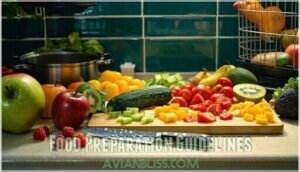
You’ll need to prepare your finch’s food carefully to guarantee safety and proper nutrition.
Always wash fresh fruits and vegetables thoroughly, chop hard foods into small beak-sized pieces, and remove any uneaten fresh food within 10 hours to prevent spoilage.
This will ensure your finch receives the best possible care and nutrition.
Safe Food Handling
Proper washing produce removes harmful pesticides and bacteria that threaten your finch’s health.
Rinse all fruits and vegetables under cool running water before serving. Chop fresh food into appropriate beak-sized pieces to prevent choking.
Remove uneaten portions within ten hours to prevent spoilage and bacterial growth.
Store finch safe foods separately from toxic foods to avoid cross-contamination accidents.
Food Variety and Color
Different colors in your finch’s fresh food mean different Colorful Nutrients.
Red bell peppers provide vitamin A, while dark leafy greens offer iron and calcium.
This Safe Variety creates Visual Appeal that encourages eating.
Offering colorful vegetables and fruit enhances Palatability Factors, making meals more exciting.
Mix textures and colors for Foraging Enrichment that mimics natural feeding behaviors finches love.
Avoiding Toxic Foods
Never offer avocado to your finch—it’s deadly poison that causes heart failure.
Chocolate dangers include seizures from theobromine, while caffeine risks cardiac arrest.
Onion/garlic harm creates anemia and organ damage. Skip salty snacks that dehydrate birds dangerously.
Create a finch toxic foods list including alcohol and these items. One bite of chocolate could kill your beloved pet, as it is a form of deadly poison.
Diet Transition Strategies
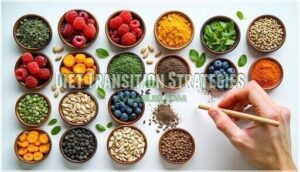
You can’t change your finch’s diet overnight without causing digestive upset or health problems.
Successful diet modifications require patience, careful monitoring, and a gradual approach that slowly introduces new foods while reducing old ones over several weeks, which demands careful consideration to avoid complications.
Gradual Weaning From Seeds
Moving your finch away from an all-seed diet requires patience and strategic seed reduction.
Start by decreasing seed portions by 10% weekly while monitoring your bird’s weight and behavior. This gradual diet change prevents stress and encourages finch acceptance of new foods.
The timeline for this change typically spans 4-6 weeks, allowing your pet to adapt naturally without shock.
- Your finch’s health depends on breaking free from seed addiction
- Every day on seeds-only shortens your bird’s precious lifespan
- Watching your pet struggle with malnutrition breaks your heart
- You’re the guardian who can save your finch’s future
- Small changes today mean years of joy together tomorrow
Introducing Pellets
Start offering pellets in a separate dish alongside seeds, particularly during morning hours when your finches are hungriest.
Mix crushed pellets with familiar foods to boost pellet acceptance tips.
Different brands offer varying pellet texture variety, so experiment to find what works.
| Pellet Feature | High-Quality Option | Budget Option |
|---|---|---|
| Nutrient Density | Complete vitamin profile | Basic nutrition only |
| Texture Options | Multiple sizes available | Single pellet size |
| Storage Life | 12+ months sealed | 6-8 months maximum |
Monitoring Health
Once you’ve introduced pellets, daily monitoring becomes your best tool for tracking your finch’s health.
Weight fluctuations and behavior changes signal how well your bird adapts to dietary shifts.
Watch for these key health indicators:
- Weight monitoring – Weigh weekly during diet changes
- Droppings observation – Check color, consistency, and frequency daily
- Feather condition – Monitor for dullness or plucking
- Activity levels – Note energy changes or lethargy
- Behavior changes – Watch eating habits and social interactions
Pellets and Supplements
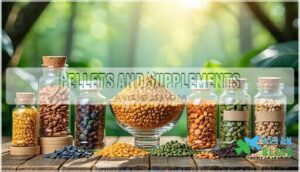
High-quality pellets should form the foundation of your finch’s diet, providing balanced nutrition that seeds alone can’t offer.
You’ll need to supplement this base with calcium sources like cuttlebone and consider vitamin additions based on your bird’s specific needs and your veterinarian’s recommendations.
Choosing High-Quality Pellets
Quality pelleted diets form the foundation of finch nutrition, replacing nutrient-deficient seed mixes that cause malnutrition risks.
Choose pellets specifically formulated for finches with appropriate pellet size and natural ingredients. Many owners choose to buy finch food pellets for their birds.
| Selection Criteria | What to Look For |
|---|---|
| Pellet Ingredients | Whole grains, fruits, vegetables |
| Nutritional Content | Balanced protein, vitamins, minerals |
| Pellet Size | Small, finch-appropriate pieces |
| Brand Comparison | Veterinarian-recommended brands |
| Storage Guidelines | Airtight containers, cool locations |
Calcium and Vitamin Supplements
Beyond pellets, your finch needs calcium supplementation to prevent calcium deficiency symptoms like seizures and poor bone density.
Powdered calcium supplements with vitamin D3 work well sprinkled on food, while liquid forms offer better absorption.
Many owners purchase finch calcium supplements online for convenience.
Follow dosage guidelines carefully—breeding birds need more frequent supplementation than non-breeding finches, and it’s essential to stick with one supplement brand for consistency and maximum results.
Eggfood and Millet Spray
If you’re already exploring calcium and vitamins, eggfood and millet spray are great additions to a healthy bird diet.
Eggfood boosts protein for growth and feather health, while millet spray offers enrichment and natural foraging fun.
- Eggfood benefits: Supports breeding and molting.
- Millet enrichment: Encourages activity.
- Feeding frequency: Offer sparingly.
- Storage guidelines: Keep dry and cool.
Suitable Foods for Finches
You’ll find that finches thrive on a varied diet of fresh fruits, vegetables, and occasional protein sources that mirror their natural feeding habits.
Understanding which foods are safe and nutritious helps you provide the balanced nutrition your finches need while avoiding potentially harmful items.
Fruits and Vegetables
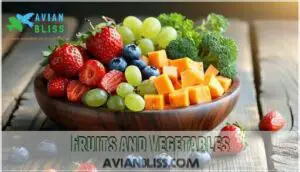
Fresh food adds essential nutrients to your finch’s healthy diet.
Safe vegetables like bell peppers, broccoli, and carrots provide color variety and essential vitamins.
Chop hard produce into beak-sized pieces for easy eating.
Always wash fruits and vegetables thoroughly before serving.
Avoid toxic produce like avocado and onions.
Remove uneaten fresh food within ten hours to prevent spoilage and maintain proper serving size portions, ensuring a healthy and safe diet with essential nutrients.
Protein Sources
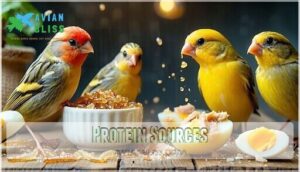
Your finches need protein beyond seeds for muscle development and feather health.
Protein deficiency weakens birds and dulls plumage.
Several finch protein sources work well:
- Insects – Mealworm benefits include high protein content, while cricket variety offers essential amino acids
- Eggfood composition – Commercial or scrambled eggs provide complete nutrition during molting seasons
- Cooked meat – Small portions of plain chicken supply plant-based proteins safely
Avoiding Unsuitable Foods
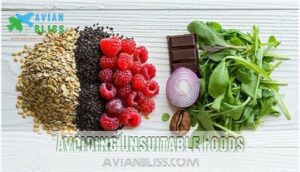
While protein sources boost your finch’s health, some foods can seriously harm them.
Chocolate contains toxic compounds that cause seizures. Caffeine risks include cardiac arrest and hyperactivity.
Alcohol poisoning damages their liver and kidneys. Onion dangers include anemia and organ damage. Avocado is another harmful food.
Safe human foods exist, but always avoid these toxic food effects completely.
Foods to Avoid
While you’ve learned about the best foods for your finches, it’s equally important to know which foods can harm them.
Certain common household items and seemingly harmless foods can cause serious health problems or even death in finches, so you’ll need to keep these dangerous items away from your birds at all times.
Toxic Foods
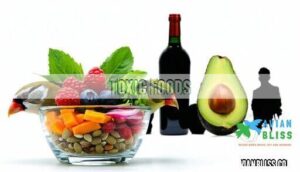
Beyond the domain of safe foods lies a dangerous territory where certain items can seriously harm your finch.
These toxic substances can cause organ damage, seizures, or even death within hours of consumption.
- Avocado Toxicity: Contains persin, causing heart damage and potentially fatal reactions
- Chocolate Dangers: Theobromine and caffeine trigger seizures and cardiac arrest
- Onion Harm: Garlic and onions destroy red blood cells, leading to anemia
- Alcohol Poisoning: Even tiny amounts damage liver and kidneys permanently
Human Foods to Limit

While chocolate, caffeine, and alcohol pose serious dangers, other human foods require careful consideration.
Salty snacks and sugary foods can disrupt your finch’s delicate system.
Processed sugars cause digestive upset, while dairy concerns arise from lactose intolerance.
Spiced foods irritate sensitive beaks, and fatty leftovers contribute to obesity.
Share your meals sparingly, avoiding these problematic options entirely.
Gravel and Grit
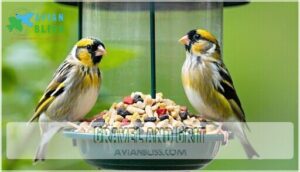
Despite old beliefs, gravel and grit aren’t necessary for your finch’s digestion since they hull seeds naturally.
These additives can actually harm your pet’s gastrointestinal tract through overconsumption risks.
Here’s why you should skip grit entirely:
- Insoluble grit can cause dangerous gastrointestinal obstruction
- Soluble grit offers minimal benefits compared to proper calcium sources
- Grit types vary widely in safety and effectiveness
- Grit function becomes unnecessary with proper pelleted diets
Life Stage Nutritional Needs
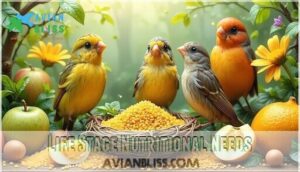
Your finch’s nutritional needs change throughout its life, and you’ll need to adjust their diet accordingly.
Young finches require extra protein for growth, breeding birds need additional calcium and nutrients, and senior finches benefit from easily digestible foods that support their aging bodies, which involves considering easily digestible foods.
Juvenile Finches
Young birds face unique challenges during their growth stages and first molt.
The weaning process from parental feeding requires careful attention to prevent nutritional deficiencies.
While baby finches adapt easily to mash diets, they may not thrive on formulated products alone.
Include high-quality finch food with diverse nutrients to support proper finch health during these critical developmental phases.
Breeding Finches
Finches preparing for egg laying need protein-rich diets exceeding 20% complete protein content.
During chick development, parents require specialized breeding supplements and egg food to support parental feeding demands.
Your finch food should include high-quality finch supplements supporting both adult finch health and growing nestlings.
Monitor finch care closely during weaning chicks, as egglaying birds face increased nutritional stress throughout the breeding cycle.
Senior Finches
After breeding, finches enter their golden years with changing nutritional needs.
Senior finches often experience appetite decline and require extra attention to maintain their health. Age-related changes affect their ability to process nutrients effectively.
Watch for these common signs in aging finches:
- Joint health issues affecting mobility
- Vision changes impacting food location
- Kidney support needs through diet modification
- Feather loss requiring protein supplementation
- Appetite decline necessitating concentrated nutrition
These signs indicate the need for careful observation and potential diet adjustments to support the finches’ overall health.
Feeding Pointers
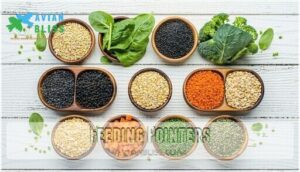
You’ll need proper daily care routines to keep your finches healthy and thriving on their balanced diet.
Clean water changes, regular food dish maintenance, and veterinary check-ups form the foundation of successful finch nutrition management.
Fresh Water Requirements
Your finches need fresh water available 24/7 in a shallow dish they can’t drown in.
Change their water daily to maintain proper water bowl hygiene and prevent bacteria growth.
Watch for hydration signs like bright eyes and active behavior.
Use filtered or bottled water if your tap water contains heavy chlorine. Avoid water additives unless recommended by your vet, as finches get nutrients from food.
Cleaning and Maintenance
Beyond providing fresh water, maintaining spotless feeding areas prevents dangerous bacteria growth.
Daily dish cleaning eliminates food residue that breeds harmful microorganisms, and feeder sanitation requires scrubbing with hot, soapy water every morning.
Water hygiene means changing containers twice daily, which is crucial for the health of your finch.
Weekly aviary cleaning includes thorough perch sanitation and cage cleaning, helping to prevent the spread of disease.
Food monitoring helps you spot contamination early, protecting your finch’s health, and is an essential part of maintaining a clean and safe environment.
Consulting an Avian Veterinarian
Your veterinarian serves as your finch’s health partner, offering expert diet advice customized to your bird’s needs.
They’ll diagnose health issues early, provide supplement recommendations, and address breed-specific needs.
When emergency nutrition situations arise, having an established relationship with an avian specialist guarantees quick access to professional guidance for superior pet bird care.
Frequently Asked Questions (FAQs)
What is a healthy diet for finches?
Perfect portions make healthy finches thrive.
You’ll need quality pellets (70% of diet), fresh fruits and vegetables (20%), plus limited seeds.
Provide clean water daily and avoid chocolate, avocado, and caffeine—they’re toxic to your feathered friends.
What is the best bird feed for finches?
High-quality pelleted food should comprise 60-70% of your finch’s diet.
Choose pellets specifically formulated for finches, supplement with quality seed mixes containing millet and canary seed, plus fresh fruits and vegetables daily.
What foods can finches not eat?
Your finch’s life literally depends on avoiding these deadly foods! Never give them avocado, chocolate, caffeine, alcohol, onions, or garlic. These can cause poisoning, organ damage, or death within hours.
Do finches need a cuttlebone?
Yes, you should provide a cuttlebone for your finches.
It’s an excellent calcium source that supports strong bones, proper egg formation, and healthy feather development while also serving as natural beak conditioning.
How often should I feed my finches daily?
Feed your finches twice daily – morning and evening. Offer fresh food each time, removing uneaten portions after 10-12 hours to prevent spoilage. Consistent timing helps establish healthy eating routines.
Can finches eat sprouted seeds and grains safely?
Sprouted seeds and grains are excellent for finches, offering enhanced nutrition and digestibility.
You can safely provide them as part of a balanced diet, ensuring they’re fresh and properly prepared to avoid spoilage.
What feeding schedule works best for finches?
Birds that don’t eat for 12-24 hours can die from starvation.
You’ll want to offer fresh food twice daily – morning and evening.
Keep pellets available constantly, but remove fresh fruits and vegetables after 10 hours.
How do I store finch food properly?
Store finch food in airtight containers away from heat, light, and moisture.
Keep seeds in cool, dry places like pantries.
Check expiration dates regularly and discard old food to prevent spoilage and maintain nutritional value.
Should I provide separate dishes for different foods?
Like setting a formal dinner table, you’ll want separate dishes for your finch’s varied menu.
Use different bowls for seeds, pellets, fresh foods, and water to prevent contamination and make monitoring consumption easier.
Conclusion
Creating a healthy bird diet for finches is like assembling a nutritional puzzle—each piece must fit perfectly to complete the picture.
You’ve learned that pellets form the foundation, fresh produce adds essential nutrients, and seeds serve as occasional treats.
Remember to provide clean water daily and avoid toxic foods completely.
Monitor your finches’ health during dietary shifts, and don’t hesitate to consult an avian veterinarian when needed.
Your commitment to proper nutrition will reward you with vibrant, thriving birds.