This site is supported by our readers. We may earn a commission, at no cost to you, if you purchase through links.
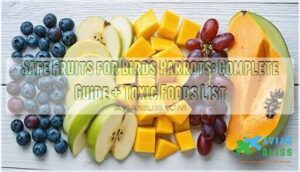 You can safely offer your parrot berries like blueberries and strawberries, which pack antioxidants without the fuss.
Apples work great too—just remove those seeds since they contain cyanide. Bananas are soft and easy to digest, while melons provide hydration on hot days.
Grapes are fine in small amounts, though they’re sugar bombs. Mangoes and papayas deliver vitamin A for bright feathers and healthy eyes.
Always wash fruits thoroughly and cut them into bite-sized pieces. Think of fruit as nature’s candy—it should make up about 10-15% of your bird’s diet.
The key lies in knowing which common household fruits can actually harm your feathered friend.
Table Of Contents
- Key Takeaways
- Safe Fruits for Parrots
- Favourite Fruits of Parrots
- Toxic Fruits for Parrots
- Low Sugar Fruits for Parrots
- Feeding Fruits to Parrots
- Nutritional Benefits of Fruits
- Preparing Fruits for Parrots
- Fruits to Avoid for Parrots
- Creating a Balanced Diet
- Feeding Guidelines for Parrots
- Frequently Asked Questions (FAQs)
- What fruits are safe for parrots?
- What is parrot’s favourite fruit?
- Why can’t parrots eat avocado?
- What fruit is low in sugar for parrots?
- Can parrots eat frozen or canned fruits?
- How do seasonal fruits affect parrot nutrition?
- Are organic fruits better for parrots?
- Can baby parrots eat the same fruits?
- Do different parrot species have fruit preferences?
- Conclusion
Key Takeaways
- You’ll need to remove all seeds and pits from fruits like apples, cherries, and peaches before serving them to your parrot, as these contain cyanide and can be deadly even in small amounts.
- Never feed your parrot avocado in any form – it contains persin, a toxic compound that can cause heart problems, breathing difficulties, and death, making it completely off-limits for all bird species.
- Keep fruits to 10-15% of your parrot’s total diet, offering them as treats rather than meal replacements, while ensuring pellets make up 70-75% of their daily nutrition for proper balance.
- You can safely offer berries, bananas, melons, and properly prepared apples, but always wash fruits thoroughly and choose lower-sugar options like raspberries and melons over high-sugar treats like grapes.
Safe Fruits for Parrots
You’ll find that most fruits are safe and healthy for your parrot, providing essential vitamins, antioxidants, and natural energy that support their overall health.
The key is knowing which fruits to choose and how to prepare them properly, since some require removing pits or seeds before serving, which is a crucial step for your parrot’s health.
Bananas and Berries
Why wouldn’t you want to spoil your feathered friend with nature’s candy? Bananas and berries rank among the safest fruits parrots can enjoy.
Your feathered friend deserves nature’s sweetest treasures – fresh fruits packed with vitamins and joy!
These parrot diet fruits offer excellent parrot nutrition fruits through banana potassium for heart health and berry antioxidants that fight inflammation.
- Banana digestion benefits include natural sugars and fiber that support healthy gut function
- Berry varieties like blueberries, strawberries, and raspberries provide essential vitamins without excess sugar
- Feeding frequency should remain moderate – offer these safe fruits parrots love 2-3 times weekly
Apples and Grapes
Apples make excellent parrot diet fruits when you remove those deadly seeds first.
Apple varieties like Granny Smith offer fiber and antioxidants for grape digestion support.
Grapes provide quick energy but watch portions – they’re candy-like treats.
Both fruits parrots eat enthusiastically, though seed toxicity in apples requires careful prep.
Try serving suggestions like sliced apples with halved grapes for nutritional comparison benefits in parrot healthy fruits rotation, using parrot healthy fruits and considering quick energy.
Oranges and Citrus Fruits
Peel away your concerns about oranges – they’re packed with vitamin C and make excellent parrot healthy fruits.
Orange varieties like naval and blood oranges offer essential vitamins, though citrus acidity means moderation matters.
Remove seeds before serving citrus to your feathered friend. The peel benefits include extra fiber, making oranges a smart addition to any parrot safe diet.
A balanced diet needs essential vitamins and minerals for overall wellness, and including oranges can be a great way to provide essential vitamins.
Favourite Fruits of Parrots
Discovering your parrot’s fruit favorites can be like watching a kid in a candy store.
Popular choices among most parrots include bananas, which offer creamy sweetness that’s hard to resist.
Sweet preferences lean heavily toward berries – strawberries, blueberries, and raspberries top the list for their burst of flavor.
Texture appeal plays a huge role too; many birds love the crunch of fresh apples and the juicy pop of grapes.
Wild parrots naturally gravitate toward seasonal fruits available in their native habitats, giving us clues about domestic preferences.
Your feathered friend might show strong parrot fruit preferences for tropical options like mango, papaya, or pineapple.
Safe fruits for parrots that consistently win favor include melons for their high water content and oranges for their tangy zip.
Offering parrot fruit variety keeps mealtimes exciting while ensuring fruits good parrots enjoy become regular treats in their balanced diet.
This approach helps in maintaining a healthy and exciting mealtime experience for your parrot.
Toxic Fruits for Parrots
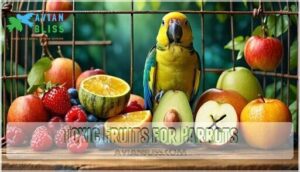
While most fruits are safe for your parrot, certain ones can seriously harm or even kill your feathered friend.
You’ll need to avoid avocado completely and remove all pits and seeds from fruits like apples, cherries, and peaches before serving them to ensure your parrot’s safety with seeds.
Avocado and Its Dangers
Avocado toxicity poses serious risks to your parrot’s health. This fruit contains persin, a dangerous compound found throughout the entire plant.
Never risk your parrot’s life with avocado – this deadly fruit can kill even in tiny amounts.
Research documented budgie deaths after avocado consumption, making it completely off-limits. Symptoms to watch include breathing difficulties, weakness, and heart problems.
Instead of unsafe foods like avocado, stick to safe fruits such as apples, berries, and melons for your feathered friend. A balanced diet requires essential vitamins and minerals for peak health.
Fruit Pits and Seeds
Beyond avocado’s threat, fruit pits and seeds pose serious cyanide exposure risks.
Apple seeds contain concentrated toxins that’ll poison your feathered friend quickly. Stone fruits like cherries, peaches, and apricots hide dangerous pits inside their sweet flesh.
Always remove these deadly parts before serving. Your parrot fruit guide should emphasize pit removal and seed toxicity awareness.
Choose safe alternatives like seedless grapes instead.
Low Sugar Fruits for Parrots
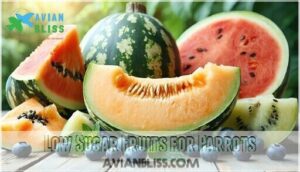
When you’re watching your parrot’s sugar intake, you’ll want to focus on fruits that won’t spike their energy levels or contribute to weight gain.
Low sugar options like melons, papayas, and certain berries provide essential nutrients while keeping sweetness in check, making them perfect for daily feeding routines with a focus on low sugar options.
Melons and Pineapples
Among low-sugar options, melons and pineapples offer excellent nutrition for your feathered friends.
Cantaloupe provides exceptional melon hydration while watermelon delivers essential vitamins. Despite pineapple acidity, bromelain benefits aid digestion substantially.
Parrots can also enjoy fiber from apples for better digestion.
Consider these melon varieties and serving suggestions:
- Fresh cantaloupe chunks – Natural sweetness without overwhelming sugar content
- Watermelon wedges – Perfect summer treats that keep parrots hydrated
- Pineapple rings – Tropical flavor packed with digestive enzymes.
These safe fruits balance nutrition perfectly.
Papayas and Mangoes
Papayas and mangoes bring tropical sweetness to your parrot’s diet while staying relatively low in sugar.
Papaya enzymes aid digestion, making this fruit particularly beneficial. Different mango varieties offer varying sweetness levels – choose firmer, less ripe options for lower sugar content.
Check ripeness indicators like slight softness before serving.
| Fruit | Sugar Content | Key Benefits |
|---|---|---|
| Papaya | 5.9g per 100g | Digestive enzymes, Vitamin C |
| Mango | 13.7g per 100g | Beta-carotene, fiber |
Feeding Fruits to Parrots
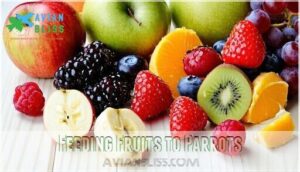
When you feed fruits to your parrot, remember that moderation is key since fruits should make up only 25-30% of their total diet.
You’ll want to offer a variety of safe fruits while ensuring proper hydration by diluting fruit juices with water and always washing fruits thoroughly before serving.
Moderation and Balance
Think of fruit as dessert for your feathered friend.
Portion control keeps your parrot healthy while preventing sugar overload. Limit fruits to 25-30% of their total diet, with pellets forming the foundation.
Balance acidic fruits like citrus with milder options. Monitor sugar content in sweet fruits like grapes.
This dietary ratio guarantees balanced nutrition without compromising your parrot’s health or creating picky eating habits.
Hydration and Variety
Rotating seasonal fruits keeps your parrot’s diet exciting while boosting hydration naturally. Water-rich fruits like watermelon and cantaloupe help meet daily fluid needs, especially during warmer months.
Juice dilution with water creates invigorating treats that encourage drinking. Year-round feeding helps sustain birds with nutritional needs.
- Texture variety: Mix soft mangoes with crunchy apples for engaging meals
- Seasonal rotation: Spring berries, summer melons, fall pears keep things fresh
- Water content boost: Watermelon, grapes, and oranges provide natural hydration
- Diluted juices: Mix fruit juices with equal parts water for healthy variety
Nutritional Benefits of Fruits
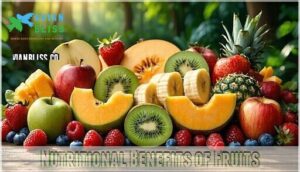
When you offer fruits to your parrot, you’re providing essential vitamins, antioxidants, and minerals that support their immune system, heart health, and overall well-being.
These natural powerhouses also deliver fiber that aids digestion and helps maintain your bird’s healthy weight when served in proper portions.
Vitamins and Antioxidants
Fruits pack your parrot’s diet with essential vitamins and antioxidants that keep them thriving.
Vitamin A from mangoes and papayas supports feather health and vision, while vitamin C in citrus fruits boosts immune support.
Antioxidant benefits from berries provide cellular protection against free radicals, and this vitamin variety works together, creating a natural defense system.
This natural defense system helps your feathered friend maintain vibrant plumage and healthy health.
Fiber and Digestion
Beyond vitamins and antioxidants, fiber-rich fruits for birds work like tiny janitors in your parrot’s digestive system.
Apples, pears, and berries provide soluble fiber that promotes healthy gut bacteria and smooth digestion.
These fiber sources help your feathered friend process food efficiently while supporting overall gut health.
Digestive enzymes in fresh fruit variety guarantee balanced intake keeps your parrot’s system running smoothly.
Preparing Fruits for Parrots
You’ll need to wash all fruits thoroughly and remove any pits or seeds before serving them to your parrot.
Proper preparation prevents pesticide exposure and eliminates toxic elements like apple seeds or cherry pits that can harm your bird, which is why proper handling is crucial.
Washing and Peeling
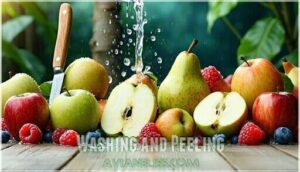
Before serving any fruits for parrots can eat, thorough washing removes harmful pesticides that threaten bird food safety.
Run cold water over each piece, gently scrubbing with your hands. Organic options reduce chemical exposure but still need cleaning.
For a deeper clean, consider a specialized fruit wash.
Keep beneficial peels on apples and pears—they’re packed with fiber. However, always remove citrus rinds since their oils can upset your parrot’s stomach, causing stomach upset.
Removing Pits and Seeds
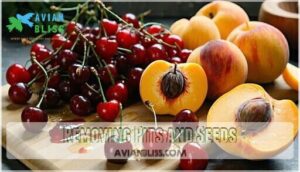
After proper washing and peeling, you’ll need to tackle pit removal and seed toxicity concerns. Stone fruits like cherries and apricots contain pits that pose cyanide exposure risks to your feathered friend. Apple seeds are equally dangerous, making fruit preparation a key safety step.
Safe fruit list parrots guidelines for pit removal:
- Remove all pits from stone fruits before serving – cherries, peaches, plums, and apricots can be deadly
- Cut apples into slices and discard the core completely to eliminate toxic seeds
- Choose safe alternatives like berries or melons that don’t require extensive preparation for worry-free feeding
To simplify pit removal, consider using a specialized fruit tool.
Fruits to Avoid for Parrots
While most fruits make healthy treats for your parrot, certain fruits can pose serious health risks that you’ll want to avoid completely.
Understanding which fruits are dangerous helps you keep your feathered friend safe while still providing variety in their diet.
Avocado and Stone Fruits
After properly preparing fruits, it’s time to address the biggest danger lurking in your fruit bowl.
Avocado toxicity poses serious risks to parrots – even small amounts can be fatal.
Stone fruit safety requires removing all pits before serving. Cherry, peach, and plum pits contain cyanide, making pit removal non-negotiable for safe alternatives.
| Toxic Fruits | Safe Alternatives |
|---|---|
| Avocado (all parts) | Banana slices |
| Cherry pits | Pitted cherry flesh |
| Peach stones | Peach flesh only |
| Plum pits | Seedless grapes |
Highly Acidic Fruits
Citrus fruits pack serious acidity that can spell trouble for your parrot’s delicate stomach.
While lemons offer vitamin C benefits, their harsh acidity often causes stomach upset when fed regularly.
Limes carry similar caution warnings due to their intense sourness.
Smart moderation tips include offering tiny portions occasionally rather than daily treats.
Consider acidic alternatives like diluted orange juice or mild citrus varieties for safer options.
A balanced diet needs essential vitamins and minerals for overall wellness and should include smart moderation to avoid stomach upset.
Creating a Balanced Diet
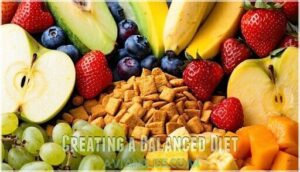
You’ll want to make sure fruits represent only 25-30% of your parrot’s daily food intake, with high-quality pellets forming the foundation at 70-75%.
This balance prevents your bird from filling up on sweet treats while missing essential nutrients from their main diet.
Pellets and Whole Grains
High-quality pellets form your parrot’s nutritional backbone, containing essential vitamins and minerals your bird needs daily. Think of pellets as your parrot’s multivitamin wrapped in a tasty package.
Whole grains boost your parrot’s diet with natural fiber and energy:
- Pellet Composition – Choose organic options with hulled oats and natural ingredients
- Grain Variety – Add quinoa, barley, and millet to homemade chop mixes
- Sprouting Grains – Fresh sprouts provide concentrated nutrition and foraging fun
Seeds and Nuts
Seeds and nuts pack powerful nutrition for your parrot’s diet, but they’re like candy – irresistible yet requiring careful portion control.
Sprouting seeds boosts their nutritional value, while nut varieties like almonds and walnuts provide essential vitamins and minerals.
Offer safe quantities – just a tablespoon daily, as shelling challenges keep parrots mentally stimulated, making mealtime engaging while preventing seed nutrition overload.
Feeding Guidelines for Parrots
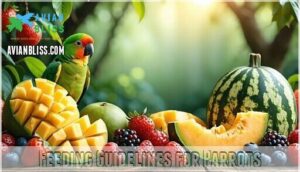
You’ll need to establish proper feeding routines to keep your parrot healthy and prevent nutritional imbalances that can lead to serious health problems.
Getting the portions and timing right isn’t just about following rules—it’s about understanding your bird’s individual needs and watching for signs that tell you if you’re on the right track.
You should also consider that getting this right is crucial for your parrot’s well-being, and serious health problems can be prevented with proper care.
Food Portions and Frequency
Getting your parrot food portions right prevents overeating and keeps them healthy.
Feed your feathered friend twice daily, mimicking their natural eating patterns.
Daily fruit intake should include 2-3 different fruit varieties alongside 5-7 vegetables, with pellets making up 70-90% of their diet.
Many owners purchase pre-portioned parrot food for convenience.
Feeding Schedule Tips:
- Morning meal – Offer fresh fruits with pellets around sunrise
- Evening portion – Provide second meal before sunset
- Portion size guide – Adjust servings based on your bird’s size
- Monitor parrot weight – Track changes to prevent obesity from overfeeding
Monitoring Intake and Health
When you’re feeding fruits to your parrot, keeping tabs on their health becomes your top priority.
Watch for weight fluctuations, feather condition changes, and unusual dropping analysis results. Monitor activity levels and behavioral changes daily.
| Health Indicator | Normal Signs | Warning Signs |
|---|---|---|
| Weight Fluctuations | Stable weekly weight | 10%+ weight loss/gain |
| Feather Condition | Bright, smooth plumage | Dull, plucked feathers |
| Activity Levels | Playful, vocal behavior | Lethargy, reduced interaction |
Proper bird nutrition monitoring guarantees your parrot’s long-term wellbeing. The key to a healthy parrot is proper care and attention to these details.
Frequently Asked Questions (FAQs)
What fruits are safe for parrots?
You can safely feed your parrot most fruits like apples, berries, grapes, and melons.
Always remove pits and seeds first.
Avoid avocado completely—it’s toxic.
Feed fruits in moderation alongside their regular pellet diet.
What is parrot’s favourite fruit?
Bananas reign supreme, grapes deliver sweetness, berries burst with flavor—your parrot’s taste buds crave variety.
Most parrots absolutely love bananas for their creamy texture and natural sweetness, making them the top crowd-pleaser in aviaries worldwide, and this is because they provide a unique taste experience.
Why can’t parrots eat avocado?
Avocado contains persin, a compound that’s toxic to parrots and can cause heart damage, respiratory distress, and death.
Even small amounts are dangerous, so you should never feed your parrot any part of an avocado.
What fruit is low in sugar for parrots?
Raspberries top the list for low-sugar fruit options.
You’ll also find tomatoes, cranberries, and lemons work well.
These choices won’t spike your parrot’s blood sugar while still providing essential vitamins and antioxidants.
Can parrots eat frozen or canned fruits?
Looking for convenient fruit options? You can offer frozen fruits to your parrot, but they’re best thawed and drained first.
Skip canned fruits entirely—they contain harmful preservatives and excess sugars that’ll upset your bird’s stomach.
How do seasonal fruits affect parrot nutrition?
Seasonal fruits provide natural dietary variety that mirrors your parrot’s wild feeding patterns.
You’ll notice spring berries boost antioxidants, summer stone fruits add vitamins, and fall apples offer fiber—creating nutritional balance throughout the year with natural dietary variety.
Are organic fruits better for parrots?
Premium produce provides peace of mind for parrot parents.
You don’t need organic fruits exclusively—thoroughly washing conventional fruits removes most pesticides.
Organic’s better when budget allows, but proper cleaning makes regular fruits perfectly safe.
Can baby parrots eat the same fruits?
Baby parrots can eat most safe fruits, but you’ll need to mash or puree them first.
Start with soft options like bananas and berries.
Always remove seeds and pits before serving.
Do different parrot species have fruit preferences?
Like people favoring chocolate over vanilla, parrot species show distinct fruit preferences.
African Greys often prefer citrus, while Amazons gravitate toward tropical fruits like mango.
You’ll notice your bird’s individual tastes within species patterns.
Conclusion
Picture your parrot’s colorful feathers glistening as they enjoy a nutritious berry treat—that’s the reward of choosing safe fruits for birds parrots.
You’ve learned which fruits nourish and which ones threaten your feathered companion’s health.
Remember to wash thoroughly, remove dangerous seeds, and maintain moderation with sugary options.
Stick to the 10-15% fruit guideline while avoiding toxic choices like avocado.
Your parrot’s vibrant health depends on these informed decisions you make daily.
- https://parrotessentials.co.uk/blog/what-fruits-can-parrots-eat
- https://zupreem.com/what-are-the-best-fresh-fruits-for-birds/
- https://queenslanderaviaries.com/blogs/news/bird-safe-fruit-and-vegetable-list?srsltid=AfmBOoqGoysmp9PdMLuG2OMIm8tPayY8w-rolHNwm-APzfoOCZQe1ics
- https://www.quora.com/What-are-some-fruits-that-pet-birds-enjoy-eating
- https://www.parrotforums.com/threads/fruits-and-veggies-list.52530/