This site is supported by our readers. We may earn a commission, at no cost to you, if you purchase through links.
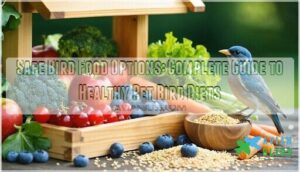 In the context of safe bird food options, focus on fresh, healthy choices.
Birds enjoy fruits like apples (without seeds) and berries, along with vegetables such as carrots, broccoli, and leafy greens.
High-quality pellets and seeds provide essential nutrients, but don’t rely on seeds alone—they’re like eating candy for birds.
Offer cooked grains like quinoa and small portions of nuts or legumes for variety.
Avoid toxic foods like chocolate, avocado, garlic, salt, and anything processed.
Always provide fresh water and remove uneaten food daily.
Every bird’s needs are a bit unique, so learning your bird’s preferences makes all the difference!
Table Of Contents
- Key Takeaways
- Healthy Bird Food
- Toxic Foods Avoided
- Nutritional Requirements
- Safe Feeding Practices
- Species Specific Diets
- Frequently Asked Questions (FAQs)
- What can birds eat?
- What can birds eat if they don’t eat birdseed?
- What can birds eat if they don’t eat meat?
- What vegetables can birds eat?
- What can birds eat in winter?
- What can birds eat if they don’t eat fruit?
- What is the safest way to feed birds?
- What food is safe for birds?
- What can you feed birds if you don’t have bird seed?
- What is the 5 7 9 rule for bird feeders?
- Conclusion
Key Takeaways
- Stick with high-quality pellets, fresh fruits like apples and berries, veggies like carrots, and whole grains for a balanced diet.
- Avoid toxic foods like chocolate, avocado, garlic, caffeine, and anything processed to keep your bird safe.
- Clean feeders and bowls daily, remove uneaten food after 2 hours, and always provide fresh water.
- Tailor your bird’s diet to its specific species and nutritional needs, and consult a vet for personalized guidance if necessary.
Healthy Bird Food
You’ll build your bird’s healthy diet around high-quality pellets that provide complete nutrition for daily meals.
Fresh fruits, vegetables, whole grains, and unsalted nuts add variety and essential vitamins your pet needs to stay strong and active.
Fresh Fruits and Vegetables
Fresh fruits and vegetables form the cornerstone of safe bird food, providing essential nutrients your feathered friend craves.
Proper fruit preparation and selecting diverse vegetable varieties guarantees maximum nutrient benefits while maintaining appropriate portion sizes. A balanced diet requires essential vitamins and minerals for overall wellness.
- Wash thoroughly – Remove pesticides from fresh fruits
- Cut small – Prevent choking with bite-sized pieces
- Choose organic – Reduce chemical exposure when possible
- Remove quickly – Discard uneaten portions within hours
Whole Grains and Seeds
Beyond fresh produce, whole grains and seeds form your bird’s nutritional backbone.
These powerhouse foods deliver fiber content and energy your feathered friend needs daily.
| Grain Type | Nutritional Value | Serving Suggestions |
|---|---|---|
| Quinoa | Complete protein, minerals | Cook plain, cool completely |
| Brown Rice | B vitamins, fiber | Small portions, unseasoned |
| Oats | Heart-healthy, filling | Raw oats only, avoid cooked |
| Millet | Easy digestion, energy | Spray millet as treats |
Quality bird seed mixtures and whole grains require proper processing methods before serving.
Many owners buy quinoa specifically for their birds.
Nuts and Legumes
Nuts and legumes pack serious nutritional value into your bird’s diet. These protein powerhouses offer essential fats and minerals that keep feathers shiny and energy levels steady.
- Choose unsalted peanuts and plain nuts for safe bird food options
- Serve nuts in small portions to prevent overeating
- Cook legumes like lentils and chickpeas before serving
- Mix grains with legumes using a 2:1 ratio for complete proteins
- Store prepared legume mixtures fresh or frozen for convenience
Pellets and Supplements
High-quality pellets should form your bird’s dietary foundation, providing balanced avian nutrition through carefully formulated pellet composition.
Commercial pellets offer superior pellet quality compared to seed-only diets. You’ll find pellet variety designed for different species and life stages.
Quality avian pellets are essential for a balanced diet. Safe bird food options include vitamin-enriched supplements that deliver specific supplement benefits.
Always follow proper supplement dosage guidelines and consult your vet before adding new supplements to guarantee the best health outcomes and promote healthy results.
Toxic Foods Avoided
Keeping your bird safe means knowing which foods can harm or kill them.
You’ll need to avoid chocolate, avocado, caffeine, onions, garlic, and processed snacks that contain dangerous chemicals your bird’s body can’t handle.
Chocolate and Caffeine

Chocolate’s dark secret lies in theobromine toxicity, making it deadly for birds.
**Never share your chocolate treats – one bite could be your bird’s last.
You’ll risk heart rate impact and severe digestive issues if your feathered friend consumes any chocolate or caffeine.
These harmful foods trigger poisoning symptoms quickly.
Toxic effects include:
- Rapid heart palpitations from caffeine effects
- Severe vomiting and diarrhea
- Tremors and seizures
- Death within hours
Choose safe bird treats instead.
Avocado and Onions
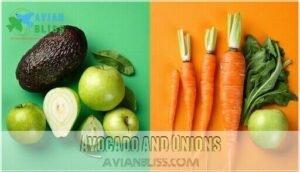
Never underestimate how dangerous avocado and onions are for your feathered friends.
Avocado toxicity occurs from persin, causing heart damage and sudden death in birds.
Onion poisoning happens when sulfur compounds create anemia and digestive problems.
These allium dangers make both foods completely off-limits, and it’s crucial to choose safe alternatives like apples, carrots, and leafy greens instead.
Garlic and Salt
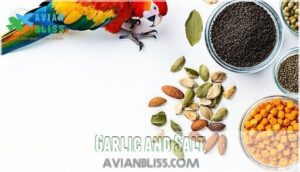
Both garlic and salt create serious health risks for your feathered friends.
Garlic poisoning damages red blood cells, while salt toxicity overwhelms their delicate kidneys.
Even small amounts can prove lethal.
Safe salt levels for birds are practically zero – their bodies can’t process excess sodium like ours.
Skip garlic alternatives and choose birdsafe foods instead.
These harmful foods for birds require zero tolerance in proper bird food safety practices.
Processed Snacks and Junk Food
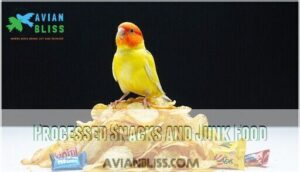
Most processed foods spell trouble for your feathered friend’s health.
Salty snacks and sugary treats contain artificial additives that cause serious harm.
Processed ingredients create long-term health problems you’ll want to avoid.
A balanced diet requires essential vitamins and minerals for peak health.
Here are five toxic processed foods to eliminate:
- Potato chips (salt toxicity risk)
- Candy bars (artificial additives)
- Crackers (choking hazards)
- Cookies (sugar overload)
- Fast food (multiple toxins) which can lead to long-term health problems and salt toxicity risk due to artificial additives.
Nutritional Requirements
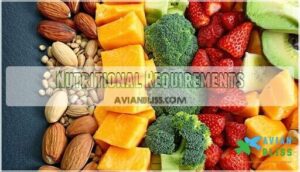
Your pet bird needs a balanced mix of proteins, fats, vitamins, minerals, carbohydrates, and fiber to stay healthy and strong.
You’ll want to understand these basic nutritional building blocks so you can make smart food choices that keep your feathered friend thriving, with a focus on balanced mix.
Proteins and Fats
Your bird’s body runs on protein and fats like a well-tuned engine.
Protein sources include cooked eggs, legumes, and tofu for muscle development. Fat sources like sunflower seeds and peanuts provide energy.
Balance these nutrients carefully – too little protein weakens feathers, while excess fats cause obesity.
Quality birdsafe foods deliver ideal protein needs and fat ratios for healthy avian nutrition.
Vitamins and Minerals
Your feathered friend needs specific vitamins and minerals to thrive.
Your feathered friend deserves nothing less than premium nutrition to soar through life with vibrant health and boundless energy.
Vitamin A benefits include healthy vision and immune function—find it in orange vegetables like carrots and sweet potatoes.
Calcium sources like leafy greens support strong bones, while Vitamin D roles help calcium absorption.
Watch for mineral deficiencies through regular vet checkups.
Balanced supplementation with birdsafe foods guarantees proper vitamin support and mineral balance.
Carbohydrates and Fiber
Complex carbohydrates from whole grains like quinoa and brown rice provide steady energy for your bird’s daily activities.
Fiber sources such as leafy greens and vegetables support healthy digestion and prevent constipation. These grain varieties offer better digestibility factors than processed options.
Fiber benefits include improved gut health and nutrient absorption. Species-specific diets are essential for health.
Balance carbohydrate needs with birdsafe food choices for ideal wellness.
Hydration and Fresh Water
Water quality matters as much as food quality for your bird’s health. Clean, fresh water keeps your feathered friend hydrated and supports proper digestion of safe bird food.
- Water Source Options: Use filtered or bottled water to avoid chlorine and contaminants
- Water Bowl Hygiene: Clean bowls daily with hot water and bird-safe soap
- Fresh Water Frequency: Replace water every 24 hours, more often in hot weather
- Water Quality Concerns: Test tap water for heavy metals and chemicals
- Hydration Importance: Monitor drinking habits for early health problem detection
Safe Feeding Practices
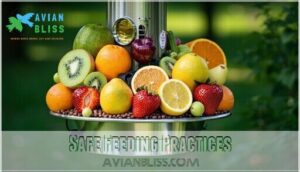
You’ll guarantee your bird stays healthy when you follow proper feeding practices that control timing, portions, and food freshness.
These simple rules help you prevent waste, avoid health problems, and give your pet the best nutrition possible.
Morning Feeding and Rotation
Early risers know the drill – your feathered friend’s feeding schedule matters.
Morning feeding sets the tone for healthy eating habits.
You’ll want to establish consistent meal times while rotating different bird food options throughout the week.
Cockatoos thrive when their diet includes a minimum of 12% protein.
| Day | Morning Portion | Food Type |
|---|---|---|
| Monday | 1/4 cup | Pellets + seeds |
| Tuesday | 1/4 cup | Pellets + fruits |
| Wednesday | 1/4 cup | Pellets + vegetables |
| Thursday | 1/4 cup | Mixed variety |
Portion control prevents waste and maintains water freshness daily.
Fresh Food Supplements
Beyond your bird’s daily pellets, fresh food supplements transform mealtime into a nutritional powerhouse. These bird safe foods boost health while adding excitement to your feathered friend’s routine.
Consider using additional dietary support for peak health.
- Fruit Preparation: Wash apples, berries, and melons thoroughly before serving
- Vegetable Selection: Choose organic kale, carrots, and broccoli for maximum nutrients
- Seed Variety: Rotate sunflower, pumpkin, and flax seeds weekly
- Portion Sizes: Limit treats to 15% of total diet
- Supplement Benefits: Fresh additions prevent deficiencies and boredom
Uneaten Food Removal
Fresh food supplements boost your bird’s health, but timing matters regarding removal. You’ll need to clear uneaten fresh foods within two hours to prevent food spoilage and contamination.
This simple step protects your feathered friend from harmful bacteria. Quick removal prevents waste disposal issues and maintains bird food safety tips effectiveness.
| Time Frame | Action Required |
|---|---|
| 0-2 hours | Monitor consumption closely |
| 2+ hours | Remove all uneaten fresh food |
| Daily | Clean feeders thoroughly |
| Weekly | Deep clean feeding areas |
The provided instructions are crucial for maintaining your bird’s health, emphasizing the importance of fresh food management and proper hygiene practices.
Human Food Limitation
Keep human foods to just 10-15% of your bird’s diet.
While sharing snacks feels natural, portion control matters more than you think.
Most human foods lack balanced nutrition birds need.
Toxic foods for birds like chocolate and avocado hide in everyday meals.
Focus on food variety through bird-specific options instead.
Treat frequency should stay minimal to avoid human food risks and harmful foods.
Species Specific Diets
Your bird’s species determines its specific nutritional needs, and you can’t feed all birds the same way.
Large parrots require different pellet formulations and portion sizes than small finches, which need frequent energy-rich meals to support their fast metabolisms.
Parrots and Large Birds
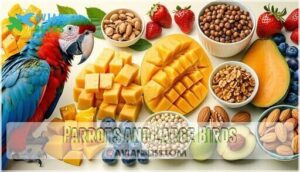
Large parrots like macaws and cockatoos need specialized diets that differ from smaller birds.
Pellet importance can’t be overstated – quality pellets should form 70-80% of their daily intake, as these species-specific formulas address unique dietary needs.
Treat selection matters too – offer fresh fruits and nuts sparingly, and portion control prevents obesity, a common issue in captive large birds.
Small Birds and Finches
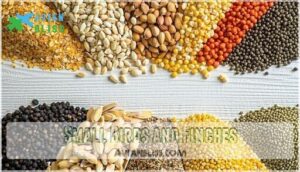
Small birds like finches need frequent feeding with energy-rich meals throughout the day.
Their fast metabolisms demand consistent nutrition to maintain small bird health and meet their specific dietary needs.
Quality finch seed mixes should include:
- Nyjer seeds – goldfinches’ favorite choice
- Millet varieties – perfect for ground-feeding species
- Sunflower seeds – hulled versions reduce mess
- Daily pellet portions – species-specific formulations
- Cracked corn – affordable energy source
Specialty Diets and Consultation
When medical conditions or life stages demand special attention, you’ll need customized feeding plans.
Vet consultation becomes essential for birds with dietary deficiencies or selective eating habits. A qualified bird nutritionist can design species-specific diets targeting your pet’s unique nutritional needs.
Don’t guess with serious health issues—professional diet customization guarantees your feathered friend gets exactly what they need to thrive, ensuring they receive the right amount of nutrients for optimal health, which is made possible by qualified bird nutritionist expertise.
Regular Health Checks and Monitoring
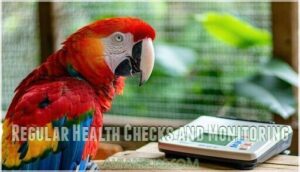
Beyond choosing the right diet, you’ll need to watch your feathered friend like a hawk.
Regular health checks catch problems before they become serious.
Here’s your monitoring checklist:
- Weight Management – Weigh your bird weekly using a digital scale
- Behavior Analysis – Note appetite changes, lethargy, or unusual droppings
- Vet Consultation Frequency – Schedule checkups every six months for early detection
Frequently Asked Questions (FAQs)
What can birds eat?
Birds thrive on a diet of pellets, fresh fruits like apples and berries, vegetables like carrots and spinach, whole grains, unsalted nuts, and seeds.
Avoid toxic foods like chocolate, avocado, caffeine, onions, and garlic.
What can birds eat if they don’t eat birdseed?
Imagine a feast of fresh fruits, crunchy vegetables, and whole grains.
Birds can enjoy apples, berries, spinach, quinoa, and unsalted nuts.
Avoid toxic options like chocolate, avocado, and onions to keep them safe.
What can birds eat if they don’t eat meat?
You can offer fruits like apples, berries, or bananas, and veggies such as carrots or spinach.
Whole grains like quinoa and unsalted nuts work too.
Just avoid avocado, chocolate, caffeine, onions, and garlic.
What vegetables can birds eat?
You might think veggies are tricky for birds, but they’re not.
Birds can enjoy carrots, spinach, kale, broccoli, peas, and sweet potatoes.
Keep them plain, fresh, or steamed, and avoid seasoning altogether.
What can birds eat in winter?
In winter, you can feed birds unsalted nuts, suet, seeds, dried fruits, and plain popcorn.
These high-energy foods help them stay warm.
Avoid salt, chocolate, and avocado to keep them healthy and safe.
What can birds eat if they don’t eat fruit?
Birds that skip fruit can enjoy seeds, nuts, grains, or fresh veggies like spinach and carrots.
Cooked rice, quinoa, and unsalted popcorn work too.
Just avoid salt, chocolate, avocado, and anything overly processed.
What is the safest way to feed birds?
To safely feed birds, use clean feeders and offer fresh, bird-safe foods like seeds, unsalted nuts, and whole grains.
Avoid toxic items like chocolate, avocado, and caffeine.
Clean feeding areas regularly to prevent disease.
What food is safe for birds?
Offer fresh fruits like apples, bananas, and berries.
Add vegetables like carrots and spinach. Include whole grains such as quinoa and plain rice.
Avoid chocolate, caffeine, onions, garlic, and salty or sugary snacks.
What can you feed birds if you don’t have bird seed?
You can feed birds plain cooked rice, quinoa, chopped fruits like apples or bananas (no seeds), raw veggies like carrots or broccoli, unsalted nuts, or even plain oats.
Avoid seasoning, salt, or sugar.
What is the 5 7 9 rule for bird feeders?
Imagine counting feeders like you’d organize your meals.
The 5-7-9 rule means placing feeders 5 feet off the ground, 7 feet apart, and 9 feet from shelter to guarantee comfort and safety for birds, following the 5-7-9 rule.
Conclusion
Choosing safe bird food options might feel like solving the world’s biggest puzzle, but it’s simpler than it seems.
Stick with fresh fruits, vegetables, grains, and high-quality pellets to build a balanced diet.
Avoid toxic foods like chocolate, avocado, and anything processed.
Always provide fresh water and clean your bird’s feeding area daily.
Every bird is unique, so pay attention to their preferences.
A thoughtful diet means healthier, happier birds that thrive under your care.