This site is supported by our readers. We may earn a commission, at no cost to you, if you purchase through links.
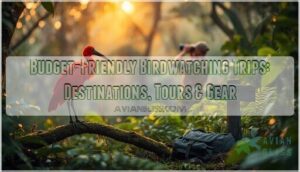
You don’t need a trust fund to chase rare warblers through cloud forests or spot scarlet ibises at sunrise. While premium birding expeditions can cost thousands, some of the world’s most remarkable birding happens at destinations that won’t drain your savings.
Pennsylvania’s state parks offer free access to migration corridors where hundreds of species pass through each spring. Costa Rica’s budget eco-lodges put you in prime rainforest territory for around $100 per day, meals included.
The secret isn’t cutting corners—it’s knowing where passionate birders gather, which seasons bring the best sightings without peak pricing, and how a decent pair of binoculars beats an expensive guided tour every time.
Table Of Contents
- Key Takeaways
- Best Budget-Friendly Birdwatching Destinations in The U.S
- Affordable International Birding Trip Options
- How to Save Money on Birdwatching Trips
- Essential Budget Birdwatching Gear and Equipment
- Planning Your Budget Birding Adventure
- Frequently Asked Questions (FAQs)
- What is the best month for bird watching?
- What are the 5 S’s of birding?
- What is the best state for birdwatching?
- What colors not to wear when birding?
- Whats the best season for budget birding?
- How much should I budget per day?
- Are group tours cheaper than solo travel?
- Which vaccinations are required for African birding?
- Can I rent equipment at birding destinations?
- What food and supplies should I pack?
- Conclusion
Key Takeaways
- You don’t need expensive guided tours to find world-class birding—Pennsylvania’s free state parks, national parks with $30 entrance fees, and self-guided Central American trails deliver remarkable species diversity without draining your wallet.
- Shoulder season travel (spring and fall) cuts lodging costs by 10-40% while catching peak migration patterns, and budget accommodations near hotspots like Costa Rican eco-lodges run $50-150 nightly with meals included.
- Quality birding gear doesn’t require a fortune—binoculars between $60-$200, spotting scopes under $300, and free apps like Merlin Bird ID give you professional-grade tools without the premium price tag.
- Smart planning beats big budgets every time: cluster nearby sites to reduce driving, book budget tour operators with 4.5+ ratings, and prioritize destinations like Texas or Belize where $100 daily covers guided tours, park fees, and lodging.
Best Budget-Friendly Birdwatching Destinations in The U.S
You don’t need to drain your savings to find great birdwatching in the United States. From Pennsylvania’s diverse state parks to nationally protected lands with budget-friendly access, plenty of spots offer outstanding birding without the hefty price tag.
If you’re planning trips abroad, check out these affordable birdwatching tours in Europe that apply the same budget-smart principles to international destinations.
Here are some of the best destinations where your money stretches as far as your binoculars can see.
Pennsylvania State Parks for Birding

Pennsylvania state parks open the door to remarkable bird watching without draining your wallet. You’ll find free or low-cost entry to over 100,000 acres of diverse bird habitats, from wetlands to forests.
Identifying where to find different birds across these varied ecosystems can help you make the most of your visits.
Bald Eagle State Park delivers on its namesake promise, while park trails across the state reveal warblers, thrushes, and raptors during spring and fall migrations. State park maps help you navigate to the best bird species hotspots.
Detailed birdwatching maps near me can pinpoint exactly where warblers and raptors cluster during peak migration windows.
National Parks With Low Entrance Fees

National parks across the U.S. offer budget bird watching with entrance fees under $30 per vehicle, and some locations waive charges on free admission days. You can stretch your budget further with annual passes or by planning visits during off-peak seasons when park entrance fees drop or disappear entirely.
These protected areas maintain excellent birding trails year-round, giving you access to diverse species without breaking the bank.
Many of these birding locations with easy trails also feature boardwalks and paved paths that make wildlife observation accessible for all skill levels.
Free Public Birding Trails and Hotspots
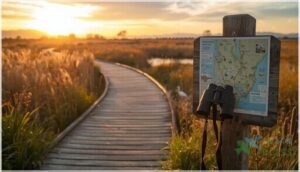
You don’t need deep pockets to find remarkable bird watching locations. Free public access sites across the country let you observe bird migration, track bird species, and support habitat conservation without spending a dime. Trail maps from the National Audubon Society guide you to wildlife refuges where bird counts reveal seasonal patterns, and wildlife conservation efforts protect critical areas you can explore on your own schedule.
- Sandhills Crane Trail, Nebraska – 4.5-mile loop with boardwalks and viewing blinds
- Great Smoky Mountains National Park – Free pedestrian entry on select days with high-elevation birding
- Cape May Bird Observatory, New Jersey – Coastal viewpoints open during regular hours
- Allens Creek Wildlife Management Area, Florida – Free trails showcasing migrant and resident species
- State and County Park Networks – Downloadable maps for self-guided routes at no cost
Important Bird Areas Worth Visiting

Sites recognized by the National Audubon Society and BirdLife International as Important Bird Areas give you front-row seats to bird conservation in action. These biodiversity hotspots protect endangered species during critical breeding and migration periods.
You’ll find bird watching locations that support habitat preservation and wildlife conservation across every continent, many inside wildlife refuges with free or low-cost access to globally significant bird species.
Affordable International Birding Trip Options

You don’t need a fortune to chase birds beyond U.S. borders. Central America and parts of Africa offer remarkable diversity at prices that won’t break the bank, especially when you know where to look.
Here’s where budget-conscious birders can find top-tier experiences without the luxury price tag.
Start with best birding binoculars under $300 that combine sharp optics with weatherproof builds, perfect for enthusiasts who want professional-grade views without breaking the bank.
Costa Rica Budget Birding Tours
Costa Rica birds draw budget-conscious travelers year-round, with wildlife conservation supporting ecotourism across the country. Many birding guides offer tours for $100–$150 per day, including park fees and eco lodges. Here’s what you’ll find in most budget birding tours packages:
- Access to Monteverde, Carara, and Sierpe—regions packed with diverse species
- Small-group birdwatching trips that optimize personal attention
- Short 3–5 day itineraries reducing transportation costs
Belize Guided Tours Under $100 Daily
Several Belize-based tour operators run guided birdwatching trips that clock in under $100 daily, covering the Maya Forest Corridor and coastal wetlands. You’ll spot motmots, toucans, and jabiru storks without breaking the bank. Budget tours usually include shared transport, park entry, and field observation time—ideal for birding on a shoestring.
| Tour Feature | What’s Included | Best For |
|---|---|---|
| Group Departures | Shared rides, guide services | Social birders |
| Off-Peak Pricing | Lower daily rates, fewer crowds | Flexible schedules |
| 1–3 Day Itineraries | Reserve access, basic meals | Weekend explorers |
Self-Guided Birding in Central America
Independent birding adventures across Central America put you in prime rainforest trails and cloud forest habitats where toucans, tanagers, and flycatchers thrive. National parks publish birding maps and trail notes to support DIY budget birding:
- Explore well-marked trails in multiple reserves
- Use affordable day passes at protected areas
- Follow routes near traveler hubs
- Consult maps from park services and NGOs
- Hire local guides when needed
You’ll save money while discovering regional specialties on your own terms.
Eastern Africa Affordable Birding Destinations
Africa delivers stunning wildlife tourism without draining your wallet, especially when you focus on birding over big-game safaris. Kenya’s community-based tours pair budget lodging ($50–$150 nightly) with local guides who know where bird species gather.
Tanzania and Uganda offer shared birding excursions from $20–$150 daily, connecting you to conservation efforts while you spot endemic warblers and sunbirds across savannas and wetlands.
How to Save Money on Birdwatching Trips
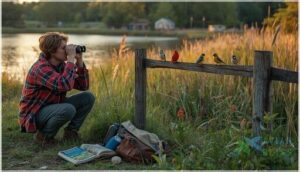
You don’t need a trust fund to enjoy amazing birdwatching adventures. Smart planning and a few strategic choices can slash your costs without sacrificing the quality of your experience.
Here’s how to keep more money in your pocket while still spotting the species you’re after.
Traveling During Shoulder Seasons
Timing your birding adventure for shoulder season—spring and fall—unlocks remarkable travel discounts while catching peak bird migration patterns in full swing. You’ll enjoy mild weather perfect for outdoor recreation, fewer crowds at wildlife conservation efforts sites, and affordable lodging that drops 10–40% below summer rates. Migration season brings active flyways, promotional airfares, and unforgettable encounters without the peak-season price tag.
- Spring warblers filling forests with song as temperatures climb into comfortable ranges
- Fall raptors riding thermals during southbound migration season journeys
- Empty trails where you can hear every chip note and wing beat
- Boutique lodges offering shoulder-season specials near prime birding hotspots
- Airlines releasing promotional fares that make distant destinations suddenly reachable
Budget Accommodations Near Birding Hotspots
You can slash lodging costs dramatically by choosing eco hostels near nature reserves, where beds run under $40 nightly and private rooms hit $60–$90.
Rural guesthouses around birding camps offer rooms at $50–85 with breakfast included, while local homestays near wildlife refuges provide $40–70 accommodations—often with free trail maps.
Budget bird watching tours become accessible when lodges don’t drain your wallet.
Self-Guided Vs. Guided Tour Cost Comparison
Going solo cuts guide fees from your budget bird watching tours, letting you control logistics management and itinerary planning at your own pace.
Guided adventure tours bundle transportation and permits with expert birding tour operations—usually $50–$150 daily for groups—while self-guided trips allow budget negotiation on lodging.
Your travel planning and organization style determines which tour costs make sense for your wallet.
Essential Budget Birdwatching Gear and Equipment
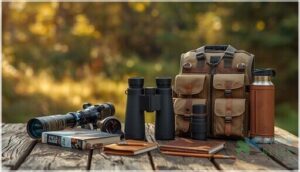
You don’t need to drain your savings account to start watching birds. The right gear makes all the difference between guessing at a bird’s identity and knowing exactly what you’re looking at, but quality equipment doesn’t have to cost a fortune.
Here’s what you actually need to get started without breaking the bank.
Affordable Binoculars for Beginners
You don’t need to empty your wallet for quality binoculars—entry-level models between and 0 deliver solid lens quality and durability for DIY budget birding adventures. Look for these features when comparing binocular reviews:
- 8×32 or 10×42 specifications with fully multi-coated lenses for crisp views
- Center focus systems with diopter adjustment for comfortable birdwatching sessions
- Warranties from 1 to 25 years indicating reliable construction from budget brands
Budget-Friendly Spotting Scopes
After covering binoculars, spotting scopes deserve attention for distant waterfowl and raptors. Budget optics between $60 and $300 offer 20–60x scope magnification with multi-coated lens quality that brightens far-off subjects. Tripod stability matters—look for models under 3.5 pounds with pan-head mounts for birdwatching comfort. These portable scopes transform your birding trips without the premium price tag.
| Feature | Budget Range | Mid-Range |
|---|---|---|
| Price | $60–$150 | $150–$300 |
| Magnification | 15–45x zoom | 20–60x zoom |
| Lens Coating | Multi-coated | Fully multi-coated |
| Weight | 1.5–2.5 lbs | 2.5–3.5 lbs |
Free and Low-Cost Birding Apps
Your smartphone can match your binoculars when budget birding apps deliver field guides, species tracking, and offline modes for free or under $5. Apps like Merlin Bird ID and eBird let you record sightings, browse bird lists, and access app reviews from the birdwatching community—no cellular data needed. Check BudgetBirders.com for top picks that identify bird species on the trail.
- Core field guides available free or at low one-time costs
- Offline access for remote birding locations
- Crowd-sourced sightings expand regional coverage
- Photo and audio notes for later verification
- Integration with eBird data for enhanced checklists
Field Guides and Reference Materials
A well-chosen field guide turns every outing into a learning opportunity for birdwatching. Budget-friendly reference books under cover regional bird species with taxonomy updates, range maps, and illustrated plates for bird identification.
Pair printed guides with field guide apps offering digital libraries and ornithology resources that work offline. Libraries often stock environmental education materials free, helping you master local avifauna without breaking the bank.
Planning Your Budget Birding Adventure

Planning a budget birding trip doesn’t have to be complicated, but a little preparation goes a long way in stretching your dollars and maximizing your chances of spotting great birds.
You’ll want to balance your wish list of species with practical considerations like travel costs, seasonal timing, and the reliability of tour operators.
Here’s how to put together a birding adventure that won’t break the bank.
Researching Top Birding Locations
Finding the perfect birding spot doesn’t require guesswork—it takes smart location scouting. Start by checking current biodiversity reports to pinpoint species-rich areas with easy public access. Your research should include:
- Habitat analysis to match target species with wetlands, forests, or grasslands
- Bird migration patterns and peak seasons for timing your visits
- National park entrance fees to prioritize budget-friendly sites
- Conservation efforts and Important Bird Areas designated by organizations like Audubon
- Practical details like parking, trails, and facilities for smooth birdwatching
Creating a Cost-Effective Itinerary
Once you’ve nailed down your birding hotspots, the real magic happens when you map out a flexible itinerary that maximizes species diversity without maxing out your credit card.
Smart trip optimization means clustering nearby sites to cut driving costs and tracking expenses daily.
Budget bird watching tours can anchor your travel planning, but don’t lock yourself into rigid schedules—leave room for spontaneous detours when you spot something remarkable along the way.
Booking Affordable Transportation Options
Comparing bus fares against rail options can reveal surprising savings—sometimes intercity buses run half the price of trains on the same route.
For nearby birding sites, car sharing platforms let you split fuel costs with fellow enthusiasts, especially when you choose vehicles with strong fuel efficiency.
Weekday off-peak travel and regional transit passes slash transport costs while keeping your budget bird watching tours accessible and sustainable.
Finding Reputable Budget Tour Operators
Checking operator credentials protects your investment and the birds you’ll encounter. Look for Tour Operator Reviews on third-party platforms—scores above 4.5 signal reliability—and verify membership in trade associations like IATA or ABTA.
Budget Bird Watching Tours from companies such as Bindlestiff Tours and ROW Adventures often publish Birding Ethics policies, showing their commitment to Conservation Efforts and Sustainable Tourism practices.
Many tour operators offer budget bird tours that cater to various needs and preferences.
Frequently Asked Questions (FAQs)
What is the best month for bird watching?
Picture warblers flitting through fresh spring foliage or raptors soaring on fall thermals. Migration patterns and seasonal changes make May and September prime months for birdwatching, when weather conditions and habitat variations bring outstanding bird behavior opportunities.
Understanding the role of seasonal bird migrations is vital for planning successful birdwatching trips.
What are the 5 S’s of birding?
The five S’s of birding—shape, shade, size, sound, and space—help you identify birds quickly in the field.
By focusing on structural features, plumage patterns, vocalizations, and habitat context, these elements enhance your birdwatching adventures.
What is the best state for birdwatching?
Texas reigns paramount for birding, hosting over 3 billion birds during spring migration. With 668 species, outstanding Gulf Coast hotspots, and abundant free wildlife refuges, it’s unbeatable for budget-conscious nature tourism.
What colors not to wear when birding?
Avoid bright neons, white, and shiny fabrics when birding—they spook birds. Stick to neutral tones and earthy shades that blend with nature. Muted hues in camouflage clothing help you get closer during birdwatching adventures.
Whats the best season for budget birding?
Shoulder season is hands down the golden ticket for budget birders. You’ll catch stunning migration patterns and seasonal bird activity while slashing flights and lodging costs, making travel planning tips from BudgetBirders.com essential for independent birding adventures.
How much should I budget per day?
Daily cost estimates for travel expenses depend on your style—camping and self-catering can keep you around $75-150 per person, while guided Budget Bird Watching Tours with meals often run $100-200 daily.
Are group tours cheaper than solo travel?
It depends—group tours split transportation and guide fees, lowering per-person costs, while solo independent birding offers rock-bottom savings if you’re comfortable planning your own birding trip without group discounts.
Which vaccinations are required for African birding?
You’ll need Yellow Fever, Hepatitis A and B shots, Typhoid vaccination, and Meningococcal vaccine for most African birding destinations.
Rabies prevention is smart if you’re heading into remote wildlife conservation areas.
Can I rent equipment at birding destinations?
Yes, many local outfitters and birding tour operators offer equipment rentals at popular destinations. Rental fees for binoculars and spotting scopes generally run $10-25 daily, helping outdoor enthusiasts reduce upfront gear costs.
What food and supplies should I pack?
Pack calorie-dense foods like trail mix and jerky, plus 2 liters of water for all-day birding experiences.
Don’t forget sun protection, insect repellent, and a compact first aid kit for outdoor enthusiasts.
Conclusion
What if the trip that changes everything costs less than you think? Budget-friendly birdwatching trips prove that remarkable moments don’t require premium pricing—just curiosity and decent timing.
Pennsylvania’s migration corridors, Costa Rica’s rainforest lodges, and free public trails deliver species diversity that rivals luxury expeditions.
Your binoculars matter more than your budget. Pack light, travel smart, and let the birds lead you somewhere unforgettable.
- https://elsevier.blog/sub-points-outlining-organization/
- https://mcluhan.unk.edu/lawson/?page_id=187
- https://github.com/vinhphunguyen/how-to-write-a-paper/blob/master/how-to-write-paper.out
- https://www.audubon.org/news/safety-tips-better-birding
- https://www.pa.gov/agencies/dcnr/recreation/where-to-go/state-parks/find-a-park/bald-eagle-state-park/wildlife-watching