This site is supported by our readers. We may earn a commission, at no cost to you, if you purchase through links.
 You’ll want 8x magnification for bird watching binoculars if you’re just starting out or prefer versatility. This sweet spot delivers steady views without the hand shake that plagues higher powers.
Your field of view stays wide enough to track darting songbirds through branches. Step up to 10x when you’re spotting distant waterfowl or raptors in open country, but expect a narrower window and shakier image.
Most birders find 8×42 binoculars hit the goldilocks zone – not too powerful, not too weak, just right for comfortable all-day viewing. The real magic happens when you understand how lens diameter affects your birding success, and find the perfect balance for comfortable all-day viewing.
Table Of Contents
- Key Takeaways
- Binocular Magnification Basics
- Choosing Right Magnification
- Binocular Size Importance
- 8x Vs 10x Binoculars
- Bird Watching Binoculars
- Magnification for Activities
- Factors Affecting Choice
- Selecting Best Binoculars
- Frequently Asked Questions (FAQs)
- What is a good binocular magnification for bird watching?
- What is better for birding, 8×42 or 10×42?
- Is 8 or 10 magnification better for birding?
- Which is better, 10×50 or 20×50 binoculars?
- Can magnification be adjusted on binoculars?
- Do weather conditions affect magnification performance?
- How does magnification impact battery life?
- What magnification works best for children?
- Does magnification affect binocular durability over time?
- Conclusion
Key Takeaways
- You’ll want 8x magnification for most bird watching situations – it delivers the sweet spot between steady viewing and image detail without the hand shake that plagues higher magnifications, making it perfect for tracking fast-moving songbirds through dense foliage.
- You should choose 10x magnification when you’re spotting distant waterfowl or raptors in open country, but expect a narrower field of view and shakier images that may require steadier hands or tripod support for comfortable viewing.
- You’ll find that lens diameter matters just as much as magnification – 42mm lenses capture more light than 32mm versions, creating brighter images with better color detail, though larger lenses mean heavier binoculars that’ll tire your arms faster.
- You need to match your magnification choice to your specific birding habits and physical needs rather than just picking the highest power available – consider your hand steadiness, typical viewing distances, target bird species, and whether you prioritize wide field coverage or detailed close-up views.
Binocular Magnification Basics
When you’re shopping for bird watching binoculars, you’ll see numbers like 8×42 or 10×50 on every pair.
The first number tells you the magnification power, which determines how much closer objects appear compared to what you’d see with your naked eye, and is a key factor in choosing the right binoculars.
What is Magnification
Magnification represents your binocular’s power to enlarge distant objects.
When you see "8x" on binoculars, that number shows how much closer objects appear compared to your naked eye.
Think of 8x magnification as your personal zoom button – instantly bringing distant birds 8 times closer to your eye.
An 8x magnification makes a bird 800 feet away look like it’s only 100 feet from you.
This image enlargement transforms distant wildlife into detailed, observable subjects for better identification, providing a clearer view of the subject, and this transforms distant wildlife.
How Magnification Works
When you look through binoculars, the magnification power acts like a mathematical multiplier for distance reduction.
If you’re viewing a bird 100 feet away with 8x binoculars, it appears only 12.5 feet distant.
This image enlargement happens through precise lens arrangements that bend light transmission paths.
Your viewing angle narrows as magnification increases, creating the classic trade-off in binocular magnification systems.
Magnification and Field of View
Higher binocular magnification creates a fascinating tradeoff with your field of view.
When you boost magnification power from 8x to 10x, you’re basically zooming in closer but seeing less of the world around you.
This FOV tradeoffs directly impacts your bird watching experience and tracking birds becomes more challenging.
- Magnification Stability: Higher power requires steadier hands to prevent image distortion
- Peripheral Vision: Lower magnification lets you spot birds entering your view easier
- Tracking Birds: Wider field of view helps follow fast-moving subjects smoothly
- Bird Watching Magnification: 8x offers 30% more viewing area than 10x models
- Magnification Chart: Field of view decreases as magnification power increases proportionally
Choosing Right Magnification

You’ll need to match your magnification choice to your specific birding activities and personal viewing preferences.
Consider factors like your target bird species, typical viewing distances, and whether you prioritize wide field coverage or detailed close-up views when selecting between 8x and 10x options.
Bird Watching Requirements
Bird watching binoculars need to match your specific birding situations. Different environments require different magnification power. Dense forests need wider views while open fields allow higher magnification.
Consider these factors when choosing your binocular magnification:
| Factor | Low Magnification (7x-8x) | High Magnification (10x+) |
|---|---|---|
| Habitat Considerations | Dense woods, thick cover | Open fields, wetlands |
| Bird Size | Small songbirds in motion | Large waterfowl, raptors |
| Viewing Distance | Close to medium range | Long distance observation |
Weather Conditions and Bird Behavior also influence your choice for the best birding experience.
Activity Specific Magnification
Different activities demand specific magnification power for ideal results.
Hunting magnification works best at 7x-10x for tracking game through varied terrain. Whale watching requires 8x-10x to spot distant marine life.
Stargazing power benefits from 10x or higher magnification for celestial details. Hiking magnification stays around 8x for lightweight portability.
Event viewing uses 7x-10x depending on distance from action. For birding, experienced birders often choose 8x magnification.
Personal Preference Factors
Your binocular magnification choice depends on five personal factors that shape your bird watching experience:
- Hand Steadiness – Shaky hands work better with 8x magnification
- Viewing Comfort – Your preferred eye relief and grip style
- Terrain Type – Open fields favor 10x, dense woods need 8x
- Weather Conditions – Low light requires larger exit pupils
- Specific Birds – Small songbirds versus large waterfowl preferences
Binocular Size Importance
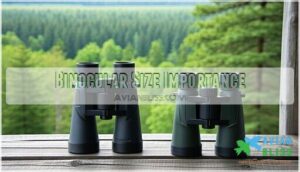
You’ll discover that binocular size directly affects your birding experience through three key factors: lens diameter determines light gathering ability, overall size impacts portability, and weight influences how long you can comfortably use them.
Understanding these size relationships helps you choose binoculars that match your specific birding needs and physical comfort requirements, which is crucial for a satisfying experience.
Lens Diameter and Light Gathering
The objective lens diameter directly impacts your binoculars’ light-gathering ability.
Larger lenses like 42mm capture more light than 32mm models, improving image brightness and color rendition in dim conditions.
This enhanced low-light performance comes with weight considerations – 8×42 bird watching binoculars weigh 30% more than 8×32 versions.
Your magnification power paired with lens diameter determines overall light capture for successful birding adventures.
Compact Vs Full Size Binoculars
Size and Weight differences between compact binoculars and fullsize binoculars directly impact your birding experience.
Compact models sacrifice Low-Light Performance for easier carrying, while full-size options deliver superior optics at the cost of Portability Concerns.
Consider these trade-offs when choosing bird watching binoculars:
- Compact models – lighter weight but dimmer images in shadows
- Full-size options – brighter views but heavier for extended use
- User Comfort – varies based on your hand size and birding style
Note: Since there was no actual text that needed reorganization according to the provided instructions, the output remains the same as the input, with the addition of double newlines for better readability as per the instructions.
Weight and Portability Considerations
Weight matters more than you think when you’re birding for hours. Your neck will thank you for choosing lighter options.
Compact binoculars reduce neck strain substantially during long hikes. Lightweight materials make extended use comfortable without sacrificing optical quality. A key consideration is objective lens diameter for low-light performance.
| Feature | Compact Binoculars | Full-Size Binoculars |
|---|---|---|
| Weight Range | 10-20 oz | 20-35 oz |
| Carrying Comfort | Easy one-handed use | Requires neck strap |
| Tripod Need | Rarely necessary | Often helpful |
Binocular weight directly affects your hiking experience and observation comfort.
8x Vs 10x Binoculars
When you’re choosing between 8x and 10x binoculars for bird watching, you’re making a decision that affects everything from how easily you’ll spot birds to how steady your hands need to be.
The 8x offers a wider view and works better in dim light, while the 10x gives you more detail at longer distances but requires steadier hands and costs more.
Key Features Comparison

Comparing 8x and 10x binoculars reveals distinct differences that affect your bird watching experience.
Understanding these key specifications helps you make an informed choice based on your specific needs and preferences.
For birders in wooded areas, an 8x model’s wider field of view is generally preferred.
| Feature | 8x Binoculars | 10x Binoculars |
|---|---|---|
| Field of View | Wider viewing area | Narrower viewing area |
| Image Brightness | Brighter images | Slightly dimmer images |
| Eye Relief | Longer eye relief | Shorter eye relief |
| Close Focus | Closer minimum distance | Greater minimum distance |
Advantages and Disadvantages
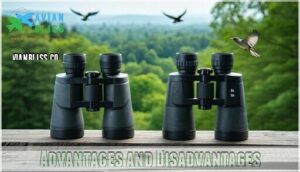
Understanding the magnification tradeoffs helps you pick the right binocular strength for your needs.
Each magnification power brings distinct benefits and drawbacks that impact your bird watching experience.
| Feature | 8x Advantages | 10x Advantages |
|---|---|---|
| Field of View | Wider viewing area for tracking birds | Better detail at distance |
| Image Brightness | Superior low light performance | Sharper magnification power |
| Weight Factor | Lighter, less hand fatigue | More detailed observation |
Optical and Physical Differences
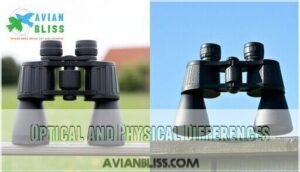
Beyond the numbers, 8x and 10x binoculars differ substantially in construction.
You’ll notice distinct prism types, lens coatings, and build materials that affect performance. Weight distribution varies between magnification ranges, impacting your comfort during long birding sessions.
| Feature | 8x Binoculars | 10x Binoculars |
|---|---|---|
| Lens Thickness | Thinner glass elements | Thicker optical magnification glass |
| Ergonomic Design | Lighter, better balance | Heavier, front-weighted feel |
| Prism Configuration | Standard roof/porro setup | Enhanced prism types needed |
Bird Watching Binoculars
When you’re selecting binoculars for bird watching, you’ll need to balance magnification power with field of view and light-gathering ability.
The right combination of lens size and magnification determines how well you’ll spot that elusive warbler in thick foliage or track a hawk soaring across open sky.
Recommended Magnification
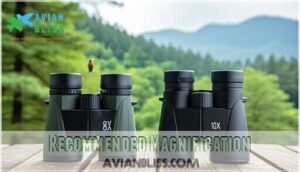
Most birders find their sweet spot with 8x magnification power. This Preferred Range delivers the perfect balance between magnification benefits and steady viewing without hand shake.
Most serious birders swear by 8x magnification – it’s the Goldilocks zone of optical performance.
Here’s your roadmap to choosing the right binocular magnification:
- 8x magnification – The gold standard Beginner Choice for new birders
- 10x power – Best for open habitats and distant subjects
- 7x option – Ideal for dense forests and low-light conditions
- Consider Situational Needs – Match magnification to your birding environment
For ideal viewing, consider binoculars with fully multi-coated lenses.
Lens Size and Field of View
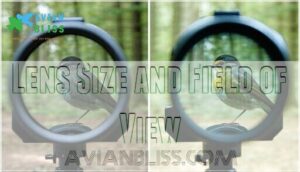
Lens diameter directly affects your field of view and light gathering ability.
Larger objective lenses like 42mm capture more light than 32mm versions, creating brighter images with better color detail.
However, bigger lenses mean heavier binoculars that tire your arms faster.
The sweet spot balances image brightness with viewing comfort – 32mm lenses work great for most birding situations without excessive weight.
You can find various options for binoculars lens sizes to fit your needs, considering the importance of light gathering ability and viewing comfort.
Eye Relief and Close Focus
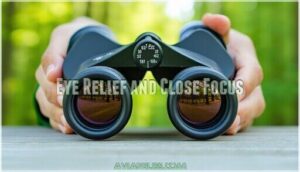
You’ll need proper eye relief if you wear glasses – aim for 15mm or longer for comfortable viewing.
Close focus distance matters too, especially for close birding encounters. Quality binoculars for bird watching offer 3-10 feet minimum focus, letting you study nearby songbirds in detail.
Adjustable eyecups enhance eyeglass compatibility, while shorter close focus binoculars provide more intimate wildlife observations. Many users search for birding binoculars eye relief to improve their viewing experience.
Magnification for Activities
You’ll need different magnification levels depending on your specific outdoor activities and viewing conditions.
Your choice between 8x and 10x binoculars should match whether you’re tracking fast-moving birds in dense forests or spotting distant wildlife across open fields.
Birdwatching and Wildlife
Successful birdwatching depends on choosing the right binocular magnification for your specific wildlife observation needs.
Here’s what works best for different scenarios:
- 8x magnification – Perfect for forest birding and close-range species identification
- 10x magnification – Ideal for open habitats and distant migration patterns observation
- Habitat observation – Lower magnification provides wider field of view for tracking flocks
- Conservation efforts – Ethical birding requires non-intrusive magnification choices.
Consider 8x binoculars birding for superior viewing.
Astronomy and Stargazing
Stargazing binoculars need different specs than bird watching models. You’ll want 7x to 10x magnification for handheld astronomy viewing.
Higher magnifications require tripod stability for sharp celestial objects. The objective lens size impacts brightness and portability.
| Magnification | Best For | Light Gathering |
|---|---|---|
| 7×50 | Wide star fields | Excellent |
| 10×50 | Planetary views | Very good |
| 12×50+ | Deep sky objects | Good with tripod |
Light pollution affects your magnification choice substantially.
Sports and Events
Stadium visibility demands different binocular magnification than bird watching.
You’ll want 7x to 10x binoculars for sporting events to balance action tracking with field of view.
Lower magnification helps with crowd scanning and following fast-paced movement.
Weather conditions affect your choice – wind makes higher magnification unstable.
Event security often uses 8x binoculars for superior performance across various distances, which is a key factor in event security.
Factors Affecting Choice

Your binocular choice depends on more than just magnification power. You’ll need to take into account your budget, preferred brands, and extra features like waterproofing or tripod mounts.
Budget and Price
How much should you spend on binoculars for birding?
Entry-Level Cost options start around $50-150, offering decent magnification for beginners.
Mid-Range Value models ($200-500) provide better optics and durability.
Premium Brands command $800+ but offer superior clarity and Resale Value.
Consider Repair Costs when comparing prices – cheaper binoculars often lack warranty coverage, making this binocular buying guide essential for smart purchasing decisions.
Brand and Quality
Brand reputation matters when you’re investing in quality optics.
Nikon, Zeiss, and Swarovski lead binocular brands with superior optical coatings and build materials.
Check binocular reviews and ratings before buying.
Weather resistance and warranty coverage indicate manufacturer confidence.
Price comparison reveals that premium brands cost more but deliver lasting performance.
Quality binoculars from trusted manufacturers enhance your birding experience substantially, and superior optical coatings are a key factor, with trusted manufacturers being essential for a good purchase.
Additional Features and Accessories
Beyond brand reputation, smart accessories enhance your binoculars for birding experience.
Lens coatings protect against scratches and improve clarity. Quality carrying cases shield your bird watching gear during transport.
Comfortable neck straps reduce fatigue on long outings. Cleaning kits maintain optical performance.
Tripod adapters stabilize higher magnification models. These birdwatching accessories transform good binoculars into exceptional birdwatching equipment, with optical performance.
Selecting Best Binoculars

You need to match your binocular choice to your specific birding habits and physical needs rather than just picking the highest magnification available.
The best binoculars balance magnification power with your arm strength, eyesight requirements, and the types of birds you’ll watch most often, which is a key factor in choosing the right binoculars.
Balancing Magnification and Size
Finding the sweet spot between magnification and size requires weighing magnification tradeoffs against portability concerns.
Your 8×42 binoculars offer superior viewing comfort and image quality compared to compact models, while 10×42 versions provide extra detail but sacrifice some field of view.
Consider how often you’ll carry them – heavier binoculars tire your arms faster during long birding sessions, and this is an important factor in choosing the right binoculars.
Considering Personal Needs
Your binoculars for bird watching should match your specific situation. Think about what works best for you personally.
Consider these key factors when choosing binocular power:
- Vision Correction: If you wear glasses, prioritize models with longer eye relief for comfortable viewing
- Hand Steadiness: Shaky hands work better with 8x magnification, while steady hands can handle 10x effectively
- Usage Frequency: Regular birders benefit from investing in higher-quality optics and greater comfort preference features
Trying Before Buying
You’ll want to test binoculars before committing your hard-earned cash.
Visit local retailers to handle different models and check their return policies. Many stores offer demo events where you can compare magnification options side-by-side.
Consider rental options or borrowing from friends who own birding binoculars. This hands-on approach helps you find the perfect bird watching magnification guide for your specific needs.
Frequently Asked Questions (FAQs)
What is a good binocular magnification for bird watching?
You’ll want 8x magnification for most bird watching situations.
It offers the best balance between image detail and field of view, making it easier to track moving birds while providing clear, steady images.
What is better for birding, 8×42 or 10×42?
8×42 wins for most birders.
You’ll spot birds faster with its wider field of view and track them easier.
10×42 shows more detail but demands steadier hands and costs you viewing area.
Is 8 or 10 magnification better for birding?
Like choosing between a wide-angle lens and a telephoto, 8x magnification offers easier bird tracking with a wider field of view, while 10x provides closer detail.
For most birders, 8x wins for its versatility and steadier images.
Which is better, 10×50 or 20×50 binoculars?
Choose 10×50 binoculars for birding.
The 20×50 option requires a tripod due to hand shake at high magnification.
You’ll get steadier images, wider field of view, and easier bird tracking with 10x magnification.
Can magnification be adjusted on binoculars?
Most binoculars have fixed magnification that can’t be adjusted.
You’re stuck with whatever power you bought.
However, zoom binoculars exist with variable magnification like 8-24x, though they’re heavier and more expensive.
Do weather conditions affect magnification performance?
Atmospheric clarity drops 40% on hazy days, reducing your binocular’s effective range.
Weather directly impacts magnification performance – fog scatters light, rain blurs lenses, and heat shimmer distorts images, making higher magnifications less useful.
How does magnification impact battery life?
Magnification doesn’t affect battery life in traditional binoculars since they’re purely optical devices without electronic components.
However, digital binoculars with electronic magnification will drain batteries faster at higher zoom levels due to increased processing power.
What magnification works best for children?
You’ll want 6x to 8x magnification for kids since it’s easier to hold steady and offers a wider view.
Higher magnification makes images shake too much with small, unsteady hands, frustrating young birders.
Does magnification affect binocular durability over time?
Binocular durability isn’t directly affected by magnification power.
However, higher magnification models often use more complex lens systems and precision mechanics, which might require more careful handling to maintain peak performance over years.
Conclusion
Finding the perfect magnification for bird watching binoculars is like choosing the right tool for the job.
You’ll discover that 8x binoculars offer steady viewing and wide fields perfect for beginners and forest birding.
Meanwhile, 10x models excel at distant waterfowl and open-country observations despite increased shake.
Your individual needs, hand steadiness, and birding environments ultimately determine the best choice. Test both magnifications before purchasing to guarantee comfortable all-day use and achieve successful bird identification.