This site is supported by our readers. We may earn a commission, at no cost to you, if you purchase through links.
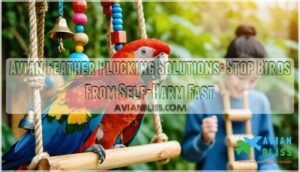 When your feathered friend starts plucking, you’re witnessing a cry for help that demands immediate attention.
Effective avian feather plucking solutions begin with identifying the root cause—whether it’s medical issues like skin infections, environmental stressors, or behavioral problems stemming from boredom or anxiety.
You’ll need to create a thorough approach that includes veterinary evaluation, environmental enrichment with rotating toys, proper nutrition, and consistent routines.
Don’t underestimate the power of social interaction and mental stimulation in breaking this destructive cycle.
Understanding the subtle warning signs and implementing targeted interventions can mean the difference between a healthy, vibrant bird and one trapped in self-destructive patterns.
Table Of Contents
- Key Takeaways
- Feather Plucking Signs
- Medical Causes Diagnosis
- Environmental Factors Matter
- Behavioral Modification Techniques
- Treatment and Prevention Plans
- Frequently Asked Questions (FAQs)
- Is feather plucking bad for birds?
- Is feather plucking a normal avian activity?
- How do you prevent or stop Feather plucking in birds?
- What is feather plucking in birds?
- Is feather plucking a habit?
- How to stop a bird plucking its feathers?
- What can I spray on my bird to stop plucking?
- What is the treatment for feather plucking?
- How do I stop feather picking?
- Can feather plucking spread to other birds?
- Conclusion
Key Takeaways
- Address medical causes first – You will need a veterinary evaluation to rule out infections, parasites, nutritional deficiencies, or hormonal imbalances that drive 40% of plucking cases before attempting behavioral solutions.
- Create environmental enrichment – You can prevent boredom-induced plucking by rotating toys weekly, providing foraging opportunities, maintaining proper humidity levels (50-60%), and ensuring adequate cage space for natural behaviors.
- Use positive reinforcement training – You will stop destructive cycles more effectively through clicker training and reward systems that reinforce healthy preening rather than punishing plucking behaviors.
- Establish consistent routines and stress management – You need to maintain daily schedules, provide mental stimulation through puzzle feeders, and create calming environments with soft lighting to prevent the 15% relapse rate common in treated birds.
Feather Plucking Signs
You’ll notice the warning signs of feather plucking before the behavior becomes severe and causes permanent damage.
Catching feather plucking early prevents permanent damage to your bird’s health and appearance.
Early detection lets you address the underlying causes quickly, whether they’re medical issues like infections or behavioral problems like stress and boredom.
Recognizing Bald Patches
Looking closely at your bird’s chest, neck, and wing areas reveals telltale signs of feather loss.
Bald patches typically appear symmetrically when birds self-pluck, creating distinctive patterns that differ from natural molting.
You’ll notice these bare spots often cluster around easily accessible areas where your bird can reach comfortably.
Check for skin lesions beneath missing feathers—healthy skin should appear pale pink, not inflamed or irritated, and be aware of the overall health of the skin.
Identifying Damaged Feathers
Damaged feathers tell their own story through careful feather inspection.
You’ll spot broken, frayed, or chewed feather tips that reveal unhealthy preening habits.
Check feather texture regularly – healthy plumage feels smooth and intact, while feather damage creates rough, brittle surfaces.
These visual clues help distinguish normal molting from destructive feather plucking behavior patterns.
Observing Excessive Grooming
Normal preening becomes concerning when your bird spends hours obsessively working the same feathers.
Watch for repetitive motions that go beyond typical grooming habits—excessive pecking, nibbling, or manipulating feathers signals underlying plucking triggers.
Healthy feather care involves brief, purposeful sessions, while problematic bird behavior includes constant, frantic preening that prevents other activities like eating or socializing, indicating a potential issue with underlying plucking triggers and affecting overall bird well-being due to excessive pecking.
Noticing Red Irritated Skin
Red patches tell a troubling story about your bird’s distress. Skin irritation from feather plucking creates visible inflammation that demands immediate attention.
**Angry red skin reveals your bird’s silent suffering—immediate action prevents permanent damage.
Watch for these critical irritation signs:
- Bright red welts – Fresh skin lesions indicate active plucking episodes
- Swollen areas – Tissue inflammation signals potential skin infections brewing beneath
- Raw patches – Open wounds increase infection risk and require urgent feather loss treatment
Redness causes range from bacterial invasion to self-trauma cycles. Effective feather plucking remedies start with proper avian skin care assessment. Understanding feather plucking causes is vital for developing a thorough treatment plan.
Medical Causes Diagnosis
When your bird won’t stop plucking, the root cause often lies in hidden medical issues that require professional diagnosis.
You’ll need to work with an avian veterinarian to identify whether infections, allergies, nutritional deficiencies, or other health problems are driving this destructive behavior.
Skin Irritation and Infections
Skin infections pose serious threats to your bird’s health, triggering relentless feather plucking cycles.
Bacterial dermatitis creates inflamed, itchy patches that birds can’t resist scratching. Fungal irritation spreads quickly in humid environments, while feather mites burrow deep into follicles.
Parasite control requires immediate veterinary intervention—these microscopic invaders won’t disappear on their own. Proper avian skin care prevents most infections before they start.
Allergies and Hormonal Imbalances
You’ll discover that allergies and hormonal imbalances often masquerade as mysterious culprits behind your bird’s feather plucking.
Allergy testing reveals common triggers like peanuts, corn, and environmental irritants, while hormonal imbalances create weekly veterinary cases with aggressive behaviors.
Your bird’s immune systems react unpredictably, making stress management vital.
Hormone therapy and targeted feather growth supplements support feather regrowth, though thorough avian feather care requires addressing both conditions simultaneously for effective feather plucking prevention.
Understanding feather plucking causes is essential for developing a successful treatment plan.
Nutritional Deficiencies and Toxicity
Poor nutrition wreaks havoc on your bird’s feathers faster than you’d expect.
Vitamin Deficit strips away feather strength, while Mineral Imbalance creates brittle plumage that breaks easily.
Toxic Foods like avocado or chocolate trigger Seed Poisoning, and Heavy Metals from contaminated feed cause severe toxicity.
Smart diet optimization with proper feather growth supplements prevents these nutritional deficiencies effectively, utilizing proper feather care to maintain health.
Diagnostic Methods and Tests

Several diagnostic tests help pinpoint medical causes behind your bird’s feather plucking behavior.
Blood tests reveal nutritional deficiencies and organ dysfunction, while skin scrapings detect parasites or fungal infections.
X-rays identify internal issues, and endoscopy examines hard-to-reach areas.
Cytology tests analyze skin cells, and biopsies provide definitive tissue analysis when other diagnostic tests prove inconclusive, helping to identify the underlying cause of the bird’s behavior, such as parasites.
Environmental Factors Matter

Your bird’s environment plays a vital role in preventing feather plucking behavior, as poor living conditions often trigger this destructive habit.
You’ll need to address four key environmental factors: proper humidity levels, balanced nutrition, adequate cage space, and sufficient social interaction to keep your feathered friend healthy and content.
Humidity and Air Quality Importance
Environmental air quality directly impacts your bird’s respiratory health and feather condition.
Poor ventilation creates stale air that promotes bacterial growth and stress-related plucking behaviors.
- Humidity Control: Maintain 50-60% humidity levels to prevent dry, brittle feathers that birds compulsively remove
- Air Purification: Install HEPA filters to eliminate dust, dander, and airborne irritants triggering plucking episodes
- Ventilation Systems: Support proper airflow without drafts to support healthy respiratory function and feather development
- Climate Regulation: Monitor temperature consistency to reduce environmental stress that leads to self-destructive behaviors
Effective air purification systems utilize HEPA air filters to improve indoor air quality.
Diet and Nutrition for Feather Health
Your bird’s diet serves as the foundation for healthy feather development and can make or break your plucking prevention efforts.
A balanced parrot diet featuring high-quality pellets as the base, supplemented with fresh vegetables and fruits, provides essential nutrients that combat nutritional deficiencies triggering self-destructive behaviors.
Addressing a bird’s plucking often requires identifying potential stress and boredom triggers.
| Food Category | Daily Percentage | Key Benefits |
|---|---|---|
| Pellet Foods | 60-70% | Complete nutrition base |
| Fresh Vegetables | 15-20% | Vitamin A, minerals |
| Healthy Treats | 5-10% | Omega-3, enrichment |
Nutrient supplements and specialized feather growth formulas can accelerate recovery when dietary improvements alone aren’t sufficient.
Cage Size and Cleanliness Standards
Adequate cage dimensions prevent stress-induced feather plucking.
Your bird needs sufficient cage depth for wing extension and proper bar spacing to prevent injury.
Establish consistent cleaning schedules with sanitation protocols that include daily spot-cleaning and weekly deep sanitization.
Maintain ventilation systems for fresh airflow while ensuring cage size accommodates natural behaviors and environmental enrichment opportunities, which support overall well-being through proper bar spacing.
Social Interaction and Exercise Needs
Beyond simply providing Bird Socialization opportunities, you’ll need to address your bird’s Exercise Routines and Playtime Activities for ideal mental health.
Interactive social interaction prevents isolation-induced plucking behaviors through Environmental Enrichment strategies.
- Daily flight time strengthens wing muscles and reduces anxiety
- Foraging activities mimic natural hunting behaviors for Mental Stimulation
- Rotating parrot toys weekly prevents boredom and encourages exploration
- Scheduled playtime creates predictable routines that reduce stress triggers
Understanding bird social behaviors, including their complex social hierarchies, is essential for creating effective enrichment strategies.
Behavioral Modification Techniques
You can redirect your bird’s destructive plucking behavior through proven training methods that reward healthy habits instead of punishing bad ones.
Consistent positive reinforcement combined with environmental changes helps break the psychological cycle that drives compulsive feather pulling, using positive reinforcement to achieve this goal.
Positive Reinforcement Training
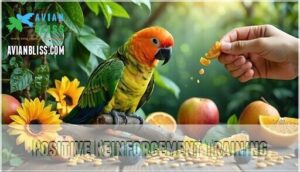
Consistently implementing positive reinforcement transforms destructive feather plucking into healthy behaviors through reward systems and behavioral therapy.
You’ll discover that training methods using verbal praise and treats create lasting changes without punishment.
Target training with consistent timing strengthens desired actions, while behavioral training sessions build trust.
This avian behavioral therapy approach proves more effective than aversive techniques, offering genuine feather plucking solutions through systematic bird behavior modification.
Clicker Training and Reward Systems

You’ll transform your bird’s destructive habits using clicker training’s precise timing and consistent reward systems.
This evidence-based approach creates clear communication between you and your feathered friend, making behavioral modification both effective and enjoyable.
- Start training sessions with a distinct clicker sound followed immediately by healthy treats
- Use behavioral rewards like verbal praise, favorite foods, or brief social interaction
- Apply clicker methods during positive preening behaviors to reinforce healthy grooming
- Implement training tools consistently, clicking the moment your bird displays desired behaviors
- Schedule positive reinforcement sessions 2-3 times daily for maximum effectiveness
Environmental Enrichment Strategies

Creating an enriching habitat involves strategic toys rotation and thoughtful cage setup to combat boredom effectively.
You’ll need varied lighting options and noise reduction measures to establish comfort zones.
Incorporate foraging activities like hidden treats in paper cups or puzzle feeders that mimic natural behaviors.
Environmental enrichment through perches of different textures, mirrors, and interactive elements creates a stimulating environment that redirects destructive impulses into healthy exploration and play.
Reducing Stress and Anxiety Methods

Multiple calming techniques can dramatically reduce your bird’s stress levels and prevent destructive plucking behaviors.
Implement consistent routines, soft lighting, and quiet environments for effective stress management.
Environmental enrichment through foraging toys provides anxiety reduction while gentle music offers relaxation methods.
These behavioral interventions create emotional support systems that address underlying anxiety management needs through proven stress reduction strategies, which can be part of a broader approach to overall anxiety reduction.
Treatment and Prevention Plans

Developing an effective treatment plan requires professional veterinary assessment combined with targeted behavioral interventions.
You’ll need to address both immediate medical concerns and long-term environmental modifications to prevent your bird from returning to destructive plucking habits, which is crucial for a successful treatment.
Veterinary Intervention and Guidance
Beyond behavioral training, your bird needs professional medical evaluation.
Vet consultation provides thorough health screening through blood tests and diagnostic imaging to identify underlying causes.
An avian veterinarian delivers accurate medical diagnosis, distinguishing between physical ailments and behavioral issues.
Professional veterinary intervention guarantees proper feather repair protocols and bird rehabilitation strategies.
Expert avian therapy combined with systematic bird health management creates effective feather plucking solutions through targeted veterinary care, ensuring the overall well-being of your bird with proper feather care and bird rehabilitation.
Dietary Changes for Feather Growth
Since nutritional deficiencies directly contribute to weak feathers and compulsive plucking behaviors, you’ll need targeted dietary solutions to restore healthy feather growth.
Balanced parrot diets with proper supplementation strategies address nutrient imbalances that fuel this destructive cycle. A well-planned parrot diet should include essential parrot food supplements to promote healthy nutrition.
- Nutrient Supplements: Add vitamin A, E, and essential fatty acids through vet-approved vitamin therapy to strengthen feather structure
- Feather Nutrition: Incorporate protein-rich healthy snacks like cooked quinoa and legumes to support keratin production
- Balanced Diets: Replace seed-only diets with high-quality pellets plus fresh vegetables for thorough nutritional support
Creating a Stimulating Environment
When you transform your bird’s space into an engaging haven, you’re tackling feather plucking at its roots.
Toys Rotation keeps birds curious—swap enrichment activities weekly to prevent boredom. Your Cage Setup should include interactive foraging toys that challenge their minds naturally.
| Mental Stimulation Strategy | Environmental Enrichment Type | Social Stimulation Benefit |
|---|---|---|
| Puzzle feeders challenge intelligence | Natural branch perches vary texture | Mirror play reduces loneliness |
| Shreddable toys satisfy destruction urges | Multiple cage levels encourage climbing | Owner interaction builds trust |
| Hidden treats promote foraging instincts | Rotating toy positions create novelty | Gentle music provides comfort |
| Colorful objects stimulate visual senses | Fresh branches offer chewing outlets | Training sessions strengthen bonds |
| Bell toys encourage auditory exploration | Varied lighting mimics natural rhythms | Supervised flight time increases confidence |
This stimulating environment becomes your bird’s playground, where avian environmental design meets their psychological needs, creating a sanctuary that naturally discourages self-destructive behaviors.
Managing Stress and Preventing Relapse
Consistent stress management creates the foundation for lasting recovery from feather plucking behaviors.
You’ll need to establish daily routines that incorporate calming techniques like soft music or dimmed lighting during evening hours.
Environmental changes should happen gradually—sudden shifts can trigger relapse episodes.
Mental stimulation through puzzle feeders and rotating toys prevents boredom-induced stress cycles, supporting long-term avian wellbeing enhancement.
Understanding the causes of feather plucking stress is essential for developing effective treatment and prevention plans to achieve lasting recovery.
Frequently Asked Questions (FAQs)
Is feather plucking bad for birds?
Like watching a peacock lose its magnificent plumage, feather plucking devastates your bird’s health.
Yes, it’s extremely harmful—causing infections, skin damage, and psychological distress that can escalate into life-threatening self-mutilation without prompt intervention.
The issue is serious and requires immediate attention to prevent further psychological distress.
Is feather plucking a normal avian activity?
No, feather plucking isn’t normal grooming behavior. You’re witnessing a red flag signaling underlying medical issues, psychological distress, or environmental stressors that need immediate veterinary attention.
How do you prevent or stop Feather plucking in birds?
Nearly 40% of captive parrots develop feather plucking behavior.
You’ll prevent this destructive habit by providing mental stimulation, balanced nutrition, veterinary care, stress reduction, and consistent behavioral training with positive reinforcement techniques.
What is feather plucking in birds?
Destructive behavior where birds obsessively pull out their own feathers beyond normal grooming. You’ll notice bald patches, damaged plumage, and irritated skin indicating underlying medical issues or psychological distress.
Is feather plucking a habit?
Yes, feather plucking can become a compulsive habit when birds repeatedly engage in this behavior beyond normal grooming.
It’s an abnormal repetitive pattern that escalates into obsessive self-destructive cycles without proper intervention.
How to stop a bird plucking its feathers?
Worried sick about your bird’s bare patches?
First, visit an avian vet to rule out medical causes like infections or parasites.
Then boost mental stimulation with rotating toys, foraging opportunities, and consistent routines to address behavioral triggers.
What can I spray on my bird to stop plucking?
Don’t spray anything on your bird – topical products can worsen plucking and be toxic.
Instead, address underlying medical or behavioral causes through veterinary examination, environmental enrichment, and stress reduction techniques.
What is the treatment for feather plucking?
Treatment involves identifying underlying causes through veterinary examination, addressing medical issues, providing environmental enrichment, implementing behavioral interventions, ensuring proper nutrition, and maintaining consistent routines to reduce stress-induced plucking behaviors.
How do I stop feather picking?
Start by consulting an avian veterinarian to rule out medical causes like infections or nutritional deficiencies.
Then address boredom through environmental enrichment, interactive toys, and consistent routines to break the cycle.
Can feather plucking spread to other birds?
Feather plucking isn’t contagious between birds, but stress from seeing another bird pluck can trigger copycat behavior.
You’ll want to separate affected birds and address underlying causes to prevent behavioral mimicry.
Conclusion
Research shows that 15% of captive birds develop feather plucking disorders, making this a widespread concern among bird owners.
Successfully implementing avian feather plucking solutions requires your commitment to addressing medical, environmental, and behavioral factors simultaneously.
You’ll need patience as feathers regrow slowly, but with proper veterinary care, enrichment activities, and consistent routines, most birds can overcome this destructive habit.
Remember, your bird’s plucking is communication—listen carefully and respond with thorough care that addresses their physical and emotional needs.
- https://petincart.com/identifying-and-treating-feather-plucking-in-birds/
- https://birdsupplies.com/blogs/news/what-is-feather-plucking-causes-signs-solutions
- https://vetpomedix.com/feather-plucking-treatment/
- https://www.dvm360.com/view/avian-parasites-common-problem-proceedings
- https://poultry.extension.org/articles/poultry-behavior/feather-pecking-and-cannibalism-in-small-and-backyard-poultry-flocks/