This site is supported by our readers. We may earn a commission, at no cost to you, if you purchase through links.
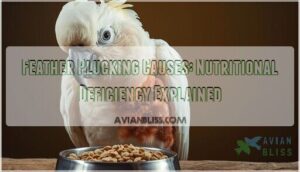
When a cockatoo stands on her perch methodically stripping herself bare, feather by feather, the owner’s first thought is often psychological distress—but the real culprit might be hiding in her food bowl.
Nutritional deficiency ranks among the most overlooked feather plucking causes, yet it affects 10-15% of pet birds and can transform a vibrant, fully-plumed companion into a self-destructive shadow of herself.
The connection between what your bird eats and her compulsion to destroy her plumage runs deeper than most owners realize. Without adequate vitamins, minerals, and amino acids, your bird’s skin becomes irritated, her feather follicles weaken, and the discomfort drives her to pluck—creating a vicious cycle that won’t stop until you address the nutritional gap at its root.
Table Of Contents
- Key Takeaways
- What is Feather Plucking in Birds?
- Nutritional Deficiencies Linked to Feather Plucking
- Signs of Nutritional Deficiency in Birds
- How Nutritional Deficiency Causes Feather Plucking
- Diagnosing Nutritional Deficiency in Feather Plucking Cases
- Frequently Asked Questions (FAQs)
- Is feather plucking bad?
- Do feathers have any nutritional value?
- What is a natural remedy for feather plucking?
- Can vitamin C deficiency cause feather plucking?
- How long before nutritional changes show results?
- Do protein deficiencies worsen plucking behavior?
- Can over-supplementation trigger feather problems?
- Which blood tests detect nutritional deficiencies?
- Which supplements best prevent feather plucking behavior?
- Can nutritional deficiency cause permanent feather damage?
- Conclusion
Key Takeaways
- Nutritional deficiency affects 10-15% of pet birds and ranks among the most overlooked causes of feather plucking, yet 60-70% of these cases resolve completely within 8-12 weeks once you correct the diet.
- Your bird’s feathers need specific nutrients to stay healthy—vitamin A for skin integrity, amino acids like methionine and cysteine for keratin production, omega fatty acids to prevent inflammation, and zinc with copper for proper pigmentation and tissue repair.
- African grey parrots and cockatoos carry genetic predispositions that make them especially vulnerable to nutritional deficiency-driven feather plucking, with all-seed diets being the primary culprit since seeds lack vitamin A, calcium, and essential amino acids.
- When nutritional deficiencies strike, they create a vicious cycle where irritated skin and brittle feathers trigger plucking behavior, which further damages the skin and disrupts the molting process—making early dietary intervention critical before follicle damage becomes permanent.
What is Feather Plucking in Birds?
If you’ve noticed your bird pulling out its own feathers, you’re witnessing a behavior that goes far beyond normal grooming. Feather plucking is a distressing condition where birds obsessively chew or remove their feathers, sometimes to the point of creating bald patches or even injuring their skin.
While some species like the yellow birds in North Carolina are naturally meticulous about their plumage, feather plucking differs dramatically from their instinctive tail-cocking grooming habits.
To help your feathered friend, you’ll need to understand what this feather plucking behavior really is, which birds are most vulnerable, and just how common this problem has become in our companion birds.
If your bird is actively injuring itself through plucking, knowing basic bird injury home treatment can help you manage wounds while you seek professional advice.
Definition and Description
This self-destructive Bird Behavior involves your feathered friend obsessively chewing, pulling, or removing their own feathers—often leading to bald patches, skin damage, and in severe cases, actual mutilation.
While many Plucking Causes exist (from medical issues to stress), Nutritional Deficiencies play a surprisingly significant role in compromising Feather Health and triggering these devastating Behavioral Signs that affect overall Avian Wellness.
Prevalence in Pet Birds
If you’re wondering just how common this heartbreaking behavior really is, the numbers might surprise you—approximately 10-15% of pet birds engage in feather plucking, making it one of the most frequently encountered problems in avian medicine. Understanding the causes of feather plucking, including feather health issues, is essential for addressing this behavior.
That means if you visit an avian practice on any given day, you’ll likely encounter at least one case! These pet bird statistics reveal a troubling reality: feather plucking affects thousands of companion birds annually, with nutritional deficiencies contributing substantially to these avian behavior patterns despite being largely preventable through proper bird nutrition and plucking prevention strategies.
Species Most Affected
While feather plucking can strike any bird, certain species—particularly African grey parrots and cockatoos—seem to carry a genetic predisposition that makes them especially vulnerable to this destructive behavior. Why do these intelligent parrots struggle more than others?
Species vulnerability often comes down to parrot psychology and bird genetics:
- African Greys: Highly sensitive to nutritional deficiencies, especially calcium and Vitamin A
- Cockatoos: Prone to anxiety-driven cockatoo behavior patterns that manifest as self-mutilation
- Eclectus Parrots: Susceptible to Psittacine Beak and Feather Disease, compounding plucking risks
Nutritional Deficiencies Linked to Feather Plucking
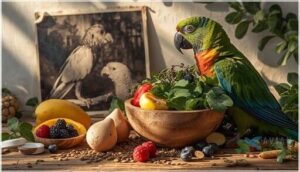
You wouldn’t build a house without the right materials, and your bird’s body works the same way in terms of growing healthy feathers. When essential nutrients are missing from your bird’s diet, those beautiful plumages can become brittle, dull, or trigger the urge to pluck.
That’s why feeding doves properly with a balanced diet rich in vitamins, minerals, and protein is crucial for maintaining strong, vibrant feathers.
Let’s look at the specific nutritional building blocks your feathered friend needs to maintain gorgeous, healthy feathers.
A balanced diet is critical—without the right mix of protein, vitamins, and minerals, you’ll notice signs of deficiency in your peafowl’s diet like dull feathers or brittle shells.
Key Nutrients for Feather Health
Your bird’s feathers are built from the inside out, which means the right vitamins and minerals aren’t just helpful—they’re absolutely essential for preventing those bald patches and broken plumes. Feather nutrition depends on several key players working together. Let’s break down what your feathered friend actually needs:
| Nutrient | Primary Role | Deficiency Signs |
|---|---|---|
| Vitamin A | Skin cell health, feather follicle integrity | Dry, flaky skin; poor feather quality |
| Amino Acids (esp. methionine, cysteine) | Keratin production for feather structure | Weak, brittle feathers; slow regrowth |
| Omega Fatty Acids (Omega-3, Omega-6) | Skin moisture, inflammation control | Dull plumage; irritated, itchy skin |
| Zinc & Copper | Feather pigmentation, tissue repair | Discolored feathers; delayed molting |
| Calcium & Vitamin D3 | Mineral balance, overall metabolism | Stress-related plucking; hormonal issues |
These nutrients don’t work alone—mineral balance matters tremendously. You can’t just load up on vitamin supplements and call it a day. Bird nutrition and diet requires the right ratios, because excess calcium can block zinc absorption, while vitamin A needs dietary fat for proper uptake. When nutritional deficiencies develop, your bird’s body prioritizes essential organs over feather health, leaving those gorgeous plumes vulnerable and triggering the itch-scratch-pluck cycle we’re trying to avoid.
Common Dietary Shortfalls
Most bird owners think they’re feeding their pets well, but nearly 70% of companion parrots suffer from at least one significant nutritional gap that directly contributes to feather plucking.
Nearly 70% of companion parrots suffer from nutritional gaps that directly fuel their feather plucking
The most common dietary shortfalls I see include:
- All-seed diets – Seeds lack vitamin A, calcium, and essential amino acids your bird desperately needs for feather care.
- Missing fresh foods – Without vegetables and fruits, malabsorption issues and nutrient deficits become inevitable.
- Imbalanced pellet-only feeding – Even quality pellets can’t address individual digestive problems or food allergies affecting bird nutrition and diet.
These dietary imbalances create the perfect storm for feather plucking causes you can actually prevent.
Impact of Poor Nutrition on Feathers
When nutritional deficiencies take hold, your feathered friend’s plumage doesn’t just fade—it transforms into a visible roadmap of internal distress. Poor nutrition and diet for birds directly compromises feather health, creating brittle shafts that snap easily and dull colors that signal deeper avian health problems.
| Deficiency | Feather Impact |
|---|---|
| Vitamin A | Dry, ragged edges with increased plucking |
| Protein | Weak structure, stress bars visible |
| Omega-3s | Brittle texture, poor regrowth |
| Calcium | Malformed development, persistent gaps |
Without balanced diets and proper nutrition therapy, feather care becomes impossible—your bird’s body simply can’t manufacture the building blocks needed for healthy plumage, making feather plucking nearly inevitable.
Signs of Nutritional Deficiency in Birds
Your bird’s body will send clear distress signals when it’s missing essential nutrients—and recognizing these warning signs early can make all the difference.
From patchy feather loss to changes in skin texture, nutritional deficiencies show up in visible, physical ways that you can spot during daily interactions with your feathered friend.
Let’s look at the most common signs that something’s off with your bird’s diet.
Feather Loss and Bald Patches
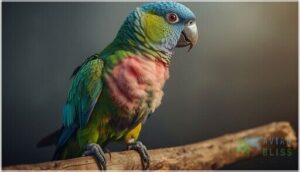
If you’ve noticed bare skin peeking through your feathered friend’s plumage, you’re witnessing one of the most visible red flags that something’s wrong with their diet. Nutritional deficiency doesn’t just cause random feather loss—it creates distinct patterns that tell a story.
Watch for these telltale signs:
- Symmetrical bald patches appearing on both sides of the body, suggesting systemic nutritional deficiency rather than injury
- Damaged feather follicles that struggle with feather regrowth, leaving persistent baldness in affected areas
- Abnormal molting patterns where feathers don’t regenerate on schedule or grow back weak and sparse
- Skin lesions developing beneath missing feathers, indicating compromised skin integrity from vitamin deficits
Brittle or Discolored Feathers
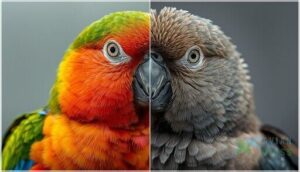
Just like human hair reveals the state of our health, your bird’s feathers act as a living barometer of nutritional wellness—and when they start looking dull, brittle, or strangely colored, they’re sending you an urgent message.
Feather texture changes dramatically with nutritional deficiency: healthy plumage should feel smooth and flexible, not dry and prone to snapping. Discoloration—especially fading from vibrant hues to washed-out tones—signals that essential nutrients aren’t reaching the molting process, compromising both feather health and your bird’s overall wellness.
Changes in Skin Condition
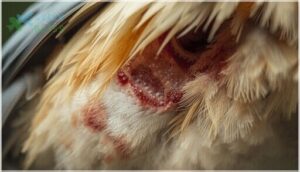
Beneath those feathers lies a delicate skin barrier that’s far more vulnerable to nutritional deficiency than most bird owners realize. You’ll notice dry, flaky patches or increased skin irritation—red flags that essential fatty acids and vitamin A are running low.
This compromised skin condition creates a vicious cycle: poor plumage quality triggers feather plucking, which damages skin further and disrupts the moulting process, potentially inviting skin infections that require prompt skin infection treatment.
How Nutritional Deficiency Causes Feather Plucking
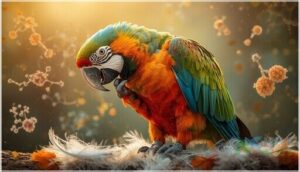
When your bird isn’t getting the right nutrients, feather plucking isn’t just a bad habit—it’s often a physical response to real discomfort happening beneath the surface.
Poor nutrition actually triggers a cascade of biological changes that make your feathered friend feel compelled to pull at their own plumage. Let’s break down exactly how nutritional deficiencies set this destructive cycle in motion.
Mechanisms Behind Self-Mutilation
Your feathered companion isn’t just being destructive—they’re desperately trying to tell you something’s physically wrong inside their body. When nutritional deficiency strikes, it creates a cascade of uncomfortable symptoms—itchy, irritated skin and brittle feathers that feel wrong.
This physical discomfort becomes a behavioral trigger, compelling your bird to pluck in a misguided attempt to relieve the persistent irritation that poor nutrition has created.
Role of Vitamin and Mineral Deficits
Specific nutrients—particularly Vitamin A, calcium, zinc, and omega-3 fatty acids—play starring roles in maintaining healthy skin and plumage, and when they’re missing, your bird’s body simply can’t function properly.
Here’s what happens when specific deficits occur:
- Vitamin A deficiency causes dry, flaky skin that triggers relentless itching—your bird’s feather plucking becomes their only relief from this maddening discomfort.
- Calcium and zinc imbalances weaken feather structure from the inside out, producing brittle plumage that breaks easily and grows abnormally.
- Omega-3 shortfalls create inflammatory skin conditions that exacerbate irritation, making dietary therapy with targeted nutrient supplements essential for reversing these feather disorders.
Interaction With Other Health Issues
But here’s the kicker—nutritional deficiencies rarely work alone, and they often team up with other health problems to create a perfect storm of feather plucking behavior. When your bird’s diet falls short, it weakens their immune system, making them vulnerable to skin infections and hormonal imbalances that compound the plucking.
Organ disease can further complicate matters, while environmental stress amplifies these medical conditions—suddenly you’re dealing with a cascade of issues requiring thorough behavioral therapy and veterinary intervention.
Diagnosing Nutritional Deficiency in Feather Plucking Cases
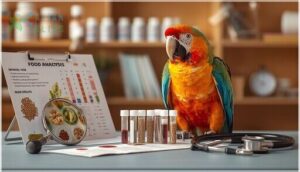
When your bird won’t stop plucking, pinpointing the root cause can feel like detective work—and nutrition is just one piece of the puzzle.
A proper diagnosis starts with a thorough review of what your feathered friend eats every day, but it doesn’t stop there. Before we can confidently blame a poor diet, we need to rule out other medical and environmental triggers that might be driving this behavior.
Dietary Assessment and History
A thorough diet evaluation forms the foundation of diagnosing nutritional causes of feather plucking. Your avian veterinarian will document what your bird actually eats—not just what you offer—to spot gaps in nutrient balance.
The evaluation will consider several key factors, including:
- Food types and brands: Seed-based versus pelleted diets reveal different deficiency risks
- Proportions and feeding habits: Daily amounts of staples, fresh produce, and treats matter tremendously
- Timeline: When diet changes occurred relative to feather plucking onset
- Supplements: Over-supplementation can mask underlying problems or create new imbalances
Ruling Out Other Causes
Even when diet looks like the culprit, your vet won’t stop there—feather plucking rarely has just one cause, and medical conditions from liver disease to parasites can mimic or coexist with nutritional deficiencies.
A complete health screening includes physical examination, medical testing for hormonal imbalances and allergies, plus evaluating environmental factors and behavioral therapy needs. This thorough veterinary medicine approach ensures you’re treating the root problem, not just symptoms.
Frequently Asked Questions (FAQs)
Is feather plucking bad?
Feather plucking consequences are severe—like watching a slow-motion crisis unfold. This destructive behavior damages bird welfare impact profoundly, causing painful skin lesions, infections, and psychological trauma.
Without plucking prevention methods, your bird’s health deteriorates rapidly.
Do feathers have any nutritional value?
No, feathers themselves don’t provide nutrition to birds—they’re composed of keratin, a protein birds can’t digest.
However, the nutrients required to grow healthy feathers are absolutely essential for your bird’s overall wellness.
What is a natural remedy for feather plucking?
Natural remedies for feather plucking include dietary adjustments with omega-3s, environmental enrichment through toys and foraging, stress management via routine consistency, herbal supplements like chamomile, and gentle aromatherapy—always consult your avian veterinarian first!
Can vitamin C deficiency cause feather plucking?
While vitamin C plays a supporting role in avian wellness and stress management, it’s not a smoking gun for feather plucking—vitamin A, D3, E, and zinc deficiencies are the real culprits behind most nutrition-related cases.
How long before nutritional changes show results?
Recovery time varies depending on severity, but most birds show initial improvements in feather regrowth within 4-6 weeks of dietary adjustments.
Complete recovery requires 3-6 months of consistent health monitoring and nutrient absorption optimization.
Do protein deficiencies worsen plucking behavior?
Absolutely—protein imbalance drives plucking in multiple ways. Since feather keratin requires 85-90% protein, deficiencies create rough, irritating plumage that triggers self-mutilation.
Amino acid effects include pruritic skin and compulsive manipulation, worsening malnutrition symptoms substantially.
Can over-supplementation trigger feather problems?
Yes—overdoing supplements can backfire. Vitamin toxicity and mineral imbalance from dietary excesses may worsen feather disorders, trigger feather plucking, and create supplement interactions that compromise nutrition and feather health rather than support it.
Which blood tests detect nutritional deficiencies?
Your avian vet will likely order thorough blood chemistry panels measuring total protein, albumin, liver enzymes, and electrolytes like calcium and phosphorus.
Serum analysis can also detect vitamin A, D3, E levels, plus trace mineral panels quantifying zinc, copper, and selenium concentrations.
Which supplements best prevent feather plucking behavior?
Quality vitamin supplements containing omega fatty acids, amino acids, and mineral therapy work best alongside probiotics support for feather plucking prevention, though you’ll need proper veterinary guidance to address individual deficiencies effectively.
Can nutritional deficiency cause permanent feather damage?
Is the damage reversible? Severe malnutrition effects on follicle health can cause permanent damage—feathers lost may never regrow if follicles are scarred, though early nutrient replenishment often allows feather regrowth over successive molts.
Conclusion
Studies show that 60-70% of feather plucking cases linked to nutritional deficiency resolve completely within 8-12 weeks of dietary correction—proof that your bird’s body knows exactly how to heal when given the right building blocks.
Addressing feather plucking causes nutritional deficiency isn’t just about stopping destructive behavior; it’s about restoring your bird’s fundamental health from the inside out. The answer you’ve been searching for might be simpler than you ever imagined.
- https://www.academia.edu/31520559/Plumage_disorders_in_psittacine_birds_part_1_feather_abnormalities
- https://www.veterinary-practice.com/article/feather-destructive-behaviour
- https://www.bestbirdfoodever.com/2019/07/avian-malnutrition-feather-condition/
- http://www.thebirdschool.com/parrot-health/zinc-toxicosis-separating-fact-from-fiction/
- https://allbirdproducts.com/pages/feather-quality