This site is supported by our readers. We may earn a commission, at no cost to you, if you purchase through links.
 You’ll want to focus on native plants that provide the three essentials birds need: food, shelter, and nesting sites.
Oak trees top the list since they host over 500 caterpillar species that feed songbirds.
Native berry producers like elderberry, serviceberry, and dogwood offer essential fall and winter nutrition.
Evergreen conifers provide year-round shelter, while dense shrubs like spicebush create safe nesting spots.
Seed-producing plants such as coneflowers and black-eyed Susans attract finches and cardinals.
The best plants for bird habitats combine multiple benefits – think of them as nature’s all-inclusive resorts.
Strategic plant selection can transform your yard into a thriving ecosystem that supports dozens of species.
Table Of Contents
- Key Takeaways
- Best Bird Habitat Plants
- Bird Attracting Shrubs
- Vines for Bird Habitats
- Bird Friendly Plant Features
- Creating Bird Friendly Habitats
- Benefits of Bird Habitats
- Frequently Asked Questions (FAQs)
- What are the best house plants for birds?
- What is the best plant for birds?
- What plants are good for nesting birds?
- What is the best habitat for a bird?
- What time of year should I plant bird-attracting plants?
- How do I protect bird plants from pests?
- How much space do bird habitat plants need?
- Can I grow bird plants in containers successfully?
- Conclusion
Key Takeaways
- You’ll attract more birds by focusing on native oak trees – they support over 500 caterpillar species that feed songbirds, making them the ultimate bird magnet for your yard.
- Plant berry-producing shrubs like elderberry and serviceberry – they’ll provide essential fall and winter nutrition when other food sources disappear, creating a year-round buffet.
- Create layers with evergreen conifers and dense shrubs – you’ll give birds the shelter and nesting sites they need while adding year-round structure to your landscape.
- Choose plants that serve multiple purposes – seed producers like coneflowers and black-eyed Susans attract finches while providing nectar for beneficial insects that birds also eat.
Best Bird Habitat Plants
You’ll create thriving bird habitats by selecting plants that provide essential food sources, nesting sites, and year-round shelter.
The right combination of native trees, shrubs, and vines transforms your garden into a wildlife sanctuary that supports local bird populations while reducing maintenance needs.
Deciduous Trees for Birds
You’ll discover that deciduous trees create the backbone of any bird-friendly landscape.
Oak trees support nearly 900 oak caterpillars that feed countless songbirds, while mulberry nesting sites attract robins and cardinals.
Oak trees alone feed 900 caterpillar species that nourish countless songbirds throughout nesting season.
Serviceberry flowers bloom early for migrating birds, and dogwood berries provide fall nutrition.
Crabapple cover offers year-round shelter, making these native plants essential for thriving bird habitat gardens.
For example, eastern red cedar provides vital cones favored by cedar waxwings.
Coniferous Trees for Birds
Coniferous trees create year-round sanctuaries for countless bird species.
Spruces offer dense evergreen cover and seed-rich cones that attract crossbills and chickadees during harsh winters.
Eastern red cedar provides winter-persistent berries for waxwings while creating secure conifer nesting sites.
Pine shelter supports nuthatches and siskins with abundant seeds, making these hardy trees essential for bird habitats throughout all seasons.
Native conifers provide essential food and shelter for various bird species, offering them year-round support.
Native Plants for Bird Attraction
Native plants form the backbone of successful bird habitats in your garden.
Native plants create thriving bird sanctuaries that naturally support local wildlife in your backyard.
You’ll attract more species by choosing serviceberries, dogwoods, and viburnums that support local ecosystems through natural plant diversity.
These native gardening choices provide year-round food sources while promoting habitat restoration and bird conservation efforts in your backyard bird habitat.
Bird Attracting Shrubs
Shrubs form the backbone of any bird-friendly landscape by providing essential food sources and protective shelter at the perfect height for many songbird species.
You’ll find that these mid-level plants offer berries, seeds, and nesting sites while creating safe corridors that connect ground cover to tree canopies, providing a backbone to the landscape.
Flowering Shrubs for Birds

Flowering shrubs create the perfect welcome mat for feathered visitors, offering both nectar-rich blooms and dense foliage for nesting sites.
These bird-friendly shrubs provide essential resources throughout multiple seasons, supporting everything from hummingbirds to songbirds with their varied shrub bloom times and shrub pollinator attraction.
- Viburnums produce abundant nectar and berries, creating shrub nectar sources that attract diverse songbirds and pollinators
- Flowering dogwood offers both spring nectar and fall berries, supporting birds during migration and nesting seasons
- Serviceberries bloom early in spring, providing critical nectar when few other plants flower for migrating birds
- Elderberry shrubs attract hummingbirds and butterflies with nectar-rich flowers, supporting pollination and insectivorous birds
- Witch hazel blooms in late fall, offering essential nectar sources when other plants have finished flowering.
Consider exploring options for flowering shrub needs for your garden.
Fruit Bearing Shrubs for Birds
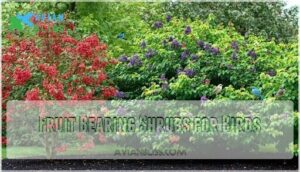
You’ll find berry nutrient value makes native shrub benefits clear when choosing shrubs for birds.
Winter fruit abundance from serviceberries, elderberries, and viburnums provides critical nutrition when other food sources disappear.
Shrub size matters for different bird species – larger shrubs like nannyberry support more nesting sites.
Consider shrub placement tips: group berry producing plants together for maximum impact on bird habitat plants.
You can find various fruit bearing shrubs for your garden, which is a key factor in creating a bird habitat.
Evergreen Shrubs for Birds
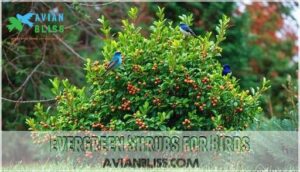
Evergreen shrubs create a winter sanctuary that transforms your garden into a year-round bird haven.
These hardy plants offer consistent shelter when deciduous options stand bare, providing essential nesting security and winter cover. These evergreen shrubs attract birds.
- Northern Bayberry – Semi-evergreen shrub producing waxy berries that persist through winter, attracting Tree Swallows and catbirds while offering dense cover
- Eastern Red Cedar – Evergreen conifer reaching 50-90 feet, providing winter-persistent berries for waxwings plus excellent nesting sites
- Juniper Species – Low-growing evergreens offering berry abundance and year-round food sources, creating perfect bird-friendly habitats with evergreen diversity
Vines for Bird Habitats
Vines create vertical bird habitats that maximize your garden’s potential by providing food, shelter, and nesting sites in compact spaces.
You’ll find that climbing and fruit-bearing vines like wild grape and Virginia creeper offer dense foliage for protection while producing berries that attract over 50 bird species throughout fall and winter, providing food.
Climbing Vines for Birds
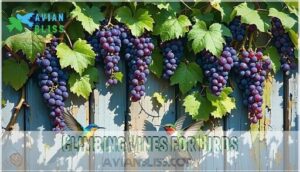
Climbing vines create vertical bird-friendly landscapes by offering vine support for nesting and dense foliage for shelter.
You’ll want to select native species like wild grape, which provides excellent nesting material and attracts over fifty bird species. Consider vine toxicity when choosing plants, ensuring they’re safe for birds while creating attractive habitats for attracting hummingbirds and songbirds through strategic foliage density.
You can further improve the habitat by providing supplemental feeding to attract a wider variety of birds.
Fruit Bearing Vines for Birds

Wild grape and Virginia creeper offer year-round bird food sources through their abundant fruiting plants.
These birdfriendly vines produce winter fruit vines that persist when other food becomes scarce.
Wild grape supports over fifty bird species with dense clusters, while Virginia creeper provides purple berries.
Both vines create excellent vine nesting sites and vine cover benefits, attracting specific birds like robins and thrushes with diverse vine fruit types.
Native Vines for Bird Attraction
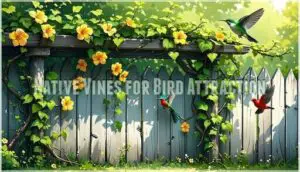
Native plants like Carolina jessamine and crossvine create essential bird attracting vines in your yard.
These birdfriendly vines offer Vine Nesting Sites through dense foliage while providing Vine Fruit Variety that sustains songbirds year-round.
Wild grape delivers exceptional Vine Shelter Benefits, supporting over fifty species.
Vine Growth Habits vary – some climb fifty feet, maximizing Vine Insect Support for feeding birds naturally.
Bird Friendly Plant Features

When choosing plants for your bird habitat, focus on three key features that provide essential resources throughout the year.
The most effective bird-friendly plants offer berries and fruits for energy, seeds and nuts for protein, plus nectar-rich flowers that attract insects birds need to feed their young.
Berries and Fruits for Birds
Berry nutritional value drives birds to your garden like a magnet.
These fruiting plants offer essential fats, carbohydrates, and nutrients that sustain bird populations year-round. Fruit size matters—smaller berries accommodate more species, while berry color attraction helps birds locate food sources easily.
- Blueberries and elderberries provide high-energy nutrition for robins, waxwings, and thrushes
- Native chokeberries and serviceberries offer winter sustenance with superior nutrient content
- Winterberries and viburnum deliver high-fat content vital for cold-weather survival
- Currants and inkberries feature soft textures perfect for smaller songbirds
- Seasonal berry availability from multiple varieties guarantees continuous bird food sources
Planting berry varieties strategically creates a buffet that supports diverse birdfriendly fruits throughout seasons.
Seeds and Nuts for Birds
Beyond juicy berries, seeds and acorns form the backbone of winter bird survival. These nutrient-dense powerhouses sustain cardinals, woodpeckers, and chickadees when other food sources disappear.
Seed size matters—goldfinches prefer small sunflower seeds while jays crack larger acorns. Squirrel competition can be fierce, but smart planting guarantees abundant winter food for your feathered friends.
Black oil sunflower seeds, known for their high oil content, are particularly attractive to a wide variety of birds.
| Plant | Seeds/Nuts | Target Birds | Season |
|---|---|---|---|
| Sunflowers | Large black seeds | Cardinals, finches | Fall-winter |
| White Oak | Medium acorns | Woodpeckers, jays | Fall-winter |
| Purple Coneflower | Small dark seeds | Goldfinches, chickadees | Late summer-fall |
| Pine Trees | Cone seeds | Crossbills, nuthatches | Year-round |
The selection of nutrient-dense powerhouses like sunflower seeds and acorns is crucial for the survival of cardinals, woodpeckers, and chickadees during the winter months, making smart planting and understanding of seed size essential for supporting these bird species.
Nectar Rich Flowers for Birds
Trumpet honeysuckle and cardinal flower provide high-quality nectar sources that hummingbirds crave.
These plants for hummingbirds feature tubular flower morphology perfectly matched to long beaks.
Nectar composition varies by species, but sugar content typically ranges from 15-25%.
Stagger bloom times throughout growing seasons to maintain consistent nectar availability.
Understanding pollination ecology helps you select the right birdfriendly flowers for your garden’s hummingbird favorites.
Creating Bird Friendly Habitats
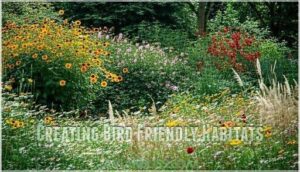
Creating a bird-friendly habitat starts with selecting the right combination of native plants that provide food, shelter, and nesting sites throughout the year.
You’ll want to focus on species that offer berries, seeds, or nectar while considering your local climate zone and the specific birds you hope to attract, which is a key part of creating a bird-friendly habitat.
Choosing Right Plants for Birds
Plant diversity forms the foundation of attracting birds garden success. Select bird-friendly plants that bloom and fruit across different seasons to provide year-round resources. Consider your space requirements carefully – large trees need room to mature, while shrubs can fit smaller areas.
Creating a diverse environment also involves reducing pesticide use to protect birds and beneficial insects. This is crucial for maintaining a healthy ecosystem and ensuring the well-being of the birds and other wildlife in your garden.
- Watch cardinals build their first nest in your serviceberry’s protective branches
- Hear goldfinches sing while feeding on your native sunflower seeds
- See hummingbirds dart between trumpet honeysuckle blooms at dawn
- Feel proud knowing your native plants birds depend on are thriving
Match plants for bird food and plants for nesting birds to your local bird species‘ specific needs and maintenance capabilities. By doing so, you can create a bird-friendly habitat that supports the local avifauna and provides them with the necessary resources to survive and flourish.
Planting Native Species for Birds
Native plants create thriving bird-friendly habitats by supporting local ecosystems and native bird diets.
When you choose regional plant selection for habitat restoration, you’re supporting conservation efforts that benefit both wildlife and your community.
Local plant selection guarantees birds find familiar food sources year-round.
| Native Trees Birds Love | Best Shrubs | Top Vines |
|---|---|---|
| Oak (supports 900+ caterpillars) | Elderberry (nectar & berries) | Virginia Creeper (berries) |
| Serviceberry (summer fruit) | Viburnum (persistent fruit) | Trumpet Honeysuckle (nectar) |
| White Pine (seeds & shelter) | Winterberry Holly (winter food) | Wild Grape (50+ bird species) |
| Flowering Dogwood (fall berries) | Ninebark (nesting sites) | Native Clematis (cover) |
Providing Water Sources for Birds
While plants form your garden’s foundation, water sources complete the picture for thriving bird communities.
You’ll need strategic water source placement near cover but visible for safety. Bird bath types range from pedestal basins to ground-level dishes, accommodating different bird species.
Regular cleaning of water sources prevents disease spread. Winter water requires heated elements or frequent ice removal.
Natural water features like shallow streams attract more diverse visitors than static options, and provide a thriving environment for birds, with strategic placement being key.
Benefits of Bird Habitats

When you create bird-friendly habitats in your garden, you’re supporting declining bird populations while transforming your outdoor space into a vibrant ecosystem.
These carefully chosen plants don’t just feed and shelter birds—they increase biodiversity, attract beneficial insects, and create year-round visual interest that makes your garden come alive with movement and sound.
Supporting Local Bird Populations
Three key threats jeopardize bird species survival: habitat fragmentation from urban development, climate change disrupting migration patterns, and invasive species outcompeting natives.
By choosing bird-friendly plants and native plants that provide reliable bird food sources, you’re creating essential stepping stones for bird conservation.
Your garden becomes a refuge where local populations can find shelter, food, and nesting sites despite increasing pesticide use in surrounding areas.
Increasing Biodiversity in Gardens
Bird-friendly gardens become biodiversity hotspots by attracting insects that feed countless species beyond birds.
Native plants create habitat complexity through varied heights and textures, supporting different wildlife needs.
Your garden design choices directly impact soil health and reduce pesticides naturally.
Wildlife gardening with diverse bird-friendly plants establishes food webs where each species plays a pivotal role, transforming your yard into a thriving ecosystem.
Enhancing Garden Beauty With Birds
Your garden transforms into a living masterpiece when colorful plumage and melodic birdsong benefits create natural entertainment.
Bird photography opportunities multiply as attracting songbirds becomes easier with strategic birdfriendly plants.
Here’s how birdfriendly gardens enhance aesthetics:
- Bird attracting trees provide seasonal color changes and movement
- Colorful plumage creates living art against green foliage
- Morning birdsong benefits replace artificial soundscapes
- Bird garden ideas incorporate natural sculptures through perching birds
- Bird attracting shrubs frame garden views with wildlife activity
Garden aesthetics improve dramatically when nature’s performers visit regularly, creating a unique living masterpiece with natural entertainment.
Frequently Asked Questions (FAQs)
What are the best house plants for birds?
You’re creating an indoor sanctuary, but houseplants for birds require careful consideration.
Spider plants, Boston ferns, and African violets offer safe foliage for pet birds to explore and nibble without toxicity concerns.
What is the best plant for birds?
Oaks reign supreme for bird habitats, supporting nearly 900 caterpillar species while providing acorns for woodpeckers and jays. You’ll create a bustling ecosystem with this single tree choice.
What plants are good for nesting birds?
Serviceberries, oaks, and conifers like spruces provide excellent nesting sites with their branching structure.
Dense shrubs such as elderberry, ninebark, and red-osier dogwood offer protective cover and safe spaces for building nests.
What is the best habitat for a bird?
You’ll want to create a layered habitat with native trees, shrubs, and ground cover that provides food sources year-round, clean water, nesting sites, and shelter from predators and weather.
What time of year should I plant bird-attracting plants?
Time’s ticking like nature’s clock—plant your feathered friends’ favorites during spring’s sweet spot.
You’ll want to get bird-attracting plants in the ground during early spring or fall when temperatures are mild and rainfall is steady.
How do I protect bird plants from pests?
Use organic methods like neem oil, beneficial insects, and companion planting. Remove affected leaves promptly. Avoid chemical pesticides that harm birds and beneficial pollinators visiting your plants.
How much space do bird habitat plants need?
Think of your yard as nature’s apartment complex—you’ll need different room sizes for different tenants.
Small shrubs like elderberry need 4-6 feet apart, while large trees like oaks require 20-40 feet spacing to prevent overcrowding and competition for resources, which is crucial for a healthy ecosystem.
Can I grow bird plants in containers successfully?
Container gardening works perfectly for many bird-attracting plants.
Choose compact varieties like dwarf serviceberries, small coneflowers, or native shrubs.
You’ll need large pots, proper drainage, and regular watering to keep feathered friends happy and attract them with compact varieties.
Conclusion
Picture a hummingbird returning to the same feeder every spring after a 2,000-mile migration – that’s the power of creating reliable habitat.
By selecting the best plants for bird habitats, you’re building a living ecosystem that’ll support local species for generations.
Native trees, berry-producing shrubs, and seed-bearing flowers work together like nature’s grocery store and hotel combined.
Your thoughtful plant choices create ripple effects that strengthen entire bird populations while transforming your landscape into a vibrant, year-round sanctuary.
- https://abcbirds.org/blog/native-trees-shrubs-attract-birds
- https://www.missouribotanicalgarden.org/gardens-gardening/your-garden/help-for-the-home-gardener/advice-tips-resources/visual-guides/native-plants-to-attract-birds.aspx
- https://www.audubon.org/plantsforbirds
- https://www.birdsandblooms.com/birding/attracting-birds/plants-and-trees-that-attract-birds/plants-attract-birds-seasons
- https://www.michiganaudubon.org/bfc/bird-friendly-plants