This site is supported by our readers. We may earn a commission, at no cost to you, if you purchase through links.
 Avian aspergillosis isn’t contagious between birds or from birds to humans.
This fungal infection doesn’t spread through direct contact like a cold would.
Instead, birds contract aspergillosis by inhaling fungal spores from contaminated environments – think moldy feed, dusty bedding, or poorly ventilated spaces.
You can’t catch it from handling infected birds or eating properly cooked poultry.
However, humans can develop aspergillosis by breathing in airborne spores from the same contaminated environments, especially if you have a compromised immune system.
When multiple birds get sick simultaneously, it’s because they’re sharing the same spore-laden environment, not passing the disease between themselves.
Understanding how these invisible spores create perfect storms for infection reveals critical prevention strategies.
Table Of Contents
- Key Takeaways
- Avian Aspergillosis Overview
- Is Avian Aspergillosis Contagious
- Aspergillosis Infection Mechanism
- Clinical Signs of Aspergillosis
- Diagnosis of Aspergillosis
- Treatment and Management
- Prevention and Control
- Prognosis and Survival
- Frequently Asked Questions (FAQs)
- Is Aspergillus contagious?
- Can birds get Aspergillus?
- Are avian species susceptible to aspergillosis?
- Which birds are most at risk of aspergillosis?
- Can chickens get aspergillosis?
- Is avian aspergillosis an environmental health indicator?
- Can humans get aspergillosis from birds?
- Can you catch aspergillosis from someone else?
- Can I catch aspergillosis from my dog?
- How does aspergillosis spread?
- Conclusion
Key Takeaways
- You can’t catch aspergillosis from your infected bird – This fungal infection doesn’t spread through direct contact like a cold would, so handling your sick bird won’t make you ill
- Multiple birds get sick from shared contaminated environments, not from each other – When several birds develop aspergillosis simultaneously, they’re all breathing the same fungal spores from moldy feed or poor ventilation, not passing it between themselves
- Humans develop aspergillosis by inhaling the same environmental spores as birds – You’re at risk if you breathe contaminated air from moldy areas, especially if you have a compromised immune system, but not from your bird directly
- Prevention focuses on eliminating spore sources, not isolating infected birds – Clean, dry environments with proper ventilation and fresh feed prevent aspergillosis more effectively than quarantine measures since the disease stems from environmental contamination
Avian Aspergillosis Overview
Aspergillosis is a non-contagious fungal infection that affects your bird’s respiratory system when they inhale Aspergillus spores from their environment.
This opportunistic disease primarily targets birds with weakened immune systems, making proper husbandry and nutrition essential for prevention.
Definition of Aspergillosis
When you’re dealing with respiratory issues in your feathered friend, aspergillosis represents a fungal infection caused by Aspergillus species that targets your bird’s breathing system.
This opportunistic infection develops when your pet inhales microscopic spores from contaminated environments, creating a respiratory disease that primarily affects the lungs and air sacs rather than spreading between birds, which is a key characteristic of this fungal infection.
Causes of Aspergillosis
You’ll encounter Aspergillus fungus everywhere—it’s an environmental contaminant found in soil, decaying organic matter, and moldy feed.
Aspergillus spores lurk in every corner of your bird’s world, waiting for the perfect moment to strike.
Spore inhalation occurs when birds breathe contaminated air.
Immune suppression from stress, antibiotics, or nutritional deficiencies weakens your bird’s natural defenses.
Environmental factors like poor ventilation and high humidity create perfect breeding conditions for ubiquitous spores to multiply rapidly, leading to immune suppression and spore inhalation.
Risk Factors for Aspergillosis
Several factors substantially increase your bird’s aspergillosis risk birds susceptibility.
Immune Suppression from stress, illness, or medications creates vulnerability, while Environmental Spores thrive in poor Ventilation Quality spaces.
Nutritional Deficiencies, especially vitamin A deficiency, weaken respiratory defenses against environmental conditions.
Key risk factors include:
- Inappropriate husbandry – damp bedding, moldy seeds, overcrowded cages
- Immunosuppression – concurrent diseases, prolonged antibiotic use, chronic stress
- Dietary Deficiencies – all-seed diets lacking essential vitamins and minerals
Is Avian Aspergillosis Contagious
You’re likely wondering whether your sick bird can spread aspergillosis to your other pets or family members.
The good news is that aspergillosis isn’t contagious between birds, but there are important environmental and human health considerations you need to understand.
Transmission Between Birds
Aspergillosis doesn’t spread through direct contact between birds.
You won’t see feather transmission or contagious bird disease patterns like with viral infections.
Instead, aspergillosis transmission occurs when birds share environments with high spore loads.
Your bird’s immune status determines infection risk after inhaling airborne spores.
Healthy birds in contaminated spaces face aspergillosis risk, making environmental control more important than isolating infected birds.
Prevention can include reducing access to moldy agricultural waste to minimize the chance of infection risk.
Transmission to Humans
While aspergillosis isn’t directly contagious from birds to humans, you face Human Susceptibility through Spore Inhalation.
Immunocompromised Risk increases dramatically when handling infected birds or contaminated materials.
Occupational Hazards exist for veterinarians and bird handlers exposed to Aspergillus fumigatus spores.
All bird species are susceptible, with most cases found in waterfowl, raptors, and gulls.
Public Awareness remains essential—though aspergillosis transmission doesn’t occur person-to-person, environmental exposure poses real risks for vulnerable individuals.
Environmental Factors
Environmental spore-exposure creates infection hotspots where Aspergillus species thrive.
Poor ventilation and humidity levels above 60% transform your bird’s surroundings into breeding grounds for contaminated environments.
- Moldy feed and moist nesting material harbor millions of spores that become airborne during cleaning
- Spore proliferation accelerates exponentially in warm, damp conditions with inadequate air circulation
- Hygiene lapses allow fungal buildup in water dishes, cage corners, and food storage areas
Aspergillosis Infection Mechanism
Understanding how aspergillosis actually develops inside your bird’s body helps explain why it’s so persistent and difficult to treat.
The infection follows a predictable three-stage process that begins when your bird breathes in microscopic fungal spores from the environment.
Inhalation of Spores
Your bird breathes in microscopic spores from contaminated environments, where these fungal particles float invisibly through the air. Once inhaled, spores travel deep into your bird’s respiratory system, settling in air sacs and lung tissue where they can establish infection and begin growing.
| Environmental Sources | Spore Concentration |
|---|---|
| Moldy feed and bedding | High (10,000+ spores/m³) |
| Damp nesting materials | Moderate (5,000-10,000 spores/m³) |
| Contaminated soil | Variable (1,000-15,000 spores/m³) |
| Poor ventilation areas | Elevated (3-5× normal levels) |
| Humid environments (>60%) | Exponentially increased |
The spore size determines inhalation depth – smaller particles penetrate deeper into your bird’s respiratory tract, reaching delicate air sacs where aspergillosis in birds typically begins. It’s important to understand causes of infection to provide a safe environment. Your bird’s immune response initially tries to clear these invaders, but persistent exposure overwhelms natural defenses, allowing avian aspergillosis to take hold.
Immune System Suppression
Compromised immune systems provide the perfect opening for Aspergillus spores to establish infection.
Weakened defenses roll out the red carpet for fungal invaders.
Your bird’s natural defenses weaken under specific conditions that create vulnerability:
- Steroid use and prolonged antibiotic effects disrupt normal immune responses
- Viral infections and chronic diseases drain immune system resources continuously
- Nutritional deficiencies, especially vitamin A deficiency, compromise respiratory tract immunity
Immunosuppression basically rolls out the red carpet for opportunistic fungal infections.
Respiratory Tract Damage
Once spores penetrate your bird’s respiratory system, they begin their destructive work on delicate tissue structures.
Air sac inflammation develops first, followed by lung tissue damage that compromises oxygen exchange.
Tracheal lesions form as the fungus spreads, while sinus involvement creates additional complications.
You’ll notice nasal discharge as the respiratory tract deteriorates, making this bird fungal infection particularly devastating to your pet’s respiratory system.
Clinical Signs of Aspergillosis
You’ll need to recognize aspergillosis symptoms early, as this fungal infection progresses gradually and can become life-threatening without prompt treatment.
The clinical signs range from subtle respiratory changes to severe systemic illness, making careful observation of your bird’s behavior and breathing patterns essential for successful outcomes.
Respiratory Symptoms
Respiratory signs develop as aspergillosis in birds progresses, creating unmistakable breathing difficulty that you’ll notice immediately.
Your bird’s respiratory infection will manifest through these key symptoms:
- Open-mouth breathing and gasping during rest periods
- Tail bobbing with each labored breath attempt
- Coughing sounds accompanied by occasional nasal discharge
These bird respiratory illness indicators signal serious respiratory tract compromise requiring immediate veterinary attention.
Non-Specific Signs
Many bird owners miss these subtle warning signs that can indicate aspergillosis in birds.
Your feathered friend might display vague signs that seem unrelated to respiratory illness, making early detection challenging.
| Sign Category | What You’ll Notice | Why It Happens |
|---|---|---|
| Lethargy Indicators | Decreased perching, sleeping more, less vocal | Body conserves energy fighting infection |
| Weight Changes | Gradual weight loss, prominent keel bone | Appetite loss and increased metabolic demands |
| Feather Appearance | Fluffed feathers, poor grooming, dull plumage | Illness affects normal preening behavior |
| Activity Decline | Reluctance to fly, reduced playfulness, withdrawn behavior | General malaise from systemic infection |
These nonspecific signs often appear weeks before obvious respiratory symptoms develop, making regular weight monitoring and behavioral observation essential for early intervention.
Advanced Symptoms
When aspergillosis progresses unchecked, your bird faces life-threatening complications.
Neurologic signs emerge as the infection spreads systemically, causing incoordination issues and balance problems.
Chronic manifestations include severe emaciation effects from prolonged illness, and advanced respiratory abnormalities worsen, with persistent dyspnea and potential cyanosis indicating oxygen deprivation.
These neurologic symptoms signal critical systemic spread requiring immediate veterinary intervention.
Diagnosis of Aspergillosis
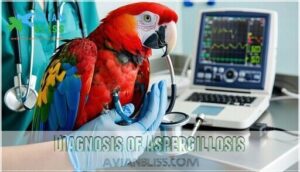
If you suspect your bird has aspergillosis, you’ll need a veterinarian to run several diagnostic tests since the symptoms often mimic other respiratory diseases.
Your vet will likely combine blood work, imaging studies, and specialized tests like DNA analysis or surgical laparoscopy to confirm the diagnosis and determine the infection’s severity.
Laboratory Tests
Your veterinarian will run several laboratory tests to confirm aspergillosis diagnosis. Blood analysis reveals elevated white blood cells, while serological tests detect antibodies against Aspergillus. DNA identification provides rapid, accurate results by detecting fungal genetic material in samples.
- Fungal culture – Takes 48-72 hours but offers definitive species identification
- Cytology results – Microscopic examination of respiratory samples shows fungal elements
- Diagnostic testing panels – Combine multiple serology tests and DNA tests for thorough assessment
Imaging Techniques
Diagnostic imaging serves as your window into your bird’s internal condition, revealing what physical exams can’t detect.
X-rays remain the cornerstone of aspergillosis diagnosis, showing characteristic lesions and air sac changes that confirm infection.
| Imaging Method | Detection Capability |
|---|---|
| Radiographs | Air sac thickening, lung lesions |
| CT Scans | Detailed tissue visualization |
| MRI Use | Soft tissue contrast enhancement |
| Ultrasound Application | Real-time organ assessment |
Radiographic findings typically show cloudy air sacs and granulomas, while CT scans provide superior detail for complex cases.
However, image interpretation requires expertise since aspergillosis mimics other respiratory conditions.
These diagnostic testing methods guide treatment decisions but can’t definitively confirm the fungus without additional testing.
Surgical Laparoscopy
When imaging doesn’t provide definitive answers, your veterinarian might recommend laparoscopy for aspergillosis diagnosis birds.
This surgical procedure offers 92% laparoscopy accuracy by allowing direct lesion visualization inside your bird’s respiratory system.
An experienced avian surgeon uses specialized sampling techniques to collect tissue samples while minimizing surgical risks.
Though invasive, laparoscopy provides the most reliable confirmation of aspergillosis in birds, requiring careful post-op care for ideal recovery.
Regular health checks are also important for early disease detection.
Treatment and Management
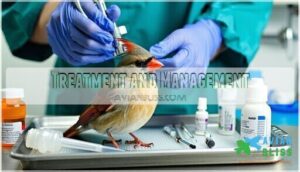
Once you’ve confirmed aspergillosis, treatment becomes a long-term commitment requiring multiple approaches to combat this stubborn fungal infection.
You’ll need to work closely with an avian veterinarian who can design a thorough treatment plan that includes antifungal medications, supportive care, and possibly surgical intervention depending on your bird’s condition.
Antifungal Medications
Treatment requires carefully selected antifungal medications, with voriconazole and itraconazole serving as first-line options for aspergillosis treatment birds.
These medications combat fungal infection birds through oral, intravenous, or aerosolized delivery methods.
Treatment duration typically spans weeks to months, requiring vigilant monitoring for medication side effects including kidney damage.
Novel antifungals show promise against antifungal resistance, though drug interactions remain concerning.
Supportive Care
Beyond medication, your bird needs thorough supportive care during aspergillosis treatment.
Hospitalization protocols guarantee constant monitoring while oxygen therapy helps combat respiratory distress.
Force-feeding techniques maintain nutrition when appetite drops, and anti-inflammatory medications reduce tissue swelling.
Stress reduction through quiet environments and gentle handling accelerates healing.
Avian oxygen supplementation can be vital for recovery.
This supportive care foundation gives antifungal treatments their best chance to work effectively, emphasizing the importance of constant monitoring and a calm environment for effective recovery.
Surgical Intervention
When surgery becomes necessary, you’re facing a high-stakes procedure requiring specialized expertise.
Surgical removal of fungal plaques through debulking or excision carries significant anesthesia concerns, especially for compromised birds.
Post-op care demands thorough monitoring for complications, and early intervention is essential for favorable outcomes, as success rates vary dramatically based on infection severity and surgical timing.
Prevention and Control
You can substantially reduce your bird’s risk of aspergillosis through proper husbandry and environmental management.
While the fungal spores exist everywhere in nature, creating clean conditions and supporting your bird’s immune system makes all the difference in preventing infection.
Good Hygiene Practices
Consistent hygiene practices serve as your strongest defense against aspergillosis spores in your bird’s environment. Regular cage cleaning and proper disinfection eliminate fungal contamination before it becomes dangerous.
A clean cage requires specialized cleaning solutions to maintain hygiene.
- Cage Cleaning: Clean cages twice weekly with bird-safe disinfectants, removing all debris and organic matter
- Food Storage: Store seeds and pellets in airtight containers in cool, dry locations to prevent mold growth
- Water Sanitation: Change water daily and disinfect bowls every three days with diluted bleach solution
- Ventilation Quality: Make certain adequate airflow around cages to reduce humidity and prevent stagnant air pockets
- Waste Removal: Remove droppings, uneaten fresh food, and soiled bedding within 24 hours of contamination
Environmental Modifications
HEPA air-filtration systems create cleaner environments by reducing airborne spores up to five times compared to unfiltered spaces.
You’ll want proper ventilation improvement alongside humidity control below 60% to prevent fungal growth. Establish strict cleaning protocols for cage cleaning, removing dust and organic debris daily.
Store feed in cool, dry conditions and maintain fresh food supplies. These environmental modifications work together to minimize spore exposure and infection risk.
To further reduce risk, consider implementing disease prevention strategies like rotating feeding sites to achieve disease prevention and ensure a clean environment with minimal spore exposure.
Nutrition and Diet
Proper bird nutrition serves as your first line of defense against aspergillosis.
All-seed diets create dangerous vitamin A deficiency, weakening respiratory immunity by up to 70%.
You’ll need pellets, fresh vegetables, and fruits to prevent nutritional deficiencies.
Supplementing their diet with quality bird pellets can help guarantee they get the nutrients they need.
Always discard moldy food immediately, as contaminated bird food directly increases infection risk and compromises your bird’s natural defenses.
Prognosis and Survival

Your bird’s chances of recovery depend heavily on how quickly you catch the infection and begin treatment.
While aspergillosis can be serious, many birds survive with prompt veterinary care and aggressive antifungal therapy, though the recovery process often takes several months.
Factors Affecting Survival
Several key factors determine your bird’s survival chances when battling aspergillosis.
Disease severity and how quickly you catch it play vital roles—early detection substantially improves treatment efficacy.
Your bird’s immune response and any underlying diseases that cause immunosuppression directly impact aspergillosis prognosis birds face.
Species susceptibility varies, with some birds naturally more resilient.
Environmental control measures you implement affect treatment success rates substantially.
Treatment Outcomes
Treatment success depends on early intervention and your bird’s overall health condition.
Antifungal medications show variable effectiveness, with survival rates improving substantially when treatment begins before respiratory compromise occurs. However, treatment costs can be substantial, and medication effectiveness varies between individual birds.
Environmental modifications can aid in recovery.
- Treatment response varies widely – some birds recover completely while others experience treatment failure despite aggressive therapy
- Relapse prevention requires long-term commitment – aspergillosis prognosis birds often need months of continuous antifungal treatment to prevent recurrence
- Long-term effects may persist – respiratory damage can cause permanent breathing difficulties even after successful treatment
Long-Term Prognosis
Despite aggressive treatment, aspergillosis prognosis birds face remains guarded with challenging disease outcomes.
Survival rates vary substantially based on early diagnosis and immune system strength.
Chronic management becomes essential for recovered birds, requiring lifelong disease management protocols.
Relapse potential stays high without proper environmental controls, and quality of life depends on preventing potential complications through consistent monitoring and maintaining ideal husbandry practices.
Frequently Asked Questions (FAQs)
Is Aspergillus contagious?
Coincidentally, many bird owners worry about catching diseases from their feathered friends, but Aspergillus isn’t contagious between birds or to humans through direct contact.
You’ll contract it by inhaling environmental spores, not from your bird.
Can birds get Aspergillus?
Yes, birds can definitely get Aspergillus. This fungal infection affects your bird’s respiratory system when they inhale spores from moldy environments, contaminated food, or poor ventilation conditions.
Are avian species susceptible to aspergillosis?
Immunosuppressed birds exhibit 12× higher infection susceptibility than healthy specimens.
You’ll find that all avian species can contract aspergillosis through inhaling Aspergillus fungal spores from contaminated environments, especially when their immune systems are compromised.
Which birds are most at risk of aspergillosis?
Birds with weakened immune systems face the highest risk – those on all-seed diets lacking vitamin A, stressed birds, and waterfowl near moldy grain fields during fall.
Can chickens get aspergillosis?
Chickens absolutely can get aspergillosis from inhaling Aspergillus spores in their environment. You’ll need to watch for respiratory distress, weight loss, and lethargy, especially in birds with compromised immune systems.
Is avian aspergillosis an environmental health indicator?
Poor ventilation increases airborne spore concentration by 3-5× in enclosed aviaries, making aspergillosis a reliable environmental health indicator.
You’ll find this fungal infection signals contaminated conditions, excessive humidity, and inadequate air circulation in bird habitats, which can be indicated by complete concepts of poor environmental conditions.
Can humans get aspergillosis from birds?
Yes, you can get aspergillosis from breathing the same fungal spores that infect birds. You’re at higher risk if you have a weakened immune system or underlying respiratory conditions.
Can you catch aspergillosis from someone else?
Actually, the theory that aspergillosis spreads person-to-person doesn’t hold up.
You can’t catch aspergillosis from another person because it’s not contagious between people—you get it by breathing fungal spores from the environment.
Can I catch aspergillosis from my dog?
Dogs don’t directly transmit aspergillosis to humans, but you can catch it from shared contaminated environments.
Both you and your dog inhale the same fungal spores from moldy areas or materials.
How does aspergillosis spread?
Aspergillosis spreads through inhaling fungal spores from contaminated environments like moldy food, damp bedding, or soil. You can’t catch it directly from infected birds since it’s not contagious between hosts.
Conclusion
Ready to protect your flock from this fungal threat?
Remember, avian aspergillosis isn’t contagious between birds or to humans through direct contact.
The real danger lies in contaminated environments where fungal spores multiply unchecked. Focus your prevention efforts on maintaining clean, dry, well-ventilated spaces and quality feed storage.
Regular environmental monitoring prevents the spore buildup that creates infection clusters.
With proper management, you’ll effectively eliminate the conditions that allow aspergillosis to flourish in your aviary, and this will help in preventing the spore buildup, and maintaining a quality feed storage.