This site is supported by our readers. We may earn a commission, at no cost to you, if you purchase through links.
A blurry photo of a yellow bird used to mean hours flipping through field guides, second-guessing every mark and measurement. Now your phone does the work in seconds. Modern AI tools trained on millions of images can scan plumage patterns, measure proportions, and cross-reference habitat data faster than any expert. The technology recognizes subtle differences between similar species that even experienced birders miss.
But getting accurate results depends on more than just pointing your camera and hoping for the best. Photo quality, lighting conditions, and shooting angle determine whether the algorithm returns a confident match or a list of maybes. Understanding how these systems work helps you capture images that deliver reliable identifications every time.
Table Of Contents
- Key Takeaways
- How Bird Photo Identification Works
- Tips for Capturing Identifiable Bird Photos
- Features of AI-Powered Bird ID Tools
- Maximizing Accuracy in Bird Photo ID
- Benefits and Limitations of Photo Identification
- Frequently Asked Questions (FAQs)
- Is there a free bird identification app by picture?
- How do I tell what kind of bird I found by picture?
- What is the app that identifies birds in images?
- How to identify a bird from a photo on iPhone?
- How should photos be composed for best identification?
- Are there ethical considerations in photographing wild birds?
- How to document rare or unusual bird sightings?
- What to do if a bird is partially obscured?
- Can AI identify juvenile or molting birds?
- How do rare hybrids affect identification accuracy?
- Conclusion
Key Takeaways
- AI-powered bird identification tools analyze millions of images to recognize species in seconds, but photo quality—including lighting, focus, and shooting angle—directly determines whether you get a confident match or unreliable guesses.
- Side or three-quarter views at eye level with balanced lighting capture the diagnostic features like plumage patterns and bill shape that machine learning algorithms need for accurate species recognition.
- Modern bird ID apps like Merlin reach roughly 90 percent accuracy on clear photos but struggle with look-alike species, juvenile plumage, and images where birds fill less than one-third of the frame.
- Your smartphone bird photos contribute to global conservation databases like eBird, turning casual observations into research-grade data that tracks species distribution and informs protection strategies worldwide.
How Bird Photo Identification Works
Modern bird identification tools use sophisticated technology to recognize species from your photos in seconds. The process combines machine learning algorithms with vast image databases to analyze patterns most people can’t spot with the naked eye.
Many apps also let you identify birds by their songs and regional patterns, adding another layer of accuracy beyond visual features alone.
Understanding how these systems work helps you get better results and builds confidence in what the technology can deliver.
The Role of AI and Machine Learning
Modern bird photo identification relies on deep learning models that recognize patterns invisible to the human eye. Neural networks trained on millions of labeled images use computer vision to analyze shape, color, and markings. AI-powered machine learning algorithms compare your photo against vast databases in seconds. Data analytics improve these artificial intelligence systems with every new submission. Image analysis through machine vision delivers instant species suggestions you can trust. The process is enhanced by model, which offers species suggestions when confident.
For backyard enthusiasts, pairing this technology with a quiet bird feeder camera lets you capture clear shots without disturbing your feathered visitors.
Steps to Upload and Analyze Images
Once the AI-powered machine learning system is ready, you can upload your image. Most bird identification platforms accept JPEG or PNG files up to 20 MB. You’ll either snap a new photo or select one from your device gallery. The image analysis begins automatically when you submit. Sophisticated image recognition scans for color patterns and structural features. Within seconds, the tool delivers species matches ranked by confidence. Photo editing isn’t required, but proper image preparation improves accuracy. Many of these tools utilize to improve identification accuracy.
If you’re new to birding, a guide to identifying common backyard birds helps you understand what features the AI prioritizes during analysis.
Tips for Capturing Identifiable Bird Photos
The quality of your photo determines how well AI tools can identify a bird species. Even the most sophisticated algorithms struggle with poor lighting or blurry images.
Master a few basic photography techniques and you’ll get accurate results every time.
Optimal Lighting and Focus Techniques

Successful bird identification through photographs depends on mastering lighting and focus techniques. The golden hour delivers warm directional shadows that accentuate plumage detail, while diffuse lighting on overcast days reduces harsh contrast. Exposure control preserves diagnostic markings in both bright and dark feathers.
Photographers can maximize these conditions by timing shoots during golden hour, when low sun angles create ideal warmth and contrast for capturing feather textures.
Focus techniques like continuous autofocus and eye-priority sharpness guarantee critical features remain clear.
These wildlife photography fundamentals directly improve AI-powered image recognition accuracy, enabling reliable species identification when you upload photos to identification tools.
Choosing The Best Angles and Distances
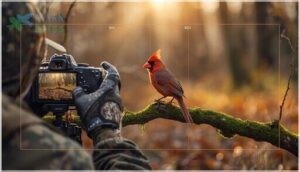
Camera angles determine what diagnostic features AI-powered bird recognition software can detect in your image. Side or three-quarter views reveal plumage patterns better than frontal shots, while a moderate focal length of 200–400 mm captures bird silhouettes without distortion. Eye-level angles preserve accurate body proportions for image analysis software. Keep enough distance to avoid spooking while maintaining sharp details.
Lighting techniques combined with thoughtful image composition give wildlife photography the clarity birdwatching tips recommend for reliable bird identification.
Features of AI-Powered Bird ID Tools
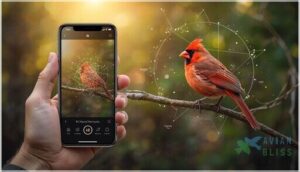
Modern bird identification tools deliver results in seconds using sophisticated machine learning systems. These platforms analyze your images against vast species databases to provide accurate matches without requiring registration or fees.
Understanding what these tools offer helps you make the most of their capabilities in the field.
Accessing Instant, Secure Results
You upload your photo and the AI delivers a species match in seconds—no waiting, no forms, and no risk to your privacy. Secure uploads protect your data while machine learning algorithms perform image analysis software operations behind the scenes.
The AI-powered bird identification techniques don’t require user authentication, so you stay anonymous. Instant feedback appears with result accuracy details, letting you verify findings immediately. Data privacy remains intact throughout the entire process.
Database Coverage and Species Range
Database completeness varies dramatically across regions and taxonomic groups in AI-powered bird recognition systems. Merlin Bird ID assists over 7,500 bird species through species classification algorithms, yet geographic bias affects regional coverage unevenly.
- North America and Europe receive extensive database support with frequent updates
- Tropical regions show taxonomic gaps due to fewer observer contributions
- Large, colorful species dominate training datasets over cryptic birds
- Species distribution models rely on crowd-sourced photos that introduce data quality concerns
Bird identification techniques improve as platforms integrate new observations and polish species coverage.
Maximizing Accuracy in Bird Photo ID
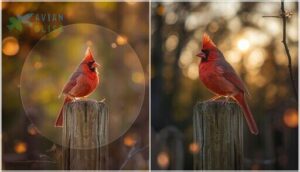
Getting a successful ID from your bird photo isn’t just about uploading an image and hoping for the best. The quality of your shot and the conditions you’re working with directly impact how well AI tools can recognize what you’ve captured.
Let’s walk through the most common pitfalls and the practical steps that actually improve your identification results.
Common Mistakes and How to Avoid Them
Blurry shots sabotage bird identification technology faster than anything else. Image quality issues from motion blur can drop AI-powered bird recognition accuracy by 10 to 40 percent. Lighting problems like backlighting create silhouettes that hide plumage details machine learning algorithms need.
Distance errors matter too—birds filling less than one-third of your frame often fail species recognition. Don’t rely on feature overreliance either; check bill shape and habitat, not just color. Contextual mistakes happen when you ignore range maps.
Environmental Factors Affecting Results
Strong shadows and uneven illumination can tank your results by 15 to 20 percent—machine learning needs balanced light to read plumage correctly. Background clutter from dense vegetation hides key features and boosts false negatives. Occlusion factors like branches obscure diagnostic marks. Weather conditions such as fog reduce contrast.
Habitat complexity matters for wildlife conservation and environmental science applications tracking conservation status of birds.
Best Practices for Reliable Identification
Treat AI-powered bird recognition as your starting point, not your finish line. Photo analysis gives you a candidate list—species verification demands you cross-check field marks against multiple references. Image quality drives accuracy, so shoot from several angles to capture diagnostic features. Identification techniques improve when you combine technology with field knowledge.
- Photograph birds from side and three-quarter views to reveal wing bars, eye-rings, and tail patterns
- Compare AI suggestions against field guides showing age, sex, and seasonal plumage variations
- Upload multiple images of the same individual to document key field marks from different perspectives
- Note habitat, behavior, and range data to validate species identification beyond visual matches alone
- Review AI confidence scores and consider alternate species when certainty falls below 90 percent
Benefits and Limitations of Photo Identification
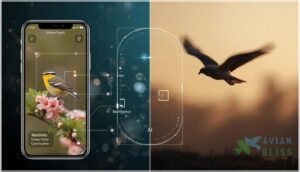
Photo identification tools have transformed how you study birds in the field and at home. These AI platforms deliver impressive accuracy for most species, but they aren’t perfect across the board. Understanding where they excel and where they fall short helps you make the most of this technology.
Use Cases for Birdwatchers and Researchers
Photo-based Bird Identification transforms how you contribute to ornithology and Citizen Science. Automated Image Recognition lets novice birders document Bird Species without field guide expertise, while Research Applications include Species Monitoring for range shifts and habitat studies.
AI-powered Bird Recognition converts your snapshots into verified records on platforms like eBird, supporting Ecological Studies and Bird Conservation. You build personal life lists and advance scientific understanding simultaneously.
Accuracy Rates and Data Quality Insights
AI-powered Bird Identification delivers reliable results when you understand its performance metrics. Computer Vision models reach roughly 90 percent Species Precision on clear photos, but Photo Quality drives accuracy.
Data Validation studies reveal:
- High-confidence Machine Learning outputs exceed 95 percent correctness
- Image Recognition struggles with tyrant flycatchers and ovenbirds
- Error Analysis shows 10 percent of species need expert review
AI-powered systems improve as training datasets grow.
Supporting Conservation and Citizen Science
Your bird photos don’t just satisfy curiosity—they fuel conservation efforts worldwide. Platforms like eBird and iNaturalist have collected over 1.5 billion observations, powering biodiversity monitoring at scales professional surveys can’t match.
Your bird photos power global conservation, contributing to over 1.5 billion observations that drive biodiversity monitoring at unprecedented scales
This citizen engagement drives species preservation through data validation and AI-powered bird recognition. Wildlife conservation depends on these citizen science contributions, turning your smartphone snapshots into research-grade records that inform protection strategies.
Frequently Asked Questions (FAQs)
Is there a free bird identification app by picture?
Ironically, the best bird identification technology costs nothing. Merlin Bird ID offers free AI-powered bird recognition for over 8,000 species worldwide. You can upload photos directly from your mobile device and receive instant, accurate results offline.
How do I tell what kind of bird I found by picture?
Upload your image to an AI-powered bird recognition tool like Merlin or Picture Bird. The software analyzes visual identification marks—plumage, beak shape, and size—then matches them against species recognition databases for instant bird ID results.
What is the app that identifies birds in images?
Merlin Bird ID stands as the primary photo identification app for most birders. Cornell Lab’s AI algorithms analyze your images against millions of records, recognizing over 8,000 species with impressive accuracy.
How to identify a bird from a photo on iPhone?
Your iPhone captures field marks that AI-powered bird identification apps analyze instantly. Upload clear photos showing plumage patterns and bill shape.
Cross-reference Photo ID suggestions with field guides for species verification before confirming your sighting.
How should photos be composed for best identification?
Good image composition separates the bird cleanly from cluttered backgrounds and captures full body views in natural light.
Focus sharply on field marks like head patterns, wings, and tail for reliable AI-powered bird recognition and photo ID.
Are there ethical considerations in photographing wild birds?
Wildlife ethics demand respect for bird welfare and conservation impact. You must maintain distance during nesting, avoid baiting or luring, and protect sensitive locations.
Animal rights and conservation status guide responsible nature photography and birdwatching practices.
How to document rare or unusual bird sightings?
Documenting rare species starts with field notes written during your sighting. Capture photos showing diagnostic marks, record exact location and date, then submit to regional bird committees following documentation standards that support conservation efforts.
What to do if a bird is partially obscured?
When branches or foliage hide key details, focus on visible features like wing patterns or bill shape.
AI-powered bird identifier tools analyze partial views using computer vision and contextual clues to suggest likely bird species matches.
Can AI identify juvenile or molting birds?
AI-powered bird recognition struggles with juvenile plumage and molting patterns because feather analysis depends on stable adult features.
Species identification accuracy drops when incomplete molt or transitional stages obscure key markers needed for reliable image recognition and species verification.
How do rare hybrids affect identification accuracy?
Rare hybrids carrying mixed ancestry create identification bias in AI-powered bird recognition systems. Their plumage variation falls between species classes, pushing models toward incorrect pure-species labels in overlap zones where genetic analysis reveals true intermediate ancestry.
Conclusion
The proof is in the pudding when identifying birds through photographs—image quality and technique determine whether AI delivers a confident match or a guessing game. Sharp focus captures diagnostic marks. Good lighting reveals true colors. Multiple angles eliminate uncertainty.
These tools work best when you understand their strengths and feed them usable data. Master the basics of wildlife photography and you’ll turn every field encounter into a reliable record worth sharing with the global birding community.
- https://onlinelibrary.wiley.com/doi/abs/10.1111/ibi.13137
- https://pmc.ncbi.nlm.nih.gov/articles/PMC10525479/
- https://pubs.aip.org/aip/acp/article/2717/1/030004/2899681/A-high-accuracy-approach-for-bird-species
- https://vt.audubon.org/news/naturalist-apps
- https://afonet.org/2023/03/identification-guide-to-north-american-birds-part-i-second-edition/