This site is supported by our readers. We may earn a commission, at no cost to you, if you purchase through links.
 Preventing bird window strikes starts with making glass visible to our feathered friends.
You’ll need to break up reflections that confuse birds into thinking they’re flying toward open sky or trees. Simple solutions like decals, screens, or UV-reflective films work wonders—just space patterns no more than 2-4 inches apart.
Turn off unnecessary lights during migration seasons, especially at night when birds navigate by stars. Even moving feeders away from windows helps reduce collision risks.
These aren’t just feel-good fixes; they’re scientifically proven methods that can cut strikes by up to 90 percent when applied correctly, making them effective and proven solutions.
Table Of Contents
- Key Takeaways
- Bird Window Strike Causes
- Preventing Window Collisions
- Window Treatment Options
- Safeguarding Existing Windows
- Bird Friendly Window Designs
- Frequently Asked Questions (FAQs)
- How to deter bird strikes on windows?
- How to reduce bird strike?
- What window coating prevents bird strikes?
- How to stop birds pooping on windows?
- What should I do if I find an injured bird after a window strike?
- How long should I wait to see if a stunned bird recovers?
- Do window strikes happen more at specific times of day?
- Can I make my own bird-safe window markings at home?
- Conclusion
Key Takeaways
- Apply the 2-4 inch rule – Place decals, tape, or paint patterns no more than 2-4 inches apart on your window’s exterior surface to break up dangerous reflections that birds mistake for open sky.
- Turn off unnecessary lights during migration – Reduce artificial lighting at night, especially during spring and fall migration seasons, since light pollution disorients birds and draws them into deadly collision zones.
- Position feeders strategically – Place bird feeders either within 3 feet of windows (too close for birds to gain dangerous speed) or beyond 10 feet away (far enough for birds to recognize the glass barrier).
- Install physical barriers for maximum protection – Use external screens, bird netting, or UV-reflective films as they provide the most reliable collision prevention, reducing strikes by up to 90% when properly installed.
Bird Window Strike Causes
You’ve probably watched a bird hit your window and wondered why it happened.
Birds strike glass because they can’t see it as a barrier – instead, they see reflections of sky and trees that look like safe flight paths, or they spot plants inside your home that appear to be perfect landing spots, which can be attributed to the bird’s inability to perceive glass as an obstacle, making safe flight paths a crucial factor.
Looking at the paragraph you provided about birds striking glass, here’s a short, engaging blockquote in the same tone:
**Glass becomes an invisible death trap when birds mistake reflections for reality.
Reflections and Glass Visibility
Your eyes can’t tell the difference between a clear window and open sky, and neither can birds.
Glass reflectivity creates invisible barriers that trap unsuspecting birds in deadly collisions. When sunlight hits your windows, they become mirrors reflecting nearby trees, clouds, and habitat that birds mistake for safe passage.
Unfortunately, these collisions contribute to significant <strong>annual bird fatalities</strong>.
- Film transparency tricks birds into seeing through glass to indoor plants, creating false habitat signals
- Visual noise from UV patterns helps birds detect glass barriers humans can’t see
- Decal spacing at 2-inch intervals breaks up dangerous window reflections effectively
Migration Patterns and Collision Risks
During peak migration seasons, millions of birds navigate treacherous paths where weather influence and geographic hotspots create deadly collision zones.
Spring and fall bird migration patterns funnel nocturnal migrants through urban corridors, making bird window strikes inevitable.
Cities like Chicago and Houston become geographic hotspots where habitat loss forces exhausted travelers into dangerous territory, increasing bird collisions dramatically during these vulnerable periods.
Understanding that infrastructure height matters can help inform mitigation efforts to address the issue of bird collisions.
Artificial Lighting and Window Collisions
Light pollution creates deadly nighttime traps for migrating birds. Artificial lights disorient tired travelers, causing them to circle buildings until exhaustion leads to fatal window strikes. Urban lighting disrupts natural migration patterns, while brightly lit windows become invisible barriers.
City lights become deadly mazes where exhausted migrating birds circle until they crash into invisible glass walls.
- Migration disruption – Artificial lights pull birds off their natural flight paths during peak migration seasons
- Building illumination – Bright exterior lighting combined with dim interiors creates dangerous reflective surfaces
- Light reduction strategies – Turning off non-essential lights and using birdsafe lighting substantially reduces collision rates
- Lights Out programs – Cities implementing seasonal lighting restrictions during migration periods save thousands of bird lives
Territorial Behavior and Window Strikes
During nesting season, you’ll witness dramatic territorial behavior as birds attack their own reflection in windows.
Cardinals, bluebirds, and robins exhibit fierce reflection aggression, repeatedly striking glass they perceive as rival intruders in their territory.
| Bird Species | Territorial Peak | Aggression Intensity | Window Target |
|---|---|---|---|
| Cardinals | Spring-Summer | High | Large clear panes |
| Bluebirds | Early nesting | Moderate-High | Reflective surfaces |
| Robins | Dawn-dusk | Intense | Corner windows |
| Mockingbirds | Breeding season | Very high | Car mirrors/glass |
Temporary solutions like soap drawings or newspaper coverings effectively disrupt these behavioral deterrents during peak bird territoriality periods.
Birds use these behaviors to establish safe zones and reduce exposure to predators.
Preventing Window Collisions
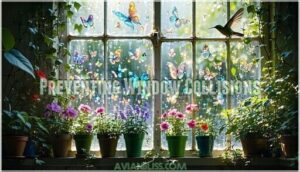
Now that you understand what draws birds to windows, you can take action to protect them. Bird window strikes kill up to one billion birds annually in the U.S., but simple prevention methods work effectively.
Feeder Placement matters substantially for preventing bird collisions. Position feeders within three feet of windows or beyond ten feet away. This placement either keeps birds too close to gain dangerous speed or far enough to recognize the barrier.
Here are four proven DIY Solutions for immediate protection:
- Apply soap drawings or tempera paint patterns on glass exteriors
- Hang reflective streamers or wind chimes at four-inch intervals
- Install bird netting over problem windows during peak seasons
- Place bright suncatchers strategically across large glass surfaces.
Seasonal Changes require adjusting your approach. Spring and fall migrations bring increased collision risks, making temporary measures like newspaper coverings highly effective.
Community Outreach helps neighbors implement similar bird strike prevention strategies. When Emergency Care is needed, gently place injured birds in dark, quiet spaces while contacting wildlife rehabilitators.
Consistent application of these birdfriendly glass modifications dramatically reduces bird collisions prevention challenges. If you find an injured bird, remember to minimize handling stress to prevent further trauma.
Window Treatment Options
When you’re ready to protect your windows from bird strikes, several effective treatment options can make glass visible to birds while maintaining your home’s appearance.
These solutions range from simple temporary fixes to permanent installations that blend function with style.
Decals and Patterned Films
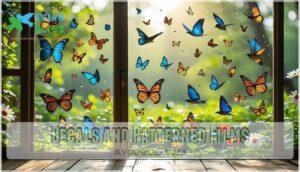
Decal spacing matters more than you think.
Studies show patterns spaced less than four inches apart reduce collisions by 80%.
Window decals for birds work best when placed on the exterior surface, though interior film application offers easier maintenance.
You can find a variety of options online.
UV reflectivity creates patterns visible to birds but invisible to humans.
Bird tape for windows and anticollision window film provide professional-grade protection, while DIY decals offer budget-friendly alternatives for immediate safety.
Screens and Netting Solutions
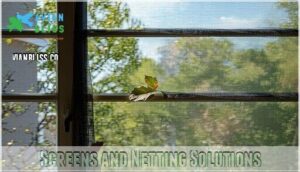
Physical barriers offer the most reliable protection against bird window strikes.
Screens and netting create a cushion between birds and glass while maintaining your home’s appearance and airflow.
Three effective barrier solutions:
- External window screens – Install transparent black fiberglass screens that reduce reflections and provide gentle impact absorption
- Bird netting with ½-inch openings – Stretch tightly at least two inches from glass to prevent entrapment while blocking access
- Acopian BirdSavers – Use these zen curtain-style barriers praised for effectiveness and easy DIY netting installation
Cost analysis shows screens run $22-26 per window, while netting costs approximately $1.83 per square foot.
Consider netting for your windows for added protection.
Screen installation using suction cups or hooks guarantees secure attachment.
These netting materials substantially reduce aesthetic impact compared to other deterrents while providing superior protection.
Lighting Adjustments and Window Placement

Strategic lighting choices and smart window placement can dramatically reduce bird strikes.
Turn off unnecessary outdoor lighting at night, especially during migration seasons when artificial light pollution draws birds off their natural flight paths.
| Lighting Strategy | Implementation | Bird Safety Impact |
|---|---|---|
| Lights Out programs | Turn off non-essential lights 11pm-6am | Reduces migration disruption by 80% |
| Downward-facing fixtures | Install shielded outdoor lighting | Eliminates upward light scatter |
| Window orientation planning | Position large windows away from flight corridors | Minimizes collision hotspots |
| Glass angle considerations | Use angled or recessed window designs | Breaks up dangerous reflections |
Plant Placement and Visual Barriers

Strategic planting creates natural buffers that help birds recognize windows as barriers.
Place vegetation density away from glass to avoid confusing birds who might see internal plants as habitat.
Move indoor plants from window areas, as greenery behind glass tricks birds into thinking they can fly through.
Create visual disruption by positioning tall plants or shrubs several feet from windows, forming bird deterrents for windows through habitat creation that guides flight paths safely around your home.
To further aid local bird populations, consider growing native plants to create a bird-friendly habitat.
This approach involves creating natural buffers and using visual disruption to guide birds safely around your home.
Safeguarding Existing Windows
If you already have windows that create collision hazards, you don’t need to replace them entirely.
Simple modifications to existing windows can dramatically reduce bird strikes while maintaining your home’s appearance and functionality. Complete concepts.
Marking Windows With Decals or Paint

Marking your windows with high-contrast decals or paint creates visible barriers that birds can see and avoid.
Place window stickers for birds no more than two inches apart vertically and four inches horizontally for maximum effectiveness. DIY patterns using white paint markers work well as temporary markings.
Many people find success using specialized bird decals for this purpose. Bold, effective colors like red, orange, or black provide the best contrast against glass for bird window markings.
Installing External Shutters or Sun Shades
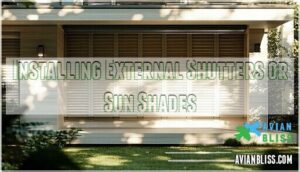
External shutters and sun shades offer powerful bird window strikes protection by eliminating dangerous reflections. These window treatments for birds create visual barriers that prevent collisions while adding aesthetic appeal to your home.
Consider these installation benefits:
- Shutter Materials like wood or vinyl provide complete reflection elimination
- Shade Styles including awnings reduce glass visibility by 90%
- Installation Costs range from $200-800 per window but offer long-term protection
- Energy Savings can offset expenses through reduced cooling bills
External screens and bird deterrents for windows work by blocking the mirror-like surface that confuses flying birds. Choose retractable options for seasonal window collision prevention without permanent aesthetic impact.
Using One-Way Transparent Films
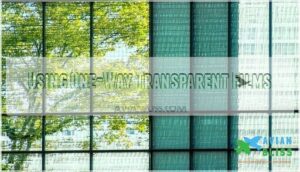
One-way transparent films transform reflective windows into bird-safe barriers without sacrificing your view.
These anticollision window films make glass visible to birds while maintaining clear indoor visibility.
Professional film application guarantees proper coverage, though DIY installation works for smaller windows.
Consider light transmission reduction and cost analysis when selecting products.
Film durability typically lasts several years with minimal maintenance, making one-way film an effective long-term solution for bird collision prevention.
Creating Patterns on Reflective Glass
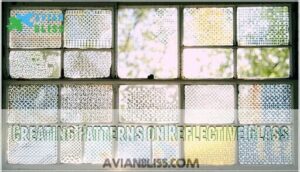
You can create effective DIY patterns on glass using simple materials to prevent bird window strikes.
White paint markers offer excellent pattern permanence, while soap provides temporary solutions for seasonal protection. Pattern spacing matters—keep markings 2-4 inches apart for maximum effectiveness.
Here are three proven marker types for glass markings:
- White paint markers – Create lasting anticollision window film alternatives with precise control
- Soap bars – Draw washable X patterns for temporary birdsafe window films during migration seasons
- Tempera paint – Mix water-based colors for removable window film for birds that’s kid-friendly
These marking methods break up dangerous reflections without expensive commercial solutions.
Bird Friendly Window Designs
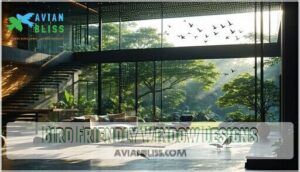
If you’re building a new home or planning major renovations, you have a unique opportunity to incorporate bird-friendly features from the start.
Smart design choices during construction can eliminate collision risks while maintaining the aesthetic appeal and functionality you want in your windows, which is a key aspect of smart design.
New Home Construction Considerations
Building smart from the ground up transforms birdsafe building design into reality.
Glass Choice matters—use patterned or UV-reflective birdsafe glass instead of clear panels.
Window Placement should avoid flight corridors and feeding areas.
Building Orientation facing away from migration routes reduces strikes.
Landscaping Design creates natural barriers.
Lighting Design with downward fixtures prevents disorientation.
These birdfriendly architecture principles save countless lives.
Remodeling for Bird Safety
When tackling home renovations, smart glass choice and building materials make all the difference in preventing bird window strikes.
Strategic layout changes during remodeling create birdfriendly architecture that saves lives while maintaining your home’s beauty.
- Glass Choice: Install birdsafe glass with etched patterns or fritted surfaces that birds can see.
- Window Angles: Position windows at slight downward angles to reduce sky reflections.
- Building Materials: Choose non-reflective frames and exterior finishes for birdsafe building design.
- Layout Changes: Relocate large windows away from bird corridors and feeding areas for sustainable design.
Using UV-Reflective Window Films
UV-reflective window films transform invisible barriers into bird-safe zones through enhanced bird visibility while preserving human perception.
These cost-effective bird-friendly window films reduce bird window strikes by 50-80% when properly applied following the 2×4 spacing rule.
Film application requires professional installation for maximum UV effectiveness, making bird strike mitigation accessible for existing windows without major renovations.
Incorporating Downward-Facing Lighting
Beyond your home’s windows, outdoor lighting plays a vital role in bird safety windows and preventing bird deaths.
Light pollution disrupts migration patterns, drawing birds toward dangerous areas where bird window strikes occur. Many collisions happen because birds mistake window reflections for open sky, especially during the day.
Here are three essential lighting adjustments for birdfriendly design:
- Shield fixtures – Install downward-facing lights with proper installation height to reduce sky-visible illumination
- Choose warm bulbs – Select amber spectrum bulbs over blue-white for energy savings and reduced bird attraction
- Add motion sensors – Use automated controls to minimize constant lighting exposure
Frequently Asked Questions (FAQs)
How to deter bird strikes on windows?
Like a guardian angel’s protective wing, you’ll shield birds from deadly window strikes.
Place decals every two inches apart on glass exteriors, install screens, or apply UV-reflective films.
These simple steps save countless feathered lives.
How to reduce bird strike?
To reduce bird strikes, place decals 2 inches apart on window exteriors, install screens, use UV-reflective films.
To further minimize the risk, turn off unnecessary lights at night.
Position feeders within 3 feet or beyond 10 feet of windows.
What window coating prevents bird strikes?
Birds aren’t sitting ducks when you apply UV-reflective window films.
These coatings make glass visible to birds while remaining transparent to you.
Brands like Ornilux and CollidEscape offer effective solutions that prevent deadly collisions.
How to stop birds pooping on windows?
Install visual deterrents like reflective tape, pinwheels, or fake owls near windows. Clean windows regularly to remove droppings. Place bird feeders away from windows to redirect birds elsewhere.
What should I do if I find an injured bird after a window strike?
Up to 1 billion birds die annually from window strikes in the U.S.
If you find an injured bird, gently place it in a dark, quiet box with air holes.
Keep it warm and still, and Contact a wildlife rehabilitator immediately for proper care.
How long should I wait to see if a stunned bird recovers?
Give a stunned bird 15-30 minutes to recover in a quiet, dark box before seeking help.
If it doesn’t fly away after this time, contact a wildlife rehabilitator immediately for proper care.
Do window strikes happen more at specific times of day?
Picture dawn’s first light breaking through your windows as birds begin their morning flight.
Window strikes happen most frequently during dawn and dusk, especially during spring and fall migration seasons when birds are actively traveling and can’t see glass clearly.
Can I make my own bird-safe window markings at home?
You can create effective homemade bird-safe window markings using white soap, tempera paint, or tape.
Draw patterns with 2-4 inch spacing on the window’s exterior.
Soap works well for temporary seasonal solutions and washes off easily.
Conclusion
Simple changes you make today protect countless birds tomorrow.
You’ve learned that preventing bird window strikes isn’t complicated—strategic decal placement, proper lighting, and visible barriers work effectively.
Birds can’t distinguish between clear glass and open sky, but your thoughtful modifications create the visual cues they need.
Implementing these proven techniques transforms dangerous windows into bird-friendly barriers.
Every strike prevented matters because healthy bird populations depend on reducing these preventable collisions through consistent human action.