This site is supported by our readers. We may earn a commission, at no cost to you, if you purchase through links.
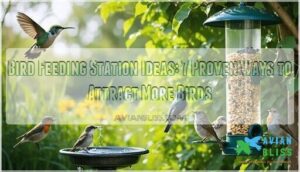 Creating effective bird feeding station ideas starts with smart placement near natural cover like shrubs or trees.
You’ll want multiple feeder types – platform feeders for ground-feeding birds, tube feeders for finches, and nectar feeders for hummingbirds.
Quality sunflower seeds and peanuts attract the widest variety of species, while thistle seeds help deter squirrels.
Position feeders at different heights and distances from jumping points to outsmart persistent critters.
Adding a water source doubles your success rate since birds need both food and drink.
The secret lies in understanding which specific combinations work best for your local bird population, using effective bird feeding station ideas.
Table Of Contents
- Key Takeaways
- Bird Feeder Location Tips
- Top 7 Bird Feeders
- Bird Food Selection Guide
- Squirrel Prevention Methods
- Creating Bird Friendly Stations
- Frequently Asked Questions (FAQs)
- How do I make a bird feeding station?
- How to choose a bird feeder station?
- What to feed birds at a bird feeding station?
- What is a bird feeding station?
- How do I get the most out of my bird feeding station?
- How do you decorate a bird feeding station?
- What is the 5 7 9 rule for bird feeders?
- How to make your own bird feeding station?
- Why put a potato in the bird feeder?
- How to set up a bird feeder station?
- Conclusion
Key Takeaways
- You’ll maximize bird visits by positioning feeders near natural cover like shrubs or trees, but keep them at least 10 feet from jumping points to outsmart squirrels.
- You’ll attract the widest variety of species using quality sunflower seeds and peanuts while avoiding cheap mixes filled with milo and wheat that birds simply ignore.
- You’ll create a complete bird habitat by combining multiple feeder types at different heights with fresh water sources, which doubles your success rate.
- You’ll maintain healthy feeding stations through weekly cleaning with dilute bleach solution and regular seed rotation to prevent mold growth and disease transmission.
Bird Feeder Location Tips
You’ll want to position your bird feeder where birds naturally feel secure, which means choosing a spot with nearby shrubs, trees, or other cover they can quickly escape to if predators appear.
Smart placement makes all the difference—birds need escape routes nearby to feel safe while feeding.
Avoid placing feeders in the middle of wide-open spaces where birds feel exposed—they prefer having a quick exit strategy within about 10-15 feet of their dining spot.
Choosing a Spot With Nearby Perching or Hiding Places
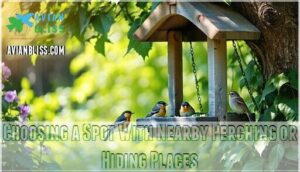
For your bird feeding station, select spots near shrubs, trees, or fences that provide natural cover. These hiding places offer predator protection and weather shelter, making birds feel secure while feeding.
Position feeders where you can easily observe bird visibility from windows while ensuring refilling ease for maintenance. This strategic placement creates aesthetic integration with your landscape, turning your bird feeding location into an attractive focal point.
That successfully attracts birds to your thoughtfully designed bird feeding station, making it a place where birds feel secure and can be easily observed, which is the key to creating a thoughtfully designed space.
Avoiding Open and Barren Yards
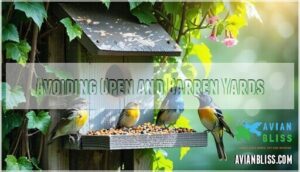
Isolation spells trouble for your bird feeding station ideas.
Birds won’t venture into exposed areas where predators can easily spot them.
They need natural cover like shrubs or trees within 10-15 feet for quick escapes, and proper habitat support is essential for their safety.
Without proper habitat support, even the best garden bird feeders become lonely monuments.
Smart placement near vegetation provides essential predator protection and weather shelter, dramatically increasing bird visitation to your thoughtfully designed feeding area.
Ensuring Feeder Accessibility for Refilling and Cleaning
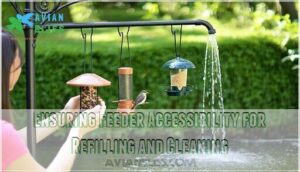
Position your bird feeding station where you can easily reach it for regular maintenance.
Place feeders at a comfortable height for refilling without needing ladders or tools.
Choose feeder designs with wide openings and removable parts for thorough cleaning.
Remember, weekly cleaning frequency keeps your bird feeding station healthy and attracts more visitors.
Easy access means you’ll actually maintain your bird feeding accessories consistently.
Top 7 Bird Feeders
You’ll want to choose the right feeder types to create a feeding station that attracts various bird species throughout the year.
Each feeder design serves different birds and feeding preferences, so combining multiple styles maximizes your success in building a thriving backyard habitat.
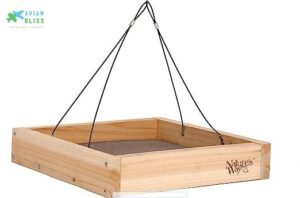
1. Cedar Platform Tray Bird Feeder
 View On Amazon
Why settle for ordinary when cedar platform feeders deliver extraordinary results?
These versatile feeders attract cardinals, jays, doves, sparrows, and woodpeckers simultaneously. The open design accommodates various foods—sunflower seeds, peanuts, fruits, even suet.
Looking at the paragraph about cedar platform feeders, here’s an engaging blockquote in the same tone:
**One feeder design welcomes cardinals, jays, doves, sparrows, and woodpeckers all at once—no fighting over perches required.
Multiple birds can feast together without squabbling over perches. You’ll love the easy maintenance with removable screens for quick cleaning.
Place it on a post, hang it, or set it ground-level—your choice, thanks to cedar’s natural rot-resistance, which means you’ll enjoy years of reliable service.
Best For: Backyard bird enthusiasts looking for a durable, versatile feeder that attracts a wide variety of bird species and offers easy maintenance.
- Attracts multiple bird species at once, including both small and large birds.
- Open, platform design allows for various types of bird food and easy cleaning.
- Made from rot-resistant cedar, ensuring long-lasting outdoor use.
- Open design makes it accessible to squirrels and larger unwanted birds.
- Exposes food to rain and droppings, requiring frequent cleaning and monitoring.
- May need frequent refilling during high bird activity times.
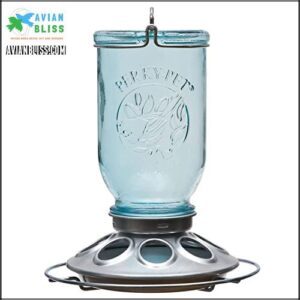
2. Perky Pet Mason Jar Feeder
 View On Amazon
You’ll discover this vintage-inspired feeder combines old-world charm with modern functionality.
The Perky Pet Mason Jar Feeder holds one pound of seed in its embossed blue glass container, featuring eight feeding ports and a circular perch for multiple birds.
While birds absolutely love it—requiring refills every other day—the flip-top design can be messy during refilling.
The sturdy glass and metal construction withstands weather beautifully, though it won’t deter determined squirrels.
Consider squirrel-proof feeder designs to avoid this issue, which is a common problem with feeders that are not squirrel-proof, and to ensure you have a bird-friendly environment with a functional feeder.
Best For: Gardeners and bird lovers who appreciate vintage design and want a durable, attractive feeder for frequent bird visitors.
- Refilling process can be messy due to flip-top design
- Not squirrel-proof; additional measures needed to deter pests
- Hook attachment may require extra hardware for secure hanging
- Sturdy glass and metal construction holds up to weather and frequent use
- Easy to clean with wide-mouth access and simple disassembly
- Aesthetic antique blue glass design adds charm to outdoor spaces
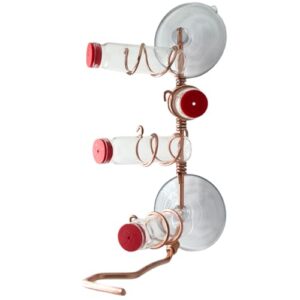
3. SWEET FEEDERS Copper Hummingbird Window Feeder
 View On Amazon
Looking through your window at hovering hummingbirds becomes effortless with this premium copper feeder.
You’ll appreciate its 100% solid copper construction that won’t break like plastic alternatives, while the strong suction-cup design attaches securely to any window.
The bee-proof engineering tilts bottles at 45 degrees, creating air pockets that keep wasps away but welcome hummingbirds.
Easy-clean glass bottles and dishwasher-safe components make maintenance simple, encouraging the frequent nectar changes that keep your tiny visitors healthy and coming back.
Best For: People who want a durable, bee-proof window feeder for close-up hummingbird viewing and easy maintenance.
- Small nectar vials require frequent refilling
- Suction cups and caps may fade with prolonged sun exposure
- Tiny containers can be challenging to clean thoroughly
- 100% solid copper construction for durability and premium appearance
- Bee-proof design with angled bottles to deter insects
- Easy-to-clean, dishwasher-safe components for hassle-free maintenance
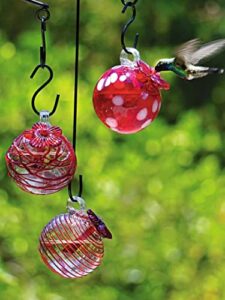
4. Droplet Hummingbird Feeders Set of Three
 View On Amazon
With sparkling ruby glass that catches sunlight like dewdrops, these three compact feeders create an enchanting hummingbird haven.
Each holds about half a cup of nectar, requiring frequent refills that actually work in your favor—fresh nectar means healthier birds.
The small size minimizes waste while the grouped setup reduces territorial squabbles among your zippy visitors.
Though some gardeners report mixed success attracting hummingbirds, many enjoy daily visits from dozens of these aerial acrobats once word spreads through the neighborhood.
Best For: Gardeners who want to attract hummingbirds with decorative, easy-to-hang feeders and are willing to refill them often to keep nectar fresh.
- Vibrant ruby glass and compact design add a decorative touch and attract hummingbirds.
- Frequent refilling ensures fresh nectar, promoting healthier birds.
- Grouping feeders reduces territorial behavior and supports more bird visits.
- Small capacity requires daily or frequent refilling, especially in hot weather.
- Mixed feedback on effectiveness—some users report hummingbirds don’t always use them.
- Fragile glass construction demands careful handling and is not suitable for freezing temperatures.
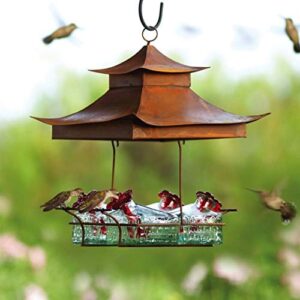
5. Clear Hummingbird Feeder Basketweave Design
 View On Amazon
This feeder’s clear reservoir works like a window into your hummingbirds’ dining habits, letting you monitor nectar levels without guesswork.
The basketweave design adds charm while the transparent plastic makes maintenance a breeze—you’ll spot mold or spoilage instantly.
With 8-12 ounce capacity, it strikes the perfect balance between frequent refills and convenience.
Users love the flower-shaped ports that mimic nature, though some report occasional leaks or breakage if dropped.
Clean twice weekly and hang in shade to keep nectar fresh longer.
Best For: Hummingbird enthusiasts seeking an easy-to-clean, visually appealing feeder that allows quick monitoring of nectar levels.
- Clear reservoir makes it easy to see when nectar needs refilling.
- Charming basketweave design enhances outdoor spaces.
- Flower-shaped ports offer natural, comfortable feeding spots.
- Can leak or break if dropped or mishandled.
- Limited capacity may require more frequent refilling.
- Replacement parts can be hard to find after breakage.
6. Mosaic Birds Clear Hummingbird Feeder
 View On Amazon
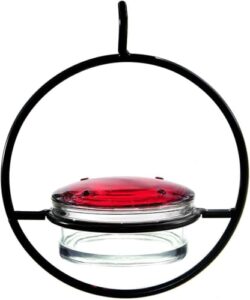
Some folks swear by the Mosaic Birds Clear Hummingbird Feeder’s artistic appeal, but you’ll want to bear in mind its practical limitations.
This glass-and-metal design holds about ⅓ cup of nectar and features a transparent base for easy monitoring.
However, the intricate construction makes thorough cleaning challenging, and the narrow tubes can harbor bacteria.
While it’s undeniably beautiful as garden art, many hummingbirds actually prefer simpler saucer-style feeders.
The copper components may also overheat in direct sunlight, potentially burning tiny feet, which is a significant practical limitation.
Best For: Gardeners who value elegant, eco-friendly design and want a decorative feeder that stands out as garden art.
- Narrow tubes and detailed parts make cleaning difficult and may harbor bacteria
- Copper and metal components can overheat in sun, risking burns for birds’ feet
- Intricate design may be less practical for hummingbird feeding compared to simple saucer-style feeders
- Made from recycled glass and powder-coated metal, offering durability and eco-friendliness
- Transparent base makes nectar level and spoilage easy to monitor
- Modern, artistic look adds a stylish touch to any outdoor space
7. Pineapple Hummingbird Feeder Bright Tropical Design
 View On Amazon
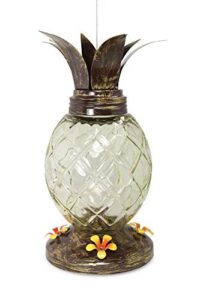
This tropical showstopper transforms your garden into a hummingbird paradise with its vibrant pineapple design.
The 28-ounce capacity means you’ll refill it weekly instead of daily, while five feeding ports accommodate multiple birds without squabbles.
Its wide-mouth top prevents messy spills during refilling—no more sticky fingers! The built-in ant moat and bee-resistant ports keep unwanted guests away naturally.
At around $50, it’s pricier than basic feeders, but the handcrafted glass construction and leak-proof design make it worth every penny for serious bird enthusiasts.
Best For: Serious hummingbird enthusiasts who want a visually stunning, low-maintenance feeder that attracts multiple birds at once.
- Pricier than standard feeders (about $50)
- Cleaning can be difficult due to beveled glass and multiple parts
- Occasional leaking or water ingress reported, especially in heavy rain
- Striking handcrafted glass design adds charm and attracts hummingbirds quickly
- Large 28-ounce capacity and five feeding ports reduce refill frequency and minimize bird competition
- Easy-fill, spill-proof top with built-in ant moat and bee-resistant silicone flowers
Bird Food Selection Guide
You’ll want to choose the right seeds to turn your backyard into a bird magnet, and it’s easier than you might think.
The secret lies in understanding what different bird species actually crave, not just grabbing the cheapest mix from the store shelf, which is the key to creating a space that attracts a variety of species, making it a true backyard haven.
Using Sunflower Seeds and Peanuts to Attract a Wide Range of Birds
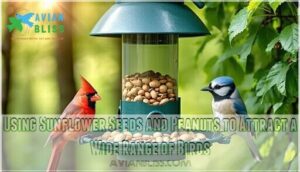
Sunflower seeds pack a nutritional punch that attracts cardinals, chickadees, and woodpeckers to your bird feeding station.
Black-oil sunflower varieties offer thin shells and high fat content, perfect for winter energy. Peanuts bring robins, nuthatches, and jays into the mix.
Offering sunflower seeds can also improve plumage quality. Choose unsalted options and store both seeds properly to prevent spoilage while maximizing bird preferences.
Including Small Amounts of Corn and White Millet for Variety
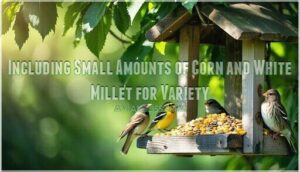
While sunflower seeds and peanuts form your bird feeding station’s foundation, adding corn and white millet creates irresistible variety.
These grains offer excellent corn nutritional value and satisfy specific millet bird preferences.
You’ll want balanced seed mix ratios—roughly 10-15% corn and millet combined, as this strategic blend serves as smart filler seed alternatives, especially when regional grain availability varies.
Different bird species gravitate toward these options, making your bird feeders more appealing to diverse visitors, with the combination of grains acting as a key factor in attracting a wide range of birds to your feeders, ultimately creating a smart filler seed alternative.
Avoiding Cheap Seed Mixes With Fillers
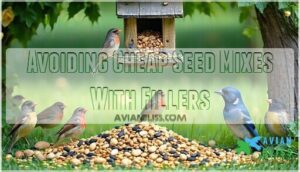
Most bird seed mixes are loaded with cheap fillers that’ll leave you disappointed. Filler Seed Dangers become obvious when you watch birds toss half your "bargain" blend onto the ground.
Here’s what savvy bird lovers avoid:
- Milo and wheat – birds ignore these completely
- Oats and cracked corn fillers – attract pests, not songbirds
- Mystery ingredient blends – check those Birdseed Ingredient Labels
Seed Quality Matters more than price. Choose best bird seed with sunflower seeds and peanuts as primary ingredients. Your feathered friends will thank you, and you’ll waste less bird food on cleanup duty.
Experimenting With Different Foods to Determine Local Bird Preferences
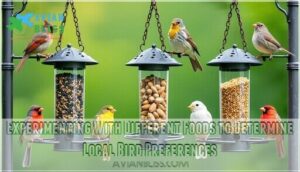
Testing different foods reveals which bird species visit your yard most often.
Start with high-quality bird seed mixtures, then try specific options like sunflower seeds and peanuts.
Track which foods disappear fastest to understand your Local Preferences.
| Food Type | Best For |
|---|---|
| Sunflower seeds | Cardinals, chickadees, nuthatches |
| Nyjer/thistle | Goldfinches, siskins, redpolls |
| Peanuts | Blue jays, woodpeckers, nuthatches |
| White millet | Sparrows, juncos, doves |
| Safflower | Cardinals (squirrel-resistant) |
Your bird feeding experimentation should span seasons since Seasonal Foods change with migration patterns.
Food Quality matters more than Seed Variety – fresh seeds always outperform stale ones for Attracting Birds successfully.
Squirrel Prevention Methods
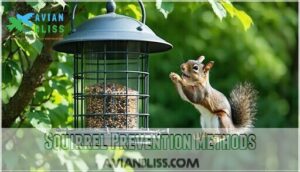
Even with the best bird food selection, squirrels can quickly turn your peaceful feeding station into their personal buffet.
These acrobatic raiders can jump up to 8 feet and will outsmart poorly designed setups, leaving frustrated bird watchers with empty feeders and disappointed feathered friends, making them a significant challenge to peaceful bird watching.
Using Squirrel-resistant Seeds Like Thistle and Safflower
Smart gardeners know that certain seeds act like nature’s bounty hunters—naturally repelling squirrels while attracting songbirds.
These squirrel-resistant options transform your bird feeding station into a selective dining experience.
Here’s your strategic seed selection:
- Thistle seed benefits – Finches love these oil-rich seeds, but squirrels find them unappetizing due to their bitter taste and small size
- Safflower seed appeal – Cardinals and chickadees adore these white seeds, while squirrels typically avoid their bitter flavor
- Seed mix strategies – Combine safflower with hot pepper blends for double protection against persistent raiders
- Regional seed variations – Test different ratios since bird preferences vary by location; some areas show stronger safflower acceptance than others
While squirrels may eventually sample these alternatives when desperate, they’ll generally seek easier targets elsewhere, keeping your squirrel proof feeder stocked for genuine feathered visitors.
Installing Squirrel Baffles and Bird Feeder Poles
Professional squirrel baffles and sturdy bird feeder poles create an impenetrable fortress around your bird feeding station.
These dual defenders work together, turning your yard into a squirrel-proof sanctuary where birds can feast peacefully while frustrated squirrels retreat in defeat.
Effective squirrel deterrent solutions are essential for bird feeding success.
| Baffle Types | Installation Benefits |
|---|---|
| Dome Baffles | Easy pole installation, weather-resistant |
| Cylinder Baffles | Maximum squirrel defeat, adjustable height |
| Wrap-Around Guards | Feeder stability, low maintenance tips |
| Torpedo Baffles | Critter management, sleek appearance |
Placing Feeders at Least 10 Feet From Launching Points
Strategic placement keeps squirrels at bay – these acrobatic athletes can leap up to 8 feet horizontally.
Position your bird feeding station beyond their jumping distance from trees, fences, or structures.
Map potential launching points around your yard and measure carefully.
Even the craftiest squirrel can’t defy physics when feeders sit in the sweet spot of proper distance, ensuring that strategic placement is key to keeping them away.
Regularly Cleaning and Maintaining Feeders to Prevent Pest Interference
Clean feeders prevent mold growth and disease transmission that can harm birds and attract unwanted pests.
Use a dilute bleach solution for thorough feeder hygiene and disease control. Empty old seeds before refilling to guarantee mold prevention.
Metal components require less material maintenance than other materials. Don’t forget baffle upkeep – clean these regularly too.
Proper bird feeding maintenance keeps your bird feeding station healthy and reduces bird feeding critter management issues while supporting bird feeding safety.
Creating Bird Friendly Stations
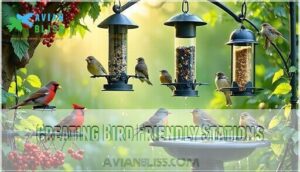
You’ll create a complete bird-friendly ecosystem when you combine multiple feeders with fresh water sources and native plants that birds love.
This integrated approach transforms your yard into a bird magnet that attracts diverse species year-round while providing everything they need to thrive.
Combining Feeders With Water Sources and Bird-friendly Landscaping
Beyond squirrel deterrents, you’ll want to create a complete bird habitat.
Adding a bird bath nearby doubles your bird traffic since birds need water for drinking and bathing.
Plant native shrubs around your bird feeding station to provide natural shelter and attract insects that birds love.
You can find a wide selection online to suit your garden’s style.
Water source types and landscaping elements that boost bird activity:
- Shallow bird baths (1-2 inches deep) with rough surfaces for grip
- Native berry bushes like elderberry and serviceberry for natural food sources
- Dense shrubs positioned 3-8 feet from feeders for quick escape routes
- Ground cover plants that attract insects for natural pest control
- Small trees with branching patterns that create multiple perching spots
This integrated approach supports the entire ecosystem while making your yard irresistible to birds.
Tailoring Seed Types to Specific Bird Species
Understanding seed preferences helps you match bird species with their dietary needs effectively.
Black oil sunflower seeds attract 88% of eastern bird species, while nyjer exclusively draws finches like goldfinches.
Cardinals prefer safflower seeds, which deter starlings.
Ground-feeders such as doves enjoy white millet scattered on trays.
Regional variations affect preferences, so experiment with different seed blends at your bird feeding station to discover what wild bird species visit your area most frequently.
Many enjoy providing sunflower seeds for birds.
Mixing Different Feeding Stations and Food Sources to Increase Bird Diversity
Diversity creates a thriving bird feeding station when you combine multiple feeder types and Food Source Variety.
Your Feeder Placement Strategy should include tube feeders, platform feeders, and suet holders at different heights. This approach transforms your backyard into a complete dining experience for Attracting Specific Birds.
- Ground-level platform feeders attract sparrows, juncos, and towhees who prefer feeding close to earth
- Mid-height tube feeders loaded with sunflower seeds draw cardinals, chickadees, and finches
- High suet feeders provide essential fats for woodpeckers, nuthatches, and other insect-eating species
To further enhance your bird feeding station, consider planting native trees for natural food sources.
Considering Seasonal Changes and Adjusting Feeder Offerings Accordingly
Your bird feeding station needs seasonal adjustments to match changing bird behaviors.
Switch to Winter Suet and high-fat seeds when temperatures drop, helping birds build energy reserves.
Spring Nectar supports breeding pairs during Molting Season, while Summer Seeds should be reduced as natural food becomes abundant.
Autumn Berries and protein-rich options prepare migrating species for long journeys ahead.
Frequently Asked Questions (FAQs)
How do I make a bird feeding station?
Choose a location with nearby cover but 10 feet from jump points.
Install a sturdy pole with squirrel baffle.
Add multiple feeder types at different heights.
Use quality seeds like sunflower and nyjer.
Clean regularly.
How to choose a bird feeder station?
While complexity seems appealing, simplicity wins—you’ll choose your station based on target birds, location safety, and maintenance ease.
Consider hopper feeders for versatility, tube feeders for finches, and platform feeders for ground-feeding species.
What to feed birds at a bird feeding station?
Feed your feathered visitors sunflower seeds, peanuts, nyjer, and safflower seeds to attract diverse species.
Skip cheap mixes with fillers like milo and wheat that birds ignore, focusing instead on quality options that’ll keep them coming back for more.
What is a bird feeding station?
You might think it’s just a fancy name for scattering seeds, but a bird feeding station’s actually a thoughtfully planned setup.
Combining multiple feeders, food types, and strategic placement to attract diverse bird species to your yard.
How do I get the most out of my bird feeding station?
Position feeders near natural cover like shrubs but ten feet from jumping points to outsmart squirrels.
Use quality seeds—sunflower, peanuts, nyjer—and clean regularly with dilute bleach to prevent disease and maintain consistent bird visits.
Use these methods to ensure a pleasant and healthy environment for the birds.
How do you decorate a bird feeding station?
You transform stations into welcoming havens through natural materials, seasonal themes, and thoughtful placement.
Add colorful flowers, wooden benches, native plants, and decorative elements like mason jars or rustic posts to create inviting spaces birds love.
What is the 5 7 9 rule for bird feeders?
The 5-7-9 rule helps you place feeders at ideal distances to prevent bird collisions with windows.
You’ll position feeders either within 3 feet of windows, between 5-7 feet away, or beyond 9 feet for maximum safety and bird protection.
How to make your own bird feeding station?
Like building a bird café from scratch, creating your own feeding station involves selecting a strategic location near cover.
Choosing diverse feeder types, and using quality seeds like sunflower and nyjer to attract various species is also crucial.
This approach helps in attracting various bird species to the feeding station.
Why put a potato in the bird feeder?
Potatoes aren’t suitable for bird feeders and could harm birds.
You shouldn’t put them in feeding stations since birds can’t digest raw potatoes properly, and they’ll spoil quickly, creating mold and bacteria that threaten bird health.
How to set up a bird feeder station?
Choose a location near trees or shrubs but 10 feet away to prevent squirrel access.
Position feeders 10+ feet from windows or within 3 feet to avoid bird collisions.
Use quality sunflower seeds, avoid cheap mixes with fillers like milo.
Conclusion
Sure, your bird feeding station setup might seem overwhelming at first, but successful bird watching doesn’t require perfection.
These proven bird feeding station ideas work because they address birds’ basic needs: food, water, and safety. You’ll see results within days when you combine quality seeds, squirrel-resistant placement, and water sources.
Start with one or two feeders, then expand your setup based on which species visit your yard most frequently, using quality seeds.
- https://www.familyhandyman.com/list/cute-bird-feeder-ideas/
- https://nature-niche.com/blogs/news/bird-feeding-stations-how-to-design-the-perfect-backyard-habitat
- https://thehelpfulbirder.com/backyard-bird-feeding-station-ideas/
- https://www.wbfi.org/2021/11/30/why-bird-feeding-is-important/
- https://www.frontiersin.org/journals/ecology-and-evolution/articles/10.3389/fevo.2017.00081/full