This site is supported by our readers. We may earn a commission, at no cost to you, if you purchase through links.
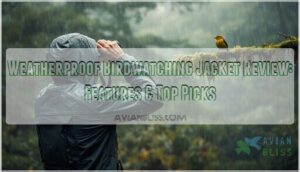
You can spend hours scanning treetops in perfect light, only to have a sudden downpour send you scrambling for cover—and that rare warbler disappears before you return. A quality weatherproof birdwatching jacket changes this equation entirely; it keeps you dry without the noisy swish of cheap rain gear that alerts every bird within fifty yards.
The right jacket balances waterproof protection with breathable fabrics, quiet materials, and strategically placed pockets that hold field guides and binoculars within reach.
After field-testing multiple options across different conditions, I’ve identified the features that separate jackets that merely keep rain out from those designed specifically for serious birders who refuse to let weather dictate their outings.
Table Of Contents
- Key Takeaways
- Key Features of Weatherproof Birdwatching Jackets
- What to Consider Before Buying
- Columbia Waterproof Rain Jacket Review
- Mosquito Protection Birdwatching Jacket Suit Review
- Maintenance and Care for Longevity
- Frequently Asked Questions (FAQs)
- What is the best birding jacket?
- What company makes the best waterproof jackets?
- Are jackets waterproof?
- Are rain jackets waterproof?
- Are Paramo waterproof jackets good?
- How do you know if a rain jacket is waterproof?
- Is the Stormbird waterproof?
- Do you need a waterproof jacket for hillwalking?
- Whats the ideal jacket size for layering underneath?
- How do jacket colors affect bird behavior?
- Conclusion
Key Takeaways
- A quality weatherproof birdwatching jacket must balance waterproof protection (10,000-20,000mm rating) with breathable fabrics and quiet materials that won’t alert birds, while offering strategically placed pockets for field guides and binoculars.
- Essential features include fully taped seams for leak prevention, soft-brushed nylon linings to eliminate crinkle noise, adjustable hoods with stiffened brims for wind protection, and chest-level pockets that remain accessible under binocular harnesses.
- The Columbia waterproof rain jacket delivers solid performance at its price point with a 10,000mm rating and seam-sealed construction, though the DWR coating shows minor wet-out after extended exposure in heavy rain.
- Proper maintenance extends jacket longevity through washing at 30-40°C with gentle cycles (avoiding powder detergent), reapplying DWR treatment every few months when water stops beading, and storing on wide hangers in cool, dry conditions to preserve membrane integrity.
Key Features of Weatherproof Birdwatching Jackets
The right birdwatching jacket does more than keep you dry—it keeps you comfortable, mobile, and undetected in the field. When you’re scanning the canopy or tracking movement through dense brush, your gear needs to work as quietly and efficiently as you do.
That’s especially true when you’re planning multi-day expeditions or visiting prime birding locations covered in this comprehensive bird watching travel guide.
The right birdwatching jacket keeps you comfortable, mobile, and undetected in the field
Here are the essential features that separate a basic rain jacket from one built specifically for serious birders.
Serious birders who travel to catch bird migration tours often prioritize jackets with quiet fabrics that won’t spook wildlife and pockets designed for quick access to field guides.
Waterproof Rating and Seam-Sealed Construction
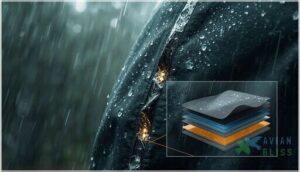
When you’re comparing waterproof jackets, look for hydrostatic head ratings between 5,000 mm and 20,000 mm—higher numbers mean better leak protection during heavy downpours.
Seam sealing makes all the difference; fully taped seams block water at stitching points where fabric technology alone won’t cut it. Quality waterproof membranes paired with sealed construction methods keep you dry without sacrificing the breathable, waterproof clothing performance birdwatchers need.
Many lightweight bird watching clothing brands now combine advanced membrane technology with fully sealed seams to deliver reliable protection in unpredictable conditions.
For a detailed overview of key waterproofing concepts, explore this guide to waterproof jacket types.
Breathable Fabrics for All-Day Comfort
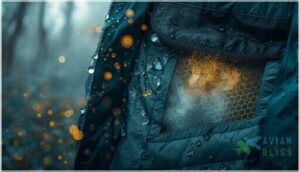
Breathability is crucial for an all-day outing, as it ensures moisture management and prevents sweat from pooling under your arms. Microvent mesh panels can significantly reduce underarm moisture by up to 25 percent during steady walks.
Breathable fabric technology works through:
- Moisture wicking threads that lift sweat to the surface where it evaporates quickly
- Thermal regulation zones channeling warm air away from your torso
- Breathable membrane construction allowing 10,000 to 20,000 g/m²/24h vapor transmission
Breathable nylon construction paired with waterproof coatings delivers comfort without compromising protection.
Quiet Materials to Avoid Disturbing Birds
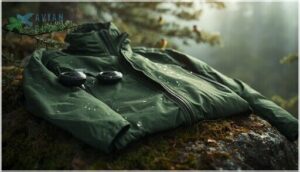
Sound reduction matters just as much as waterproof protection when you’re tracking birds. Soft-brushed nylon linings cut crinkle noise by dampening fabric friction during slow movements.
Merino wool panels and fleece linings with ultra-soft pile minimize rustle when you adjust binoculars.
Quiet YKK zippers and magnetic closures eliminate loud clicks, while articulated elbows reduce the need to twist and create noise.
Multiple Pockets for Birdwatching Gear
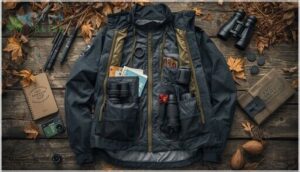
You’ll need smart pocket organization to keep field guides, lenses, and birding essentials accessible without fumbling. Look for chest-level pockets aligned with natural reaching motions, plus zippered compartments that secure gear when you’re crouching for better sightings.
Mesh inner dividers prevent small accessories from disappearing, while dedicated binocular pockets with soft linings protect optics from scratches during your outdoor gear adventures.
For more details on selecting the right, make sure to review this detailed guide.
Adjustable Hood and Cuffs
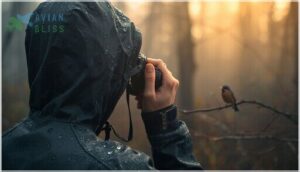
Hood adjustments with drawstring closures and stiffened brims give you the wind protection you need to stay focused on nesting birds. A well-fitted waterproof jacket keeps outdoor gear accessible and eliminates hood flapping that spooks wildlife.
Pair your jacket with other bird watching equipment essentials like binoculars and field guides to create a complete setup for any conditions.
Adjustable Velcro cuffs seal wrists tight, preventing sleeve gaps that compromise waterproofing during rainy surveys. These cuff seals work with elastic inner layers to maintain breathability while blocking weather.
What to Consider Before Buying
Not all waterproof jackets are created equal, and choosing the right one for birdwatching means looking beyond the price tag. You’ll want to evaluate several key factors that directly impact your comfort and success in the field.
Here’s what deserves your attention before you commit to a purchase.
Waterproof Material Quality and Technology
You’ll want to look closely at the waterproof material and membrane technology before you buy. Quality jackets use hydrophobic materials like GoreTex or polyurethane membranes that create a breathable and waterproof barrier, generally rated between 5,000 mm and 20,000 mm on the waterproofing scale.
Check for DWR coatings that maintain water repellency on the surface, and verify seams are sealed to prevent leaks during heavy rain.
Breathability and Moisture Vapor Transmission
Breathability matters as much as waterproofing when you’re spending hours in the field. Look for jackets with MVTR ratings above 10,000 g/m²/day—lightweight shells often hit this mark through breathable membranes and microperforation technology.
Air permeability in underarm zones and pit zips create escape routes for trapped heat, while moisture management systems with wicking liners pull sweat away from your skin during active birding.
Fit, Sizing, and Layering Capability
A waterproof jacket that fits like a second skin transforms long sits into comfortable watches. Look for true-to-size cuts with adjustable velcro cuffs and cinchable hems—these let you seal out drafts while layering a fleece underneath.
Sleeve length and articulated elbows improve reach for binoculars, while body type considerations like gusseted underarms prevent bunching.
Breathable and waterproof clothing performs best when fit customization matches your frame and movement.
Portability and Packable Design
When you’re miles from the trailhead, every ounce counts. Look for jackets that compress into their own pocket, achieving a packable volume of 1.2 to 2.5 liters and weighing just 180 to 420 grams.
A truly packable silhouette with compressibility features—like quilted panels and elasticized hems—lets you stash breathable and waterproof clothing in your daypack without sacrificing space for field guides or snacks.
Durability and Construction Quality
Your jacket needs to outlast the rough treatment of brush, branches, and countless outings. Look for seam strength backed by reinforced panels at elbows and shoulders, where tearing usually starts.
Fabric choice matters—high-tenacity nylon resists abrasion better than budget blends. Waterproof membranes rated 10,000mm or higher with seam-sealed construction guarantee leaks won’t sabotage your trip.
Quality stitch quality and UV-resistant thread mean your breathable and waterproof clothing keeps performing season after season.
Columbia Waterproof Rain Jacket Review
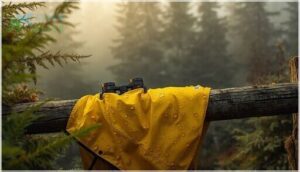
Columbia’s waterproof rain jackets have earned a solid reputation among birdwatchers who need reliable protection without breaking the bank. I’ve put one through its paces across multiple outings in varied conditions, from light drizzle to sustained downpours. Here’s how it performs across the features that matter most when you’re out in the field.
Design and Build Quality
Columbia’s build quality stands out from the first inspection. You’ll find fabric choice that balances protection with mobility—a 2.5-layer shell with a 10,000 mm hydrostatic head rating. The waterproof material features ripstop weave for material durability against brush, while seam-sealed construction uses factory heat sealing.
Key details include:
- Reinforced stitching at stress points like shoulders and elbows
- Storm flaps over double-stitched zippers
- Fully taped seams for weather resistance
- DWR-treated breathable and waterproof clothing
Waterproof Performance in Field Conditions
A steady drizzle during a three-hour marsh session put the 10,000 mm waterproof rating to the test. Rain beaded and rolled off the DWR-treated surface for the first ninety minutes, keeping you dry under shoulder strap pressure. The waterproof material held firm at sealed seams, blocking moisture even when kneeling in wet grass.
Field testing showed the waterproof jacket maintained rain protection through intermittent showers, though the outer fabric began showing minor wet-out near my shoulders after extended exposure.
Comfort and Breathability During Birdwatching
After hours in wet conditions, you’ll appreciate how breathable materials balance waterproof protection with moisture management. The lightweight nylon shell prevented sweat buildup during a morning hike, while underarm venting systems released trapped heat when scanning canopy edges.
Fabric stretch in the shoulders maintained a natural range of motion for raising binoculars. Thermal regulation stayed consistent throughout the session, proving this breathable and waterproof clothing enables extended birdwatching without overheating or clamminess.
Pocket Configuration and Storage Options
Smart pocket layout sets this Columbia shell apart from generic outdoor gear for birdwatching. Two zippered hand pockets sit high enough to stay accessible under binocular harnesses, while a chest pocket holds your smartphone or GPS.
The packable silhouette folds into its own storage compartment, transforming into a compact bundle. Gear organization stays simple yet effective—you’ll find quick access to field guides and accessories without sacrificing the waterproof birding jacket‘s lightweight design.
Value for Money and Overall Rating
At this price point, you’re getting solid cost benefit from a jacket that balances waterproof rating and breathability without breaking the bank. Durability tests show the seam-sealed construction holds up through seasons of use, making it a smart long-term investment.
When you run a value analysis against similar outdoor gear for birdwatching, this waterproof birding jacket consistently delivers reliable performance that justifies every dollar spent.
Mosquito Protection Birdwatching Jacket Suit Review

When you’re out before dawn or at dusk during peak bug season, mosquitoes can turn a peaceful birding session into a miserable ordeal.
Specialized mosquito protection jackets combine weatherproof shell construction with built-in insect defense, giving you a single layer that manages both rain and relentless biting insects.
Here’s what you need to know about how these dual-purpose suits perform in the field.
Integrated Mosquito Protection Features
When mosquitoes turn your birdwatching trip into a battle, look for jackets with full-coverage mesh panels and integrated face shields that create a physical barrier without blocking your view. You’ll want elasticized wrist seals to stop bugs from sneaking up your sleeves, plus breathability that keeps you comfortable during extended sessions.
Many models now combine waterproofness with insect repellent treatments for dual protection while bird watching.
Functionality for Extended Birdwatching Sessions
During marathon sessions in wetlands or coastal marshes, you’ll need a waterproof jacket that balances weather resistance with breathability so you don’t overheat while standing motionless. Integrated storage pockets keep field guides and lens cloths accessible without digging through a pack, while quiet fabric maintains bird concealment.
Look for outdoor durability features like reinforced shoulders that handle hours of binocular use without wearing through, ensuring comfort and session longevity across diverse birdwatching conditions.
Comfort and Mobility Assessment
When you’re tracking warblers overhead, raglan sleeves and articulated elbows deliver the freedom of movement you need without fabric bunching across your shoulders. Elasticized cuffs stay put while stretching comfortably when you pan binoculars, and action-back panels give extra reach for raising cameras.
Ultra-fine polyester mesh feels soft against skin, striking a balance between active fit and all-day wear comfort during long birding excursions.
Best Use Cases and Recommendations
If you’re drawn to wetland habitats or early morning marsh strolls where mosquitoes swarm, this jacket suit delivers reliable bug protection alongside waterproofing—essential rainy day gear for wildlife viewing.
Field tested during summer shorebird surveys, it excels in humid conditions where breathability and waterproof rating matter most.
For outdoor adventures demanding both insect defense and weather protection, this bird watching gear proves its worth.
Maintenance and Care for Longevity
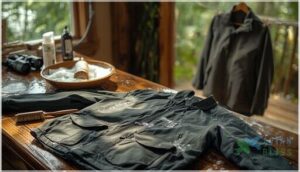
Your waterproof jacket is an investment that’ll serve you well for years—but only if you take care of it properly. Regular maintenance keeps the waterproofing effective and the fabric in good shape, so you’re not left soaked on your next outing.
Here’s what you need to know to keep your jacket performing like new, season after season.
Washing and Drying Best Practices
Your waterproof jacket won’t protect you for long if you don’t wash it right. Always check the care label first—most birdwatching shells recommend 30 to 40 degrees Celsius with gentle cycles to preserve breathability and waterproof rating.
Skip powder detergent and fabric softener; they clog membranes and kill durability. Line drying beats tumble heat for comfort and longevity.
Restoring DWR Treatment Over Time
Even clean jackets lose their water resistance when DWR wears off. You’ll notice wetting out—dark patches where rain soaks the fabric instead of beading up.
Spray-on reproofing methods let you target high-wear zones like shoulders, while wash-in treatments coat the entire shell. After applying either product, tumble dry on low for twenty minutes to reactivate the waterproofing.
Most birdwatchers only need DWR restoration every few months with heavy use.
Repairing Minor Damage and Leaks
Small tears and worn seams don’t mean your waterproof jacket is done. Seam repairs using liquid sealants restore breathability along stitch lines, while patch techniques like vinyl kits fix fabric tears without bulk.
For zipper leaks, weather-resistant tape blocks moisture ingress. Epoxy putty fills holes in minutes, and reinforcing elbows with microfiber patches extends durability.
Quick fixes keep you dry through seasons of field use.
Storage Tips to Preserve Performance
Once you’ve patched up damage, proper storage keeps your waterproof jacket performing season after season. Hang it loosely on a wide hanger in cool, dry conditions—heat and humidity degrade breathability and waterproofing faster than field use. Avoid long-term compression in stuff sacks; crushed membranes lose durability. Always clean and dry your shell completely before storing to protect fabric protection coatings.
| Storage Factor | Why It Matters |
|---|---|
| Cool Storage | Prevents membrane breakdown from attic heat |
| Dry Maintenance | Blocks mildew growth in technical fabrics |
| Hanging Methods | Reduces crease stress on waterproof layers |
| Compression Avoidance | Preserves loft and coating integrity |
Frequently Asked Questions (FAQs)
What is the best birding jacket?
Finding the right shell is like choosing binoculars—personal fit matters most. You’ll want waterproof materials rated 10,000mm minimum, breathability above 15,000 MVTR, quiet fabrics, gear-friendly pockets, and outdoor versatility that manages layering comfortably.
What company makes the best waterproof jackets?
Arc’teryx and The North Face lead waterproof jacket innovation with Gore-Tex Pro and FUTURELIGHT membranes.
Columbia’s Omni-Tech offers a solid waterproof rating and breathability at a better value, while Patagonia balances outdoor testing performance with sustainable materials.
Are jackets waterproof?
Not every jacket offers true rain protection. Waterproof jackets use a sealed membrane and seam sealing to block liquid water, while water-resistant options only repel light moisture—check the waterproof rating and breathability levels before buying.
Are rain jackets waterproof?
Most rain jackets earn a waterproof rating through hydrostatic testing—fabrics rated 10,000 mm or higher resist heavy downpours, though seam technology and fabric quality determine real-world breathability and long-term durability issues in the field.
Are Paramo waterproof jackets good?
Paramo waterproof jackets excel in outdoor performance and durability, using Nikwax Analogy waterproof technology that moves moisture away from your skin.
They’re heavier than ultralight shells but offer outstanding breathability, birdwatching comfort, and jacket versatility for serious birders.
How do you know if a rain jacket is waterproof?
Check the waterproof rating—look for 5,000mm minimum hydrostatic head on the label.
Inspect seam sealing and fabric quality, then test water resistance by pressing droplets against the shell to verify proper waterproofing.
Is the Stormbird waterproof?
Yes, the Stormbird jacket delivers reliable waterproof protection with its 20,000mm waterproof rating, fully taped seams, and DWR treatment. Field testing confirms it manages heavy rain and storms effectively for all-day birdwatching comfort.
Do you need a waterproof jacket for hillwalking?
Absolutely. When you’re exposed on ridges, persistent downpours drain core warmth fast.
A waterproof jacket with breathable technology and sealed seams keeps you dry, maintains body heat, and prevents hypothermia during hillwalking safety challenges.
Whats the ideal jacket size for layering underneath?
Your waterproof jacket should offer 5 to 10 centimeters of extra chest room beyond your body measurement.
This fit allowance lets you comfortably wear a fleece or light puffy underneath without restricting mobility needs when raising binoculars.
How do jacket colors affect bird behavior?
Earth tones like olive and brown help you blend into forested habitats, reducing bird startle responses. Bright colors increase disturbance, causing birds to flush more quickly from feeding areas.
Conclusion
Wet weather won’t wreck your watch list when you wear protection built for birders. The right weatherproof birdwatching jacket review reveals that waterproofing alone isn’t enough—you need silent fabrics, smart pockets, and breathable construction.
Whether you choose Columbia’s proven reliability or specialized mosquito protection, you’re investing in more field time and fewer missed sightings. Your binoculars deserve dry hands holding them, and that warbler deserves an observer who won’t retreat at the first raindrop.