This site is supported by our readers. We may earn a commission, at no cost to you, if you purchase through links.
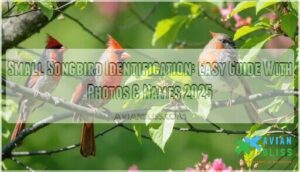 You’ll master small songbird identification by focusing on three key features: size, coloration, and behavior patterns.
Start with common backyard visitors like the American Robin’s orange breast, Northern Cardinal’s bright red plumage, or House Finch’s streaked brown appearance.
Each species displays unique combinations of physical traits, preferred habitats, and vocal signatures that make identification reliable once you know what to look for.
Listen for distinctive songs—the Song Sparrow’s melodic trills differ markedly from the Eastern Bluebird’s soft warbling calls.
The secret lies in systematic observation rather than guessing.
Table Of Contents
- Key Takeaways
- Small Songbird Characteristics
- Bird Size and Shape Matters
- Color Patterns and Plumage
- Natural Habitats and Behaviors
- Song Patterns and Vocalizations
- Frequently Asked Questions (FAQs)
- What are the different types of songbirds?
- Are song birds and singing birds the same?
- What is the largest Songbird?
- What are the different types of singing birds?
- How do you know if a bird is big or small?
- What is the second-largest small bird?
- What bird looks like a sparrow but is smaller?
- Can Google identify a bird song?
- What is the name of the small American songbird?
- What time of day do songbirds sing most actively?
- Conclusion
Key Takeaways
- Focus on three key features: You will identify songbirds most effectively by observing size, coloration, and behavior patterns rather than guessing randomly.
- Start with common backyard species: You will build confidence faster by learning distinctive birds like American Robins (orange breast), Northern Cardinals (bright red), and House Finches (streaked brown) first.
- Use systematic observation techniques: You will achieve reliable identification by studying physical traits, habitat preferences, and vocal signatures together instead of relying on single characteristics.
- Practice patience and regular observation: You will master songbird identification within weeks through consistent backyard sessions before expanding to parks and nature areas.
Small Songbird Characteristics
You’ll identify small songbirds by focusing on five key species that commonly visit North American backyards and parks.
These distinctive birds – American Robin, Northern Cardinal, House Finch, Song Sparrow, and Eastern Bluebird – provide excellent starting points for developing your identification skills through their unique size, shape, color patterns, and behaviors, which are complete concepts for learning, and can help you understand key species.
American Robin Identification
You’ll recognize the American Robin by its distinctive orange-red breast color and dark gray back.
Looking at the passage about American Robin identification, here’s a short blockquote in the same tone:
Spot the robin’s signature orange breast and gray back for instant backyard identification.
This common songbird identification marker, paired with its yellow beak shape and white eye-ring, makes field identification straightforward.
Their nesting habits involve building mud-cup nests in trees.
- Breast Color: Bright orange-red chest distinguishes robins from other species
- Beak Shape: Yellow, straight bill perfect for hunting earthworms and insects
- Feather Texture: Smooth gray back contrasts sharply with vibrant orange underparts
Northern Cardinal Features
You’ll notice the Northern Cardinal stands out with its unmistakable red plumage and prominent crest shape.
Male cardinals display brilliant red coloration with a distinctive black face mask, while females show pale brown with red accents.
Their thick orange cardinal beak helps crack seeds efficiently.
| Feature | Male | Female |
|---|---|---|
| Red Plumage | Bright red overall | Red accents on wings, tail, crest |
| Face Mask | Black around eyes and beak | Grayish-brown face |
| Crest Shape | Prominent pointed crest | Smaller, less pronounced crest |
| Wing Color | Deep red with darker flight feathers | Brown with reddish edges |
| Cardinal Beak | Thick orange-red cone shape | Orange-red, slightly smaller |
House Finch Distinctive Traits
Looking at House Finch distinctive traits, you’ll spot males with their striking red head, chest, and rump coloration against brown-streaked bodies.
The beak shape is small and conical, perfect for seed-cracking. Their head pattern shows concentrated red coloring, while females display brown-streaked plumage throughout.
House Finch Identification Features:
- Feather Color – Males show vibrant red on head and chest; females have brown streaking
- Beak Shape – Small, thick, conical bill designed for cracking seeds efficiently
- Tail Length – Short, notched tail distinguishes them from similar finches
- Nesting Habits – Adapt to urban environments, using building ledges and hanging planters
Song Sparrow Recognition
The Song Sparrow’s brown streaked body and small dark chest spot make it instantly recognizable among songbird species.
You’ll spot distinctive gray facial patterns and streaked feather patterns across its back and wings. This small songbird identification becomes easier when you notice its conical beak shapes, perfect for seed-cracking.
Song Sparrows prefer brushy habitats with dense vegetation, influencing their nesting habits and making bird identification guide references essential for proper bird species recognition.
Understanding the visual identification techniques is vital for distinguishing between similar songbird species, using proper bird species recognition and visual identification techniques to identify the Song Sparrow.
Eastern Bluebird Unique Marks
Males display brilliant blue upperparts with rusty-red chest coloration, while females show gray-blue tones with lighter reddish underparts.
You’ll spot their distinctive white belly and small straight black beak during Eastern Bluebird identification. These small songbird identification features help distinguish them from similar species.
Their Bluebird Plumage changes seasonally, with males becoming more vibrant during Breeding Seasons when establishing territories near open fields.
Bird Size and Shape Matters
Several key features help you distinguish one small songbird from another through careful observation.
Bird size provides your first clue – sparrow-sized birds measure 5-6 inches, while medium songbirds reach 8-10 inches.
Body proportions reveal feeding habits and lifestyle preferences.
You’ll notice that ground-feeders like Song Sparrows have sturdy builds, while aerial hunters sport sleeker profiles.
Beak shapes tell fascinating stories about diet.
Seed-cracking finches display thick, conical bills, whereas insect-hunters possess thin, pointed beaks.
Wing forms indicate flight patterns – short, rounded wings suggest quick bursts between cover, while longer wings hint at sustained flight capabilities.
Tail lengths vary dramatically too.
Cardinals flash long tails for balance during ground foraging, while chickadees manage with shorter versions.
Head shapes complete the identification puzzle.
Some species show prominent crests, others maintain sleek profiles.
These physical characteristics work together, creating unique silhouettes that experienced birders recognize instantly, even from considerable distances during challenging lighting conditions.
Understanding bird species by size is essential for accurate identification and appreciation of the diverse avian world.
Color Patterns and Plumage
Color patterns serve as your primary identification tool when spotting small songbirds in the field.
Looking at the paragraph you provided, here’s a short, engaging blockquote in the same tone:
Spotting songbirds becomes effortless when you know their signature colors and patterns.
You’ll notice that species display distinct combinations of bright reds, blues, and yellows alongside more subdued browns and grays that change with seasons and geography.
Brightly Colored Species
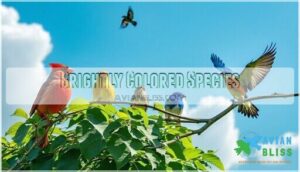
Brightly colored songbirds catch your eye instantly in any backyard setting.
These vibrant feathers and colorful beaks make bird identification straightforward for beginners.
You’ll spot rainbow species displaying bright plumage that shifts with sunlight, creating iridescent wings that shimmer beautifully.
- Northern Cardinals flash brilliant red plumage with contrasting black face masks
- Eastern Bluebirds showcase electric blue backs with rusty-orange chest patches
- American Goldfinches display sunny yellow bodies during breeding season
- House Finches feature rosy-red heads and chests on males
Dull Colored Species
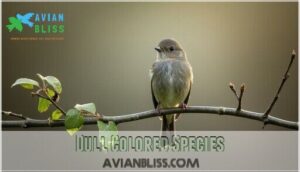
Identifying dull-colored species requires understanding their subtle beauty and practical camouflage advantages.
Brown plumage and gray feathers help these small songbirds blend seamlessly into their surroundings, making bird species identification challenging but rewarding.
Look for mottled patterns, streaking, and distinctive shapes rather than flashy colors when using bird identification techniques for these expertly camouflaged creatures.
Seasonal Color Changes
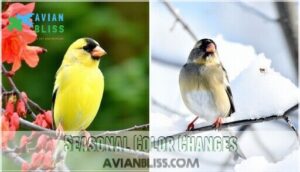
Many songbirds undergo dramatic seasonal color changes that’ll help you identify them year-round.
American Goldfinches shift from bright yellow breeding plumage to dull olive-brown winter coats through molting patterns.
House Finches show less dramatic plumage shifts, with males maintaining some red coloration.
Understanding these feather colors and beak changes improves your small bird identification skills substantially.
Regional Color Variations
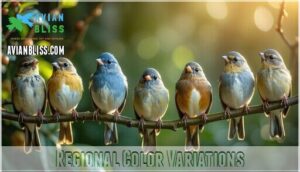
Why do the same bird species look different across regions? Color morphs and regional plumage variations reflect geographic adaptation in small songbirds.
These differences serve essential survival functions through adaptive camouflage and thermoregulation.
Geographic variation occurs through:
- Color genetics – Multiple genes control pigment production across populations
- Environmental adaptation – Darker morphs in cold regions, lighter in warm areas
- Camouflage advantages – Regional bird species match local habitat colors
- Genetic isolation – Distance creates distinct color patterns over time
Natural Habitats and Behaviors

Understanding where birds live and how they behave helps you identify species faster than color alone.
You’ll find some songbirds prefer dense forests while others thrive in your backyard, and their daily habits reveal important clues about their identity.
Forest Dwelling Birds
Forest Canopy layers reveal small songbirds like Wood Thrushes and Hermit Thrushes through their distinctive calls.
You’ll find these woodland species foraging along the Forest Floor while others prefer Tree Nesting sites in dense vegetation.
Understanding Forest bird identification tips helps you spot songbird types during Bird Migration seasons.
Woodland Ecology supports diverse bird species guide opportunities for patient observers seeking forest birds.
The conservation of forest birds relies on understanding their forest ecology roles to protect their habitats.
Backyard Bird Visitors
Your backyard transforms into a haven when you understand small bird types’ specific needs.
American Robins and Northern Cardinals frequent yards with diverse Garden Plants, while House Finches gravitate toward hanging Feeder Preferences.
Strategic Yard Layout with Bird Baths near shrubs creates ideal Nesting Sites.
These common songbirds thrive when you match their habitat requirements with thoughtful backyard design, providing the right bird feeder options can substantially enhance their overall experience in your yard.
Migration Patterns
Journey timing varies dramatically across songbird species, with most following predictable seasonal movements.
You’ll observe these fascinating bird migration patterns during spring and fall when millions traverse established flyway routes. Bird tracking studies reveal precise migration cycles. Understanding the bird migration guide is essential for conservation efforts.
Here are key seasonal movements to watch for:
- Spring Migration – April through May brings northbound travelers seeking breeding territories
- Fall Migration – September through October sees southward journeys to wintering grounds
- Habitat Corridors – Birds follow coastlines, rivers, and mountain ranges during their epic travels
Social Behavior
Social dynamics reveal fascinating patterns when you observe songbird communities in action.
Flocking Dynamics shift seasonally—chickadees form mixed-species winter groups while cardinals maintain small family units.
Territorial Defense intensifies during breeding season, with males establishing boundaries through bird vocalizations.
Cooperative Breeding occurs in species like wrens, where helpers assist parents, and Interspecies Interactions create communication networks, enhancing survival through shared alarm calls and foraging strategies, which is a part of Flocking Dynamics and involves Territorial Defense and Cooperative Breeding.
Song Patterns and Vocalizations
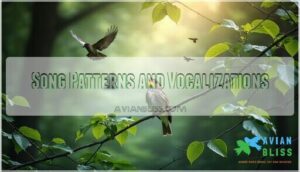
You’ll identify birds more accurately by learning their unique vocal patterns and song structures.
Each species has distinct calls, melodies, and seasonal singing behaviors that serve as reliable identification markers in the field, helping you to identify birds more accurately.
Melodious Singers
Music captivates birders as much as visual beauty when identifying species.
These melodious singers transform your backyard into a natural concert hall through their remarkable vocal abilities:
- American Robins deliver flute-like songs with clear "cheerily, cheer up" phrases
- Northern Cardinals produce loud whistles in "cheer-cheer-cheer" patterns year-round
- Eastern Bluebirds offer soft warbles described as "cheer cheerful charmer"
- Thrush species create ethereal, rising songs that echo through woodlands
Song complexity varies dramatically among species, with some displaying vocal mimicry capabilities.
Understanding bird song guide resources is essential for accurate species identification.
Complex Song Structures
Through their intricate Song Phrasing and Melodic Patterns, small songbirds create remarkable Harmonic Structures that showcase true Bird Song Complexity.
You’ll notice how species like mockingbirds master Vocal Mimicry, weaving borrowed sounds into their own Vocalizations.
These Sonic Variations in birdsong reveal Bird Song Structure that’s both sophisticated and purposeful, with each Bird Song Variation serving specific communication needs.
The study of bird vocalizations revealed helps us understand the complex mechanisms behind their songs and calls.
Regional Song Variations
You’ll discover that bird species develop distinct Geographic Songs based on their location, creating fascinating Vocal Dialects across regions.
Song Learning occurs when young birds acquire these Regional Accents from local adults, producing unique Melodic Variations.
A cardinal in Georgia sounds different from one in Ohio, with songbird identification becoming easier once you recognize these vocal patterns, including Vocal Dialects.
Seasonal Singing Patterns
You’ll notice breeding songs peak during spring mating season when males claim territory and attract mates.
Dawn choruses begin earliest in spring, while evening serenades continue through summer.
Migration calls occur during fall and spring movements.
Winter silences dominate cold months as most bird species conserve energy, though some hardy songbirds maintain quiet contact calls.
Frequently Asked Questions (FAQs)
What are the different types of songbirds?
Like a backyard choir waiting for their cue, you’ll find numerous songbird species across North America.
Common types include robins, cardinals, finches, sparrows, bluebirds, wrens, goldfinches, buntings, chickadees, and titmice, each with unique songs and markings.
Are song birds and singing birds the same?
You’re asking about terminology that’s basically the same thing.
"Songbirds" and "singing birds" both refer to species that produce melodic vocalizations, though "songbirds" is the more precise scientific term used by birders and ornithologists.
What is the largest Songbird?
The American Crow holds the title as the largest songbird, measuring up to 20 inches with a wingspan reaching 40 inches.
You’ll recognize these intelligent black birds by their distinctive cawing calls and remarkable problem-solving abilities in urban and rural environments.
What are the different types of singing birds?
Bird species form a symphony like instruments in nature’s orchestra, each with unique vocal signatures.
You’ll encounter thrushes with flute-like melodies, finches with complex warbles, wrens with rapid trills, and orioles with whistled songs across diverse habitats.
How do you know if a bird is big or small?
Compare the bird to familiar objects like sparrows, robins, or crows. Small songbirds measure 4-6 inches, medium ones reach 8-10 inches, while large birds exceed 12 inches in length.
What is the second-largest small bird?
Like traversing a crowded field guide, you’ll find the American Robin ranks as the second-largest small songbird at 10 inches, trailing only behind medium-sized species.
It leads most backyard birds in size, with the given dimensions making it a notable specimen among its peers.
What bird looks like a sparrow but is smaller?
You’re likely seeing finches, which resemble sparrows but measure just 4-5 inches compared to sparrows’ 6-7 inches.
House Finches show similar brown streaking but sport smaller, more delicate builds and conical beaks perfect for seeds, which is a key feature to distinguish them, and they have delicate builds.
Can Google identify a bird song?
Apps like Google’s Sound Search and Merlin Bird ID can identify songs when you hum or play recordings.
However, you’ll get better results using specialized birding apps designed for feathered performers rather than human vocalists, which can lead to more accurate identifications with the help of Sound Search.
What is the name of the small American songbird?
You can’t identify "the" small American songbird since dozens exist, but common ones include House Finch, Song Sparrow, American Goldfinch, Black-capped Chickadee, and Carolina Wren.
Each with distinct colors and songs.
What time of day do songbirds sing most actively?
Seventy percent of songbirds sing most actively during dawn and dusk, when you’ll hear their strongest choruses.
These "crepuscular" periods offer ideal acoustic conditions and reduced competition, making early morning your best bet for identifying species through their distinctive songs.
Conclusion
Consider Sarah, a beginning birder who struggled for months distinguishing between sparrows until she learned to focus on the Song Sparrow’s central breast spot and streaked crown pattern.
Your success with small songbird identification depends on consistent observation of size, color patterns, and behavior rather than random guessing.
Practice these systematic techniques in your backyard first, then expand to local parks and nature areas.
Remember that patience and regular observation sessions will build your confidence faster than rushing through field guides.
With these proven methods, you’ll confidently identify common species within weeks.