This site is supported by our readers. We may earn a commission, at no cost to you, if you purchase through links.
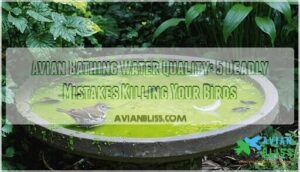 Your bird’s bathing water can turn from a rejuvenating oasis into a deadly trap faster than you’d think.
Poor avian bathing water quality kills thousands of backyard birds each year through bacterial infections and chemical poisoning.
You need to change water every 2-3 days, use filtered water when possible, and clean basins with mild bleach solutions.
Skip harsh chemicals like ammonia or commercial cleaners that seem harmless but wreak havoc on delicate bird systems, often creating a bacterial breeding ground.
The difference between crystal-clear, safe water and a hazardous environment often comes down to simple mistakes most bird lovers make without realizing the consequences.
Table Of Contents
- Key Takeaways
- Avian Bathing Essentials
- Bird Bath Benefits
- Maintaining Water Quality
- Common Water Quality Issues
- Optimizing Avian Bathing Experience
- Frequently Asked Questions (FAQs)
- How shallow should a bird bath be?
- Are bird baths a good idea?
- Do Bird baths encourage bird visitation?
- Do Bird baths attract birds?
- What happens if a bird bath is stagnant?
- Do Bird baths support biodiversity?
- What kind of water to put in a bird bath?
- Are bird baths ethical?
- How often should I replace bird bath water?
- Do birds drink out of bird baths?
- Conclusion
Key Takeaways
- Change water every 2-3 days – You’ll prevent deadly bacterial infections and algae growth that kill thousands of backyard birds annually
- Keep water depth under 2 inches – You’ll avoid creating a drowning hazard for smaller birds while adding rocks or twigs for secure footing
- Use filtered water and mild bleach cleaning – You’ll eliminate harmful chemicals and bacteria while avoiding toxic commercial cleaners that damage bird health
- Position strategically with escape routes – You’ll create a safe bathing environment by placing the bath 10 feet from feeders with clear visibility and multiple exit paths
Avian Bathing Essentials
You’re about to discover the three foundation elements that determine whether your bird bath becomes a life-saving oasis or a death trap for visiting birds.
Getting these basics wrong turns your well-intentioned water feature into a hazardous zone that can drown small birds, harbor deadly bacteria, or attract dangerous predators.
Water Depth Considerations
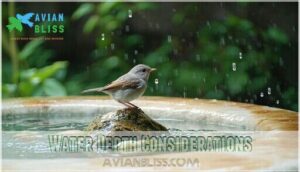
When water depth exceeds two inches, you’re creating a death trap for smaller birds.
Looking at the tone and style of the paragraph, here’s a short blockquote:
**Shallow water saves lives—keep it under two inches for bird safety.
Drowning prevention starts with maintaining shallow water benefits that accommodate species variation in size and swimming ability.
Adding rocks and twigs provides essential footing materials, while proper slope design facilitates gradual depth transitions.
Many people use rocks for bird baths to help birds get a better grip.
Regular depth maintenance keeps your bird bath safe for all visitors, ensuring a better grip for the birds.
Material Selection
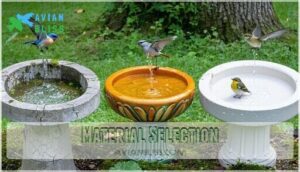
Material selection makes or breaks your bird bath’s success. You’ll want materials that balance Material Durability with safety. Cheap options often contain toxins that harm birds, while premium choices last decades.
- Concrete – Provides excellent Surface Texture for grip, naturally porous for cleaning, though heavy and prone to cracking in freeze-thaw cycles
- Ceramic/glazed pottery – Offers superior Aesthetic Appeal and easy cleaning, but requires careful Cost Analysis due to breakage risk
- Food-grade plastic – Lightweight nontoxic bird bath option with minimal Environmental Impact, though UV degradation affects longevity
Many people prefer concrete bird baths for their durability. Choose materials prioritizing bird bath design safety over appearance.
Safe Location Selection
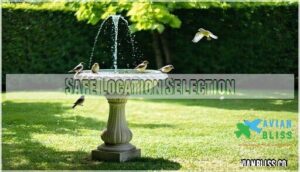
Your bird bath’s location can make or break your feathered friends’ safety. Position it with open visibility and clear flight paths for predator avoidance.
Keep it ten feet from feeders to prevent territorial squabbles. Choose spots with partial shade to limit sun exposure while avoiding dense vegetation that creates predator hiding spots.
Elevated placement can also deter ground predators. Make certain multiple escape routes surround your safe location for quick getaways.
Bird Bath Benefits
Your bird bath isn’t just a pretty garden feature – it’s a lifeline that keeps your feathered friends healthy and happy.
When you provide clean water, you’re supporting three critical functions: proper hydration that prevents dehydration and kidney problems, essential feather maintenance that keeps birds waterproof and flight-ready, and social gathering spots where birds interact and establish community bonds.
Hydration and Health
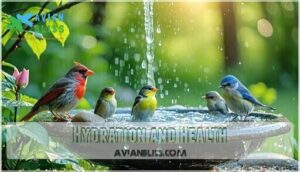
Clean avian bathing water prevents waterborne diseases that devastate bird populations.
Your feathered visitors need fresh water daily for ideal hydration and wild bird health. Different species use various drinking methods, from direct sipping to metabolic water extraction from food.
Regular bathing frequency maintains waterborne bird illness prevention while supporting essential feather health through proper water quality birds depend on for survival.
Strategic placement helps minimize water spillage to ensure proper hydration and wild bird health.
Feather Maintenance
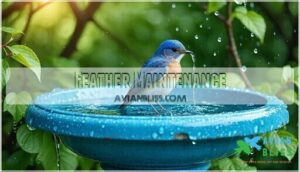
Your feathered friends rely on clean avian bathing water for proper preening importance and feather maintenance.
Birds use their oil gland to waterproof feathers during bathing, making water quality birds depend on absolutely critical.
Regular molting effects require frequent bathing frequency to maintain healthy feather structure.
Poor bird bath hygiene compromises this natural process, leaving birds vulnerable to weather and predators through damaged plumage, affecting their overall maintenance.
Social Behavior
You’ll notice avian species don’t bathe alone—they’re watching each other constantly.
Group bathing creates dominance hierarchies where larger birds claim prime spots while smaller ones wait their turn.
This social interaction helps establish territory defense patterns and strengthens predator avoidance behaviors.
Your bird bath becomes a community hub where species interaction shapes local bird behavior through these structured social dynamics.
Maintaining Water Quality
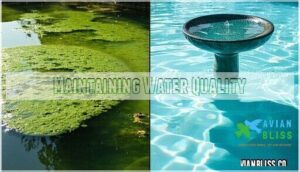
You’ll need to replace stagnant water every 2-3 days to prevent deadly bacteria and algae from forming in your bird bath.
Clean water isn’t just nice to have—it’s essential for keeping your feathered visitors healthy and free from disease.
Regular Cleaning
Your bird bath can turn into a breeding ground for harmful bacteria within just 48 hours without proper maintenance.
Establishing a consistent cleaning routine protects your feathered visitors from disease transmission and creates a welcoming environment they’ll return to daily. Consider using a dedicated bird bath cleaner for superior hygiene.
- Scrubbing Frequency: Clean your basin weekly with safe solutions like diluted bleach (1:9 ratio)
- Debris Removal: Clear leaves and droppings daily to prevent bacterial buildup
- Water Changes: Replace water every 2-3 days, daily during hot weather
Algae Control Methods
Your bird bath’s algae problem needs targeted solutions that won’t harm your feathered visitors.
Natural remedies like copper additions and shade placement work better than harsh chemicals. One simple method involves using copper coins to help inhibit algae growth.
| Method | Effectiveness |
|---|---|
| Copper pennies (pre-1982) | High for algae prevention |
| Shade placement | Moderate, reduces growth |
| Aquatic plants | Good, natural filtration |
| Water testing | Essential for monitoring |
| Vinegar solution (1:9) | High for algae control |
Regular algae control prevents bird bath algae growth while maintaining safe water conditions.
Common Water Quality Issues
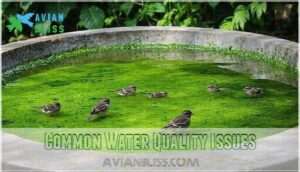
Poor water quality turns your bird bath into a death trap that spreads disease and kills the birds you’re trying to help.
Three major problems – algae blooms, bacterial infections, and chemical poisoning – account for most bird deaths from contaminated water sources.
Algae Formation
Green water turning your bird bath into a science experiment? You’re watching algae growth in real time. Sunlight exposure and nutrient sources create perfect conditions for these unwanted guests. Water stagnation makes the problem worse, turning your clean bird bath into a breeding ground.
Here’s how to tackle bird bath algae growth:
- Move to partial shade – Direct sun fuels algae types that love warm water
- Change water every 2-3 days – Fresh water stops algae prevention before it starts
- Scrub weekly – Remove green buildup before it takes over completely
- Add copper pennies – Natural algae prevention that won’t harm visiting birds
- Keep water moving – Small fountains prevent the stagnation algae craves
Bacterial Growth
Your bird bath can become a breeding ground for deadly bacteria in just 48 hours.
Your bird bath transforms into a death trap for visiting birds within 48 hours without proper maintenance.
Stagnant water creates perfect conditions for Disease Transmission through Waterborne Pathogens like Salmonella and E. coli.
These deadly bacteria form biofilm layers that standard rinsing won’t remove. Bird bath bacteria multiply rapidly in warm weather, causing avian water health problems.
Regular water changes and proper Cleaning Solutions prevent bacteria buildup that leads to bird bath diseases.
To maintain a safe environment, regular cleaning prevents the spread of infections like salmonella.
Chemical Contamination
Pesticide runoff from treated lawns contaminates your bird bath with deadly chemicals.
Agricultural chemicals and heavy metals accumulate in water, causing organ damage and reproductive failure.
Industrial pollutants like PFAS threaten bird survival.
Tap water contains chlorine and fluoride that suppress immune systems.
Implement toxin prevention through filtered water and proper remediation strategies.
Optimizing Avian Bathing Experience
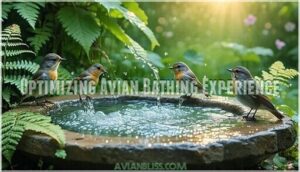
Now that you’ve fixed the major water quality problems, you need to create the perfect bathing setup for your feathered visitors.
Smart design choices and proper placement will turn your bird bath from a simple water dish into a thriving hub of avian activity.
Design and Placement
Smart placement prevents birds from becoming sitting ducks for predators.
Position your bath 10 feet from feeders and dense vegetation where cats lurk.
Choose ground-level placement with clear visibility routes for quick escapes.
Select durable materials like concrete with proper slope design.
Shade placement keeps water cool while maintaining open sightlines.
Install predator deterrents around shaded locations.
Water Feature Options
Beyond basic static bird baths, you’ll discover that water circulation transforms your backyard into an avian paradise.
Fountains create visual appeal while preventing stagnation and mosquito breeding.
Dripping mechanisms and misting systems attract more species through sound and movement.
Pond features with shallow edges accommodate various bird sizes, while stream integration adds natural soundscapes that birds can’t resist visiting.
Seasonal Maintenance Tips
When winter arrives, you’ll need to prevent freezing with safe heaters—never use antifreeze that’s toxic to birds.
Summer evaporation requires daily water level monitoring and frequent refills.
Algae prevention becomes essential during warm months through regular cleaning and shade placement. Consistent availability means adjusting your maintenance routine based on weather changes, ensuring year-round access to clean water.
Frequently Asked Questions (FAQs)
How shallow should a bird bath be?
Keep your bird bath water under 2 inches deep to prevent drowning, especially for smaller birds.
Add rough stones or twigs for secure footing and create gradual slopes with varying depths to accommodate different species safely.
Are bird baths a good idea?
Bird baths are like oases in concrete jungles – they’re excellent additions to your yard.
You’ll provide essential hydration for local birds while creating a natural gathering spot that supports wildlife survival and offers endless entertainment.
Do Bird baths encourage bird visitation?
Yes, bird baths substantially increase bird visitation to your yard.
They provide essential water for drinking and bathing, making your space more attractive than areas without water sources, especially during dry periods, with essential water being a crucial factor.
Do Bird baths attract birds?
Like a magnet drawing iron filings, bird baths absolutely attract birds by offering essential water for drinking and bathing.
You’ll notice increased bird activity within days of installing one, especially during hot weather when natural water sources become scarce.
What happens if a bird bath is stagnant?
Stagnant water becomes a breeding ground for harmful bacteria, fungi, and parasites that can make birds sick.
You’ll also see mosquitoes multiplying rapidly, creating health risks for both birds and humans visiting your yard.
Do Bird baths support biodiversity?
You’ll create a thriving ecosystem when you maintain your bird bath properly.
Clean water attracts diverse species, supports beneficial insects, and creates habitat connections.
These connections strengthen local wildlife networks throughout your neighborhood, ultimately supporting a healthy and thriving ecosystem.
What kind of water to put in a bird bath?
Nearly 10 billion birds in the U.S. depend on clean water sources for survival.
Use fresh, filtered water in your bird bath, changing it every 2-3 days to prevent bacteria buildup and disease transmission among visiting birds.
Are bird baths ethical?
Bird baths are absolutely ethical when you maintain them properly. They provide essential water sources that help birds survive, especially during droughts and extreme weather. You’re supporting wildlife conservation efforts.
How often should I replace bird bath water?
Like a swimming pool left untended, your bird bath becomes a breeding ground for harmful bacteria in just days.
You’ll need to change the water every 2-3 days during normal weather, but daily when it’s hot outside.
Do birds drink out of bird baths?
Yes, birds absolutely drink from bird baths.
They’ll sip water directly, tilt their heads back to swallow, and use the shallow water for both hydration and bathing to keep their feathers clean and healthy.
Conclusion
Proper avian bathing water quality transforms your backyard into a thriving bird sanctuary rather than a hazardous zone.
You’ve learned that changing water every 2-3 days, using filtered water, and avoiding harsh chemicals prevents bacterial infections and chemical poisoning.
Clean basins with mild bleach solutions, monitor for algae growth, and maintain appropriate water depth.
These simple practices protect thousands of birds from preventable deaths, ensuring your feathered visitors enjoy safe, rejuvenating baths year-round, and creating a thriving bird sanctuary.
- https://en.wikipedia.org/wiki/Bird_bath
- https://www.countryliving.com/uk/homes-interiors/gardens/a63862745/bird-baths-clean-hack-algae/
- https://parsonsrocks.com/keep-algae-out-of-your-water-features-such-as-ponds-and-bird-baths/
- https://www.birdsandblooms.com/birding/attracting-birds/how-to-clean-birdbath/
- https://www.birdbathbubbler.com/how-to-keep-algae-out-of-fountain/