This site is supported by our readers. We may earn a commission, at no cost to you, if you purchase through links.
 Choosing the right bird watching lens for Nikon is like finding the perfect hiking boots—you want something sharp, steady, and ready for anything.
You’ll love the Nikon AF-S 200-500mm f/5.6E for its balance of reach and budget, while the Nikon Z 800mm f/6.3 VR S brings birds practically into your lap.
Both pack image stabilization and fast autofocus, making it simple to freeze the flutteriest of feathers.
Don’t sweat the weight; some lenses are surprisingly portable, and with options that fit every backpack and every wallet, you’re just a click away from catching that elusive warbler—curious what features will make all the difference with the right lens.
Table Of Contents
- Key Takeaways
- Choosing Bird Watching Lens
- Top 8 Bird Watching Lenses
- Key Lens Features Explained
- Capturing Perfect Shots
- Buying Guide for Nikon Lenses
- Frequently Asked Questions (FAQs)
- What is the best lens for birds on Nikon?
- What lens is good for bird watching?
- Is a zoom or prime lens better for bird photography?
- Is 400mm zoom enough for bird photography?
- Which Nikon lenses are best for low-light birding?
- How do weather conditions affect lens performance outdoors?
- What maintenance is recommended for lenses in humid environments?
- Conclusion
Key Takeaways
- You’ll get the clearest bird shots with a lens that has at least 400mm of reach—more is better if you’re after small or distant birds.
- Fast autofocus and strong image stabilization make it much easier to capture sharp shots, especially when birds are on the move.
- If you want flexibility for birding on hikes, zoom lenses like the 200-500mm are smart choices, but primes are best if you want top-notch image quality.
- Lightweight or weather-sealed designs let you spend longer outdoors and protect your gear from the elements, so don’t overlook portability and durability.
Choosing Bird Watching Lens
Finding the right bird watching lens for your Nikon camera requires balancing three key factors: focal range, weight, and budget.
You’ll want at least 400mm of reach for distant birds, but longer lenses mean more weight to carry during those early morning hikes.
Focal Range Considerations
When selecting your bird watching lens, focal length becomes your most vital decision.
The right focal length turns distant birds into breathtaking portraits, bringing every feather into vivid, frame-filling detail.
The right telephoto reach determines whether you’ll capture frame-filling shots or distant specks.
- 300-400mm: Perfect starting point for larger birds and accessible locations
- 500-600mm: Essential for small, distant, or skittish species in open habitats
- 200-500mm zoom: Offers lens flexibility for mixed birding environments and changing distances
- 100-400mm range: Balances optical zoom capability with manageable size for varied shooting
- 600mm+: Maximum telephoto reach for professional-level bird photography and rare species
Your focal length choice shapes every shot you’ll take in the field.
Understanding the focal length basics is key to capturing stunning bird images.
Weight and Portability Factors
Camera Balance becomes a real challenge when you’re lugging around a telephoto lens for hours.
Balancing a hefty telephoto lens during hours of birding truly tests your endurance and gear setup.
Lens Weight directly impacts your handheld shooting stamina – anything over 2 pounds gets tiring fast.
Travel Constraints mean you’ll need to take into account lens portability for hiking trips.
Weight and Dimensions affect lens handling, especially during long birding sessions where comfort matters most.
Budget and Price Points
Your budget determines which telephoto lenses you can realistically consider for bird photography. Cost factors range from entry-level options under $600 to professional glass exceeding $10,000.
Here are four budget-conscious price tiers:
- Budget options ($600-$1,400) – Nikon 70-300mm f/4.5-5.6E and 200-500mm f/5.6E offer excellent cost-effectiveness for beginners
- Mid-range choices ($2,000-$4,000) – Z 180-600mm and Z 600mm f/6.3 balance performance with affordable pricing
- Premium selections ($5,000-$9,000) – Professional-grade lenses with superior optics and build quality
- Top-tier investments ($10,000+) – Ultra-fast apertures and cutting-edge technology for demanding professionals
Smart price comparison reveals that best budget lens options often deliver 80% of expensive alternatives’ performance at fraction of the cost. When selecting a lens, considering affordable camera options is essential for considering the overall cost of a bird watching setup.
Top 8 Bird Watching Lenses
You’ll find the perfect telephoto lens for your bird photography needs in this curated selection of eight top-performing options.
These lenses deliver the reach and image quality you need to capture stunning bird shots, whether you’re tracking a distant hawk or photographing songbirds in your backyard.
1. Nikon Zoom Lens for Cameras
 View On Amazon
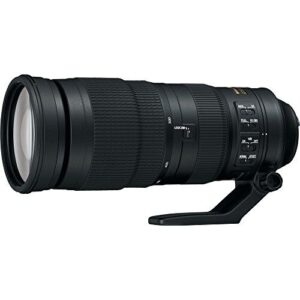
Priced at $1,400 new, the Nikon 200-500mm f/5.6E VR stands as your gateway to serious bird photography.
This workhorse delivers constant f/5.6 aperture across its 2.5x zoom range, letting you nail exposure settings once and focus on the action.
You’ll appreciate the 4.5-stop VR system that transforms shaky handheld shots into tack-sharp images.
At 2.3kg, it’s hefty but manageable with a good shoulder strap, and the lens performs brilliantly on both FX and DX bodies, giving crop-sensor users an effective 750mm reach for frame-filling bird shots.
Best For: Enthusiast and advanced bird photographers who want professional reach, sharpness, and value without the extreme price tag.
- Weighs about 2.3kg (5 lbs), making it heavy for long handheld sessions
- Autofocus is competent but can lag behind faster prime lenses, especially in low light or for erratic subjects
- Grey-market and non-U.S. warranty concerns require careful buying and dealer verification
- Constant f/5.6 aperture and 4.5-stop VR for reliable low-light, handheld, and action shooting
- 200-500mm zoom provides versatile coverage and up to 750mm equivalent reach on DX bodies
- Delivers sharp, vibrant images and is compatible with teleconverters for even greater flexibility
2. Nikon Z Series Telephoto Zoom Lens
 View On Amazon
The Nikon Z 100-400mm f/4.5-5.6 VR S stands out as a versatile telephoto zoom that’ll transform your bird photography.
This S-Line lens delivers exceptional sharpness across its entire zoom range, thanks to six ED glass elements that eliminate color fringing.
You’ll appreciate the 5.5 stops of vibration reduction, making handheld shots at 400mm surprisingly stable.
The dual stepping motors provide silent autofocus that won’t spook skittish birds.
At 1,435g, it’s remarkably portable for a super telephoto zoom, and the weather sealing protects against the elements during extended field sessions.
Best For: Bird and wildlife photographers who want sharp, stabilized images across a flexible zoom range without excessive weight.
- Excellent sharpness and color correction across the zoom range
- 5.5 stops of vibration reduction supports sharp handheld shots
- Silent, fast autofocus ideal for photographing wildlife
- Zoom ring position may require awkward hand shifts
- Non-detachable tripod collar can impact hand-holding comfort
- Slight softness at the 400mm end at wide apertures
3. Sigma Nikon Telephoto Zoom Lens
 View On Amazon
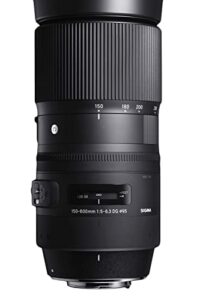
Third-party manufacturers bring fresh perspectives to Nikon’s telephoto game, and Sigma’s 150-600mm Contemporary delivers exceptional bang for your buck.
You’ll get professional-grade optics without the premium price tag that typically comes with first-party glass.
The lens features fast Hyper Sonic Motor autofocus and effective Optical Stabilizer technology, making it ideal for tracking birds in flight.
At roughly $1,089, it’s substantially more affordable than comparable Nikon options while maintaining competitive image quality and build standards, offering a great telephoto game.
Best For: Wildlife and sports photographers who need an affordable long-reach zoom with reliable autofocus.
- Excellent value for the focal range and image quality
- Fast Hyper Sonic Motor autofocus and effective stabilizer for moving subjects
- Durable build with weather sealing and USB dock compatibility
- Heavy and bulky for extended handheld use
- Slight rightward shift with image stabilization; modest corner sharpness falloff
- Grey market versions may have warranty or registration restrictions
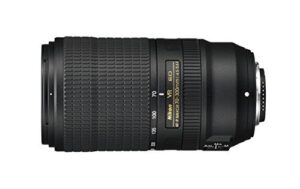
4. Nikon Telephoto Zoom Camera Lens
 View On Amazon
Fourth on our list delivers exceptional value for serious bird watchers without breaking the bank.
The Nikon AF-P NIKKOR 70-300mm f/4.5-5.6E VR stands out with its lightning-fast autofocus system and advanced vibration reduction technology.
You’ll capture tack-sharp images of birds in flight thanks to its stepping motor that operates nearly silently.
The weatherproof design handles harsh conditions while maintaining optical excellence across the entire zoom range.
This lens transforms your birding experience with professional-grade features at an accessible price point.
Best For: Bird photographers and wildlife enthusiasts seeking a fast, reliable, weather-resistant telephoto zoom at a reasonable price.
- Lightning-fast and nearly silent autofocus ideal for capturing birds in motion
- Advanced Vibration Reduction keeps images sharp even at longer focal lengths
- Lightweight and weatherproof build for easy, worry-free field use
- 300mm reach may be limiting for very distant or small birds compared to longer telezooms
- Variable maximum aperture reduces light-gathering ability at longer zoom
- Warranty coverage may vary by region and not always be comprehensive
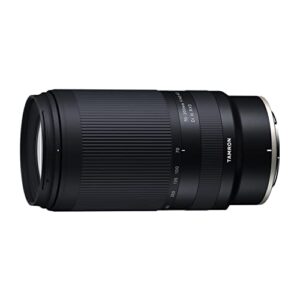
5. Tamron 70 300mm Nikon Z Lens
 View On Amazon
When you’re ready to step beyond entry-level telephoto shooting, Tamron’s 70-300mm delivers surprising punch for the price.
This compact powerhouse weighs just 545g, making it the lightest 300mm option for Nikon Z mount.
You’ll appreciate its sharp images and reliable autofocus, though it lacks optical stabilization.
The lens shines on full-frame Z bodies where in-body stabilization compensates perfectly.
At f/6.3 maximum aperture, you’ll need good light or higher ISO for fast-moving birds.
Best For: Birdwatchers or travel photographers using Nikon Z cameras who want a lightweight and affordable telephoto zoom.
- Sharp across the zoom range with reliable autofocus on modern Nikon Z bodies
- Ultra-light and compact design is perfect for handheld shooting and trips
- Budget-friendly alternative to heavier, pricier Nikon S-line lenses
- No optical stabilization, relying on camera’s in-body stabilization or higher shutter speeds
- Aperture narrows to f/6.3 at 300mm, requiring good light or higher ISO
- Some advanced lens controls and custom buttons are missing
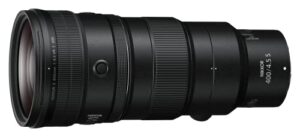
6. Nikon Nikkor Z 400mm Telephoto Lens
 View On Amazon
When you’re serious about bird photography, this 400mm prime lens delivers professional-grade results.
At just 2.5 pounds, it’s Nikon’s lightest 400mm lens ever made, perfect for long hikes and handheld shooting.
The f/4.5 aperture provides excellent low-light performance while maintaining sharp images across the frame.
Vibration Reduction offers up to 5.5 stops of compensation, letting you capture tack-sharp shots even at slower shutter speeds.
Compatible with teleconverters for extended reach.
Best For: Bird and wildlife photographers who want the lightest, most portable Nikon 400mm prime lens for travel and handheld shooting.
- Extremely lightweight and compact for a 400mm, ideal for long hikes and travel.
- Vibration Reduction up to 5.5 stops enables sharp handheld shots in low light.
- Delivers sharp, professional-grade image quality across the frame.
- Expensive investment, especially compared to zoom lenses with more flexibility.
- Minimum focusing distance limits close-up capabilities compared to some zooms.
- Autofocus can be slower and less consistent with moving subjects.
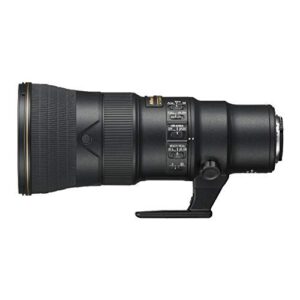
7. nikon super telephoto lens ed vr
 View On Amazon
The Nikon 500mm f/5.6E PF ED VR transforms bird photography with its revolutionary Phase Fresnel element design.
You’ll discover this lens delivers razor-sharp images while weighing just 3.2 pounds—a game-changer for handheld shooting.
The lightning-fast autofocus rivals Nikon’s premium 70-200mm f/2.8, ensuring you won’t miss fleeting moments.
Its 4.5-stop VR system keeps shots steady during those marathon birding sessions.
While the f/5.6 aperture limits low-light performance, you’re getting professional-grade optics at a fraction of the cost of bulkier alternatives.
Best For: Bird and wildlife photographers who want professional image quality and long reach without heavy, expensive gear.
- Extremely lightweight and compact for handheld use over long sessions
- Fast, accurate autofocus and sharp image quality across the zoom range
- Advanced VR system delivers steady shots, even with challenging subjects
- F/5.6 aperture limits low-light shooting and teleconverter compatibility
- Background blur (bokeh) is less creamy than pricier f/4 alternatives
- Some copies reported with sharpness inconsistencies and less rugged lens foot
8. Nikon Z Series Super Telephoto Lens
 View On Amazon
Looking at the Z 800mm f/6.3 VR S, you’ll find the ultimate reach for bird photography.
This super-telephoto prime weighs just 5.2 pounds—remarkably light for 800mm of focal length. The Phase Fresnel element keeps size manageable while delivering tack-sharp images.
You can handhold this lens thanks to its 5-stop VR system, perfect for tracking distant raptors.
With teleconverters, you’ll reach 1,120mm or 1,600mm while maintaining excellent image quality. The stepping motor autofocus locks onto birds quickly and quietly, making it ideal for serious wildlife photographers.
Best For: Dedicated bird, wildlife, and aviation photographers who need maximum reach and portability without sacrificing image quality.
- Lightweight and handholdable for an 800mm super-telephoto prime
- Exceptional sharpness and clarity, even with teleconverters
- Fast, quiet autofocus and effective VR for tracking moving subjects
- High price point, making it a significant investment
- Minimum focus distance limits ultra-close shots
- Tracking small, fast targets at 800mm takes practice and skill
Key Lens Features Explained
Understanding your lens specs helps you capture those perfect bird shots with confidence.
These four core features directly impact your wildlife photography success, so let’s break down what really matters when you’re out in the field to achieve the best bird shots.
Autofocus Systems
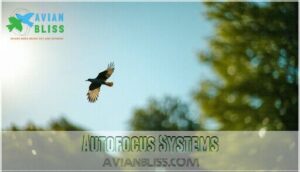
Understanding your camera’s autofocus system transforms bird photography from hit-or-miss to consistently sharp results.
Modern Nikon cameras excel with Phase Detection technology, delivering fast auto focus that locks onto moving subjects in milliseconds.
The lens autofocus performance depends on tracking systems that predict bird movement.
To further enhance your skills, learning about autofocus systems can help you master bird photography.
Your autofocus modes determine success:
- AF-C (Continuous Servo) – Tracks birds in flight with relentless precision
- 3D Tracking – Follows subjects across the frame automatically
- Pinpoint AF – Targets tiny details like a warbler’s eye
Focus Speed varies between lenses, with newer Z-mount glass offering superior lens autofocus speed for capturing those fleeting moments.
Aperture and Its Effects
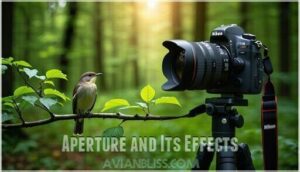
Aperture control determines how much light enters your lens, directly affecting image quality and creative possibilities.
A wider aperture (lower f-number) creates shallow focal depth, blurring backgrounds beautifully while isolating your subject.
Lens speed improves in bright conditions, but maximum aperture limits light transmission in darker environments.
Understanding your lens’s minimum aperture helps control image blur effectively for sharp bird portraits, and is crucial for managing lens speed in various conditions, including the impact of aperture control on the overall image.
Vibration Reduction Technology
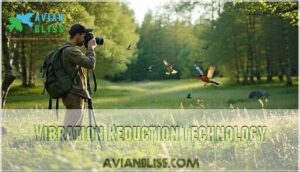
Vibration reduction transforms shaky telephoto shots into sharp keepers by counteracting camera shake through sophisticated lens-based stabilization systems.
This technology provides up to four stops of image stabilization, letting you shoot handheld at slower shutter speeds without blur compromising your bird photography.
- Gyroscopic sensors detect movement and shift lens elements to compensate for shake
- Four-stop advantage allows shooting at 1/60s instead of 1/1000s with telephoto lenses
- Automatic modes distinguish between handheld shooting, panning, and tripod use
- Enhanced optical quality maintains sharpness even in challenging shooting conditions
- Focus enhancement works seamlessly with autofocus systems for crisp bird portraits
Understanding the focal length considerations is essential for capturing high-quality bird images with vibration reduction technology.
Zoom and Telephoto Capabilities

How do you choose between zoom flexibility and telephoto reach? Your decision hinges on shooting style and target subjects.
| Lens Type | Focal Length | Best For | Trade-off |
|---|---|---|---|
| Telephoto Zoom | 100-400mm | Versatile shooting | Heavier weight |
| Super Telephoto | 400-600mm | Distant subjects | Limited range |
| Ultratelephoto | 600mm+ | Extreme reach | Fixed focal length |
| Zoom Lens | 200-500mm | All-around use | Variable aperture |
Zoom lenses offer focal length flexibility but sacrifice some optical quality compared to prime telephoto optics. Super telephoto lenses deliver superior image sharpness and lens stabilization for distant birds. Choose based on your priorities: versatility or maximum reach.
Capturing Perfect Shots
Getting sharp bird photos depends on understanding your lens’s focal range and how to use stabilization features effectively.
You’ll also need to know when teleconverters can help extend your reach without sacrificing too much image quality.
Mastering Focal Range for Bird Photography
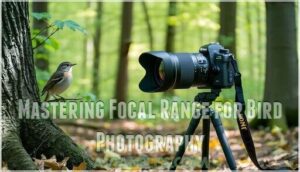
Different focal lengths reveal distinct opportunities in bird photography.
For small songbirds, you’ll need 400-600mm to fill your frame without disturbing them.
Nikon lenses with superior optical quality and image stabilization help you track fast-moving subjects smoothly.
Proper lens calibration guarantees your telephoto lens delivers sharp focus every time, especially vital for wildlife photography where precise bird tracking separates amateur shots from professional results.
Understanding advanced focusing techniques is essential for capturing sharp images of birds in various environments, utilizing telephoto lens and mastering focusing techniques.
Using Teleconverters Effectively
Teleconverters multiply your telephoto lens reach without buying expensive glass.
These nikon lenses accessories transform your existing setup into a powerful bird photography tool.
Teleconverter Tips for Success:
- Lens Compatibility – Check your telephoto lens works with 1.4x or 2x teleconverters before purchasing
- Image Quality – Use 1.4x for minimal sharpness loss; 2x requires stopping down aperture
- Focal Length Extension – Your 400mm becomes 560mm with 1.4x, doubling your effective reach
Understanding Nikon Teleconverters is vital for superior performance.
Remember: Aperture Control becomes trickier as teleconverters reduce available light by 1-2 stops.
Understanding Lens Stabilization
Nikon’s Vibration Reduction (VR) technology transforms shaky handheld shots into tack-sharp images.
This optical stabilization system compensates for camera shake by shifting lens elements, maintaining focal stability even at slow shutter speeds.
VR dramatically improves image sharpness in low light conditions when your autofocus struggles, and the system maintains lens balance while providing up to 4.5 stops of stabilization benefit, which is a significant advantage in photography, especially with slow shutter speeds.
Buying Guide for Nikon Lenses
You’ll want to take into account your experience level and shooting style when choosing your first bird photography lens.
Building a complete kit takes time, so start with one versatile option and expand gradually while keeping your gear properly maintained for years of reliable performance.
Tips for Beginners in Bird Photography
Start your bird photography journey with patience and practice. Study Bird Behavior to anticipate movements and positioning.
Master basic Camera Settings like shutter priority mode for sharp action shots. Learn Wildlife Ethics – maintain respectful distances from nesting birds.
Focus on Outdoor Preparation with weather-appropriate gear. Your telephoto lens and birding optics will reward dedicated practice sessions in local parks.
Understanding the importance of a good focal length range is essential for capturing sharp images of birds, using your skills to apply basic Camera Settings effectively.
Building a Professional Lens Kit
Professional photographers build lens kits with purpose, not impulse.
Start with one versatile zoom like the Z 180-600mm for maximum reach, then add a fast prime such as the 400mm f/4.5 for superior optical quality.
Consider camera compatibility with your Nikon mirrorless system.
Professional gear requires balancing weight, performance, and budget across multiple focal lengths.
When selecting lenses, understanding Nikon Z options is essential for making informed decisions about your photography equipment.
Maintenance and Safety Tips for Lenses
Once your lens kit is ready, keeping your gear spotless and safe matters just as much as picking the best glass. Don’t just stash your lens—show it some TLC!
Try these tips:
- Regular lens cleaning cuts down on grime.
- Use dry storage tips for moisture.
- Invest in strong lens protection.
- Handle with care.
- Watch those maintenance costs!
Frequently Asked Questions (FAQs)
What is the best lens for birds on Nikon?
Chasing birds is like chasing lightning—blink, and you’ll miss it.
For razor-sharp shots, grab the Nikon 200-500mm f/6E VR.
It balances reach, focus speed, and image stabilization to help nail those flighty moments.
What lens is good for bird watching?
When you’re out watching birds, you want a lightweight lens with good reach, like a 100-400mm zoom.
Quick autofocus and strong stabilization help nail those flight shots, so you never miss a flit or flutter.
Is a zoom or prime lens better for bird photography?
You’ll get more flexibility with a zoom, letting you quickly adjust for birds near and far—think tail feathers to treetops in a twist.
Primes, though, deliver sharper images but demand you work harder for your shot.
Is 400mm zoom enough for bird photography?
Imagine locking onto a songbird in morning mist—400mm gives you solid reach for most bird photography.
It’s enough for larger birds or closer subjects, but for tiny, distant birds, you might want more zoom.
Which Nikon lenses are best for low-light birding?
For low-light birding, you’ll want fast glass like the Nikon 300mm f/8 or 400mm f/
These primes scoop up light, keep autofocus speedy, and help freeze feathered friends at dawn or dusk.
How do weather conditions affect lens performance outdoors?
Raindrops race across your lens, sun glares bounce off glass, and frosty mornings can slow autofocus.
You’ll want weather sealing to keep out moisture and dust, plus lens hoods to tackle glare and stray raindrops.
What maintenance is recommended for lenses in humid environments?
Store your lenses with silica gel packs, check them regularly for condensation or fungus, and wipe them down after shooting.
If you’re out in the field, keep a microfiber cloth handy—humidity’s like kryptonite for optics!
Conclusion
Picture your bird watching journey as a well-packed backpack: every item matters, and with the right bird watching lens for Nikon, you’re set to catch every feather in sharp detail.
You now understand which features—focal range, stability, portability—really make a difference.
Trust your eye, pick the gear that fits your needs and style, and don’t be afraid to experiment.
You’ll find every rare songbird just a little closer with the lens that’s right for you, and have a great bird watching experience.
- https://bhpho.to/3wwtsGZ
- https://www.bhphotovideo.com/explora/photography/tips-and-solutions/guide-birding-long-lenses
- https://www.nikonusa.com/en/learn-and-explore/a/ideas-and-inspiration/the-challenge-of-bird-photography.html
- https://wanee.asia/best-focal-length-for-bird-photography/
- https://www.apcwildlife.com/blog/nikon-200-500mm-wildlife-photography