This site is supported by our readers. We may earn a commission, at no cost to you, if you purchase through links.
 You’ll identify UK birds faster using interactive digital tools that filter by size, color, habitat, and season.
A thorough bird identification guide united kingdom contains over 600 species, but smart filtering narrows your search instantly.
Start with obvious traits like a robin’s red breast or a blackbird’s yellow beak, then add habitat clues—coastal birds differ from woodland species.
Modern identification apps let you input multiple characteristics simultaneously, eliminating guesswork, and considering that timing matters too; many species are seasonal visitors.
Even experienced birders use these systematic approaches because they’re more reliable than memory alone, and the secret lies in combining physical features with behavioral patterns most guides overlook.
Table Of Contents
- Key Takeaways
- British Bird Identifier
- Bird Species Identification
- Habitat Based Identification
- Advanced Filter Features
- Using Identification Guides
- Frequently Asked Questions (FAQs)
- How to identify birds in the UK for free?
- What is the best app to identify birds in the UK?
- What is the best pocket guide to British birds?
- What is the field guide for birds in the UK?
- What sounds do common British birds make?
- How to photograph birds for better identification?
- Which birds are protected by UK law?
- What equipment is needed for birdwatching?
- How to attract specific birds to gardens?
- Conclusion
Key Takeaways
- Use interactive filtering tools that combine size, color, habitat, and seasonal data to narrow down from 600+ UK species to accurate matches instead of relying on memory alone.
- Focus on systematic observation by recording obvious physical traits like a robin’s red breast, then adding behavioral patterns and habitat context for reliable identification.
- Match birds to their preferred environments since coastal, wetland, woodland, and urban habitats each attract distinct species that rarely overlap.
- Consider seasonal timing when identifying birds, as many UK species are seasonal visitors or migrants with predictable monthly patterns that affect your sighting chances.
British Bird Identifier
You can identify British birds using an interactive search tool that filters species by physical traits and sighting details.
The tool narrows down possibilities through size, color, beak shape, habitat, and seasonal filters to help you match your bird observation with the correct species.
Interactive Search Tool
Your British bird identification journey starts here with this interactive search tool.
The bird identification app UK combines multiple filters to narrow down species matches. You can mix filter combinations like size and color for better search accuracy.
The tool usability focuses on simple clicks rather than complex menus. This UK bird identification system helps beginners and experts alike find their target species quickly.
Many use this system to find products for birding, which is a key part of the bird identification process, making it easier to enjoy British bird watching with the right birding products and a good UK bird identifier.
Physical Traits Filter
With your UK bird identification guide, you’ll filter by key physical traits like plumage patterns and wing shape.
Bird markings help narrow down species quickly. Body size matters – is it sparrow-sized or crow-sized?
Feather details reveal subtle differences between similar birds. Beak shape adaptations can also provide key identification clues.
These filters work together like puzzle pieces, making bird identification much easier than guessing alone, using key physical traits and feather details to guide you.
Sighting Details Filter
When you spot a bird, location accuracy and time of day matter for proper identification.
Note weather conditions since they affect bird behavior and visibility.
Your observer experience helps determine what you’re seeing.
Morning hours typically offer the best UK bird watching opportunities.
Record specific details like whether you’re using a British bird guide to identify garden birds UK.
Common UK birds behave differently in various conditions, so documenting these sighting details improves your garden bird identification success rate substantially.
Bird Species Identification
You’ll find that British birds come in all shapes and sizes, from tiny wrens to massive swans.
Using size, color, leg color, and tail length filters helps you narrow down your options quickly when you spot an unfamiliar bird in your garden or local park, which can be a very useful tool.
Size Filter Options

Size filters break down bird identification into three manageable categories that’ll boost your identification success.
Small birds include wrens, tits, and finches – think sparrow-sized creatures.
Medium bird species cover robins, blackbirds, and thrushes that fit comfortably in your palm.
Large bird examples encompass crows, pigeons, and raptors with impressive wingspans.
Size filter accuracy depends on comparing what you’re seeing to familiar reference points, making bird identification in the United Kingdom much more straightforward than guessing, using size filter accuracy.
Color Filter Options

Color filters reveal bird identification by focusing on plumage patterns you’ll actually see.
Your bird identification chart UK becomes more accurate when you note specific colors.
Look for plumage iridescence in starlings or magpies.
Breeding plumage often differs from winter colors.
Regional differences affect color variation too.
Camouflage colors help distinguish between similar species.
These bird identification tips make spotting characteristics easier, using color variation to improve accuracy.
Leg Color Filter

Notice how leg color variations help you distinguish between similar birds in your backyard.
This feature becomes your secret weapon when identifying birds that look nearly identical from a distance.
- Habitat leg color – Water birds often have webbed feet while woodland species show thin, grasping toes
- Camouflage leg color – Ground-dwelling birds typically have darker legs that blend with soil and rocks
- Leg color mutations – Some birds display unusual pink or yellow legs that differ from standard field guides
Your bird identification chart UK becomes more accurate when you combine leg observations with other traits.
Tail Length Filter
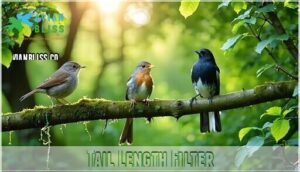
When examining tail length in British birds, you’ll find three distinct categories that enhance identification accuracy.
Short-tailed species like wrens exhibit compact profiles for woodland navigation. Medium-tailed birds such as robins balance flight dynamics with maneuverability. Long-tailed species like magpies use extended feathers for aerial control and display.
Tail function varies substantially across species, reflecting evolutionary significance in habitat adaptation. As seen in species worldwide, long tails attract mates through elaborate courtship displays.
This bird guide feature helps distinguish between similar bird characteristics, making your British birds identification more precise through careful observation of these species variations.
Habitat Based Identification
You’ll find that different bird species prefer specific habitats, making location one of your most reliable identification clues.
The interactive tool’s habitat filters help you narrow down possibilities by matching where you spotted the bird with where different species actually live, using habitat filters.
Coastal Habitat Filter

Along the UK’s rugged coastline, you’ll discover over 200 bird species perfectly adapted to saltwater environments.
Britain’s coastal waters host over 200 specialized seabirds, from diving gannets to cliff-nesting puffins.
These coastal birds UK showcase remarkable survival strategies in tidal zones.
When using coastal habitat filters for bird identification, focus on these key characteristics:
- Seabird diet – Look for fish-eating specialists like puffins and guillemots
- Salt tolerance – Species with special glands for processing saltwater
- Tidal timing – Birds that feed during specific tide cycles
- Nesting habits – Cliff-nesters versus ground-nesters on beaches
- Migration patterns – Seasonal visitors using UK coasts as stopover sites
Many resources are available if you need a coastal bird identifier.
Coastal conservation efforts protect these essential shoreline ecology systems, though habitat threats from development and climate change remain significant challenges for UK birds.
Wetland Habitat Filter

Wetland birds in the UK thrive in reed beds and shallow waters where over 150 species find food and shelter.
These habitats support ducks, herons, and bitterns while providing critical breeding grounds.
Conservation efforts have helped marsh harrier populations recover from habitat loss.
Water quality and invasive species affect bird identification success.
Seasonal changes influence which UK birds you’ll spot during birdwatching expeditions.
Resources for identifying wetland birds can aid enthusiasts.
Woodland Habitat Filter

You’ll find woodland birds UK thrive in the nation’s forests, which cover 13% of the land.
These bird habitats support diverse species like great spotted woodpeckers and nuthatches.
Tree species influence which birds you’ll spot – deciduous woods attract different species than coniferous forests.
Woodland birdsong helps identify nesting birds, while forest management affects bird populations.
Woodland conservation efforts boost species recovery, making bird identification easier for small brown birds hiding in undergrowth, and supporting woodland birds with diverse species.
Urban Habitat Filter
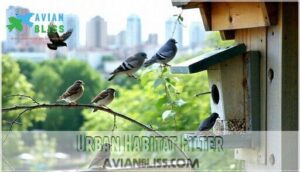
Cities offer unique bird identification challenges.
Urban bird feeders attract house sparrows and starlings year-round.
Green space importance becomes clear when parks host blackbirds and robins.
Noise pollution impact affects bird sounds identification.
Artificial light effects can alter behavior patterns.
City bird adaptations help species like pigeons thrive.
Look for small brown birds around buildings and gardens.
These areas provide crucial nesting sites for many species, highlighting the importance of urban bird habitat.
Advanced Filter Features
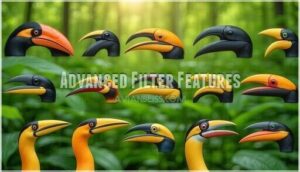
The advanced filters let you narrow down your search using specific bird features like beak shape and seasonal timing.
You can match birds by their distinctive bill types or find species that appear during particular months of the year.
Beak Shape Filter
Your bird identification becomes precise when you focus on beak morphology. Different beak shapes reveal feeding habits and species variation.
Hooked beaks catch prey while thin beaks probe for insects. These beak adaptations show evolutionary significance across UK bird species.
Beak shapes reflect millions of years of evolution. The filter helps distinguish similar-looking birds through their unique feeding tools, making bird identification techniques more accurate for serious bird watching enthusiasts.
Month Filter
Many bird species UK follow predictable seasonal migration patterns throughout the year.
Your interactive guide’s month filter helps identify which birds you’ll likely spot during specific breeding seasons or winter months.
Seasonal changes affect food availability and plumage changes, making bird identification easier when you know timing.
Bird behavior shifts monthly, so filtering by month narrows your search substantially for accurate bird species identification.
Detailed Species Information
Once you’ve narrowed down your bird identification, each species profile reveals detailed information about behavior, diet, and conservation status.
You’ll discover plumage variation between males and females, seasonal changes, and specific field marks that distinguish similar species.
These profiles include high-quality photos, habitat preferences, and migration patterns to enhance your birdwatching guide experience across UK locations.
Using Identification Guides

Once you’ve identified a potential species using the filter system, you’ll want to click through to access detailed information pages.
These pages provide thorough data about each bird, including scientific names, habitat preferences, behavioral patterns, and seasonal migration details.
These species profiles help confirm your identification and deepen your understanding of British wildlife.
Click Through Species Information
Once you’ve filtered down to potential matches, clicking through reveals the real treasure trove.
You’ll find detailed descriptions covering everything from wingspan to feeding habits. Visual aids show seasonal plumage changes while audio recordings let you hear UK bird sounds firsthand.
Conservation status helps you understand which rare birds UK needs protection. Similar species comparisons prevent those "oops, wrong bird" moments that plague every birdwatcher’s early adventures, helping to identify the real treasure and understand conservation status.
Scientific Names and Classification
Understanding scientific names helps you navigate bird identification with confidence.
Scientific names unlock the secret language of bird identification—your key to confident species recognition.
Each species carries a unique binomial nomenclature—like Turdus migratorius for American Robin—that connects to taxonomic hierarchy and evolutionary relationships.
These classification systems reveal bird families and phylogeny patterns that make ornithology accessible.
Modern bird identification guides standardize scientific names, ensuring your bird species guide remains accurate across different regions and publications, which is crucial for ornithology.
Seasonal Sightings and Migration Patterns
Bird migration UK follows predictable patterns that help with bird identification throughout the year.
Migration Triggers like daylight changes signal when species move between breeding seasons and winter habitats.
Climate Impact affects timing, with warmer springs bringing earlier arrivals.
Stopover Sites become hotspots where multiple species gather.
Understanding these patterns transforms your bird spotting experience into a seasonal treasure hunt across diverse bird habitats UK, with a focus on migration patterns.
Frequently Asked Questions (FAQs)
How to identify birds in the UK for free?
Use free online resources like the RSPB bird identifier, download apps like Merlin Bird ID, or visit local nature reserves.
Look for distinctive features like size, colors, beak shape, and habitat to narrow down species quickly, using tools like the RSPB bird identifier.
What is the best app to identify birds in the UK?
Getting lost in endless apps?
Merlin Bird ID by Cornell Lab stands out as the top choice.
This free app identifies birds through photos and sounds, using eBird’s massive database to help you confidently name any feathered friend you encounter across Britain, with the help of Merlin Bird ID.
What is the best pocket guide to British birds?
You’ll want the RSPB Pocket Guide to British Birds by Simon Harrap or British Birds: A Pocket Guide by WILDGuides.
Both actually fit your pocket and cover common species you’ll spot.
What is the field guide for birds in the UK?
Imagine this scenario: You’re in Richmond Park when you spot a flash of blue but can’t tell if it’s a kingfisher or jay.
Collins Bird Guide serves as Britain’s most complete field guide, providing detailed identification text, distribution maps, and illustrations for all major plumages, making it a valuable resource for bird identification, with detailed information that helps in distinguishing between similar species.
What sounds do common British birds make?
Common British birds produce distinctive sounds you’ll easily recognize.
Wrens have an incredibly loud song with high-pitched whistles and rolling rattles. Blackbirds deliver clear, confident verses repeated 2-4 times in the dawn chorus, while song thrushes repeat melodic phrases that sound like questions and answers.
Birds sing to attract mates and defend territories, especially during mating season behaviors.
How to photograph birds for better identification?
Use telephoto lenses to keep distance without disturbing birds.
Shoot during golden hour for softer lighting.
Focus on the eye first.
Capture multiple angles and behaviors.
Include habitat context for identification clues.
Which birds are protected by UK law?
All wild birds in the UK are protected under the Wildlife and Countryside Act
It’s illegal to kill, injure or take any wild bird, damage nests, or take eggs.
Some rare species get extra protection for their nests and young.
This protection is detailed in UK bird protection laws.
What equipment is needed for birdwatching?
Essential birdwatching gear won’t break the bank – you’ll need quality binoculars (8×42 work great).
A field guide for your region, notebook for recording sightings, and comfortable walking shoes for those early morning adventures.
How to attract specific birds to gardens?
Plant native berries like elderberries and rowan for thrushes.
Offer sunflower seeds for finches and tits.
Install water features to attract various species.
Create shelter with dense shrubs.
Match food sources to your target birds’ preferences.
Conclusion
Successfully identifying British birds transforms from guesswork into precision when you master the right techniques.
Your bird identification guide united kingdom journey becomes remarkably efficient once you understand how multiple characteristics work together.
Start with size and color, then add habitat details and seasonal timing.
The interactive filtering approach eliminates confusion by narrowing possibilities systematically.
You’ll discover that behavioral patterns often provide the final confirmation needed for accurate species identification in the field.
- https://www.rspb.org.uk/whats-happening/news/two-new-reports-reveal-how-the-uks-birds-are-faring
- https://www.gardenersworld.com/wildlife/common-british-garden-birds/
- https://www.green-feathers.co.uk/blogs/news/top-10-most-common-birds-in-the-uk
- https://www.wwt.org.uk/news-and-stories/blog/11-easy-things-you-can-do-to-improve-your-bird-id
- https://peckishbirdfood.com/pages/bird-identifier-guide