This site is supported by our readers. We may earn a commission, at no cost to you, if you purchase through links.
 Bird feather care tips start with proper nutrition – you’ll need a balanced diet rich in protein, vitamins A and D, and omega-3 fatty acids.
Regular misting or shallow baths help your bird maintain natural feather oils and cleanliness. Keep humidity levels between 50-60% and provide full-spectrum lighting for 10-12 hours daily.
A clean environment with fresh water, appropriately sized perches, and stress-reducing enrichment activities supports healthy molting cycles. Watch for signs of feather plucking, which often indicates stress or poor air quality.
Temperature consistency matters too – avoid drafts and sudden changes. The secret to lustrous plumage lies in understanding your bird’s specific species requirements and seasonal needs, which is crucial for maintaining a healthy molting cycle and overall bird well-being, ensuring proper nutrition.
Table Of Contents
- Key Takeaways
- Feather Care Essentials
- Feather Health Factors
- Common Feather Problems
- Feather Care Tips
- Long Term Feather Care
- Frequently Asked Questions (FAQs)
- How do you improve bird feather quality?
- How to preserve bird feathers?
- Can I keep a feather I found on the ground?
- How do you preserve and display a feather?
- Can molting birds safely use regular shampoo?
- How often should flight feathers be trimmed?
- What causes feathers to change color permanently?
- Do indoor birds need different feather care?
- When should emergency feather bleeding be treated?
- Conclusion
Key Takeaways
- Feed a protein-rich diet – You’ll need 88-97% protein in feathers, so provide eggs, legumes, and lean meats with vitamins A, E, and omega-3s for strong, shiny plumage
- Maintain proper environment – Keep humidity at 50-60%, temperature between 65-75°F, and provide 10-12 hours of full-spectrum lighting daily for healthy molting cycles
- Offer regular bathing opportunities – You should mist your bird daily or provide shallow water dishes to help maintain natural feather oils and cleanliness
- Monitor for stress and health issues – Watch for feather plucking, brittle feathers, or color changes that indicate poor air quality, inadequate nutrition, or underlying health problems requiring vet attention
Feather Care Essentials
You’ll discover that proper feather care relies on three fundamental pillars: nutrition, maintenance, and environment.
These essential elements work together to guarantee your bird’s feathers remain vibrant, strong, and healthy throughout their life.
Nutrition and Supplements
Your bird’s feathers are 88-97% protein, making quality nutrition absolutely essential.
Essential nutrition fuels 88-97% protein feathers for vibrant, healthy plumage that shines naturally.
Protein sources like eggs and legumes provide amino acids for strong feather structure, while fatty acids from seeds keep plumage shiny and flexible.
A well-planned diet with optimal bird nutrition is vital for maintaining healthy feathers.
- Protein Sources: Feed lean meats, eggs, and legumes for feather growth
- Vitamin Supplements: Include vitamins A, E, and biotin for strength
- Mineral Blocks: Provide calcium and zinc for healthy feather development
Feather Maintenance Practices
Daily feather preening consumes 10-25% of your bird’s time, making it essential for healthy plumage.
Monitor your bird’s grooming techniques and assist with gentle feather brushing when needed.
Regular beak trimming and nail care prevent overgrowth that interferes with preening.
Professional wing clipping ensures safety while maintaining your bird’s feather care routine and overall bird feather maintenance.
Using the right feather brush tools is vital for effective preening assistance.
Environmental Factors
Creating the right environment acts as your bird’s foundation for healthy feathers.
Air quality directly impacts respiratory health and plumage condition, so avoid cigarette smoke and chemical pollutants.
Maintain temperature between 65-75°F with 50-60% humidity for ideal feather development.
Proper ventilation systems prevent stale air while noise reduction minimizes stress-related feather plucking.
Adequate cage size allows natural movement, and environmental enrichment prevents boredom-induced feather damage.
Feather Health Factors

Your bird’s environment plays a pivotal role in maintaining healthy, vibrant feathers that’ll make your feathered friend look their absolute best.
Poor air quality, wrong temperatures, inadequate lighting, or cramped living spaces can quickly turn beautiful plumage into a dull, damaged mess.
This damaged mess affects your bird’s overall health and happiness.
Air Quality and Pollutants
Poor air quality poses serious threats to your bird’s feathers and overall health.
Household pollutants like cigarette smoke, aerosol sprays, and nonstick cookware fumes can cause feather plucking and brittle plumage.
Urban birds show darker, duller feathers from accumulated particulate matter and toxic fumes.
Install air purifiers and maintain proper ventilation to protect against chemical exposure and smoke damage.
Regular maintenance of a bird’s environment, including management of environmental health, is essential for preventing feather plucking and promoting healthy plumage.
Temperature and Humidity
Your home’s climate management directly impacts your bird’s feather health guide success.
Extreme temperatures stress birds, causing feather plucking and poor plumage quality.
Maintain thermal comfort between 65-75°F with humidity levels around 50-60%.
Dry air creates brittle feathers, while excessive moisture promotes bacterial growth.
Install a hygrometer to monitor conditions and use humidifiers during winter months for ideal avian plumage care.
Light Exposure and Photoperiod
Your bird’s light exposure and photoperiod directly impact feather health through circadian rhythms.
Proper daylight hours regulate molting cycles and hormone production, while UV lighting supports vitamin D synthesis for strong plumage.
- Light Cycles: Maintain 10-12 hours of daylight to support natural molting patterns
- Photoperiod Effects: Consistent light schedules prevent stress-related feather plucking
- UV Lighting: Full-spectrum bulbs promote calcium absorption for feather strength
- Daylight Hours: Seasonal adjustments help regulate breeding and molting cycles
- Circadian Rhythms: Regular light/dark patterns optimize overall avian plumage health
These elements work together to create a healthy environment for your bird, with each component playing a crucial role in maintaining strong, vibrant feathers.
Cage Size and Enrichment
Your bird’s cage size directly impacts feather health through stress levels and physical damage.
Cramped spaces increase anxiety, leading to feather plucking and poor plumage quality.
Proper cage design with adequate bar spacing prevents wing damage during movement, and environmental enrichment through toy rotation and perch variety encourages natural behaviors.
While maintaining cage hygiene and environmental control for ideal feather condition, providing a balanced diet that supports healthy feather growth is also essential for maintaining shiny and healthy plumage, which is crucial for overall bird well-being.
Common Feather Problems
Even healthy birds can develop feather problems that affect their appearance and well-being.
You’ll need to recognize these common issues early and take appropriate action to restore your bird’s plumage to its natural beauty.
Parasite Control and Infection
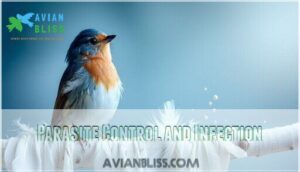
Feather mites affect nearly half of all birds, making parasite control a top priority.
You’ll spot these tiny invaders by covering your bird’s cage with a white sheet overnight—shed parasites become visible against the fabric.
Daily cage cleaning and disinfection prevent infestations, while quarantining new birds stops transmission.
Pyrethrin sprays and sulfur powder offer safe mite removal without toxic effects.
Infection prevention requires sanitizing perches and water bowls regularly.
Feather Loss and Damage

Watch for early warning signs—feather loss causes include poor nutrition, stress, and underlying illness.
Broken feathers often result from collisions or rough handling, while feather plucking solutions involve addressing behavioral triggers.
Damaged feathers may signal health issues requiring immediate attention.
Molting issues can complicate feather repair and plumage restoration efforts.
Brittle Feathers and Dry Feathers

Inadequate nutrition often leads to brittle feathers that snap easily.
Dry feathers lack natural oils, making them dull and prone to breakage.
Poor diet, environmental stress, and medical conditions cause these texture problems.
Increase protein and fatty acid intake for feather repair.
Regular misting helps restore moisture to dry feathers naturally, which can also involve increasing fatty acid intake for overall health.
Feather Care Tips
You’ll need to implement specific care practices to maintain your bird’s feathers in peak condition.
These proven techniques focus on bathing routines, proper perch selection, and stress reduction strategies that work together to promote healthy plumage growth, using complete concepts to ensure the best results.
Bathing and Cleaning Techniques

Regular bathing keeps your bird’s feathers clean and healthy.
Offer shallow water dishes daily, keeping depth at 1-2 inches for small birds. Misting bottles work well for nervous bathers.
Use lukewarm water and bird-safe cleaning products only when necessary. After bathing, move your bird to a warm, draft-free area for natural drying.
To maintain healthy feathers, feather sanitizing methods are key and should be incorporated into your bird’s care routine, focusing on complete concepts and healthy feathers.
Perch Selection and Beak Care

Choose varied texture perches made from different materials like natural wood, rope, and mineral blocks to promote healthy foot exercise. Your bird’s feet need diversity – smooth, rough, and textured surfaces prevent pressure sores and maintain proper grip strength.
For beak health assessment, watch for overgrowth or damage requiring professional trimming. Nail filing should be done carefully by experienced handlers to avoid injury and bleeding.
Proper bird perch selection is essential for the overall well-being of your bird.
Reducing Stress and Establishing Routine
Stress directly impacts feather quality, making calming techniques essential for your bird’s health.
Create consistent grooming sessions and morning routines to reduce stress and anxiety.
Monitor stress signs like excessive preening or feather plucking.
Environmental enrichment through varied perches and toys promotes natural behaviors.
Social interaction, whether with other birds or gentle handling, supports emotional well-being and healthy plumage development.
Long Term Feather Care
Long-term feather care requires consistent attention to three key areas that work together to maintain your bird’s plumage health throughout its life.
You’ll need to establish regular routines for health monitoring, nutrition management, and environmental cleanliness to prevent feather problems before they develop, focusing on complete concepts.
Regular Health Checks and Veterinary Care
Annual vet visits provide your bird’s health baseline, catching problems before they become serious.
Avian vets examine feathers during health checks, spotting subtle changes you might miss. Bird examination includes feather inspection for parasites, infections, or abnormalities.
Medical diagnosis through regular health checks helps identify diseases like Psittacine Beak and Feather Disease early.
Schedule health checkups twice yearly for ideal feather care, which is crucial for maintaining your bird’s overall health and catching any potential issues related to avian vets.
Balanced Diet and Quality Supplements
Since proper nutrition forms the foundation of vibrant plumage, you’ll want to focus on key nutrients that directly support feather development.
A balanced diet rich in protein sources and essential vitamins creates the building blocks your bird needs for healthy feathers.
- Protein Sources: Offer lean meats, eggs, and legumes to provide amino acids essential for feather structure and growth
- Fatty Acids: Include flaxseed or fish oil to maintain feather flexibility and natural shine while reducing inflammation
- Vitamin Supplements: Provide vitamins A, E, and biotin through quality bird nutrition supplements to strengthen feather development
- Mineral Blocks: Supply calcium and zinc through specialized mineral blocks to support proper feather elasticity and structure
To guarantee superior feather health, understanding the role of best supplements is vital for addressing nutritional deficiencies.
Clean Living Environment and Hygiene Practices
Clean cages weekly to remove bacteria and debris that contaminate feathers.
Fresh water daily prevents harmful microorganisms from affecting your bird’s health. Sanitize perches and food bowls regularly to eliminate disease-causing pathogens.
Use bird-safe cleaning products to maintain proper air quality. These hygiene routines create the foundation for vibrant plumage and long-term wellness.
Regular use of a cage cleaning product helps maintain a healthy environment for your bird, supporting overall wellness.
Frequently Asked Questions (FAQs)
How do you improve bird feather quality?
Like a master painter mixing colors on a palette, you’ll transform dull feathers into vibrant plumage through proper nutrition, regular bathing, and consistent care routines that support natural preening behaviors.
How to preserve bird feathers?
Clean feathers by washing with mild soap and air drying naturally.
Freeze at -18°C for 48 hours to eliminate pests.
Store in sealed plastic bags or cedar chests to prevent moisture damage and insect infestation.
Can I keep a feather I found on the ground?
That fallen feather is nature’s abandoned quill, but you can’t legally keep it unless it’s from common backyard birds. Most wild bird feathers are federally protected.
How do you preserve and display a feather?
To preserve a feather, gently wash it with mild soap and lukewarm water, then air dry completely.
Once dry, store it in a sealed plastic bag or display it in a shadow box frame to prevent dust and pest damage.
Can molting birds safely use regular shampoo?
Birds spend 10-25% of their day preening, but regular shampoo can disrupt their natural oils and damage delicate feathers.
Never use human shampoo on molting birds—it strips essential protective oils and can cause skin irritation.
Stick to bird-safe bathing products instead, as they preserve the natural oils necessary for the birds’ health.
How often should flight feathers be trimmed?
Flight feathers shouldn’t be trimmed routinely.
Wing clipping should only be done by a veterinarian when absolutely necessary for safety reasons, as it impairs natural flight abilities and can cause stress and behavioral issues.
What causes feathers to change color permanently?
Diet changes cause permanent feather color shifts.
When you switch a bird’s nutrition—especially carotenoid-rich foods like carrots or peppers—new feathers grow in different colors.
Genetics, age, and hormonal changes also permanently alter feather pigmentation over time.
Do indoor birds need different feather care?
Yes, indoor birds need different feather care than outdoor birds.
You’ll need to provide regular misting, maintain proper humidity levels, make certain adequate lighting, and create bathing opportunities since they lack natural rain and environmental conditions.
They lack natural rain and environmental conditions, which necessitates the creation of bathing opportunities.
When should emergency feather bleeding be treated?
During medieval times, when knights’ armor protected them from injury, you’d treat feather bleeding immediately if it’s from a pin feather or won’t stop within minutes.
Apply gentle pressure with a clean cloth and contact your avian veterinarian.
Conclusion
Rather than thinking feather care’s too complicated, remember that implementing these bird feather care tips becomes routine with practice.
You’ll see dramatic improvements in your bird’s plumage within weeks of consistent care.
Focus on the fundamentals: proper nutrition, regular bathing opportunities, clean environment, and stress reduction.
These bird feather care tips work together to promote natural molting cycles and vibrant feather health.
Your feathered companion will reward your dedication with stunning, healthy plumage that reflects their overall well-being.
- https://owendeutsch.com/the-purpose-of-preening/
- https://blog.mybirdbuddy.com/post/bird-clean-feathers
- https://www.lyricbirdfood.com/birding-hub/behavior/how-do-birds-take-care-of-their-feathers/
- https://pubmed.ncbi.nlm.nih.gov/14511139/
- https://www.revivalanimal.com/learning-center/bird-feather-health-and-anatomy