This site is supported by our readers. We may earn a commission, at no cost to you, if you purchase through links.
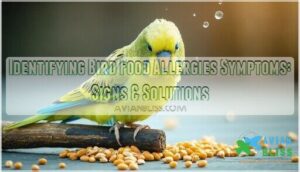 You’ll notice your bird showing clear distress signals when identifying bird food allergies symptoms.
Watch for excessive feather fluffing, persistent scratching, respiratory issues like wheezing or labored breathing, and digestive problems including vomiting or diarrhea.
Your feathered friend might also display unusual behavioral changes like lethargy or decreased appetite.
These reactions typically occur within hours of eating trigger foods like certain seeds, nuts, or pellet ingredients.
Don’t ignore subtle signs either – watery eyes, nasal discharge, or skin irritation around the beak can indicate developing sensitivities.
Understanding these warning signs becomes your first line of defense in protecting your bird’s health and preventing serious complications, by recognizing digestive problems and respiratory issues early on.
Table Of Contents
- Key Takeaways
- Bird Food Allergies
- Environmental Allergens
- Identifying Allergic Reactions
- Managing Dietary Sensitivities
- Prevention and Treatment
- Frequently Asked Questions (FAQs)
- How do you know if a bird has a food allergy?
- What are the symptoms of allergic reactions in birds?
- What causes bird allergies?
- What are the symptoms of feather allergies in birds?
- Do birds have food allergies?
- Are You allergic to birds?
- What does an allergy to birds look like?
- What do food allergy symptoms look like?
- Can birds develop new food allergies later?
- Are certain bird species more allergy-prone?
- Conclusion
Key Takeaways
- Watch for immediate physical symptoms – You’ll notice respiratory distress, such as wheezing or labored breathing, digestive issues, including vomiting and diarrhea, and skin irritation around the beak area within hours of eating trigger foods.
- Monitor behavioral changes closely – Your bird may show excessive feather plucking, increased lethargy, decreased appetite, or unusual stress responses that indicate allergic reactions to specific food ingredients.
- Identify common allergens early – Peanuts, soy, wheat, corn, sunflower seeds, and artificial additives frequently trigger sensitivities, so you’ll need to eliminate these systematically to pinpoint problem foods.
- Work with an avian veterinarian – You’ll need professional guidance for a proper diagnosis through elimination diets and testing, plus ongoing monitoring to prevent serious complications from untreated food allergies.
Bird Food Allergies
If you’ve noticed your bird acting differently around mealtime, food allergies might be the culprit.
Birds can develop sensitivities to common ingredients like peanuts, soy, wheat, and corn, which can cause serious health problems if left untreated.
Common Allergenic Ingredients
Why do certain ingredients trigger reactions in your feathered friend?
Common bird food allergens include peanuts, which often cause severe responses, and soy-based products found in many commercial diets.
Sunflower and safflower seeds rank among the most frequent seed allergens, while tree nuts like walnuts contain problematic proteins.
Citrus fruits, wheat gluten, and artificial additives can also provoke sensitivities in susceptible birds.
Symptoms of Food Allergies
Bird food allergies symptoms appear in multiple ways that you’ll want to watch for carefully.
Your feathered friend might develop digestive distress, respiratory signs, or skin irritation from problematic ingredients.
These bird allergies symptoms can sometimes mimic other health issues, making recognition challenging.
- Feather Plucking – Excessive preening and pulling out feathers due to skin irritation
- Digestive Distress – Vomiting, diarrhea, and loss of appetite after meals
- Respiratory Signs – Wheezing, coughing, and labored breathing patterns
- Behavioral Changes – Increased irritability, lethargy, or unusual stress responses
- Skin Irritation – Redness, swelling around eyes or beak, and constant scratching
Food allergies in birds manifest differently than in humans, so you’ll need to observe carefully.
Bird allergy signs often develop gradually and may worsen with continued exposure to the triggering ingredient.
Allergy symptoms can range from mild discomfort to severe reactions requiring immediate veterinary attention.
Diagnosis of Food Allergies
Diagnosing bird food allergies requires a systematic approach your avian veterinarian will guide you through.
Elimination diets serve as the gold standard, involving novel protein sources for 6-8 weeks while monitoring symptoms.
Your vet may also recommend skin tests or serum tests, though these aren’t as reliable in birds.
Keeping detailed symptom records during food trials helps pinpoint specific allergens through careful reintroduction.
A balanced diet requires essential bird nutrients like proteins and carbohydrates.
Environmental Allergens
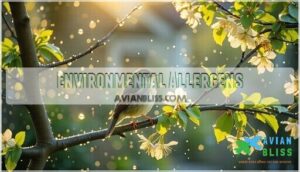
While food allergies grab most of the attention, your bird’s environment can trigger just as many problems.
Airborne allergens like pollen, dust mites, mold, and household chemicals can cause respiratory issues, skin irritation, and behavioral changes that you might mistake for other health problems, including those related to respiratory issues.
Pollen and Dust Mites
Pollen seasons bring airborne particles that trigger bird sneezing allergies and respiratory distress. You’ll notice increased symptoms during spring and fall when pollen counts peak.
Dust mites thrive in humid environments, causing bird itchy skin and feather loss. Implementing dust mite control through regular cleaning practices improves air quality substantially.
Focus on allergen reduction by using air purifiers and maintaining low humidity levels. Effective management includes addressing feather mite infestations to achieve better air quality and reduce respiratory distress.
Mold and Fungi Exposure
In damp corners of your bird’s living space, mold spores and fungi create invisible threats that trigger avian allergies.
Humidity control becomes your first line of defense against fungal infections. Watch for musty odors or visible growth—these signal poor air quality that demands immediate attention.
Regular cleaning regimens prevent spore buildup, while proper ventilation reduces moisture levels.
Your bird’s respiratory system can’t filter these microscopic invaders effectively, making spore identification essential for preventing mold allergies before they compromise your feathered friend’s health.
Household Chemicals and Air Fresheners
The invisible threats lurking in your home can trigger serious Chemical Sensitivities in your feathered friend.
Common household products become dangerous Respiratory Irritants, compromising Air Quality and Bird Health through airborne toxins that cause symptoms like watery eyes and lethargy.
- Aerosol sprays – create toxic clouds that overwhelm sensitive respiratory systems
- Scented candles – release harmful chemicals that accumulate in enclosed spaces
- Cleaning products – emit fumes that cause immediate breathing difficulties
- Air fresheners – contain allergens that trigger chronic respiratory problems
- Perfumes and colognes – produce volatile compounds that irritate delicate airways
Switch to Safe Alternatives like unscented, natural cleaning products to protect your bird from these hidden allergens.
Identifying Allergic Reactions
When your bird shows signs of allergic reactions, you’ll need to act quickly to identify the specific symptoms and their underlying causes.
Recognizing these warning signs early can prevent serious health complications and help you provide the right treatment for your feathered friend.
Respiratory Issues and Skin Irritation
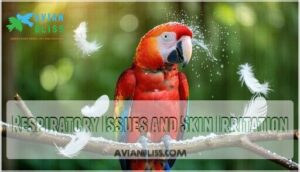
When you spot respiratory problems in your bird, watch for persistent coughing and sneezing that won’t quit.
These symptoms often pair with breathing difficulty, where your feathered friend struggles to get enough air.
Skin irritation shows up as redness around the face and body, while eye swelling makes your bird look uncomfortable.
Feather plucking becomes their go-to response when skin irritation drives them crazy.
Behavioral Changes and Gastrointestinal Symptoms
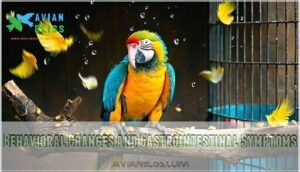
Beyond physical symptoms, food allergies in birds trigger noticeable behavioral shifts and digestive upset.
Stress and allergies often create a vicious cycle, where allergic reactions increase anxiety levels, leading to more severe symptoms.
Appetite changes serve as early warning signs, while gastrointestinal issues manifest through specific patterns.
- Feather plucking intensifies when birds experience allergic discomfort, creating bald patches and skin irritation
- Vomiting types vary from clear liquid to undigested food, indicating different severity levels of allergic reactions
- Diarrhea causes include inflammatory responses to allergens, resulting in loose, watery, or discolored droppings
- Bird behavior changes encompass increased aggression, withdrawal from social interaction, and disrupted sleep patterns. Apathy and lethargy can also be major warning signs.
Diagnostic Tests and Veterinary Examination

When troubling symptoms persist, your veterinarian becomes your detective partner in solving the mystery.
A thorough physical check-up examines skin, feathers, and respiratory health while a detailed history review reveals dietary patterns.
Skin tests and serum analysis can identify specific allergens, though elimination diets remain the gold standard for bird allergy diagnosis.
Veterinary specialists maintain detailed symptom records throughout bird allergy testing to guarantee accurate allergy diagnosis.
Managing Dietary Sensitivities
Once you’ve identified your bird’s food allergies, creating a customized management plan becomes essential for their health and comfort.
The key lies in eliminating problematic ingredients while ensuring your feathered friend still receives complete nutrition through carefully selected alternatives.
Balanced and Nutrient-Rich Diets

Once you’ve identified your bird’s food allergies, you’ll need to focus on building a balanced diet that supports their immune system while avoiding problematic ingredients.
Bird dietary balance requires careful attention to portion control and ingredient sourcing. You’ll want to incorporate dietary supplements as recommended by your vet, maintain proper hydration importance.
Many owners find success when using specially formulated bird food to meet their bird’s nutritional needs, and making seasonal adjustments to ensure the best possible care throughout the year, supporting a nutrient-rich diet.
Hypoallergenic Bird Food Formulations
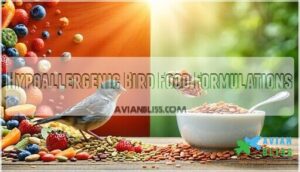
When dealing with bird food intolerance, hypoallergenic bird food formulations offer specialized solutions using novel protein alternatives like duck or quail.
These products feature hydrolyzed proteins that improve digestibility factors while addressing palatability concerns.
Despite higher cost analysis compared to standard feeds, limited ingredient sourcing reduces cross-reactivity risks.
For specialized options, consider exploring hypoallergenic bird food.
Food allergens are systematically eliminated through careful manufacturing processes, making these formulations essential for birds requiring elimination diets.
Tailored Feeding Plans and Elimination Diets
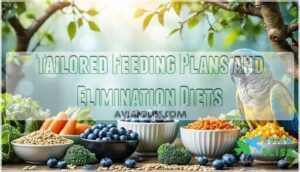
Your bird’s health depends on creating a bird food elimination diet that systematically removes potential dietary triggers.
Start with a simplified diet containing single protein sources and gradually introduce new foods while monitoring for reactions.
This methodical food reintroduction process helps identify specific food sensitivities while maintaining proper nutrient balance.
Alternative proteins and specialized avian nutrition formulations support your bird’s dietary needs during elimination periods.
Prevention and Treatment
Once you’ve identified your bird’s food allergies, preventing future reactions and managing existing symptoms becomes your next priority.
You’ll need to combine careful dietary management with environmental controls and regular veterinary care to keep your feathered friend healthy and comfortable.
Minimizing Toxin Exposure and Allergen Avoidance
When you create a safe haven for your bird, removing potential hazards becomes your top priority.
Environmental allergens lurk in everyday household items, making vigilant toxin identification essential for your feathered friend’s wellbeing.
Here’s your action plan for allergen avoidance:
- Safe Cleaning – Use bird-safe, natural cleaners instead of harsh chemicals
- Air Purification – Install HEPA filters to remove airborne allergens
- Dietary Changes – Eliminate known triggers from bird food sources
- Toxin Sources – Remove air fresheners, pesticides, and scented products
- Early Detection – Monitor for allergy symptoms after environmental changes
Regular Veterinary Monitoring and Supplementation
Professional veterinary care forms the backbone of effective allergy management in birds.
Your avian veterinarian will establish monitoring frequency based on your bird’s specific needs, typically recommending check-ups every 3-6 months for allergic birds.
During these visits, they’ll assess supplement types needed, make diet adjustments, and review symptom tracking logs.
Probiotic benefits become particularly important for digestive health maintenance.
Many owners find avian-specific probiotics beneficial for their birds.
| Assessment Type | Frequency | Purpose |
|---|---|---|
| Physical Examination | Every 3-6 months | Monitor overall health and allergy symptoms |
| Blood Work Analysis | Annually or as needed | Check for nutritional deficiencies and immune function |
| Weight Monitoring | Monthly | Track unintended weight loss from dietary restrictions |
| Fecal Analysis | When symptoms occur | Detect malabsorption or gastrointestinal inflammation |
| Supplement Review | Every visit | Adjust omega-3, vitamin A, and probiotic protocols |
Environmental Control and Air Purification
Control your bird’s environment by installing HEPA filter air purifiers to trap dust and airborne particles.
Maintain humidity levels between 40-60% to prevent mold growth.
Clean living spaces weekly, focusing on removing environmental allergens, and use allergen barriers like cage covers during high pollen seasons.
Make certain proper ventilation strategies through strategic window placement and exhaust fans, and consider drainage hole benefits for a healthier environment.
Frequently Asked Questions (FAQs)
How do you know if a bird has a food allergy?
You’ll notice gastrointestinal symptoms like vomiting, diarrhea, or loss of appetite, plus respiratory issues, skin irritation, feather plucking, lethargy, and unexplained weight loss after eating certain foods.
What are the symptoms of allergic reactions in birds?
Like a canary in a coal mine alerting miners to danger, your bird’s body signals trouble through specific symptoms.
You’ll notice sneezing, coughing, itchy skin, feather plucking, digestive upset, and behavioral changes when allergic reactions occur.
What causes bird allergies?
Bird allergies stem from environmental triggers like pollen, dust mites, mold spores, and household chemicals.
Food allergens include peanuts, soy, wheat, corn, and certain fruits.
Your bird’s immune system overreacts to these substances, causing uncomfortable symptoms, which can be triggered by environmental triggers.
What are the symptoms of feather allergies in birds?
Feather allergies in birds cause persistent itching, excessive preening, and feather plucking that damages their plumage.
You’ll notice red, irritated skin underneath affected areas, behavioral changes, and potential secondary infections from scratching.
Do birds have food allergies?
Don’t put all your eggs in one basket—yes, birds can develop food allergies!
You’ll notice symptoms like feather plucking, digestive upset, respiratory issues, and behavioral changes when they’re exposed to problematic ingredients.
Are You allergic to birds?
I can’t determine if you’re allergic to birds without knowing your specific symptoms. Common bird allergies involve reactions to feathers, dander, or droppings, causing sneezing, itching, or breathing difficulties.
What does an allergy to birds look like?
If you’re allergic to birds, you’ll likely experience sneezing, runny nose, watery eyes, and coughing when exposed to bird dander, feathers, or droppings.
Some people develop skin rashes or breathing difficulties too.
What do food allergy symptoms look like?
Your bird’s food allergies show up as feather plucking, sneezing, vomiting, diarrhea, and breathing troubles.
You’ll notice swelling around their eyes or beak, plus unusual irritability or lethargy after eating certain foods.
Can birds develop new food allergies later?
Like updating your smartphone’s software, your feathered friend’s immune system can develop new sensitivities over time.
Birds absolutely can develop food allergies later in life, especially when you introduce new ingredients or their digestive systems change with age.
Are certain bird species more allergy-prone?
Yes, certain species show higher allergy susceptibility.
Parrots, especially eclectus parrots, display more food sensitivities than other birds.
Their complex digestive systems and specialized dietary needs make them particularly vulnerable to allergic reactions.
Conclusion
Studies show that 23% of pet birds develop food sensitivities during their lifetime, making early detection vital for their wellbeing.
Successfully identifying bird food allergies symptoms requires careful observation and quick action when warning signs appear.
You’ll protect your feathered companion by monitoring for respiratory distress, digestive issues, and behavioral changes after meals.
Work closely with an avian veterinarian to confirm suspected allergies and develop appropriate treatment plans. Remember that prompt recognition and proper management can prevent serious health complications and guarantee your bird enjoys a long, healthy life.