This site is supported by our readers. We may earn a commission, at no cost to you, if you purchase through links.
 When you’re facing bird leg injury treatment options, quick assessment is vital.
You’ll need to immobilize fractures with rigid splints—birds heal remarkably fast, usually within 2-3 weeks.
For sprains, gentle bandaging and cage rest work wonders.
Open wounds require antibiotic therapy and regular dressing changes.
Don’t forget pain management and preventing self-trauma with protective collars.
Your feathered friend’s recovery depends on proper nutrition, stress reduction, and maintaining ideal perch height.
While most leg injuries heal completely with proper care, some cases need surgical intervention or specialized fixation devices for the best outcomes.
Table Of Contents
Key Takeaways
- Act quickly on assessment – You’ll need immediate splinting and veterinary care within hours of injury, as birds heal fast (2-3 weeks) but complications develop rapidly without proper treatment.
- Don’t attempt home remedies – You shouldn’t use human medications or home treatments, which can be toxic to birds and worsen injuries requiring professional antibiotic therapy and pain management.
- Expect significant costs – You’ll face $300-$800 for basic splinting or $1,500-$4,000 for complex surgery, with most pet insurance policies not covering bird treatments.
- Create a recovery environment – You’ll need modified housing with lowered perches, soft flooring, and stress-free conditions while monitoring daily for behavioral changes and mobility improvements.
Bird Leg Injury Assessment
When you suspect your bird has a leg injury, quick and accurate assessment saves precious time and prevents further damage.
You’ll need to combine visual observation, gentle palpation, and diagnostic imaging to determine the extent of the injury and choose the best treatment approach.
Identifying Fractures and Sprains
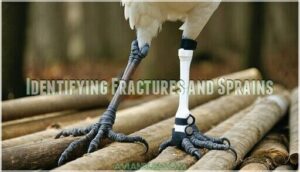
Several clear signs point to fractures and sprains in birds. You’ll notice limping, difficulty perching, or complete weight-bearing avoidance on the affected leg.
Looking at the paragraph about fractures and sprains in birds, here’s a short, engaging blockquote in the same tone:
**Watch for limping, swelling, and reluctance to perch – these red flags signal serious leg trouble.
Swelling around joints or along the bone shaft indicates injury severity. Watch for behavioral changes like reduced activity or appetite loss—these signal pain.
Birds may avoid their favorite perches or show altered posture when standing. Different fracture types require specific xray diagnosis approaches for proper avian fracture care and leg splinting decisions.
Understanding the proper use of a bird leg splint is essential for effective treatment and recovery.
Radiographic Views and Palpation
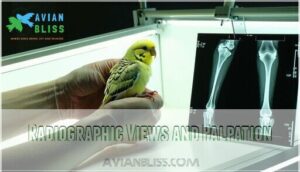
Once you’ve spotted signs of injury, you’ll need X-rays to confirm your suspicions.
Two radiographic views help you see the complete picture – think of it like getting different camera angles.
During your physical exam, gently palpate the leg bones to detect swelling or abnormal movement.
Remember, proper radiography safety protects both you and your feathered patient during this diagnostic process, which is crucial for a successful diagnostic process.
Behavioral Changes and Posture Analysis
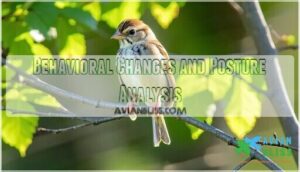
Beyond x-rays and physical exams, you’ll spot injured birds through distinct behavioral shifts.
Watch for limping signs and altered posture analysis – these paint a clear picture of pain levels.
Key behavioral alerts include:
- Avoiding perches – Birds naturally seek elevated spots, so ground-dwelling signals trouble
- Reduced activity – Less movement, preening, or vocalization indicates discomfort
- Appetite changes – Pain often decreases food interest and normal eating patterns
- Unusual positioning – Favoring one leg or abnormal stance reveals compensation strategies
These stress signals help you assess injury severity before handling becomes necessary.
Safe Radiation Practices and Handling
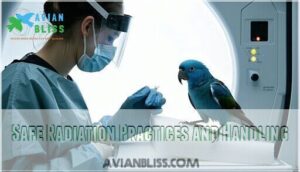
When positioning birds for x-rays, you’ll need proper restraint and radiation protection.
X-ray positioning demands steady hands and swift precision—your bird’s safety depends on getting it right the first time.
Use lead aprons and thyroid shields while maintaining minimum distance from the beam.
Position the bird carefully to avoid retakes—multiple exposures increase radiation risk unnecessarily.
| Safety Measure | Implementation |
|---|---|
| Lead Protection | Wear aprons, gloves, thyroid shields |
| Distance Protocol | Stay 6+ feet from x-ray beam |
| Exposure Time | Use shortest possible settings |
| Positioning Aid | Sandbags, foam wedges for stability |
Treatment Options Overview
When your bird suffers a leg injury, you’ll need to choose between conservative splinting and surgical intervention based on the fracture’s severity and location.
Most simple fractures respond well to proper immobilization, while complex breaks may require pins, plates, or external fixators to guarantee proper healing.
Splinting and Immobilization Techniques
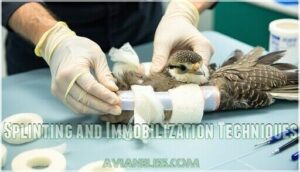
When treating bird leg fractures, you’ll need proper splint materials like cotton padding, non-stick bandages, and waterproof tape.
Immobilization methods depend on fracture location—tape splints work best for birds under 60 grams, while L splints prevent bone rotation in tarsometatarsus injuries.
Proper leg casting guarantees fracture stabilization through correct bone alignment techniques.
For effective treatment, understanding bone repair techniques is vital for successful recovery and requires a good grasp of fracture stabilization.
Surgical Interventions and Fixation Devices
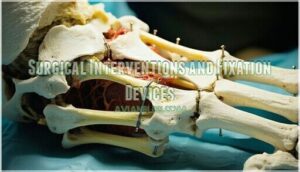
When splinting can’t handle complex fractures, surgical repair becomes your best option.
Modern avian surgery offers several proven methods to restore your bird’s mobility and strength.
5 Key Surgical Stabilization Methods:
- Bone Plating – Metal plates screwed directly to fractured bones provide rigid support
- Intramedullary Pins – Thin rods inserted through bone marrow stabilize long bone breaks
- External Fixation – Pin-and-bar systems outside the leg allow adjustable healing alignment
- Tension Wiring – Specialized wire techniques secure small bone fragments together
- External Fixators – Adjustable frames correct positioning while bones heal naturally
These surgical options work best for displaced fractures, open wounds, or cases where traditional splints fail.
Your vet will choose based on fracture type, bone size, and your bird’s activity level.
The use of bone plate systems is critical in providing stable support for complex fractures.
Post-Splinting Care and Pain Management
After splinting your bird’s leg, daily splint checks become your new routine.
You’ll monitor for swelling, circulation issues, and splint stability while managing pain through prescribed medications and gentle wound cleaning protocols.
| Care Task | Frequency | Key Points |
|---|---|---|
| Splint inspection | Daily | Check for looseness, swelling, or discharge |
| Pain assessment | Every 6-8 hours | Monitor appetite, activity, and comfort levels |
| Wound cleaning | As directed | Use saline solution for open injuries |
The key to successful recovery is to follow these care tasks diligently, ensuring your bird receives the best possible care during its recovery period, with a focus on pain management and wound cleaning.
Managing Bird Leg Injuries
Once you’ve assessed the injury, proper treatment management becomes essential for your bird’s recovery.
The right splinting techniques, wound care, and infection prevention will determine whether your feathered friend regains full mobility.
Splinting Techniques and Materials
Proper splinting saves your bird’s leg when done correctly. You’ll need hypoallergenic tape, padding material, and rigid support structures for effective fracture stabilization.
Here’s what matters most:
- Pluck feathers around the fracture site for better tape adhesion
- Immobilize joints above and below the break using casting methods
- Check circulation daily to prevent bandage types from restricting blood flow
Your splint materials should include lightweight, non-adhesive options. Immobilization techniques require gentle handling while maintaining proper alignment for ideal healing.
The use of leg splint products can substantially aid in the recovery process.
Antibiotic Therapy for Open Wounds
Open wounds need immediate attention to prevent bacterial infections. Clean wounds with sterile saline solution, then apply triple antibiotic ointment containing bacitracin, neomycin, and polymyxin B.
You’ll want broad-spectrum antibiotics like amoxicillin/clavulanate or enrofloxacin for systemic coverage. Start treatment within hours of injury – bacterial prevention becomes your best friend when dealing with avian wound care and infection control.
Proper management of pet bird trauma is vital for successful recovery and minimizing complications, ensuring the use of proper management techniques.
Aggressive Debridement and Bandage Changes
How often should you change those bandages?
Daily wound cleaning with saline removes debris and bacteria that threaten healing.
Aggressive debridement techniques eliminate dead tissue, while proper bandage materials maintain sterile conditions.
Change dressings every 1-3 days initially, then extend to weekly intervals as infection control improves.
This systematic approach promotes ideal wound healing and successful bird leg injury rehabilitation, ensuring proper bandage materials are used for successful healing.
Elizabethan Collars and Self-Trauma Prevention
Prevention beats treatment in the context of self-trauma in recovering birds.
Elizabethan collars and ball collars provide essential bird comfort while ensuring injury reduction during healing.
These protective devices prevent your feathered patient from damaging bandages or wounds through pecking.
Proper collar safety requires checking fit daily—too tight restricts breathing, too loose allows self protection failure.
Quality avian medicine includes trauma prevention as standard veterinary care protocol.
Using the right Elizabethan collars is vital for effective self-trauma prevention in birds.
Rehabilitation and Recovery
Once your bird’s leg injury is stabilized and initial treatment is complete, the real work begins with rehabilitation and recovery.
You’ll need to create the right environment, provide proper nutrition, and follow a structured plan that gradually returns your feathered friend to full mobility.
Environmental Enrichment and Stress Reduction
Creating a bird sanctuary-environment becomes essential during recovery periods.
You’ll need calming techniques like dimmed lighting and noise minimization to reduce stress levels effectively.
Environmental stimulation through soft music or natural sounds helps, while maintaining proper bird socialization distance prevents anxiety.
Your bird’s safe space should eliminate sudden movements and loud sounds completely, ensuring a calm environment with calming techniques and proper bird socialization.
Nutrition and Supplementation for Bone Healing
Your bird’s recovery depends heavily on proper nutrition and targeted supplementation.
Calcium sources like fortified pellets and leafy greens support bone mineralization, while vitamin D facilitates absorption.
Protein intake from high-quality sources aids collagen synthesis for stronger bones.
Mineral balance guarantees maximum healing, with supplement timing coordinated through your veterinarian for maximum effectiveness.
A well-planned diet must include essential nutrient supplements to support the bird’s overall health and recovery.
Regular Veterinary Follow-Ups and Rechecks
Weekly veterinary rechecks consistently prove essential for successful bird leg injury management, allowing your vet to monitor fracture monitoring and recovery tracking.
These follow up schedules typically occur every 7-10 days during initial healing phases.
Your veterinarian will assess splint stability, examine wound healing, and adjust post injury care protocols to guarantee proper bird leg injury followup care.
Professional veterinary guidance detects complications early and modifies treatment plans when necessary, ensuring successful bird leg injury management and providing essential care.
Gradual Rehabilitation and Physical Therapy
Once recovery milestones show progress, you’ll begin implementing range motion exercises to restore normal joint movement.
Physical therapy starts with gentle passive movements, then advances to strength training and balance exercises.
Your bird rehabilitation program should include mobility aids like modified perches during early stages, with professional guidance guaranteeing proper progression through each physical therapy phase, maximizing successful bird leg rehabilitation outcomes.
Prognosis and Long-Term Care
Understanding your bird’s long-term recovery outlook helps you make informed decisions about treatment and care.
Several factors influence healing success, including your bird’s age, fracture severity, and how quickly you seek treatment.
Factors Affecting Recovery and Outcome
Understanding bird leg injury recovery requires examining several key factors that influence healing success.
Injury severity plays the primary role—simple fractures heal faster than compound breaks, while bird age affects regenerative capacity.
Nutrition impact proves essential, as adequate protein and calcium accelerate bone repair.
Environmental factors like stress-free housing and proper temperature optimize recovery time, typically ranging from four to nine weeks depending on these variables.
Potential Complications and Infections
Several complications threaten recovery after leg injuries, making infection prevention your top priority.
Open fractures dramatically increase infection risk, while improper splinting causes pressure sores and secondary infections. Staphylococcus bacteria commonly cause bumblefoot, characterized by swelling and abscess formation.
Key Complications to Monitor:
- Infection Risk – Open wounds expose bone to bacteria, requiring immediate antibiotic therapy with Baytril to prevent systemic complications and potential sepsis prevention needs.
- Wound Care Issues – Improper bandaging creates pressure sores beneath splints, while delayed treatment substantially increases bird leg injury complications and bone decay risks.
- Tissue Damage – Necrosis occurs 10-14 days post-injury from microvascular damage, especially after constriction injuries that compromise blood flow to affected areas.
- Fracture Infection – Large callus formation after compound tibiotarsus fractures may require extensive therapy or result in tendon deviation, sometimes necessitating difficult decisions.
- Bone Infection – Malunion leads to permanent mobility issues and chronic bird leg injury infection, while surgical options remain limited by available fixation devices.
Early aggressive debridement and prophylactic antibiotics minimize these risks substantially.
Modified Housing and Pain Management
Following complications like infections, you’ll need to modify your bird’s housing to support healing. Create a Calm Environment with Soft Flooring materials like fleece or towels to cushion landings.
Cage Modifications include lowering perches and removing obstacles. Pain Relief through prescribed medications helps manage bird leg pain. Reduced Stress accelerates recovery through consistent routines and minimal disturbances.
| Housing Modification | Purpose | Implementation |
|---|---|---|
| Lower perches | Reduce fall risk | Position 2-4 inches from floor |
| Soft flooring | Cushion movement | Use fleece, towels, or foam |
| Easy food access | Minimize movement | Place dishes at ground level |
| Quiet environment | Reduce stress | Limit noise and activity |
Monitoring Behavior and Mobility Issues
Watch your bird’s daily activities like a detective tracking clues. Normal perching, walking, and feeding patterns tell you everything’s on track.
Look for limping, reluctance to bear weight, or avoiding favorite perches. These behavioral signs and mobility issues reveal recovery progress.
Document activity levels, appetite changes, and stress monitoring through posture analysis. Bird leg mobility improvements happen gradually – patience pays off when tracking these bird behavior changes.
Understanding bird migration patterns involves studying migration tracking methods to better comprehend their behavior and needs, which is a key aspect of bird migration and overall well-being.
Frequently Asked Questions (FAQs)
How do you treat a bird’s injured leg?
Fortunately, you’ve caught this early—splinting immediately prevents further damage.
First, secure the bird in a dark, quiet container.
Don’t attempt home treatment; contact an avian veterinarian immediately for proper splinting, pain management, and antibiotics.
What medicine is good for bird leg pain?
Pain relief for bird leg injuries requires prescription medications from a veterinarian.
You’ll typically see meloxicam or other anti-inflammatory drugs prescribed.
Don’t give human medications – they’re toxic to birds and can be deadly.
What are the costs of bird leg injury treatment?
You’ll expect costs ranging from $300-$800 for simple splinting to $1,500-$4,000 for complex fracture surgery.
X-rays typically add $150-$250 to your bill.
Emergency visits alone can cost $800-$1,500 before treatment begins.
How long before birds can fly after recovery?
Ironically, while your bird’s leg heals in weeks, they’ll typically need 4-6 additional weeks before they’re flight-ready.
You’ll watch them gradually regain strength, balance, and confidence before they can soar again with full function.
What home remedies work for bird leg pain?
You shouldn’t use home remedies for bird leg pain. Professional veterinary care is essential for proper diagnosis and treatment. Home remedies can worsen injuries or delay critical healing.
Do insurance policies cover bird injury treatments?
Roughly 10% of standard pet insurance policies cover bird injury treatments, unlike dogs and cats.
Nationwide® is the only pet insurance company that offers plans for birds, though you’ll pay higher premiums.
Most bird treatments aren’t covered, so you’d better save up for those inevitable vet visits.
Conclusion
Like a skilled pilot flying through turbulent skies, successful bird leg injury treatment options require steady guidance and expert care.
Your feathered companion’s recovery hinges on prompt assessment, proper immobilization, and consistent monitoring.
Whether managing fractures with splints or treating open wounds with antibiotics, each intervention builds toward complete healing.
Remember that most birds bounce back remarkably well with dedicated care, proper nutrition, and stress-free environments.
Trust the process—your commitment to following veterinary protocols makes all the difference, with proper nutrition being a key factor.
- https://lbah.com/avian/fractured-bird-leg/
- https://pubmed.ncbi.nlm.nih.gov/1539429/
- https://fwra.org/wp-content/uploads/2023/11/Avian-Fracture-Handout.pdf
- https://theiwrc.org/wp-content/uploads/2011/05/Duerr_Splinting_Manual_2010.pdf
- https://www.merckvetmanual.com/bird-owners/disorders-and-diseases-of-birds/injuries-and-accidents-of-pet-birds