This site is supported by our readers. We may earn a commission, at no cost to you, if you purchase through links.
 Common types of bird wing injury include fractures, dislocations, sprains, and nerve damage.
You’ll notice wing droop, inability to fly, or asymmetrical wing positioning.
Coracoid fractures are particularly common after blunt trauma—think window strikes or predator attacks.
These injuries often respond well to wing-body wraps and strict cage rest.
Open fractures carry higher infection risks than closed ones, while comminuted fractures involve multiple bone fragments.
Age matters too; younger birds typically heal faster than older ones.
Pain manifests through behavioral changes like reduced activity and appetite loss.
The recovery timeline varies dramatically based on injury severity and species-specific factors, but proper treatment reveals surprising healing potential.
Table Of Contents
- Key Takeaways
- Bird Wing Injury Types
- Factors Affecting Recovery
- Wing Fracture Classification
- Common Wing Injuries
- Impact of Wing Injuries
- Treatment and Rehabilitation
- Healing and Recovery Process
- Prevention and Safety Measures
- Complications and Risks
- Veterinary Care and Intervention
- Frequently Asked Questions (FAQs)
- How do you tell if a bird’s wing is broken or sprained?
- Can a bird recover from a wing injury?
- What kind of bird fakes its wing injury?
- How to fix an injured bird’s wing?
- How long do wing injuries take to heal completely?
- Can birds fly with only one functional wing?
- What are the warning signs of wing infection?
- Do wing injuries affect a birds lifespan significantly?
- When should wing amputation be considered necessary?
- Conclusion
Key Takeaways
- You’ll recognize wing injuries by wing droop, flight inability, and asymmetrical positioning – these are your primary warning signs that require immediate attention, especially after window strikes or predator attacks.
- Fractures are the most serious injury type, with coracoid fractures being particularly common – you’ll need to distinguish between closed fractures (skin intact), open fractures (higher infection risk), and comminuted fractures (multiple bone fragments).
- Recovery depends heavily on your bird’s age, species, and injury severity – younger birds heal faster than older ones, and prompt veterinary care within 24 hours significantly improves outcomes.
- You’ll need to provide proper immobilization, nutrition, and rehabilitation – this includes wing-body wraps, cage rest, high-protein diets, and following your vet’s physical therapy protocols for the best chance of flight recovery.
Bird Wing Injury Types
Bird wing injuries occur in various forms, each requiring specific assessment and treatment approaches. Understanding these injury types helps you recognize symptoms early and determine appropriate care for affected birds.
Fractures and Dislocations
Fractures represent the most serious bird wing injury, with bone breaks ranging from hairline cracks to complete breaks.
You’ll notice wing droop, inability to fly, and visible swelling. Dislocations occur when bones separate at joints, requiring immediate repositioning.
Fracture types include closed (skin intact), open (bone exposed), and comminuted (shattered fragments).
Healing prognosis depends on severity and prompt treatment, with surgical options available for complex cases.
Sprains and Strains
When you spot a bird wing sprain or strain, you’re dealing with soft tissue injuries that don’t involve broken bones.
These sprains affect ligaments, while strains impact muscles or tendons. Severity levels range from mild stretching to complete tears.
Treatment options include rest, immobilization, and anti-inflammatory medications. Healing timeline typically spans weeks to months, depending on injury extent.
Long-term effects may include reduced mobility or chronic weakness. Prevention tips focus on creating safe environments and proper nutrition to maintain strong wing structures.
Nerve Damage and Feather Loss
You’ll find that nerve damage represents one of the most devastating wing injuries a bird can experience.
Unlike fractures that often heal, nerve damage typically results in permanent functional loss, making recovery challenging.
Here are five key aspects of nerve damage and feather loss in bird wing injuries:
- Nerve Regeneration – Damaged nerves heal extremely slowly, often incompletely, leading to permanent flight impairment and reduced wing control
- Sensory Impact – Birds lose feeling in affected wing areas, compromising their ability to sense air currents and maintain proper flight positioning
- Feather Regrowth – While feathers can regrow during molting cycles, tissue damage may permanently affect follicles, preventing normal feather development
- Flight Impairment – Nerve damage disrupts the complex muscle coordination required for sustained flight, often grounding birds permanently
- Insulation Compromise – Feather loss exposes skin to temperature extremes, creating additional stress that can slow overall recovery from wing damage
Factors Affecting Recovery
Several key factors determine how well your bird recovers from wing injuries, directly impacting their return to flight.
Understanding these variables helps you provide appropriate care and set realistic expectations for healing outcomes.
Age and Species
Age differences play a pivotal role in recovery outcomes, with younger birds healing faster due to enhanced cellular regeneration and metabolic processes.
Species resilience varies dramatically—raptors demonstrate remarkable survival rates despite severe injuries, while smaller songbirds face greater mortality risks.
Juvenile deformities often respond better to intervention than adult-onset injuries, and species-specific needs determine healing variation.
As waterfowl require different rehabilitation approaches than terrestrial species, understanding these age and species traits guides targeted treatment protocols.
Severity of Injury
Your bird’s injury severity directly impacts mortality rates and recovery timeline.
Minor injuries like hairline fractures often heal naturally with proper care, while severe fractures require immediate veterinary intervention to prevent functional loss.
Treatment options vary substantially based on prognosis – simple breaks may need only rest, but complex injuries demand surgery.
The healing process depends on whether you’re dealing with acute or chronic damage, as long-term effects worsen without prompt care.
Nutrition and Health
Well-nourished birds bounce back faster from wing injuries than their malnourished counterparts.
Your bird’s dietary needs directly impact feather quality and immune response during recovery.
Nutritional deficiencies can worsen growth deformities and slow healing processes.
Poor bird nutrition weakens bones, leading to metabolic bone disease that complicates fracture repair.
Proper avian health depends on balanced nutrition – it’s like giving your feathered friend premium fuel for ideal bird health recovery.
Wing Fracture Classification
Understanding how veterinarians classify wing fractures helps you make informed decisions about your bird’s treatment options. Different fracture types require specific approaches, from simple splinting to complex surgical intervention.
Closed Fractures
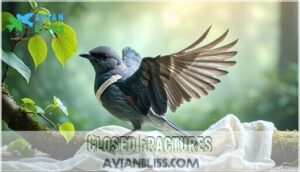
Closed fractures occur when the bone breaks but your bird’s skin remains intact, creating a "clean" break beneath the surface.
These broken bird wing fractures typically show less immediate complications than open wounds, though pain management remains essential.
Different bird species exhibit varying healing times – smaller songbirds often recover faster than larger raptors.
Proper splinting methods help stabilize the fracture site, while monitoring prevents secondary complications.
Though bone fractures appear less severe externally, they still require prompt veterinary assessment for ideal recovery outcomes, and proper care is crucial.
Open Fractures
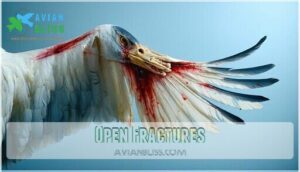
Unlike closed fractures, open fractures expose broken bone through torn skin, creating a direct pathway for bacterial contamination. These bird wing fractures demand immediate medical intervention due to elevated infection risk.
Critical management priorities include:
- Wound management with sterile cleaning and debris removal
- Antibiotic use to prevent life-threatening infections
- Surgical stabilization of exposed bone fractures.
Open fracture cases show substantially longer healing time compared to closed injuries. Prognosis factors depend heavily on contamination severity, with bacterial exposure dramatically reducing successful recovery rates in affected birds.
Comminuted Fractures
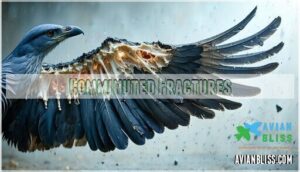
Comminuted fractures represent the most challenging type of bird wing trauma, where bones shatter into multiple fragments like a broken puzzle.
When wing bones explode into pieces, hope for flight dims dramatically.
These complex avian fractures require immediate surgical options for fragment stabilization, as natural bone regeneration becomes nearly impossible.
The infection risk increases markedly with exposed bone pieces, making prompt veterinary intervention vital.
Unfortunately, the long-term prognosis often involves permanent disability or amputation, transforming a once-soaring bird into a grounded companion requiring lifelong care.
Common Wing Injuries
When you encounter a bird with wing injuries, you’ll likely observe specific patterns that indicate the type and severity of damage.
Coracoid fractures represent the most frequent wing injury following blunt trauma, typically causing noticeable wing droop and complete flight inability, which is a clear sign of severe damage.
Coracoid Fractures
Coracoid fractures frequently occur in window collisions, affecting up to 60% of bird wing trauma cases.
These avian fractures present unique diagnosis challenges since birds often appear normal at rest. You’ll notice downward flight arcs and inability to gain height.
Radiography confirms broken wing cases, while surgical options include pinning or plate fixation.
Conservative treatment achieves 75% success rates, though healing timeline extends 30 days minimum.
Flight restoration depends on prompt care, with long-term prognosis favoring younger birds receiving immediate intervention. A study showed that surgical repair outcomes led to higher release rates in wild birds, indicating the importance of immediate intervention.
Wing Droop and Instability
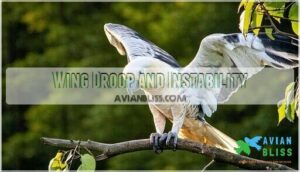
Wing droop signals significant structural damage that compromises your bird’s stability and flight capability.
A drooping wing is your bird’s silent cry for help—structural damage demands immediate attention.
When ligaments tear or bones shift, the wing hangs unnaturally low, creating visible asymmetry that affects balance and movement.
Key indicators of wing instability include:
- Causes of Droop – Coracoid fractures, shoulder dislocations, or severe soft tissue trauma disrupting normal wing positioning
- Severity Assessment – Degree of droop indicates injury extent; complete droop suggests major structural damage requiring immediate intervention
- Instability Treatment – Supportive wrapping, rest, and physical therapy restore wing stability, though Long-Term Effects may include permanent flight limitations without proper care
Acute Vs Chronic Injuries
When time matters, acute injuries demand swift action while chronic conditions require patience.
Acute bird wing injuries from sudden trauma present immediate pain and visible damage, responding well to prompt treatment.
Chronic injuries develop gradually through neglect or poor nutrition, showing subtle symptoms like persistent wing droop.
Recovery timelines differ dramatically—acute fractures heal within weeks with proper care, while chronic cases need months of rehabilitation.
Early intervention prevents long-term effects and complications in the healing process.
Many birds with proper treatment can regain flight, even after experiencing a severe wing fracture.
Impact of Wing Injuries
Wing injuries fundamentally alter a bird’s ability to function, creating cascading effects throughout its body and behavior.
You’ll notice these impacts manifest in three primary ways: immediate physical limitations, progressive muscle deterioration, and significant behavioral adaptations that affect the bird’s overall survival prospects.
Pain and Limited Mobility
Bird wing injuries create immediate pain that forces birds to limit wing movement and avoid flight attempts.
When you observe an injured bird, you’ll notice restricted mobility becomes their primary survival challenge.
5 Key Signs of Pain and Limited Mobility:
- Chronic Pain – Bird holds wing in protective position, avoiding movement
- Flight Restriction – Complete inability to achieve lift-off or sustained flight
- Foraging Impact – Reduced ability to reach food sources or hunt effectively
- Social Isolation – Withdrawal from flock activities due to mobility constraints
- Stress Signs – Increased respiratory rate, feather plucking, or aggressive behavior
Physical limitations from bird wing injury directly correlate with pain levels.
Reduced range of motion prevents normal wing extension, while weakness compromises the powerful muscle contractions needed for flight.
These restrictions force birds into survival mode, fundamentally altering their behavioral patterns and daily activities.
Muscle Atrophy and Weight Loss
When a bird’s wing injury restricts movement, physical limitations create a cascade of health problems.
Reduced Activity leads to rapid muscle atrophy and significant weight loss within days. Metabolic Changes slow healing while compromising immune function.
Nutritional Support becomes critical as appetite decreases. Environmental Enrichment helps maintain mental stimulation during recovery.
Understanding these Prognosis Factors guides effective treatment decisions for ideal outcomes.
| Recovery Factor | Timeline | Intervention |
|---|---|---|
| Muscle atrophy onset | 3-7 days | Gentle range-of-motion exercises |
| Weight loss progression | 5-14 days | High-calorie nutritional supplements |
| Metabolic slowdown | 1-2 weeks | Temperature regulation support |
| Immune compromise | 7-10 days | Stress reduction protocols |
| Appetite suppression | 2-5 days | Appetite stimulants if needed |
Behavioral Changes and Stress
Physical discomfort isn’t your bird’s only concern when dealing with wing injuries.
You’ll notice increased aggression as pain makes them defensive and territorial. Social isolation becomes common as injured birds withdraw from flock activities they once enjoyed.
Foraging changes occur when limited mobility affects their ability to search for food effectively. Sleeping disruption follows as discomfort prevents restful positioning.
These behavioral changes signal significant stress indicators requiring immediate attention. Stress minimization through environmental enrichment helps restore normal bird behavior and supports healing.
Wing injuries can also result in altered roosting habits, as the bird seeks lower, more accessible perches.
Treatment and Rehabilitation
Once you stabilize the injured wing, your focus shifts to creating ideal healing conditions through controlled rest and targeted rehabilitation.
Professional veterinary assessment guides the specific treatment approach, whether that involves splinting, pain management, or surgical intervention for severe cases.
Rest and Immobilization
Successfully immobilizing a bird wing injury requires immediate attention to prevent further damage.
Proper cage confinement becomes your first line of defense, creating a controlled environment that supports the healing process.
For effective immobilization, consider where to purchase a bird wing splint.
- Bandaging techniques using soft materials to secure the wing against the body
- Splinting materials like lightweight cardboard or gauze for structural support
- Reduced movement through appropriate cage size and padding placement
- Injury stabilization monitoring for swelling or circulation issues during supportive care
Physical Therapy and Exercise
Two key phases accelerate bird wing rehabilitation: restoring range of motion and rebuilding flight strength.
Physical therapy sessions typically occur twice weekly, progressing from gentle stretching to active flight exercises as healing advances.
| Exercise Type | Duration | Frequency |
|---|---|---|
| Range of Motion | 15-20 seconds | 20 repetitions |
| Strength Training | 30-60 seconds | 2-3 sets |
| Flight Reintroduction | 5-10 minutes | Daily supervision |
Proprioception exercises help birds regain coordination, while home exercises maintain progress between veterinary visits.
Specialized products can aid in at-home bird care.
Early intervention prevents joint stiffness and muscle atrophy, dramatically improving recovery outcomes.
Supportive Care and Nutrition
You’ll need to provide proper supportive care and nutrition to help your bird recover from wing injuries.
Monitor their caloric intake carefully, as injured birds often eat less due to stress. Offer nutrient supplements and healing diets rich in protein and vitamins to support tissue repair.
Rest and recovery require appropriate care techniques, including a quiet environment and easy access to food and water for effective bird wing injury care.
Providing the right bird food supplements is essential for a speedy recovery.
Healing and Recovery Process
Your bird’s healing timeline depends on injury severity, age, and overall health status.
Quick veterinary assessment within 24 hours substantially improves recovery outcomes and prevents complications that could permanently affect flight capability.
Factors Affecting Healing
Beyond injury severity, several critical factors determine your bird’s healing trajectory.
Bird age substantially impacts recovery speed – younger birds heal faster than older ones.
Nutrition impact can’t be overstated; well-fed birds recover better than malnourished ones.
Environmental stress slows healing, while a quiet, safe space accelerates the process.
Fracture severity and inflammation levels directly affect healing time, making proper rest and recovery essential for ideal wing injury recovery outcomes.
Timely Veterinary Care
When dealing with bird wing injury, quick action makes the difference between recovery and permanent disability.
Emergency response within the first 24 hours substantially improves outcomes, as acute fractures heal better than chronic injuries.
Contact an avian veterinarian immediately for proper bird stabilization, wound cleaning, and pain management.
Professional veterinary intervention provides diagnostic imaging, surgical options, and rehabilitation protocols essential for successful timely treatment of bird wing injury.
It’s vital to follow an avian vet guide for proper care and handling of injured birds, ensuring the best possible recovery and outcomes.
Species-Specific Recovery
Recovery patterns vary substantially between species, with raptors showing remarkable resilience despite longer healing times.
Songbirds typically require splints for seven days, while large birds need three weeks.
Non-migratory passerines achieve higher release rates than migratory species following coracoid fractures.
Pigeons demonstrate exceptional species resilience, with all subjects healing from ulna osteotomy procedures.
Understanding these species-specific recovery times helps tailor bird rehabilitation techniques and wing therapy protocols for ideal avian healing outcomes.
Prevention and Safety Measures
Preventing wing injuries protects birds from trauma that can permanently disable their flight capabilities.
You can reduce injury risks through proper handling techniques, environmental safety measures, and maintaining ideal nutrition for healthy bone and feather development, which helps in preventing wing injuries and protects birds from trauma.
Avoiding Trauma and Injury
Prevention starts with identifying common hazards that cause bird wing injury.
Window strikes represent the leading cause of wing trauma, while vehicular collisions and predator attacks follow closely.
You can reduce these risks by installing bird-safe glass treatments and maintaining clean feeding areas.
Proper bird handling techniques prevent stress-related injuries during capture or transport.
Creating safe environments with adequate shelter minimizes exposure to dangerous situations that lead to wing damage, and this is crucial for overall prevention and wing health.
Safe Handling and Transportation
When transporting injured birds, proper gentle restraint prevents additional wing damage.
Use a towel for bird wrapping, supporting the injured wing against the body.
Secure the bird in a well-ventilated, padded container for safe transport.
Avoid excessive handling—your bird first aid efforts focus on stabilization, not examination.
Quick, calm transportation to veterinary care maximizes recovery chances for any bird wing injury.
Nutritional Balance and Health
Proper nutrition forms the foundation of robust avian health, substantially reducing wing injury susceptibility.
Adequate protein intake supports muscle development and tissue repair, while essential vitamin supplements strengthen bone density.
Maintaining healthy mineral balance prevents developmental deformities like angel wing syndrome.
Meeting species-specific caloric needs helps birds maintain healthy body weight and flight capability, including adequate dietary fiber to promote digestive health, supporting overall well-being and injury prevention through thorough bird health management and ensuring healthy body weight.
Complications and Risks
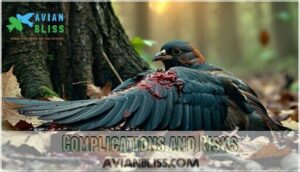
When wing injuries occur in birds, you’ll face serious complications that can threaten both recovery and survival.
These risks range from life-threatening infections and blood loss to permanent disabilities that fundamentally alter a bird’s quality of life.
Infection and Blood Loss
Open wounds and compound fractures invite bacterial infection, turning minor injuries into life-threatening emergencies.
You’ll notice increased swelling, discharge, and foul odors around damaged tissue.
Blood loss from broken blood feathers requires immediate pressure and cornstarch application to promote blood clotting.
Without prompt antibiotic use and proper wound care, sepsis risk escalates rapidly, overwhelming the bird’s immune system and compromising recovery prospects substantially.
Permanent Disability and Death
Severe wing injuries can tragically seal a bird’s fate, transforming vibrant creatures into grounded survivors facing uncertain futures.
When trauma exceeds the body’s remarkable healing capacity, devastating consequences emerge that reshape entire lives.
- Fatal Injuries: Compound fractures with extensive tissue damage often result in mortality rates exceeding 60% in wild birds
- Wing Amputation: Surgical removal becomes necessary when infection or severe trauma compromises limb viability completely
- Permanent Damage: Nerve injuries frequently cause bird wing paralysis, leaving wings functionally useless despite structural integrity
- Disability Outcomes: Bird wing deformity and weakness create lifelong challenges, with bird wing injury prognosis remaining guarded for complex cases
Long-Term Consequences and Care
Even severe wing injuries don’t spell the end of the road for your feathered friend.
Bird wing injury rehabilitation requires long-term commitment, with Flight Therapy and specialized Bird Nutrition supporting gradual recovery. Recovery Outcomes depend on consistent bird wing injury care and proper bird wing injury management throughout the healing process.
Proper leg injury treatment is also essential for birds with concurrent leg and wing injuries.
| Care Aspect | Short-Term (0-6 weeks) | Long-Term (6+ months) |
|---|---|---|
| Wing Rehabilitation | Splinting, rest, pain management | Physical therapy, flight conditioning |
| Nutrition Support | High-protein diet, supplements | Maintenance diet, weight monitoring |
| Monitoring | Daily wound checks, vet visits | Weekly assessments, behavior tracking |
| Exercise Level | Minimal movement, cage rest | Supervised flight, strengthening |
| Injury Prevention | Protective housing, isolation | Environmental modifications, safety |
Veterinary Care and Intervention
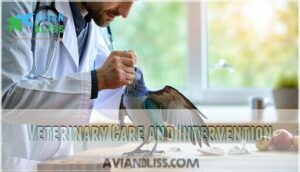
When your bird suffers a wing injury, professional veterinary assessment becomes essential for proper diagnosis and treatment planning.
Advanced diagnostic techniques like radiographs help veterinarians determine the exact nature of fractures, while specialized surgical interventions can restore function when conservative treatment isn’t sufficient.
Diagnostic Techniques and Treatment
When diagnosing bird wing injury, veterinarians rely on thorough assessment techniques.
Xray imaging reveals fracture patterns, while blood tests identify infection or systemic issues.
Radiography provides detailed bone structure visualization for accurate fracture diagnosis.
Treatment approaches include:
- Wing casting for stabilization and proper healing alignment
- Medication management addressing pain control and infection prevention
- Physical therapy protocols promoting mobility restoration
Veterinary treatment combines clinical examination with diagnostic imaging to determine ideal intervention strategies for each case.
Surgery and Rehabilitation Options
Modern surgical intervention offers hope when wing repair becomes necessary.
Bio-absorbable pins from sheep or dogs eliminate second surgeries and improve flight outcomes compared to traditional metal implants.
Following surgical intervention, thorough rehabilitation techniques restore function through targeted postoperative care.
The success of these procedures often relies on proper avian surgery options to guarantee the best outcomes for the birds.
| Treatment Phase | Techniques | Duration |
|---|---|---|
| Surgical Repair | Intramedullary pinning, external fixators | 1-2 hours |
| Flight Therapy | Passive range-of-motion, forced wing flapping | 2-6 weeks |
| Recovery Assessment | Goniometry, percentage scoring | 4-9 weeks |
Monitoring Progress and Adjusting Care
Following your surgical intervention, you’ll need to monitor your bird’s progress carefully.
Watch for changes in appetite, activity levels, and wing movement patterns. Document these observations daily to track healing strategies effectiveness.
Your veterinarian will schedule follow-up appointments to assess injury recovery and make necessary care adjustments.
Progress tracking helps identify complications early, allowing for timely modifications to the treatment plan and ensuring ideal wing recovery outcomes.
Frequently Asked Questions (FAQs)
How do you tell if a bird’s wing is broken or sprained?
Like a detective examining clues, you’ll notice key differences between broken and sprained wings.
A fracture typically causes visible deformity, complete wing droop, and inability to lift the wing.
Sprains show swelling, limited movement, but retain some wing function, which can be a key indicator to differentiate it from a fracture, often involving complete wing droop.
Can a bird recover from a wing injury?
Yes, birds can recover from wing injuries, but success depends on several factors.
Minor fractures and sprains often heal naturally with proper care, while severe injuries may cause permanent disability.
Recovery rates improve with prompt veterinary treatment, appropriate nutrition, and rehabilitation therapy.
What kind of bird fakes its wing injury?
Like a master performer on nature’s stage, you’ll encounter the killdeer, a clever plover that performs dramatic broken-wing displays when threatened.
This behavioral adaptation, called distraction display, effectively lures predators away from vulnerable nests and young offspring.
How to fix an injured bird’s wing?
Handle injured birds carefully—stabilize the wing with soft cloth, create a quiet recovery space, and contact a veterinarian immediately for proper assessment and treatment.
How long do wing injuries take to heal completely?
Time heals all wounds, but wing injuries need patience. You’ll see minor fractures heal in 2-4 weeks, while severe breaks require 6-12 weeks for complete recovery.
Can birds fly with only one functional wing?
Birds can’t achieve sustained flight with only one functional wing.
You’ll see them attempt short glides or hops, but they lack the symmetrical lift and control needed for true flight.
Think of it like trying to row a boat with one oar, which highlights the importance of balance in achieving successful movement.
What are the warning signs of wing infection?
Red flags wave danger when you spot these infection warning signs: increased swelling, foul odor, discharge, warm-to-touch skin, lethargy, and appetite loss. Contact your vet immediately.
Do wing injuries affect a birds lifespan significantly?
Wing injuries dramatically shorten lifespans by preventing flight, escape from predators, and successful foraging. You’ll find survival rates plummet with severe fractures, nerve damage, or infections compromising essential behaviors.
When should wing amputation be considered necessary?
You’ll consider amputation when severe compound fractures, extensive nerve damage, or infection threaten the bird’s life.
If conservative treatment fails and the wing causes chronic pain or prevents normal movement, surgical removal becomes necessary.
Conclusion
Understanding common types of bird wing injury helps you recognize when your feathered friend needs help.
You’ll spot the signs—wing droop, flight problems, or unusual positioning.
You’ll assess the severity—fractures, sprains, or nerve damage.
You’ll provide proper care through rest, immobilization, and veterinary support.
With timely intervention and appropriate treatment, many wing injuries heal successfully.
Remember that species, age, and injury type all influence recovery outcomes, making professional evaluation essential for effective healing.
- https://cdn.ymaws.com/www.nwrawildlife.org/resource/resmgr/symp_2020/handouts/mcmunn_avian_i_wednesday_win.pdf
- https://cdnsciencepub.com/doi/10.1139/cjas-2019-0204
- https://vetmed.illinois.edu/wildlife-blog/just-wing-it/
- https://wildbirdrehabhaven.org/wings
- https://www.reddit.com/r/Ornithology/comments/t2wzcd/what_kind_of_injuries_would_make_a_bird/