This site is supported by our readers. We may earn a commission, at no cost to you, if you purchase through links.
 Understanding bird body language explained health signs helps you catch problems early and strengthen your bond with your feathered friend.
Healthy birds show bright eyes, smooth feathers, and active behavior. Watch for warning signs like fluffed feathers, labored breathing, or changes in eating habits.
Eye pinning often signals excitement, while beak grinding usually means contentment. Tail bobbing can indicate respiratory distress, and excessive feather plucking suggests stress or illness.
Your bird’s posture, vocalizations, and daily routines reveal their physical and emotional state. Recognizing these subtle cues makes the difference between a minor issue and a serious health crisis.
Table Of Contents
- Key Takeaways
- Bird Body Language
- Recognizing Healthy Birds
- Bird Stress and Aggression
- Health Indicators and Sickness
- Bird Health and Wellness
- Frequently Asked Questions (FAQs)
- How to tell if a bird is healthy?
- How do birds act when they’re sick?
- How do you read a bird’s body language?
- What does an unhealthy bird look like?
- Can birds communicate through specific sleeping positions?
- How do birds show jealousy or possessiveness?
- What does excessive yawning indicate in birds?
- Do birds have different communication styles by species?
- How can weather changes affect bird behavior?
- Conclusion
Key Takeaways
- Watch for subtle early warning signs – You’ll spot illness through changes in posture, eating habits, and vocalizations before symptoms become obvious, since birds naturally hide sickness as a survival instinct.
- Learn normal vs. concerning behaviors – Healthy birds show beak grinding (contentment), eye pinning (excitement), and regular preening, while fluffed feathers, tail bobbing, and silence from vocal birds signal distress.
- Monitor daily patterns consistently – You’ll catch problems early by establishing your bird’s normal behavioral baselines and noting deviations in sleep, appetite, and activity levels.
- Don’t ignore feather plucking or respiratory signs – Excessive plucking indicates stress or underlying health issues, while persistent tail bobbing when at rest requires immediate veterinary attention for potential respiratory distress.
Bird Body Language
Your bird’s body language reveals vital health information that can save their life. Understanding these signals helps you spot problems early and guarantee your feathered friend stays healthy and happy.
Beak Signals and Meanings
Your bird’s beak tells a fascinating story through distinct signals.
Every feather flutter, beak click, and eye movement speaks volumes about your bird’s inner world.
Beak clicking often means "hello" or contentment, while gentle beak grinding before bedtime signals pure relaxation.
When you see beak wiping after meals, that’s simply housekeeping.
Beak-to-beak interactions show bonding between birds, but watch for aggressive beak biting during territorial moments.
Understanding these beak behaviors helps you decode your feathered friend’s communication signals effectively.
Eye Expressions and Emotions
Your bird’s eyes tell a story through pupil dilation and blinking patterns.
Eye pinning—rapid pupil expansion and contraction—signals excitement, curiosity, or territorial warnings.
Context matters when interpreting these emotional indicators, as calm eye contact with gentle pinning shows contentment.
While aggressive behaviors paired with eye signals suggest defensiveness, rapid blinking frequency can indicate stress.
Understanding avian body language through eye behavior helps you read parrot emotions and respond appropriately to your feathered friend’s needs.
Feather and Wing Behaviors
Watch for telltale feather movements that reveal your bird’s inner world.
Feather ruffling serves multiple purposes – temperature regulation, comfort, and relaxation before sleep.
Preening shows contentment as birds distribute natural oils.
Wing drooping signals exhaustion or illness, while normal flapping frequency indicates healthy exercise.
However, feather plucking demands immediate attention, often indicating stress, boredom, or underlying health issues requiring veterinary consultation.
Some birds also exhibit fascinating sunbathing behaviors to help regulate body temperature.
Recognizing Healthy Birds
You’ll quickly learn to distinguish between a healthy, content bird and one that needs attention.
Understanding normal behaviors like beak grinding, eye pinning, and feather ruffling helps you spot when something’s actually wrong with your feathered friend.
Normal Beak Grinding and Eye Pinning
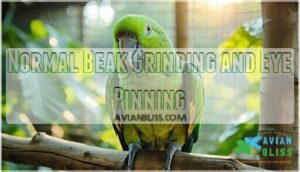
Most birds make soft beak grinding sounds when they’re content, especially within 30 minutes of bedtime.
This low-frequency noise signals relaxation and safety. Eye pinning—rapid pupil dilation—shows excitement or curiosity.
Context matters for interpreting these normal behaviors. Calm eye pinning paired with relaxed body language indicates happiness, while aggressive posturing suggests territorial warnings.
This behavior also helps with natural beak trimming, which is related to the bird’s overall safety and content.
Feather Ruffling and Preening
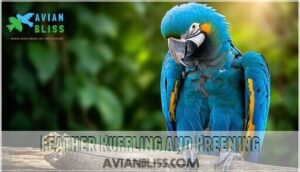
Your bird’s feather maintenance speaks volumes about their health.
When you observe your feathered friend, healthy preening frequency occurs multiple times daily using their oil gland for waterproofing and conditioning.
Ruffling causes include comfort-seeking, temperature regulation, and relaxation preparation.
Monitor these bird behavior signs:
- Feather condition appears smooth and well-aligned after preening sessions
- Social preening between bonded birds shows contentment and trust
- Bird health indicators include regular grooming without excessive plucking
- Sick bird symptoms emerge when bird preening becomes obsessive or stops entirely
Normal bird feather condition results from consistent self-care routines.
Supplying birds with proper grooming tools can enhance their preening habits.
Wing Flapping and Stretching
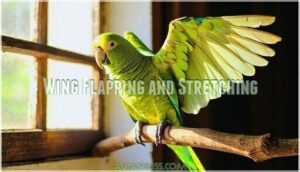
A healthy bird’s wing flapping tells you they’re feeling good. When your feathered friend stretches one wing at a time during morning routines, that’s normal behavior.
Frequent wing flapping at a 45-degree angle signals exercise or excitement. Watch for balanced grip on perches during flapping – instability might indicate health issues.
Wing drooping suggests fatigue or illness requiring attention.
Bird Stress and Aggression
When your bird shows signs of stress or aggression, you’ll need to act quickly to prevent escalation and protect both your pet’s health and your safety.
Understanding these warning signals can mean the difference between a minor behavioral issue and a serious health crisis that requires immediate veterinary attention.
Signs of Stress and Anxiety
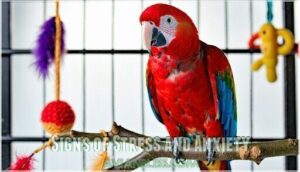
Several environmental stressors can trigger your bird’s anxiety, making behavioral changes vital warning signs.
Your bird’s body language is their voice – learn to listen before it’s too late.
You’ll notice stress signals like increased vocalizations, feather plucking, and appetite changes. These stress stages range from mild tension to severe self-harm signs, requiring immediate environmental adjustments. One key indicator can be changes in droppings.
- Feather plucking or excessive preening – Your bird’s way of coping with overwhelming emotions
- Pacing and repetitive movements – Like a nervous habit that won’t stop
- Sudden silence or excessive screaming – Both extremes signal distress
- Loss of appetite or refusing favorite treats – A red flag for serious stress
- Dilated pupils and panting during calm moments – Physical signs of internal panic
Aggressive Behavior and Warning Signs
Beyond stress signals, your bird’s body language shifts dramatically when aggression builds.
Watch for the warning sequence: standing tall with raised feathers, eye pinning, and wing flaring signal imminent biting.
Over 70% of biting incidents stem from ignored early warnings like territorial displays and stress escalation.
Redirected aggression often follows overstimulation, making recognition of these stress signals fundamental for preventing confrontation.
Tail Bobbing and Respiratory Issues
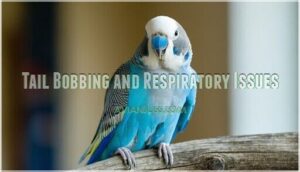
Watch your bird’s tail closely—persistent bobbing when at rest signals respiratory distress requiring immediate veterinary intervention.
This bird illness sign indicates labored breathing, often from infections affecting air sacs.
Poor ventilation and dust exposure trigger these bird breathing problems.
Prevention tips include maintaining clean air and monitoring bird tail movements regularly for early detection of bird respiratory issues.
The key to successful prevention is being aware of the signs, such as labored breathing, and taking prompt action to address them.
Health Indicators and Sickness
Understanding your bird’s health through body language can save their life.
Birds naturally hide illness, so recognizing subtle changes in their behavior becomes your first line of defense against serious health problems.
Early Signs of Illness in Birds
When birds start feeling unwell, they’ll often mask their symptoms as a survival instinct, making early detection essential for their health.
Recognizing these Subtle Behavior Changes can save your feathered friend’s life, as bird illness signs often appear gradually before becoming obvious.
- Lethargy and fluffed-up feathers – Your bird sits quietly with puffed plumage, conserving energy
- Persistent bottom-of-cage perching – Abandoning favorite perches signals serious health distress
- Unusual sleep patterns – Excessive daytime sleeping or restless nights indicate underlying illness
- Partially closed or swollen eyes – Often suggests viral or bacterial infections requiring immediate attention
- Decreased vocalization – Silence from typically chatty birds points to respiratory or systemic problems
Watch for Activity Level Decline and abnormal bird behavior like unusual bird posture meanings.
Through careful bird observation and understanding bird health interpretation, you’ll catch these warning signs before they become emergencies.
Reduced Appetite and Lack of Singing
Your bird’s eating habits tell a story about their health.
A sudden drop in food and water intake often precedes visible illness signs, with malnourishment-related syndromes developing after just 24-48 hours of food refusal.
Weight loss exceeding 10% of body weight becomes critical in companion birds.
| Warning Sign | What It Means |
|---|---|
| Silent mornings | Respiratory or systemic illness |
| Untouched food bowl | Digestive issues or pain |
| Reduced water intake | Kidney dysfunction or fever |
| Changed dropping frequency | Intestinal blockage or infection |
Silence from typically vocal species signals trouble.
Nutritional deficiencies, environmental factors, and social isolation can trigger behavioral changes.
Regular diagnostic testing helps catch bird illness signs early, making bird health monitoring essential for pet bird health and understanding bird behavior through bird body language.
Feather Plucking and Health Issues
Your feathered friend’s destructive plucking behavior often signals deeper health issues beyond simple boredom or stress.
Forty percent of feather plucking cases stem from medical causes like liver disease, parasites, or skin infections rather than behavioral problems alone.
Environmental enrichment helps prevent plucking, but addressing root causes through proper treatment options remains essential for bird health.
Bird Health and Wellness
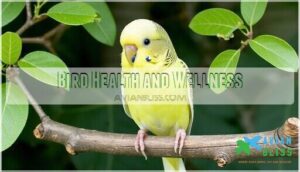
Your bird’s behavior patterns tell a story about their health that you can learn to read with practice.
Understanding these signals helps you catch problems early and keep your feathered friend thriving for years to come, which is a key concept to keep your feathered friend thriving.
Importance of Veterinary Care
Your feathered friend deserves specialized care. Annual checkups with an avian veterinarian catch hidden problems early, preventing costly emergencies. Early detection saves lives since birds hide illness naturally.
To guarantee their well-being, prioritize regular avian check-ups.
- Preventative care stops small issues from becoming life-threatening emergencies
- Specialized avian vets understand unique bird anatomy and health risks better than general practitioners
- Emergency treatment costs 5-10 times more than regular checkups and monitoring
- Regular checkups provide peace of mind and guarantee your bird’s longest, healthiest life possible
Monitoring Bird Behavior and Health
Building on regular veterinary visits, daily observation forms the foundation of effective bird health monitoring.
You’ll need to establish behavioral baselines for your pet to recognize subtle changes that signal illness.
Birds mask symptoms naturally, making consistent monitoring vital for early bird illness detection.
Consider using a specialized bird health device to track vital signs.
| Normal Behavior | Concerning Changes |
|---|---|
| Active preening and grooming | Excessive feather plucking or neglect |
| Regular eating and drinking patterns | Appetite loss or increased water consumption |
| Consistent sleep-wake cycles | Lethargy or disrupted rest patterns |
Environmental impact affects bird behavior interpretation substantially.
Temperature fluctuations, lighting changes, and cage placement influence your pet’s daily routines.
Diet’s role in behavioral patterns becomes apparent through energy levels and waste consistency.
Enrichment effects show through increased activity and reduced stress behaviors.
Document these observations in a simple journal – noting eating habits, vocalizations, and social interactions helps identify patterns that support effective pet bird health monitoring.
Preventing Stress and Promoting Wellness
Creating a stress-free environment for your feathered friend requires proactive steps.
Understanding bird body language helps you spot stress early and take action.
Here’s how to promote wellness:
- Enrichment Activities – Rotate toys weekly and provide foraging opportunities
- Social Interaction – Spend quality time daily talking and playing
- Diet Quality – Offer balanced pellets with fresh fruits and vegetables
- Safe Environment – Maintain consistent routines and remove stressors
Providing stimulating toys aids bird wellness.
Regular bird health monitoring through behavior interpretation guarantees your pet stays relaxed and healthy.
Frequently Asked Questions (FAQs)
How to tell if a bird is healthy?
You’ll spot a healthy bird through bright, clear eyes and smooth feathers. Watch for active movement, normal eating habits, and regular preening. Alert posture and consistent vocalizations indicate good health.
How do birds act when they’re sick?
Sick birds typically show subtle changes: they’ll fluff feathers constantly, eat less, become unusually quiet, have drooping wings, exhibit labored breathing with tail bobbing, and sleep more than usual.
How do you read a bird’s body language?
Watch your bird’s eyes, wings, and feathers for key signals.
Eye pinning shows excitement or aggression. Beak grinding means contentment.
Fluffed feathers indicate comfort or illness.
Wing position reveals health status.
What does an unhealthy bird look like?
You’ll notice drooping wings, fluffed feathers that won’t settle, tail bobbing without exercise, lethargy, loss of appetite, and silence where there’s usually chatter. These warning signs need immediate veterinary attention.
Can birds communicate through specific sleeping positions?
Don’t count your chickens before they hatch—while birds communicate through various positions, sleeping postures aren’t specific communication tools.
Your bird’s one-legged perch indicates normal rest, while unusual positions might signal health issues requiring attention.
How do birds show jealousy or possessiveness?
Birds express jealousy through aggressive behaviors like lunging, biting, and territorial displays.
They’ll flare their tail feathers, pin their eyes rapidly, and position themselves between you and perceived threats to claim their territory.
What does excessive yawning indicate in birds?
When your feathered friend seems to be hitting the yawn button repeatedly, it’s raising red flags about their health.
Excessive yawning in birds is usually an indication of either an upper GI infection or an sinus/oral irritation, usually also from an infection.
This behavior isn’t just sleepiness—it’s your bird’s way of saying something’s off.
Do birds have different communication styles by species?
Yes, different bird species have distinct communication styles.
Macaws commonly blush when excited, while lovebirds rarely flare their tails.
Each species has evolved unique body language patterns that reflect their natural behaviors and social structures.
How can weather changes affect bird behavior?
When the wind changes, feathers know.
Weather shifts trigger natural responses in your bird that might seem puzzling.
Temperature drops cause feather fluffing for warmth, while barometric pressure changes before storms can make birds restless, vocal, or hide—their ancient survival instincts kicking in, which is why feather fluffing is a common sight.
Conclusion
Like a canary in a coal mine, your bird’s body language serves as an early warning system for health issues.
Understanding bird body language explained health signs helps you catch problems before they become serious.
Watch for changes in posture, eating habits, and vocalizations daily.
Normal behaviors like beak grinding and eye pinning indicate contentment, while fluffed feathers and tail bobbing signal distress.
You’ll strengthen your bond and potentially save your bird’s life by learning these essential signals.