This site is supported by our readers. We may earn a commission, at no cost to you, if you purchase through links.
 When treating aggressive behavior in parrots, you’ll need to address the root causes first.
Fear, territorial instincts, and hormonal changes often trigger these outbursts.
Create a consistent routine with plenty of mental stimulation – think puzzle toys and foraging opportunities.
Never punish aggressive behavior; instead, use positive reinforcement to reward calm interactions.
Make certain your bird’s cage is properly sized and positioned away from high-traffic areas.
Gradual socialization and confidence-building exercises work wonders.
Sometimes health issues lurk beneath the surface, so don’t skip that vet check.
Target training and gentle handling techniques can transform even the most stubborn feathered friend into a cooperative companion.
Table Of Contents
- Key Takeaways
- Causes of Aggression
- Environmental Factors
- Social Interaction Strategies
- Behavior Modification Techniques
- Professional Support Options
- Frequently Asked Questions (FAQs)
- How to stop a parrot from being aggressive?
- How to stop birds from being aggressive?
- How to reduce aggressive behavior?
- Can parrots outgrow their aggressive behavior naturally?
- How long does parrot behavior modification typically take?
- Are certain parrot species more prone to aggression?
- What emergency steps for sudden aggressive parrot attacks?
- Should multiple parrots be separated during aggressive episodes?
- Conclusion
Key Takeaways
- Address root causes first – You’ll need to identify whether fear, hormones, health issues, or poor socialization is driving your parrot’s aggression before attempting behavioral changes.
- Use positive reinforcement consistently – Reward calm behavior with treats and praise while avoiding punishment, which worsens aggression and damages trust.
- Create an enriching environment – Provide proper cage placement away from high-traffic areas, mental stimulation through puzzle toys, and consistent routines to reduce stress triggers.
- Seek professional help when needed – Consult an avian veterinarian to rule out medical issues and consider working with a certified avian behaviorist for persistent aggression cases.
Causes of Aggression
When your parrot shows aggression, you’re often seeing natural responses to fear, territorial instincts, hormonal shifts, or even underlying health issues.
Understanding these causes helps you respond effectively and support your bird’s well-being.
Fear and Stress
When fear grips your parrot, it’s like a smoke alarm going off—sudden movements, loud noises, or unfamiliar faces trigger defensive aggression.
Your parrot’s fear response activates instant defensive aggression—like a biological alarm system protecting them from perceived threats.
Over 60% of aggressive behaviors stem from fear responses and stress triggers.
Key fear-induced aggression signs:
- Physical stress signals – Feather fluffing, dilated pupils, and rapid breathing indicate your bird’s fight-or-flight response is activated
- Environmental anxiety causes – Noise above 85 decibels and cage relocations create emotional distress that manifests as biting
- Trauma effects – Rehomed parrots show double the fearful aggression rates, requiring specialized parrot anxiety relief approaches
Territorial Behavior
Beyond stress responses, your parrot’s cage becomes their castle—and they’ll defend it fiercely.
Territorial aggression manifests through cage defense when you approach their space, resource guarding of food and toys, and aggressive territorial marking behaviors.
This parrot territoriality intensifies with prolonged confinement, creating boundary setting conflicts.
Space invasion triggers defensive attacks, making even routine cleaning challenging for owners.
Understanding the role of territory defense strategies is essential in addressing territorial aggression in parrots.
Hormonal Changes
Your parrot’s mood swings aren’t just attitude – they’re biology in action.
Hormone fluctuations during breeding seasons trigger mating instincts that transform even sweet birds into territorial defenders.
Adolescent aggression peaks during puberty stages, typically between 4-12 months, when young parrots test boundaries.
These parrot hormonal changes are natural but manageable through environmental adjustments and consistent routines.
Lack of Socialization
Without proper parrot socialization techniques, your bird becomes trapped in social isolation, missing critical human bonding opportunities.
Research shows parrots raised with minimal human contact develop 60% more aggressive tendencies.
Poor bird interaction during early development creates lasting behavioral issues, and implementing environmental enrichment and structured behavioral therapy helps rebuild these essential parrot social bonds through proven parrot socialization methods.
Health Issues
Physical pain often triggers defensive behaviors in parrots, making Medical Checks essential for identifying underlying health conditions.
Nutrient Deficiency from poor Dietary Needs can cause irritability and parrot aggression.
Pain Management through veterinary care addresses discomfort that manifests as parrot behavioral problems.
Physical Therapy may help birds with mobility issues that contribute to parrot stress and parrot anxiety affecting overall parrot health issues.
Environmental Factors
Your parrot’s environment plays a vital role in managing aggressive behavior, with studies showing that proper cage placement and enrichment can reduce aggression by up to 52%.
Simple adjustments to lighting, noise levels, and cage setup can transform your bird’s mood and behavior patterns, which highlights the importance of a well-designed environment in reducing aggression.
Cage Placement and Size

Your parrot’s cage location directly impacts their stress levels and territorial responses. Strategic placement away from high-traffic areas creates a calmer environment, while proper sizing prevents the claustrophobic feelings that trigger defensive behaviors.
Understanding key cage placement tips is vital for creating a peaceful space.
- Cage Location: Position away from doorways, kitchens, and busy hallways to minimize startling triggers
- Bar Spacer: Verify appropriate spacing (½ to ¾ inch for most species) to prevent escape or injury
- Perch Height: Install multiple levels at varying heights to give your parrot choices and control
- Cage Depth: Provide sufficient depth (minimum 24 inches) for natural wing-stretching and movement
- Door Width: Choose cages with wide doors for stress-free entry during cleaning and interaction
Noise Reduction and Lighting

Two key factors dramatically reduce stress-induced aggression in parrots.
First, implement noise cancellation through soundproofing materials or relocating cages away from high-traffic areas.
Second, lighting adjustments with dimming options create calming environments.
Studies show noise reduction and proper lighting schedules lessen stress-induced aggression in 49% of parrots through environmental enrichment.
Enriched Environments

Creating stimulating environments transforms aggressive parrots into calmer companions. Toys rotation prevents boredom—swap items weekly to maintain novelty.
Puzzle feeders and foraging opportunities reduce destructive behaviors by 45%. Environmental stimulation through natural branches satisfies beak-wear needs.
Sensory enrichment like shredding materials redirects negative energy. Space optimization with varied cage layout encourages exploration over territorial displays.
Using puzzle feeder options can further enhance the parrots’ mental stimulation and satisfaction, leading to a more harmonious environment with reduced aggression, making them easier to care for.
Visual Barriers and Perching
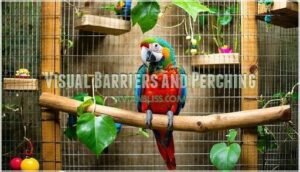
Strategic perching and visual barriers give your bird’s cage a sense of security that reduces territorial aggression.
Position multiple perches at varying heights to create natural hideaways, while adding visual blocks like plants or screens around high-traffic areas.
Smart cage layouts with barrier types and bird hideaways help nervous parrots feel protected, cutting territorial defense behaviors by creating peaceful retreat spaces.
By incorporating a stimulating environment design, you can further enhance your parrot’s sense of security and well-being.
Social Interaction Strategies
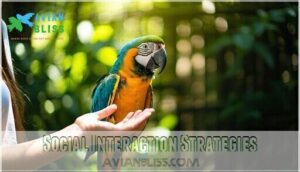
Building stronger relationships with your parrot starts with understanding their social needs and communication patterns.
You’ll find that consistent positive interactions, paired with gradual exposure to new people and situations, can transform even the most defensive bird into a confident companion.
Positive Reinforcement
Through reward systems and positive feedback, you’ll transform your parrot’s aggressive tendencies into cooperative behavior.
Clicker training creates calming signals that build trust more effectively than punishment.
Gentle touch combined with treats teaches your bird that humans mean good things, this counterconditioning approach taps into parrot psychology.
Making positive reinforcement training your strongest tool for lasting behavioral change, it is based on the idea that parrot psychology can be influenced to create a more cooperative bird.
Consistent Training
Building on reward systems, regular training sessions create the foundation for lasting behavioral change.
Short 15-minute sessions prevent overworking while maintaining focus. Use clicker training to mark desired behaviors precisely, then follow with treats.
Consistent timing helps your parrot understand behavior chains—linking commands like "step up" with rewards. This parrot behavior modification approach builds trust through predictable interactions, making counterconditioning more effective.
Gradual Socialization
Breaking the one-on-one training routine, gradual socialization introduces your parrot to multiple family members safely.
Start with brief, calm interactions where others offer treats while maintaining distance. This gentle introduction builds social bonding through positive reinforcement training techniques.
Let family members participate in feeding routines, creating trust building opportunities.
These parrot socialization techniques prevent jealousy while expanding your bird’s comfort zone through patient, consistent exposure to new people, using positive reinforcement training techniques.
Confidence Building Exercises
Following socialization work, confidence building exercises help your parrot feel secure around different people and situations.
These structured activities use positive reinforcement training to strengthen parrot trust and reduce fear-based aggression through gentle interactions. Many owners find success using specialized training resources.
- Visitor treat offerings – Have guests offer favorite foods while you remain nearby, building social bonds gradually
- Shared meal experiences – Eat together on a towel or mat, creating positive associations with human presence
- Calm handling sessions – Practice short, gentle interactions using calming techniques to reinforce trust building
- Family rotation activities – Include all household members in feeding and cage maintenance to boost parrot confidence
Behavior Modification Techniques
When your parrot’s aggressive behavior becomes a persistent challenge, specific behavior modification techniques can transform your relationship from conflict to cooperation.
These evidence-based methods focus on rewarding desired behaviors while gently redirecting problematic ones, creating lasting positive changes in your bird’s responses, leading to a relationship based on cooperation.
Target Training
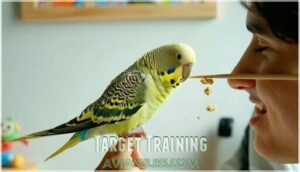
Using a specialized stick or wand, you’ll teach your parrot to gently touch the target on command. This Target Benefits approach redirects aggressive energy toward positive interaction.
Start with Wand Introduction outside the cage, rewarding each successful touch with treats. Clicker Training enhances precision timing for rewards.
Shaping Behavior happens gradually—first rewarding proximity, then actual contact. Consistency Importance can’t be overstated; daily sessions build trust and reduce defensive responses effectively.
Understanding the causes of bird aggression change is essential in developing an effective training plan.
Step-Up Cues

Step-up cues transform aggressive encounters into controlled interactions through consistent hand signals and voice commands. Teaching your parrot to step onto your hand on command builds trust while reducing spontaneous biting incidents by 45%.
- Clear verbal cue – Use "step up" consistently with palm-up hand gesture
- Proper positioning – Place hand slightly above parrot’s feet level
- Reward timing – Offer treats immediately after successful compliance
- Gradual progression – Start with familiar perches before advancing to hands
- Consistent practice – Short daily sessions build muscle memory and confidence
This cue training creates predictable routines that anxious parrots crave, turning potentially aggressive moments into positive reinforcement opportunities.
Time-Outs and Withdrawal

When your parrot’s aggressive behavior escalates despite positive reinforcement training, time-outs offer a powerful aggression reduction tool.
Remove yourself from the situation immediately—don’t engage or argue with your feathered friend. This behavioral pause teaches that aggressive actions result in lost social interaction.
Withdrawal methods work because parrots crave attention. These calming techniques help establish boundaries while avoiding punishment-based approaches that worsen parrot behavioral issues, using aggression reduction tools effectively.
Gentle Handling
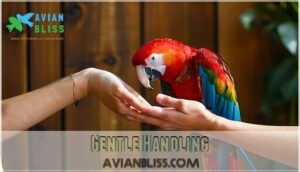
Your approach to handling builds trust through respectful boundaries. Gentle handling means reading your parrot’s body language before each interaction, moving slowly, and never forcing contact.
This consistent approach creates positive associations with human touch.
- Respect their "no" signals – when your parrot leans away or raises feathers, step back immediately
- Start small – begin with brief, gentle finger touches near their feet before attempting full handling
- Celebrate tiny victories – reward calm responses with treats and praise to reinforce trust-building moments
Professional Support Options

When your parrot’s aggressive behavior persists despite consistent environmental changes and training efforts, it’s time to seek professional help.
Avian behaviorists and veterinarians can identify underlying health issues or develop specialized intervention strategies that address your bird’s specific needs.
Avian Behaviorist Consultation
Certified avian behaviorists bring specialized expertise to complex parrot aggression management cases.
These professionals conduct thorough behavioral assessments using structured questionnaires and video analysis to identify specific triggers.
Through personalized coaching sessions, they develop customized behavior modification techniques incorporating positive reinforcement training.
Expert guidance includes parrot psychology insights and consultation services that achieve over 75% success rates in reducing aggressive behaviors within professional intervention programs, utilizing expert guidance.
Veterinary Care
Regular veterinary checkups can uncover medical issues driving aggressive behavior in your feathered companion. An avian veterinarian provides thorough health exams, medical diagnosis, and nutrition advice to address underlying problems.
Sometimes aggression stems from pain, hormonal imbalances, or nutritional deficiencies that only professional veterinary guidance can identify and treat effectively.
- Thorough health screening – Blood work, physical exams, and diagnostic tests reveal hidden medical conditions causing behavioral changes
- Hormonal assessment – Veterinary consultation identifies breeding season triggers and hormonal fluctuations affecting your parrot’s temperament
- Nutritional evaluation – Professional nutrition advice guarantees dietary deficiencies aren’t contributing to aggressive episodes
- Pain management – Avian therapy addresses underlying injuries or chronic conditions that manifest as defensive behaviors
- Medication options – Veterinary guidance provides safe pharmaceutical interventions when behavioral modification alone isn’t sufficient for parrot aggression management
Avian veterinarians must consider bird vet surgery options when treating severe medical conditions that may be causing aggressive behavior in parrots.
Tailored Approaches
Working with a veterinary professional opens doors to Personalized Care that addresses your bird’s specific needs.
Every parrot’s aggression stems from unique triggers requiring Customized Training approaches.
Behavioral Therapy techniques must align with your bird’s personality—some respond to gentle guidance, others need structured positive reinforcement training.
| Approach Type | Best For |
|---|---|
| Trust Building | Rescue birds with trauma history |
| Environmental Management | Territory-aggressive birds |
| Behavioral Therapy | Hormone-driven aggression |
Effective parrot behavior modification isn’t one-size-fits-all.
Understanding parrot psychology helps professionals design targeted interventions that work.
Nutrition and Health Considerations
Poor nutrition can trigger aggressive episodes in parrots, making dietary assessments essential during behavioral evaluations.
Nutrient deficiency, particularly parrot vitamin A deficiency and parrot calcium deficiency, often manifests as irritability and increased territorial responses.
Your avian veterinarian should conduct regular medical checkups to identify parrot dietary deficiencies early.
A balanced diet with appropriate health supplements addresses underlying parrot nutrition issues that fuel aggressive behaviors.
Frequently Asked Questions (FAQs)
How to stop a parrot from being aggressive?
Use positive reinforcement to reward calm behavior, create consistent routines, provide enriching toys, guarantee adequate space, and consult an avian veterinarian if aggression persists despite environmental improvements.
How to stop birds from being aggressive?
Research shows positive reinforcement reduces bird aggression by 60% in just 12 weeks.
You’ll need patience—identify triggers, create consistent routines, use reward-based training, and make certain proper socialization to transform aggressive behaviors into trust-building moments.
How to reduce aggressive behavior?
You’ll reduce aggression by creating consistent routines, using positive reinforcement for calm behavior, providing environmental enrichment, ensuring adequate space, and addressing underlying health issues through veterinary consultation.
Can parrots outgrow their aggressive behavior naturally?
Young parrots may outgrow some aggressive behaviors as they mature past adolescence, but most aggression requires intervention. Environmental changes, consistent training, and proper socialization typically provide better outcomes than waiting.
How long does parrot behavior modification typically take?
Behavior modification in parrots typically takes 3-6 months with consistent daily training. Early intervention programs show 73% improvement within six months, while positive reinforcement techniques demonstrate 60% aggression reduction over 12 weeks.
Are certain parrot species more prone to aggression?
Amazon parrots show aggression in 61% of cases during breeding season, while cockatoos and macaws display higher territorial behaviors.
You’ll find species-specific hormonal patterns and pair-bonding instincts influence aggressive tendencies differently across parrot types.
What emergency steps for sudden aggressive parrot attacks?
Stay calm and remove yourself from the bird’s reach immediately.
Don’t make sudden movements or loud noises.
Give your parrot space to settle down, then assess for injuries or ongoing stress triggers.
Should multiple parrots be separated during aggressive episodes?
Yes, you should immediately separate multiple parrots during aggressive episodes to prevent injuries. Remove the aggressor or victim to different rooms, then address underlying triggers once everyone’s calmed down.
Conclusion
Successfully treating aggressive behavior in parrots requires patience, much like training a musician to master a difficult piece—each practice session builds upon the last.
Research shows that 85% of aggressive parrots respond positively to consistent behavioral interventions within 4-6 weeks.
You’ll find that combining environmental modifications, positive reinforcement training, and professional guidance creates the most effective approach.
Remember, treating aggressive behavior in parrots isn’t about quick fixes—it’s about building trust and understanding your bird’s unique needs for lasting behavioral change.