This site is supported by our readers. We may earn a commission, at no cost to you, if you purchase through links.
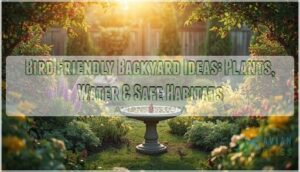
Your backyard can become a thriving sanctuary where birds flock year-round—not by accident, but through thoughtful design that meets their most basic needs. Birds need three essentials to survive: food, water, and shelter.
When you create spaces that provide these elements naturally, you’re not just attracting more species; you’re building a small ecosystem that benefits local wildlife while giving you a front-row seat to nature’s best show. The secret lies in understanding how birds interact with their environment and then shaping your outdoor space to mirror what they’d find in the wild.
With some smart plant choices, a few strategic water features, and careful attention to safety, you can transform even a modest yard into a vibrant habitat that benefits both feathered visitors and your own peace of mind.
Table Of Contents
- Key Takeaways
- Assess Your Backyard for Birds
- Plant Native Species for Year-Round Support
- Add Water Features Birds Love
- Provide Diverse Food and Nesting Options
- Ensure a Safe and Healthy Habitat
- Frequently Asked Questions (FAQs)
- How do I make my backyard more bird friendly?
- Do birds prefer birdbath in sun or shade?
- What ground cover attracts birds?
- How to create a backyard bird sanctuary?
- How can I make my backyard more bird friendly?
- How do you create a bird habitat in your backyard?
- How to make bird paradise in the backyard?
- How to turn yard into bird sanctuary?
- How often should I clean bird feeders?
- What bird species visit backyards most frequently?
- Conclusion
Key Takeaways
- Birds need three essentials to thrive in your backyard: food, water, and shelter—and you can provide all three by choosing native plants, adding shallow water features, and creating layered cover from ground to canopy.
- Native species outperform exotic plants because they support the insects and berries local birds have evolved to rely on, turning your yard into a self-sustaining ecosystem rather than a decorative space.
- Moving water features like drippers or fountains attract more birds than still birdbaths, and positioning feeders within three feet or beyond thirty feet of windows prevents deadly collisions.
- Skip pesticides entirely and leave natural debris like dead trees and brush piles in place—they shelter ground-foraging birds, host insects, and create the predator protection that keeps your sanctuary safe year-round.
Assess Your Backyard for Birds
Before you plant a single shrub or hang your first feeder, take a good look at what you’re working with. Your backyard already has its own rhythm of light, soil, and structure—and understanding these elements helps you create spaces birds actually want to use.
Start by observing which common birds in Illinois already visit your yard, since their habits will guide your choices for feeders, plants, and water features.
Here’s what to observe as you walk your yard.
Mapping Sun and Shade Areas
Before you break ground on your bird friendly garden, grab a notebook and track where sunlight hits your yard throughout the day. A simple sun path analysis reveals which spots get six-plus hours of sun for native plants and where shade lingers for cooler microclimates.
Use shade mapping tools or colored pencils to chart seasonal sun patterns, helping you position that perfect sunny spot for wildlife garden features year-round.
Identifying Existing Trees and Shrubs
Once you’ve mapped your light zones, turn your attention to tree identification—the backbone of any bird-friendly garden. Look for leaf analysis clues like simple versus compound structures, bark patterns that hint at species classification, and twig features such as opposite or alternate arrangement.
Note which native plants already provide habitat through dense hedges or dead trees, since these existing resources shape your next moves without starting from scratch.
Evaluating Soil Types and Drainage
Your soil texture and drainage systems tell you which native plants will thrive and where water pools after storms. Grab a handful of moist soil—if it ribbons smoothly, you’ve got clay that holds water; if it crumbles, it’s sandy and drains fast. Check for standing water spots; they signal a high water table or erosion control needs before you plant wildlife-friendly gardens.
- Clay soils retain moisture but drain slowly, often creating wet pockets
- Sandy soils drain quickly yet may need soil amendments for nutrients
- A simple percolation test reveals drainage capacity in minutes
- Waterlogged areas stress plants, reducing insect food for birds
- Well-drained zones support diverse seed sources for sustainable gardening
Spotting Potential Nesting and Shelter Sites
Once you spot where water collects, look for spots birds would actually claim. Dense hedges along fences, overgrown corners, and dead trees with peeling bark signal prime nesting site selection zones.
Check mid-level sheltered areas where branches overlap—many songbirds avoid wide-open spaces. A rock pile, climbing vines, or twigs scattered near shrubs show you’re building wildlife corridors that link cover to food.
One way to increase diversity and nesting opportunities is to include bird-friendly shrubs and climbers that offer dense cover and sturdy branches.
| Nesting Site Selection Feature | What Birds Look For | Your Action |
|---|---|---|
| Dense Hedges (3–6 ft tall) | Mid-level cover between ground and canopy | Plant thickets along property edges |
| Dead Trees or snags | Natural cavities for hole-nesting species | Leave safe standing wood or add Nesting Boxes |
| Climbing vines and brambles | Hidden tangles that protect nests | Train ivy or honeysuckle on fences |
| Rock Pile or brush piles | Low escape cover and Nesting Materials | Stack branches loosely near shrubs |
This snapshot turns your yard into working bird habitat instead of guesswork.
Check out this guide on where to place bird cameras in your yard to get the height, angle, and positioning right for the species you’re actually trying to attract.
Plant Native Species for Year-Round Support
The plants you choose make all the difference in turning your yard into a bird haven. Native species give birds the food and shelter they’ve relied on for generations, from protein-packed caterpillars in spring to winter berries when everything else is bare.
Here’s how to pick the right plants to support birds every season.
Choosing Native Trees and Shrubs
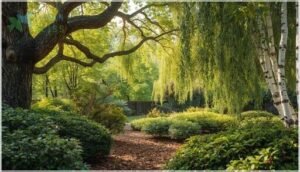
You don’t need to import exotic varieties when native tree selection and shrub planting tips can transform your space into a birdfriendly habitat. Start by checking soil compatibility—sandy or clay conditions determine which native plant species thrive.
Oaks, willows, and birches host caterpillars that fuel nestlings, while dense shrubs offer shelter. This native plant gardening approach strengthens ecosystem balance and gives wildlife support without constant maintenance. Incorporating can further improve your landscape’s value for birds and local ecosystems.
Selecting Berry and Fruit-Bearing Plants
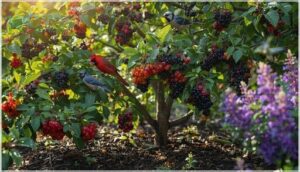
Berry selection sets the stage for a thriving birdfriendly garden packed with fruit yield season after season. Pick fruiting plants adapted to your climate and resistant to plant disease, then prep beds with compost for solid soil preparation.
Cross pollination matters too—plant at least two compatible cultivars nearby to boost harvests that attract pollinatorfriendly plants and support native plant gardening for wildlife.
Incorporating Nectar-Rich Flowers for Hummingbirds
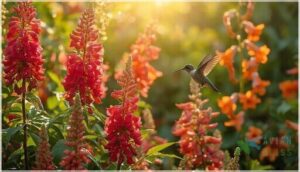
Tubular blooms in red and orange create a feast hummingbirds can’t resist. Focus on nectar plant selection that matches flower shape importance—deep corollas support hovering feeders while bloom timing strategies keep nectar-rich flowers available spring through fall.
Mix native plants with pollinator-friendly plants in your wildlife garden, clustering hummingbird attractants together. Smart garden layout tips position flowering plants where birds can sip and perch safely.
Planting Dense Hedges and Evergreens
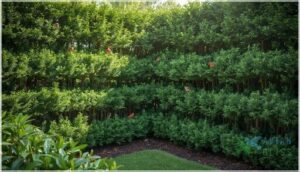
Dense foliage transforms your space into a year-round sanctuary, giving birds the wildlife shelter they desperately need during storms and nesting season. Hedge planting with native screening species builds the backbone of habitat creation and restoration in your wildlife garden.
- Space evergreens 18 to 24 inches apart for rapid evergreen cover
- Choose shade-tolerant boxwood or yew for dense hedges in partial sun
- Begin pruning after the first season to encourage thick branching
Smart evergreen care means gardening for birds with purpose—native plants deliver the insulation and protection that make your backyard irresistible.
Add Water Features Birds Love
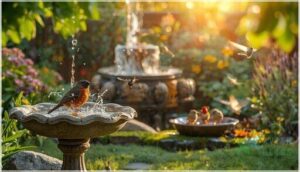
Water is one of the easiest ways to turn your backyard into a magnet for birds. Whether you go simple with a birdbath or add something a bit more elaborate, you’ll quickly see which features keep them coming back.
Let’s look at some options that work well and why birds are drawn to them.
Installing Shallow Birdbaths and Ponds
A well-placed birdbath or small pond can transform your yard into a bird magnet. Position your birdbath 2 to 3 inches deep with a firm base on level ground, keeping it at least 4 feet from feeders.
For ponds, create gently sloping edges and shallow shelves so birds can enter safely. Use natural stone around the pond edge to blend your water garden into the landscape while supporting a thriving pond ecosystem balance.
Choosing Moving Water Options (Drips, Fountains)
Moving water catches a bird’s attention like nothing else. Drip systems offer a gentle trickle that draws curious visitors without overwhelming small birds, while fountain designs create ripples and micro-splashes that invite bathing.
Consider water flow rates measured in gallons per hour—slower flows work best for birdfriendly fountains. Pair your birdbath or small pond with recirculating pumps that keep splash zones minimal and energy use low.
Maintaining and Cleaning Water Sources
Once your fountain or birdbath is running, you’ll want to keep it sparkling. Rinse bird baths weekly to prevent biofilm buildup, and scrub the basin monthly with a nontoxic brush.
For pond maintenance, scoop out sediment regularly and test water quality to catch algae control issues early. Filter cleaning every two to four weeks keeps your birdfriendly fountain humming and your water garden inviting.
Landscaping With Aquatic and Marginal Plants
After you’ve committed to clean water, frame your pond with native marginal plants like rushes and sedges. These water-edge champions stabilize shorelines, filter nutrients, and build pond biodiversity by sheltering insects and amphibians that birds hunt.
Pair them with floating lilies for shade, and you’ve created a pollinator-friendly garden design that doubles as a bird-friendly oasis and promotes wildlife conservation year-round.
Provide Diverse Food and Nesting Options
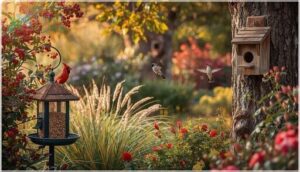
Once you’ve got water flowing and native plants taking root, it’s time to think about where birds will eat and raise their families.
A backyard that offers varied food sources and safe nesting spots becomes a true refuge throughout the year. Here’s how to layer in the essentials that keep birds coming back season after season.
Offering Multiple Types of Bird Feeders
You’ll attract a wider mix of species when you set up different feeder styles—tube, platform, hopper, and nyjer feeders each draw specific birds.
Smart feeder placement about 5-10 feet from windows cuts collision risks, while spacing feeders at least 10 feet apart reduces competition.
Clean feeders every two weeks and use baffles as squirrel deterrents to keep your backyard bird watching spot thriving year-round.
Planting Seed- and Insect-Producing Plants
Feeders help, but native plants create a self-sustaining buffet. Choose sunflowers and black-eyed Susans for seed selection that finches love, while planting bee balm and cardinal flower draws hummingbirds and insect attractors.
Dense shrubs like viburnum offer fruit-bearing plants that thrush species crave. This pollinator-friendly garden design transforms your yard into a gardening for birds and butterflies paradise, supporting native grasses and flowering plants that host caterpillars year-round.
Installing Species-Appropriate Nest Boxes
You’ll boost bird conservation by choosing nest boxes that match your local species. Bluebirds need 1½-inch entrance hole size, while chickadees prefer 1⅛-inch openings.
Mount boxes 5 to 12 feet high on metal poles with predator guards to keep raccoons out. Skip perches in your nest box design—smooth interiors work better. Clean annually and position away from feeders for safer nesting habitat.
Leaving Dead Trees and Natural Debris
Dead tree benefits go beyond aesthetics—standing snags create nesting cavities for bluebirds and owls while hosting insects that fuel local food webs. Balance debris management with fire safety tips by keeping larger logs away from structures but within wildlife corridors.
- Fallen branches shelter ground-foraging birds and small mammals
- Decomposing wood enriches soil for nature-friendly gardening
- Inspect standing snags regularly to maintain ecosystem balance safely
- Retain varied debris textures supporting bird conservation and wildlife preservation
Ensure a Safe and Healthy Habitat
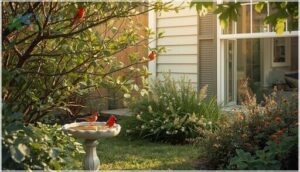
You’ve planted the right natives, added water, and set up feeders—but your backyard won’t truly support birds if it’s full of hidden dangers.
A bird-friendly space means thinking beyond what you offer and focusing on what could harm them.
Let’s cover a few straightforward ways to keep your garden safe, healthy, and genuinely welcoming.
Avoiding Pesticides and Chemicals
Your backyard becomes a genuine sanctuary when you skip chemical pesticides and herbicides entirely. Choose organic gardening methods—pull weeds by hand, use mulch, and let beneficial insects handle pests naturally.
A true sanctuary skips chemicals entirely—pull weeds by hand, mulch generously, and let beneficial insects handle pests naturally
These chemical-free practices protect birds from toxic exposure while supporting environmental protection and wildlife conservation efforts. Natural remedies and sustainable practices create a thriving, safe habitat where birds can feed, nest, and flourish.
Protecting Birds From Predators
Your bird-friendly backyard won’t thrive if predators turn it into a hunting ground. Install predator guards like metal baffles on pole-mounted bird feeders and mount nesting boxes 8–12 feet high on steel poles.
Plant dense native hedges within 6–10 feet of feeders for quick escape cover, and position nest boxes away from branches predators can leap from—habitat security means birds stick around.
Preventing Window Collisions
Your windows might be invisible killers in your bird-friendly yard. Apply window decals or bird films in high-contrast patterns spaced 4–6 inches apart on the exterior to break up reflections.
Position bird feeders either within 3 feet of glass or over 30 feet away—collision prevention starts with smart placement. For extra feather safety, install external screens or lightweight DIY string barriers that disrupt flight paths without blocking light.
Maintaining a Clean, Natural Environment
Your yard can be a healthy sanctuary when you skip harsh chemicals and embrace organic gardening methods. Sustainable landscaping practices safeguard wildlife conservation while creating a chemical-free environment that keeps birds thriving.
- Clean feeders weekly with hot water to prevent deadly bacteria and mold
- Replace stale birdbath water daily to stop mosquito breeding
- Use natural pest control like beneficial insects instead of toxic sprays
- Rake only when necessary to preserve insect-rich leaf litter
- Inspect nest boxes after breeding season and remove old nests for next year’s families
Frequently Asked Questions (FAQs)
How do I make my backyard more bird friendly?
Start with native plants, clean water sources, and safe shelter.
Design your space to offer year-round food through seed-producing flowers, berry-bearing shrubs, and diverse feeders while eliminating pesticides for true wildlife habitat support.
Do birds prefer birdbath in sun or shade?
A mix of sun and shade works best.
Morning light warms the water and boosts bird visibility, while afternoon shade keeps temperatures comfortable and slows evaporation—giving your backyard wildlife the ideal bathing spot.
What ground cover attracts birds?
Berry-producing native ground covers like bearberry and cotoneaster draw birds year-round, while dense evergreen mats and seed-producing covers create shelter for ground-foraging species and support the insects they need.
How to create a backyard bird sanctuary?
Think your yard needs a total makeover? It doesn’t.
Map sunlit areas, plant native species for habitat restoration, add shallow water features, install diverse feeders, and skip pesticides—wildlife conservation starts with eco-friendly garden design choices.
How can I make my backyard more bird friendly?
You can boost biodiversity and wildlife support by planting native plants, installing shallow water features, and skipping pesticides—these eco-friendly garden design choices create a pollinator-friendly, bird-friendly yard that champions bird conservation.
How do you create a bird habitat in your backyard?
Creating a bird-friendly garden starts with native plants, fresh water sources, and safe shelter.
Focus on habitat creation that fosters biodiversity—plant layers from groundcovers to canopy trees, install shallow birdbaths, and skip pesticides for a thriving wildlife garden ecosystem.
How to make bird paradise in the backyard?
You don’t need a sprawling estate to support bird migration and wildlife conservation.
A thoughtful backyard design with native plants, clean water, and eco-friendly practices transforms any garden layout into a pollinator-friendly garden design sanctuary.
How to turn yard into bird sanctuary?
Transform your yard into a bird sanctuary by planting native species, adding clean water sources, installing nest boxes, and avoiding pesticides—creating an eco-friendly wildlife garden that promotes habitat restoration and bird migration year-round.
How often should I clean bird feeders?
You should clean feeders every two weeks to protect bird health. In hot weather, increase to weekly cleanings. Hummingbird feeders need washing every 3–4 days to prevent mold and fermentation.
What bird species visit backyards most frequently?
The early bird catches the worm, and in your yard, you’ll spot American robins, northern cardinals, black-capped chickadees, house finches, and American goldfinches—common backyard habitats that celebrate species diversity and urban wildlife.
Conclusion
If you build it, they’ll come—and your backyard can prove it. By weaving together native plants, clean water, and safe shelter, you’re rolling out the welcome mat for birds that need exactly what you’re offering.
These bird friendly backyard ideas aren’t just about attracting more species; they’re about creating a space where nature thrives and you get to witness it unfold. Start small, stay consistent, and watch your yard come alive.