This site is supported by our readers. We may earn a commission, at no cost to you, if you purchase through links.
 Your bird’s sleeping positions reveal important clues about their health and comfort levels.
When birds sleep standing on one leg, they’re conserving body heat and showing they feel secure.
Tucking their head under a wing indicates deep, restful sleep.
If your feathered friend sleeps with both feet firmly planted or appears restless, this might signal stress or illness.
Healthy birds typically sleep for 10-12 hours nightly, often choosing high perches where they feel safe.
Birds sleeping upside down, like some parrots, demonstrate complete relaxation and trust in their environment.
Understanding these bird sleeping positions meaning helps you monitor your pet’s wellbeing and spot potential health concerns before they become serious issues.
Table Of Contents
- Key Takeaways
- Bird Sleep Patterns
- Sleeping Positions Meaning
- Parrot Sleep Environment
- Creating Sleep Conducive Environment
- Parrot Sleep Problems
- Ideal Sleep Locations
- Factors Influencing Sleep
- Frequently Asked Questions (FAQs)
- Do birds sleep in a standing position?
- How do birds sleep?
- Why do migratory birds sleep on one leg?
- Do birds sleep on one leg?
- Why do birds sleep in close proximity?
- What happens if a bird sleeps at night?
- What is the sleeping position of birds?
- Why do birds put one leg up while sleeping?
- What does it mean if my bird is sleeping a lot?
- Why do birds tuck their heads when they sleep?
- Conclusion
Key Takeaways
- Your bird’s sleeping position indicates their comfort level – Birds standing on one leg while sleeping show they’re conserving heat and feel secure, while both feet planted or restless behavior signals stress or illness.
- Head tucking under wings means deep, restful sleep – This natural position helps your bird conserve body heat and indicates they feel safe enough for quality rest in their environment.
- Upside-down sleeping demonstrates complete trust – Some parrot species naturally sleep inverted, showing they’re completely relaxed and secure in their surroundings.
- Sleep environment directly affects your bird’s health – You’ll need to maintain 65-75°F temperatures, provide darkness for 10-12 hours nightly, and minimize noise to support proper sleep patterns and immune function.
Bird Sleep Patterns
Your bird’s sleep patterns reveal important clues about their health and well-being. Understanding these behaviors helps you provide better care and spot potential issues early.
General Sleep Patterns
Like clockwork, your bird’s sleep patterns reveal fascinating insights about avian evolution and health. Bird sleep behavior differs dramatically from mammals, with unique adaptations for survival.
Your bird’s sleep holds ancient secrets—evolutionary adaptations that reveal health, comfort, and survival instincts in every peaceful moment.
Understanding these bird sleeping habits helps you recognize normal versus concerning patterns. Birds often fluff their feathers, using down for insulation, to stay warm while sleeping.
Here are 4 key aspects of bird sleep patterns:
- Avian Sleep Cycles: Birds experience both light and deep sleep phases, including REM sleep function for cognitive processing and memory consolidation
- USWS Mechanism: Unihemispheric slow-wave sleep allows one brain hemisphere to rest while the other stays alert for predators
- Sleep Evolution: Birds developed polyphasic sleep patterns with multiple short bursts throughout day and night, unlike human consolidated sleep
- Sleep Deprivation: Insufficient rest leads to irritability, poor coordination, and weakened immune function in pet birds
Parrot Sleep Requirements
Your parrot needs 8-12 hours of uninterrupted sleep for peak health.
Less than 8 hours causes irritability and health issues, while more than 12 hours may signal feather-destructive behavior.
Unlike humans, parrots experience polyphasic sleep – multiple short bursts throughout day and night.
This sleep pattern, combined with a consistent schedule, prevents sleep deprivation and supports parrot wellbeing.
Sleep Duration and Quality
Quality sleep substantially impacts your parrot’s health and behavior.
Most parrots need 8-12 hours of uninterrupted sleep nightly, experiencing polyphasic sleep patterns with short daytime naps.
REM sleep supports cognitive function, while sleep deprivation causes irritability and feather plucking.
Sleep consistency prevents disturbed sleep cycles, and poor bird sleep quality affects immune health, making proper bird sleep duration essential for well-being.
Sleeping Positions Meaning
Your parrot’s sleeping position reveals important clues about their comfort, health, and emotional state. Understanding these natural behaviors helps you monitor your bird’s well-being and identify potential concerns early.
Your bird’s sleep position is a window into their soul – revealing comfort, health, and happiness at a glance.
Sleeping Standing Up

Why do birds sleep standing up? This common avian sleep position demonstrates remarkable standing stability through specialized toe locking mechanisms that secure them to perches.
Wild parrots have evolved this adaptation to prevent leg fatigue while maintaining perch security throughout the night.
- Toe Locking Mechanism: Birds’ tendons automatically lock their toes around perches when they relax, preventing falls during sleep
- Energy Conservation: Standing position requires minimal energy expenditure compared to other bird sleeping postures
- Predator Awareness: This avian sleep position allows quick escape responses while maintaining balance on branches
- Natural Adaptation: Wild parrots developed this standing up behavior to survive in trees where lying down isn’t possible
Sleeping on One Leg

When you spot your bird sleeping on one leg, you’re witnessing a masterpiece of avian engineering.
This onelegged sleep position serves multiple purposes through sophisticated balance mechanisms and thermoregulation strategies.
| Function | Benefit | Energy Impact |
|---|---|---|
| Thermoregulation | Reduces heat loss by up to 90% | Significant energy conservation |
| Muscle Rest | Alternates leg usage, prevents fatigue | Maintains circulation efficiency |
| Balance Mechanism | Locks joints with minimal effort | Reduces muscular energy expenditure |
| Sleep Quality | Enables deeper, more restorative rest | Improved overall health outcomes |
Leg tucking demonstrates your bird’s comfort and health.
The standing leg uses a natural "stay apparatus" that locks joints automatically, requiring minimal muscular effort.
This leg flexibility allows birds to maintain perfect balance while maximizing energy conservation during extended sleep periods.
Sleeping Upside Down

Several species naturally sleep upside down, including hanging parrots and some finches. This position mimics wild roosting behaviors and enables quick escape from predators. Your bird’s inverted sleep shows comfort and security in their environment.
- Hanging Parrot species consistently sleep upside down in both wild and captivity settings
- Cage bar hanging demonstrates your bird’s natural climbing instincts and environmental exploration
- Upside-down comfort indicates your pet feels safe and secure in their surroundings
- Species variation affects frequency – budgerigars occasionally invert while larger parrots rarely do
- Upside-down fear isn’t typically associated with healthy inversion behavior in appropriate species
Sleeping With Head Down
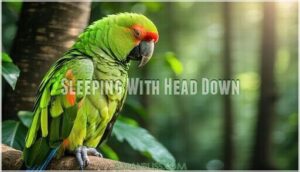
When your feathered friend tucks their head down while sleeping, they’re likely conserving warmth or seeking comfort.
This bird sleep meaning often indicates your pet feels secure in their environment, though it can signal illness if accompanied by other symptoms.
| Behavior | Meaning |
|---|---|
| Head down, eyes closed | Conserving warmth and feeling safe |
| Head down with fluffed feathers | Temperature regulation or mild stress |
| Head down during daytime | Possible illness sign or lack energy |
| Head down with neck flexibility | Normal resting position |
| Persistent head down posture | May indicate health concerns requiring attention |
This avian sleep position demonstrates your bird’s neck flexibility while helping them retain body heat.
However, watch for concerning patterns in their sleep positions.
If your bird is sleeping more, consider potential health issues.
Parrot Sleep Environment
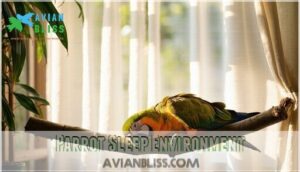
Your parrot’s sleep environment directly impacts their health and behavior patterns.
Creating the right conditions with proper temperature, lighting, and noise control guarantees your bird gets the restorative sleep they need for superior well-being.
Temperature Control
Your feathered friend thrives when you maintain the ideal temperature between 65-75°F for maximum thermal comfort.
A nesting box provides additional warmth during colder months, while heating options like ceramic heaters guarantee consistent temperatures.
Draft prevention is paramount – cold air disrupts bird sleep meaning and affects avian sleep positions.
Consider parrot heating products to maintain the right temperature.
Monitor your bird’s comfort levels, as temperature directly impacts their comfortable sleeping place and overall well-being, ensuring a good sleep.
Lighting and Noise Reduction
Light exposure disrupts your parrot’s natural sleep cycle, requiring careful management of brightness and sound levels.
Darkness triggers melatonin production, while ambient noise can prevent deep rest phases essential for health. One way to help with this is by rotating toys regularly.
Essential lighting and noise reduction strategies:
- Sleep Covers – Block light completely while maintaining proper ventilation for breathing comfort
- Dimming Strategies – Gradually reduce brightness 30 minutes before bedtime to signal rest time
- Sound Dampening – Use soft materials around the cage to absorb disruptive household noises
- Night Lights – Provide minimal illumination only if your bird experiences night frights or anxiety
Secure and Quiet Space
Your parrot needs a secure environment that promotes Predator Avoidance and Stress Reduction.
This secure environment with noise reduction and dim lighting helps establish Routine Establishment.
Complete darkness isn’t always necessary, but your sleeping environment should feel safe and protected for ideal rest, ensuring Territory Security through consistent placement and creating a Sleep Sanctuary away from household traffic.
Creating Sleep Conducive Environment
Creating the right environment helps your parrot sleep better and stay healthy. You’ll need to control noise, temperature, and comfort levels to match your bird’s natural sleep needs.
Keep Noise Down
Noise sensitivity affects your bird’s sleep quality substantially.
Sudden sounds can jolt your parrot awake, disrupting their natural rest cycle.
Create a peaceful sleeping environment by minimizing nighttime disturbances around their cage area.
- Soundproofing cages with thick covers reduces external noise penetration
- White noise machines mask household sounds and create consistent audio backdrop
- Calming music at low volumes can soothe anxious birds during sleep hours
- Relocate sleep areas away from high-traffic zones and noisy appliances
Check Temperature
Temperature control affects your bird’s sleep quality more than you might think.
Maintain an ideal temperature between 65-75°F using a reliable thermometer for accurate readings.
In cold climates, consider heating options like a nesting box or ceramic heat emitter.
Bird sleeping positions meaning often reflects comfort levels – cramped postures may indicate temperature issues affecting your bird’s sleeping environment.
Provide Comfort and Security
Creating a secure sanctuary helps your bird achieve deeper rest and better health.
Safe perches with varied textures prevent foot problems while supporting natural sleeping positions.
Cozy bedding made from paper or cloth provides warmth without dust concerns.
Cage covering blocks light while ensuring airflow, and night lights can prevent startling.
A predictable routine signals bedtime, reinforcing your bird’s comfort levels and safety while sleeping.
Many owners find that using protective cage covers promotes better sleep.
Using a predictable routine and ensuring the cage is comfortable can significantly impact the bird’s well-being.
Parrot Sleep Problems

When your parrot displays unusual sleeping behaviors like sleeping at the cage bottom, hanging from bars, or crouching during rest, these often signal health problems or stress.
Recognizing these warning signs helps you address sleep issues before they affect your bird’s overall well-being.
Signs of Sleep Problems
Your bird’s sleep troubles show through specific warning signs that require immediate attention. Watch for these key indicators:
- Unusual positions like sleeping on the cage floor instead of perching
- Night frights with sudden flapping or crashing during dark hours
- Feather plucking from stress and exhaustion
- Lack vocalization during normal active periods
- Decreased appetite alongside general lethargy
These sleep problems signal underlying bird health indicators that shouldn’t be ignored. Sleep deprivation creates a cascade of bird stress signs, including feather-destructive behavior that worsens without proper intervention.
Solutions for Sleep Issues
When you notice sleep problems, start with behavioral adjustments like establishing consistent bedtime routines.
Environmental enrichment through dimmed lighting and gentle sounds reduces sleep onset time by 20%. Check your bird’s sleeping environment for temperature stability between 70-75°F.
Dietary changes may help, but veterinary consultation remains important for persistent issues. Natural sleep aids include covering three cage sides to minimize visual stressors, which can be a useful behavioral adjustment.
Concerning Behaviors
Several behaviors signal when your parrot’s sleep patterns cross into concerning territory.
Cage bottom sleeping often indicates illness or extreme fatigue, while hanging from bars suggests distress.
Crouching while sleeping can mean your bird feels unwell, and excessive upside-down positioning may indicate fear or threat response.
Parrot insomnia, hyperactivity, and feather-destructive behavior often stem from sleep deprivation requiring immediate attention.
Ideal Sleep Locations
Where you place your bird’s sleeping area directly affects their rest quality and overall health.
The right location provides the security and comfort needed for deep, restorative sleep that keeps your feathered friend happy and healthy.
Sleep Cage
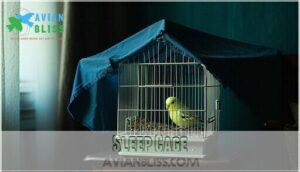
A dedicated sleep cage offers your bird a quieter, more secure bird sleep environment than their main living space.
This smaller cage promotes better rest by reducing distractions and creating consistent sleep routines. Many owners find a dedicated bird sleep cage essential for their pet’s rest.
Consider these sleep cage essentials:
- Cage Size: Choose dimensions allowing comfortable perching without feeling cramped
- Bar Spacing: Guarantee proper spacing prevents escapes while maintaining ventilation
- Toy Placement: Include minimal comfort items, avoiding stimulating toys that disrupt rest
- Cage Coverings: Use breathable covers to control lighting and reduce external noise
Location Choice substantially impacts your bird’s sleep quality and overall well-being.
Walk-in Hall Cupboard

Transform your walk-in hall cupboard into a cozy sleep haven with proper ventilation needs and safety concerns addressed.
Cupboard size should accommodate your bird’s wingspan while guaranteeing accessibility issues don’t interfere with daily routines.
Customize the space with perches and soft lighting for ideal bird sleeping positions.
This setup helps decode bird sleeping positions meaning while providing security.
Monitor ventilation to prevent stuffiness, and guarantee easy access for cleaning and health checks.
Room With Family Interaction

Many pet owners wonder whether keeping their parrot in a room with family interaction affects sleep quality.
Social bonding strengthens during daytime activity, but family noise can disrupt nighttime rest.
Consider these sleep relocation strategies:
- Move your bird to a quieter space when bedtime approaches to minimize behavioral impacts
- Monitor bird body language for signs of stress from household sounds
- Balance social time with proper rest – bird sleeping positions meaning often reflects their comfort levels in different environments
This approach supports both bird behavior needs and ideal bird sleep environment.
Factors Influencing Sleep

Your bird’s sleeping position reveals important information about their comfort level, health status, and environmental needs.
Several key factors influence how and where your feathered friend chooses to rest, including temperature, lighting conditions, noise levels, social dynamics, and overall physical wellbeing.
Environmental Factors
Beyond the basics of perch placement, your bird’s sleep quality depends heavily on getting the environmental factors just right.
Temperature impact plays a vital role—your feathered friend needs consistent warmth between 65-75°F for ideal rest.
Ensuring your bird isn’t bird sleeping more than usual can also improve their sleep quality.
| Factor | Optimal Range | Impact on Sleep |
|---|---|---|
| Temperature | 65-75°F | Prevents restlessness, promotes deep sleep |
| Lighting | Complete darkness | Triggers natural sleep hormones |
| Noise Level | Under 40 decibels | Reduces stress-related sleep disruptions |
| Humidity | 50-60% | Maintains respiratory comfort |
| Air Quality | Well-ventilated | Supports healthy breathing patterns |
Lighting importance can’t be overstated—even small amounts of light disrupt your bird’s circadian rhythm.
Noise reduction creates the secure environment essential for restful sleep, while proper bedding materials provide comfort and safety.
Social Factors
Your bird’s social environment substantially impacts sleep quality.
Flock Sleep Dynamics show birds naturally roost together for safety and warmth. Pair Bonding creates secure sleep partnerships, while Social Hierarchy determines preferred perching positions.
Isolation Effects can cause anxiety and disrupted rest patterns. Birds housed with companions often display Mimicry Influence, copying sleeping behaviors.
Proper socialization and social interaction support healthy sleep cycles, influenced by factors such as Flock Sleep Dynamics.
Health and Wellness Factors
Poor health directly impacts your bird’s sleep quality and positions.
Nutritional deficiencies, particularly vitamin A, trigger abnormal sleep behaviors and feather plucking.
Respiratory infections cause head-tucked positions for better airflow, while injured birds avoid perching.
Elevated stress hormones disrupt normal sleep cycles, affecting cognitive function and immune health. Monitor these health indicators closely—unusual sleep positions often signal underlying wellness issues requiring veterinary attention.
Frequently Asked Questions (FAQs)
Do birds sleep in a standing position?
Ever wonder how feathered friends catch their Z’s?
Yes, birds do sleep standing up!
They’ve got a special locking mechanism in their toe joints that keeps them securely perched on branches without falling off during sleep.
How do birds sleep?
You’ll find birds sleep upright on perches, using locked toe joints for stability.
Most sleep 6-12 hours nightly, often on one leg for warmth, with heads tucked under wings during deep sleep phases.
Why do migratory birds sleep on one leg?
Migratory birds sleep on one leg to conserve body heat and maintain balance while perched. This position reduces heat loss by tucking one leg into warm belly feathers.
Do birds sleep on one leg?
Yes, birds commonly sleep on one leg.
This behavior helps them conserve body heat by tucking one leg into their warm belly feathers while maintaining balance with the other leg anchored on their perch.
Why do birds sleep in close proximity?
Like feathered safety blankets, birds huddle together at night for warmth, protection from predators, and sharing essential information about food sources.
This communal roosting behavior helps them survive harsh conditions while staying socially connected.
Notably, birds typically don’t sleep in their nests, instead preferring to find a safe spot to begin the roosting for protection and survival.
What happens if a bird sleeps at night?
When you sleep at night, your bird’s body undergoes essential recovery processes.
Brain waste gets cleared, energy restores, and cognitive functions refresh.
This natural rhythm maintains your bird’s health, behavior, and survival instincts effectively.
What is the sleeping position of birds?
Birds sleep upright while perched, using a special tendon-locking mechanism in their feet to maintain grip without effort.
Most species sleep standing on one leg, tucking the other for warmth, while some tuck their heads under wings for protection.
Why do birds put one leg up while sleeping?
You’ll notice birds tucking one leg up while sleeping for warmth and energy conservation.
This position helps them maintain body heat by reducing exposed surface area while keeping the tucked leg cozy and rested.
What does it mean if my bird is sleeping a lot?
When your feathered friend becomes a sleepyhead, it’s nature’s way of signaling something’s up. Excessive sleeping often indicates illness, stress, or environmental issues requiring immediate attention and veterinary consultation.
Why do birds tuck their heads when they sleep?
Your bird tucks its head under its wing or into its feathers to stay warm and feel secure while sleeping.
This natural position helps conserve body heat and provides comfort, signaling your bird feels safe enough for deep, restful sleep.
Conclusion
Monitoring your bird’s sleeping positions, recognizing their sleep patterns, and understanding their nightly behaviors provides valuable insights into their overall health and wellbeing.
You can identify stress signals, detect early illness warning signs, and guarantee your feathered companion feels secure in their environment.
Understanding bird sleeping positions meaning helps you create ideal rest conditions while maintaining your pet’s physical and emotional health.
Remember that proper sleep directly impacts your bird’s immune system, behavior, and longevity for years ahead.
- https://enviroliteracy.org/why-do-birds-sleep-with-their-head-tucked-in/
- https://monvet.com/en/tuck-head-under-wing-to-sleep/
- https://www.youtube.com/watch?v=0mVG0AO9l1k
- https://kids.niehs.nih.gov/topics/natural-world/wildlife/animals/birds-on-one-leg
- https://www.mickaboo.org/resources/reading-bird-body-language