This site is supported by our readers. We may earn a commission, at no cost to you, if you purchase through links.
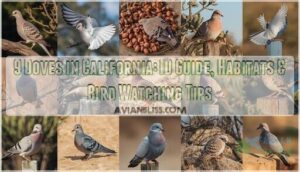
The soft coo echoing across your backyard at dawn isn’t just one bird—it’s likely one of nine distinct dove species calling California home. From the abundant Mourning Dove with its graceful tapered tail to the chunky Band-tailed Pigeon tucked high in oak forests, these birds occupy nearly every corner of the state.
You’ll spot them in coastal scrublands, desert washes, urban parks, and mountain meadows, each species perfectly adapted to its niche. Learning to identify these birds opens up a whole new dimension to your outdoor adventures, whether you’re hiking remote trails or sipping coffee on your patio.
Size, wing patterns, tail shapes, and those distinctive calls become your field guide to understanding which doves share your California landscape.
Table Of Contents
- Key Takeaways
- Types of Doves Found in California
- Dove Identification and Characteristics
- Habitats and Distribution of Doves
- Top 5 Products for California Dove Enthusiasts
- Frequently Asked Questions (FAQs)
- Where do mourning doves live in California?
- Are there collared doves in California?
- How many types of doves are there in California?
- What do doves look like in California?
- Are doves a good bird?
- Are doves common in California?
- Is it good to have doves in your yard?
- What does it mean when mourning doves hang around your house?
- Is there a difference between a dove and a Mourning Dove?
- What do California doves eat year-round?
- Conclusion
Key Takeaways
- California hosts nine distinct dove species ranging from the abundant Mourning Dove found statewide to rare visitors like the Spotted Dove, each occupying unique ecological niches from coastal forests to desert washes.
- You can identify doves in the field by focusing on size differences (Mourning Doves at 9-11 inches versus Band-tailed Pigeons at 14-18 inches), distinctive markings like white wing patches or neck collars, and species-specific vocalizations from soft coos to aggressive calls.
- Mourning Doves, Rock Pigeons, and Eurasian Collared-Doves thrive in urban and suburban environments across California, adapting readily to backyards, parks, and agricultural areas where seed sources and water are available.
- The taxonomic distinction between “doves” and “pigeons” is largely about size and tradition rather than scientific classification—all belong to the same Columbidae family and share similar anatomical features like beak structure and feather morphology.
Types of Doves Found in California
California’s skies are home to nine distinct dove species, each with its own story and unique characteristics! You’ll encounter everything from the familiar Mourning Dove in your backyard to rare visitors like the Spotted Dove that few birders get to see.
Many dove enthusiasts also enjoy identifying black birds in California, which share similar habitats and can often be spotted during the same backyard birdwatching sessions.
Let’s break down each species so you can confidently identify these gentle birds wherever your adventures take you.
If you’re curious about which species call Massachusetts home, check out this guide to woodpeckers of Massachusetts for local identification tips.
Mourning Dove
The Mourning Dove is California’s most abundant dove, and you’ll spot its grayish-brown plumage with pale underside year-round across the state! Listen for that haunting coo echoing from Central Valley fields to southern deserts.
These gentle birds share similar habitats with backyard birds of Nevada, thriving in arid landscapes where water sources and scattered trees provide essential nesting sites.
These graceful birds nest in shrubs 1–6 meters high, feast on seeds in your backyard, and can zoom up to 55 mph during flight!
Their vibrant plumage and fruit-based diet make them a favorite among birdwatchers who want to learn more about tropical bird species and their unique behaviors.
These agile birds nest in shrubs up to six meters high and can fly an impressive 55 mph while foraging for seeds
Rock Pigeon
You’ve probably seen the Rock Pigeon (Columba livia domestica) more than any other dove in California! This urban ecology champion thrives in cities with its distinctive slate-gray plumage, black wing bars, and shimmering neck feathers.
Watch these feral birds roost on building ledges and forage for seeds at your feet—their soft cooing calls and hiss-like wing sounds make bird identification easy during bird watching in California adventures!
Eurasian Collared-Dove
Another familiar face in California cities and suburbs is the Eurasian Collared-Dove (Streptopelia decaocto), an invasive species that arrived in the Americas during the 1980s! Look for its tan-gray body, distinctive black neck collar, and long tail during bird identification sessions.
You’ll spot these farmland and suburban visitors nesting on buildings across southern California and the San Francisco Bay Area, often outcompeting native species—making understanding their migration patterns and habitat expansion essential for bird watching in California!
White-winged Dove
If you’ve spotted doves with striking white wing patches during your birdwatching adventures in California, you’ve likely seen the White-winged Dove (Zenaida asiatica)—a species that has made itself right at home in the Golden State! These medium-sized birds measure 28–32 cm long and weigh around 190–275 grams, boasting pale gray-brown bodies and those unmistakable white wing stripes.
While White-winged Doves thrive in California’s warm climate, bird enthusiasts in the Southeast might also enjoy spotting vibrant blue species native to Georgia during their regional birdwatching excursions.
Your White-winged Dove identification checklist:
- White wing patches – Visible in flight, your key field mark for dove identification!
- Dark reddish-brown eyes with black bill and pinkish legs
- Soft, repetitive cooing – Different from Mourning Dove calls
- Duller juvenile plumage – Immatures lack the full white wing patch
- Black cheek spot – Another helpful distinguishing feature
Watch for their flocking behavior during migration periods, especially in spring and fall when peak presence occurs across southern California. These partial migrants exhibit fascinating movement patterns—some individuals remain year-round in coastal regions, while others undertake short-distance journeys inland.
You’ll find White-winged Doves thriving in urban nesting sites, including parks, gardens, and agricultural landscapes, where reliable water sources are available. Their range has expanded dramatically in recent decades, with established breeding populations now stretching from southern California into the San Francisco Bay Area.
Their feeding habits focus heavily on seeds and grains found in human-modified environments, making them regular visitors at backyard feeders. Unlike their more timid cousins, these adaptable birds have embraced suburban life, building flimsy nests in trees and dense shrubs right in your neighborhood.
During the breeding season, they can raise multiple broods in favorable years—a key factor in their growing population in urban and peri-urban habitats. Banding studies reveal they disperse locally up to 20–40 kilometers between breeding sites, helping explain their steady range expansion across California.
Winter months bring interesting patterns, as coastal and near-coastal regions host concentrated populations thanks to stable food supplies and shelter. Rainfall also influences their movements, with increased dispersal following above-average precipitation periods.
Want to attract these beauties? Focus on their seed preferences by offering grains, and you’ll likely draw them in. Their enthusiasm for bird feeders has made them one of the most common dove species encountered during birdwatching sessions in southern California.
Band-tailed Pigeon
When winter arrives, watch for the Band-tailed Pigeon (Patagioenas fasciata)—California’s largest native dove, cruising through coastal forests and oak woodlands!
These impressive birds measure up to 36 cm long, sporting dark gray bodies with that signature narrow white tail band visible in flight.
You’ll spot them foraging in flocks for acorns and seeds, their low cooing echoing through mature redwood and conifer habitats where bird conservation and habitat preservation efforts protect their seasonal movements.
Inca Dove
You’ll find the tiny Inca Dove (Columbina inca) in southern California’s urban gardens and desert edges, where Desert Birdwatching and Bird Conservation Efforts protect this delicate species.
Measuring just 9–11 inches and weighing around 70–90 grams, these brownish-gray beauties with pale bellies prefer Urban Birding Tips-friendly habitats—think palm groves and backyard feeders!
Their soft coos and subtle greenish wing gloss make Dove Species Identification rewarding during Birdwatching in California adventures.
Common Ground Dove
The Common Ground Dove (Columbina passerina) stands out as California’s smallest dove, measuring just 6–7 inches! Its gray-brown plumage with scaly wing patterns and short squared-off tail make Dove Species Identification straightforward during Birdwatching in California excursions.
Here’s what makes these doves fascinating:
- Ground Nesting in low shrubs and sheltered spots
- Seed Preferences for millet and weeds
- Urban Adaptation in parks and golf courses
- Conservation Status remains stable across southern California
Spotted Dove (Rare)
The Spotted Dove (Streptopelia chinensis) has become California’s vanishing act, with populations plummeting so dramatically since its 1917 introduction that spotting one today feels like discovering a feathered ghost! This decline is similar to the issues with bird population declines in the region.
Habitat Loss and fierce competition from Eurasian Collared-Doves drove population trends downward. Your best chance for rare sightings? Urban gardens in Los Angeles, though the conservation status remains precarious for California’s wildlife enthusiasts tracking endangered species.
African Collared-Dove (Rare)
You’ll rarely encounter African Collared-Doves during birdwatching adventures in California—these escapees from captivity lack an established breeding population here! Unlike invasive species such as Eurasian Collared-Doves, rare sightings usually involve single, exceptionally tame individuals linked to releases rather than natural habitat expansion.
Identification tips focus on white undertail coverts and subtle plumage differences, though confirming conservation status requires photographic evidence given confusing hybrid possibilities in wildlife in California! For accurate identification, refer to the official California bird checklist for more information.
Dove Identification and Characteristics
Learning to identify California’s doves opens up a whole new world of birdwatching excitement! Once you know what to look for, you’ll start spotting the subtle differences between species wherever you go.
Let’s break down the key features that’ll help you confidently tell these beautiful birds apart in the field.
Size, Color, and Markings
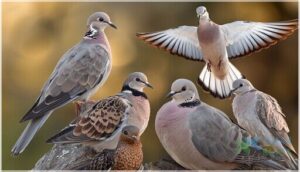
When identifying types of doves in California, you’ll notice each species shows unique plumage patterns and feather colors! Mourning Doves display soft gray-brown tones with black wing spots, while White-winged Doves flash striking white wing markings in flight. Eurasian Collared-Doves sport distinctive black neck collars, and tiny Inca Doves wear scaly brown patterns.
Pay attention to tail features and beak shapes—they’re your key field marks!
Distinctive Calls and Behaviors

Beyond their feathers and markings, you can identify California’s doves by the sounds they make and how they act in the wild! Listen for these distinctive vocalization patterns and bird behavior:
- Mourning Doves produce haunting “coo-OOO-ooo” calls at dawn
- White-winged Doves make aggressive “who-cooks-for-you” sounds
- Rock Pigeons perform dramatic courtship displays with puffed chests
- Band-tailed Pigeons travel migration routes in massive flocking behaviors
- Ground-dwelling species show unique nesting habits low in shrubs
Differences Between Doves and Pigeons
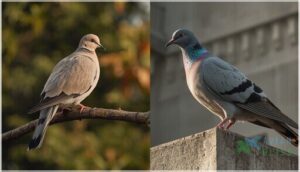
You’ve probably wondered if doves and pigeons are actually different birds! Here’s the truth: taxonomic classification places them all in the same family, Columbidae. The names are mostly about size and tradition, not real scientific categories. Rock Pigeon, Mourning Dove, and Eurasian Collared-Dove all share similar beak structure and feather morphology—they’re cousins in the bird watching world!
| Feature | Doves (Generally) | Pigeons (Generally) |
|---|---|---|
| Body Size | 15-30 cm, lighter weight | Up to 75 cm, over 2,000 g |
| Tail Shape | Longer, more fanned and expressive | Straighter, less dramatic |
| Typical Habitat | Woodlands, grasslands, rural edges | Dense urban areas, human structures |
How to Tell Doves Apart in The Field
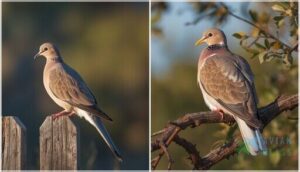
Now that you know the basics, let’s get practical with field identification! When bird watching, focus on size first—Mourning Doves measure 9-11 inches with long tails, while Band-tailed Pigeons reach 14-18 inches.
Listen for bird call analysis cues: Mourning Doves produce soft “coon-coon” sounds.
Watch wingbeat speed and feather pattern during dove migration seasons to distinguish types of doves quickly!
Habitats and Distribution of Doves

California’s doves have carved out homes in just about every corner of the state, from busy city parks to remote desert washes. Where you spot these birds depends entirely on the species—some thrive in your backyard while others prefer wild, untouched landscapes.
Let’s explore the four main habitat types where you’ll find California’s dove population!
Urban and Suburban Environments
If you’re a backyard birding enthusiast in California, your urban and suburban landscapes are dove magnets! Residential neighborhoods with scattered trees, lawns, and gardens create perfect habitats for several species that thrive around humans.
- Mourning Doves dominate spacious suburbs, visiting bird feeders and foraging on the ground beneath them
- Rock Pigeons stick to dense city centers with older buildings
- Eurasian Collared-Doves love small towns with open ground and trees
- Spotted Doves prefer tame residential areas where they feed on lawns
Grasslands and Open Woodlands
California’s wide-open spaces—from the golden grasslands of the Central Valley to scattered oak woodlands—offer prime real estate for doves that prefer room to roam! Mourning Doves absolutely dominate these habitats, foraging for seeds among native grasses and perching in oak branches.
Band-tailed Pigeons visit oak woodlands seasonally during bird migration periods, while habitat conservation efforts help protect these critical feeding grounds for backyard birding enthusiasts and wildlife management programs alike.
Deserts and Coastal Regions
From the Sonoran Desert’s arid landscapes to California’s coastal ecosystems, you’ll find doves mastering drought adaptation in surprising ways! White-winged Doves and Mourning Doves thrive where sparse vegetation meets occasional seeding events, while Rock Pigeons expand along coastal zones.
Desert dove habitats depend heavily on small water sources—washes and irrigated patches become magnets for these resilient bird species during your wildlife conservation adventures and bird watching expeditions!
Mountainous Areas and Forests
Head into California’s forested highlands and you’ll discover Band-tailed Pigeons ruling the tree canopy above 2,000 feet, while Mourning Doves patrol foothill zones up to 4,000 feet!
These woodland birds navigate mountain elevation ranges where coniferous forests meet oak woodlands, creating prime forest dove habitats for your bird watching adventures and wildlife conservation efforts in California’s rugged terrain.
Top 5 Products for California Dove Enthusiasts
You’ve spotted California’s doves in the wild—now it’s time to bring that experience closer to home! Whether you’re setting up a backyard feeding station or deepening your dove knowledge, the right gear makes all the difference.
Here are five handpicked products that’ll transform your dove-watching adventures from casual glances to full-on obsession!
1. Stevie Nicks Art Poster Print

If you’re a fan of music icons and bird watching tips, this Stevie Nicks Art Poster Print celebrates the legendary “White Winged Dove” from her hit song! Measuring 15×24 inches, this collectible piece blends fan culture with California’s actual white-winged dove habitat and behavior.
At just $19.99, it’s one of the top gift ideas for poster collecting enthusiasts who appreciate both doves in California and rock history. You’ll need to frame it separately, but it’s perfect for showcasing your passion for birds of California and art prints!
| Best For | Stevie Nicks fans who want an affordable art print to frame and display as part of their music memorabilia collection. |
|---|---|
| Price | $19.99 |
| Target Audience | Stevie Nicks fans |
| Primary Material | Paper/Print |
| Dimensions | 15×24 inches |
| Brand/Publisher | Bob Masse |
| Use Type | Wall decoration |
| Additional Features |
|
- Affordable price at $19.99 for a collectible music poster
- Features iconic White Winged Dove imagery from Stevie Nicks’ famous song
- Standard 15×24 size works well for most frames and wall spaces
- Frame not included, requires separate purchase
- No details provided about print material quality or durability
- Limited to one size option, which may not fit all decorating preferences
2. Birdream Retro Pagoda Bird Feeder
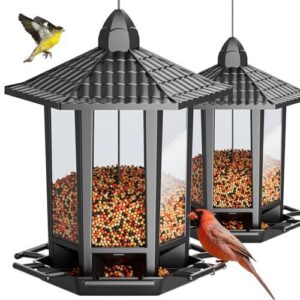
Want to bring California’s doves right into your backyard? The Birdream Retro Pagoda Bird Feeder combines stunning garden decorations with practical bird feeding!
This oriental-style feeder holds up to 5 pounds of seeds and features transparent panels so you’ll always know when it’s refill time. Perfect for attracting Mourning Doves, finches, and sparrows, it assembles in just one minute!
At 8.2 x 8.2 x 9.8 inches, you get easy feeder maintenance with a wide opening for quick refills. Just remember—smaller seeds work best to prevent port clogging!
| Best For | Bird watchers who want an easy-to-use, attractive feeder for small songbirds like finches, chickadees, and sparrows in moderate climates. |
|---|---|
| Price | $29.99 (set of 2) |
| Target Audience | Bird watchers |
| Primary Material | Plastic |
| Dimensions | 8.2×8.2×9.8 inches |
| Brand/Publisher | Birdream |
| Use Type | Bird feeding |
| Additional Features |
|
- Holds up to 5 pounds of seed with transparent panels for easy monitoring
- Quick 1-minute assembly with wide opening for hassle-free refills
- Lifetime warranty and distinctive pagoda design that doubles as garden décor
- Not squirrel-proof and made of plastic, which may be less durable than metal alternatives
- Small feeding ports can clog with sunflower seeds—works best with smaller seed types
- May struggle in harsh weather and reflective panels could potentially startle birds in bright sunlight
3. Mourning Dove Bird Watcher Guide
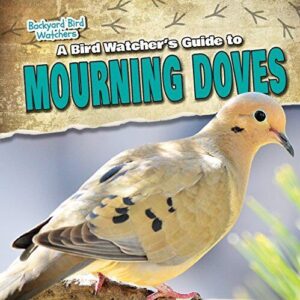
Ready to level up your bird watching skills? This 32-page guide dives deep into Mourning Dove migration patterns, nesting habits, and mating rituals across California’s diverse landscapes!
You’ll discover feeding tips and observation techniques that follow proper bird watching ethics while exploring urban dove conservation efforts.
Perfect for young ornithology enthusiasts, it breaks down complex behaviors into easy-to-understand concepts. At just $9.80, this Gareth Stevens publication (8.11 x 8.35 inches) transforms casual backyard observers into confident doves experts who understand these extraordinary birds!
| Best For | Young bird watchers (ages 6-12) who want to learn about mourning doves and start exploring bird watching as a hobby. |
|---|---|
| Price | $9.80 |
| Target Audience | Young readers |
| Primary Material | Paper/Book |
| Dimensions | 8.11×0.08×8.35 inches |
| Brand/Publisher | Gareth Stevens Pub |
| Use Type | Educational reading |
| Additional Features |
|
- Covers essential mourning dove behaviors like migration, mating rituals, and survival adaptations in an accessible way for kids
- Affordable at $9.80 and compact size (8.11 x 8.35 inches) makes it easy for young readers to handle and take outdoors
- Encourages hands-on outdoor exploration and observation, helping kids connect with nature beyond just reading
- Content may be too basic for older children, teens, or adults looking for detailed ornithological information
- At only 32 pages, it likely doesn’t cover advanced observation techniques or in-depth species analysis
- Geared specifically toward younger audiences, so experienced bird watchers won’t find much new information
4. David Sunflower Seeds Original Flavor

After observing doves, you’ll want to keep them coming back! DAVID Original Sunflower Seeds (twenty-four 1.75 oz. bags) work brilliantly in backyard bird feeders across California.
These roasted seeds deliver excellent seed nutrition—7 grams of protein, vitamin E, and healthy fats that attract Mourning Doves and other species. The roasting process enhances their flavor profile, creating irresistible appeal for bird watching sessions.
At 160 calories per serving, they’re perfect for sustained backyard feeding while you document dove behaviors from your favorite observation spot!
| Best For | Snackers looking for a convenient, protein-packed option they can grab on the go, whether for road trips, game days, or just keeping hunger at bay between meals. |
|---|---|
| Price | $29.74 (24-pack) |
| Target Audience | Snack enthusiasts |
| Primary Material | Sunflower seeds |
| Dimensions | 1.75 oz bags |
| Brand/Publisher | David |
| Use Type | Snacking |
| Additional Features |
|
- Comes in a 24-pack of individual 1.75 oz. bags, making it super easy to toss in a lunch box, gym bag, or backpack without worrying about portion control.
- Packs 7 grams of protein and 2 grams of fiber per serving, plus vitamin E and healthy fats, so you’re actually getting some nutritional value while snacking.
- The classic roasted and lightly salted flavor hits the spot without being over-the-top, and cracking the shells keeps your hands busy during long games or drives.
- Some people find them saltier than they’d like, which might be a dealbreaker if you’re watching your sodium intake.
- The seeds in these smaller bags can run on the petite side compared to what you’d get in larger bulk packages.
- If you’re not into eating the shells or dealing with the mess, this snack might feel more like a chore than a treat.
5. Noah Mourning Dove Jigsaw Puzzle
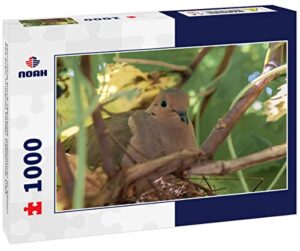
When your bird watching wraps up, celebrate California’s Mourning Doves with this stunning 1000-piece jigsaw puzzle! The Noah Mourning Dove Jigsaw Puzzle features authentic gray-brown plumage details and desert habitat backgrounds on high-quality 70pt Blue Puzzle Board.
At 26 by 20 inches completed, it’s perfect for framing while teaching dove conservation through educational toys. The puzzle assembly challenges you with realistic feather textures and earth-tone gradients—expect 4-6 hours of engaging wildlife appreciation. Made in the USA for just $29.99!
| Best For | Bird enthusiasts and puzzle lovers who want a challenging 1000-piece activity that doubles as frameable art celebrating California’s Mourning Doves. |
|---|---|
| Price | $29.99 |
| Target Audience | Puzzle lovers |
| Primary Material | Cardboard |
| Dimensions | 1000 pieces |
| Brand/Publisher | Made in USA |
| Use Type | Entertainment/Puzzle |
| Additional Features |
|
- Authentic dove details and desert habitat imagery on thick 70pt puzzle board make it educational and display-worthy at 26×20 inches completed
- Made in USA with recycled packaging, includes reference poster and bird-watching notes for added learning value
- Smart design avoids repetitive patterns while offering realistic feather textures that keep the 4-6 hour assembly engaging without frustration
- May be too complex for young children despite being marketed for “adults and children”
- Single-theme design limits replayability once you’ve completed it
- Requires storage space for the box and a 26×20 inch area to display or work on the puzzle
Frequently Asked Questions (FAQs)
Where do mourning doves live in California?
Mourning doves blanket California like a soft quilt! You’ll spot them everywhere—from coastal cities to inland valleys, agricultural fields, desert edges, suburban backyards, and riparian corridors.
They thrive wherever seeds and water meet open ground!
Are there collared doves in California?
The Eurasian Collared-Dove has spread widely across California since introduction, with established breeding populations in urban and suburban areas throughout southern and central counties, thriving in human-modified landscapes year-round.
How many types of doves are there in California?
Like spotting a Pokémon in the wild, you’ll discover nine types of doves across California habitats!
These bird species in California range from common Mourning Doves to rare Spotted Doves, enriching the state’s diverse avifauna.
What do doves look like in California?
California’s avifauna showcases diverse types of doves with distinct feather patterns, bird size, and tail features.
You’ll spot variations in dove plumage, beak shapes, and wing stripes across Eurasian Collared-Dove, White-Winged Dove, and Inca Dove populations.
Are doves a good bird?
Think backyard birding is hard? Doves prove otherwise! These peaceful visitors readily adapt to California’s urban spaces, visit feeders consistently, and coexist beautifully with humans—perfect ambassadors for avian conservation and wildlife-friendly feeding strategies.
Are doves common in California?
You’ll find doves thriving throughout California’s diverse avifauna—from bustling urban dove habitats to remote wilderness.
California dove sightings reveal impressive regional dove diversity, with species like Mourning Doves dominating landscapes statewide, making birdwatching exceptionally rewarding!
Is it good to have doves in your yard?
Having doves in your backyard brings natural pest control and signals a thriving ecosystem!
You’ll enjoy easy birdwatching at feeders while supporting urban wildlife and nature conservation through simple yard birdwatching setups.
What does it mean when mourning doves hang around your house?
You’ve probably noticed them cooing outside your window! When mourning doves hang around your California backyard, they’re signaling great news—reliable bird feeding stations, safe nesting spots, and perfect urban wildlife habitat nearby.
Is there a difference between a dove and a Mourning Dove?
Dove” refers to the entire bird family, while Mourning Dove is one specific California species.
You’ll spot Mourning Doves by their slender build, soft gray-brown feather patterns, and that unmistakable melancholic cooing sound!
What do California doves eat year-round?
You’ll spot doves year-round at bird feeders hunting seeds—especially sunflower seeds!
Their foraging habits shift seasonally, balancing nutrition needs between grass seeds, cracked corn, and wild plant seeds across California’s diverse landscapes.
Conclusion
Sure, you could spend your mornings scrolling through bird apps, mistaking every gray blob for a Rock Pigeon while actual Mourning Doves stage aerial acrobatics overhead.
Or you could step outside armed with field marks, habitat clues, and those telltale calls—suddenly transforming your California backyard into prime birding territory.
The doves in California aren’t hiding. They’re waiting for you to finally notice them perched right there on your fence, cooing their patient invitation.
- https://wildlife.ca.gov/Conservation/Birds/Band-tailed-Pigeon
- https://sora.unm.edu/sites/default/files/journals/nabb/v016n02/p0034-p0036.pdf
- https://x.com/godofprompt/status/1990526288063324577
- https://www.sciencedirect.com/science/article/pii/S0749208123000268
- https://github.com/vinhphunguyen/how-to-write-a-paper/blob/master/how-to-write-paper.out