This site is supported by our readers. We may earn a commission, at no cost to you, if you purchase through links.
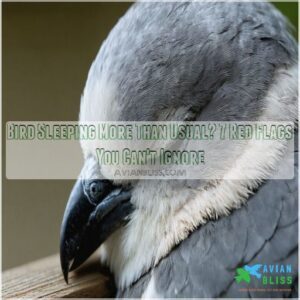
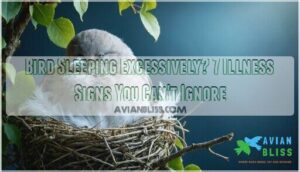 When your bird’s sleeping more than usual, it’s often your feathered friend’s way of telling you something’s wrong.
Bird sleeping excessively possible illness scenarios include respiratory infections, nutritional deficiencies, or environmental stress.
Healthy birds typically sleep 10-12 hours nightly, so dramatic changes in sleep patterns warrant attention.
Watch for accompanying symptoms like fluffed feathers, labored breathing, changes in appetite, or altered droppings.
These sleep pattern shifts can signal anything from minor stress to serious bacterial infections.
Early detection makes all the difference in treatment outcomes, and recognizing the subtle warning signs alongside excessive sleep can help you distinguish between temporary fatigue and genuine health concerns requiring immediate veterinary intervention.
Recognizing the importance of early detection is crucial for the well-being of your bird.
Table Of Contents
- Key Takeaways
- Bird Sleep Patterns
- Causes of Excessive Sleep
- Recognizing Illness Symptoms
- Veterinary Care and Diagnosis
- Treatment and Prevention
- Emergency Care and Monitoring
- Frequently Asked Questions (FAQs)
- Is a lack of sleep bad for a bird?
- Do birds sleep a lot?
- Why is my bird sleeping a lot?
- Why is my bird snoozing so much?
- How many hours a day do birds sleep?
- Why is my bird so lethargic?
- Why is my bird sleeping so much all of a sudden?
- Why is my bird lethargic all of a sudden?
- How to tell if your bird has a respiratory infection?
- How do you tell if a bird is sleeping or sick?
- Conclusion
Key Takeaways
- Monitor your bird’s sleep duration – Healthy birds sleep 10-12 hours nightly, so if you’re seeing more than 12 hours daily, it’s time to investigate potential health issues.
- Watch for accompanying illness symptoms – You’ll need to check for fluffed feathers, labored breathing, changes in appetite, altered droppings, or respiratory distress alongside the excessive sleep.
- Don’t wait to seek veterinary care – If your bird’s sleeping excessively for more than 48 hours or shows any concerning symptoms, you should schedule an immediate avian veterinary exam for proper diagnosis.
- Create a proper sleep environment – You can prevent stress-induced sleep disorders by maintaining consistent lighting (10-12 hours of darkness), a stable temperature (65-75°F), and quiet surroundings free from drafts and toxins.
Bird Sleep Patterns
Understanding your bird’s sleep patterns helps you spot health problems early. Most healthy birds sleep 10-12 hours nightly, but factors like age, species, and environment affect their rest cycles substantially.
Normal Sleep Duration
Understanding your bird’s Sleep Cycles helps you recognize when something’s wrong.
Healthy birds typically sleep 10-12 hours nightly, following consistent Daily Routines that mirror natural patterns.
Their Sleep Patterns shouldn’t include excessive daytime rest, which often signals underlying health issues requiring immediate attention.
Recognizing normal sleep patterns is essential for identifying potential problems.
- Species variation: Smaller birds may need slightly more rest than larger species
- Consistent timing: Regular Bird Rest schedules indicate healthy circadian rhythms
Factors Affecting Sleep
Several environmental factors can dramatically alter your bird’s sleep patterns and overall health.
Light exposure regulates natural sleep cycles, while excessive noise levels disrupt rest quality.
Poor cage conditions create stress that manifests as bird sleeping disorders.
Social interaction needs vary by species, affecting sleep duration.
Temperature fluctuations and drafts commonly trigger excessive bird sleeping and bird lethargy causes, making proper sleep environment management essential, as it affects light exposure and social interaction needs, which are crucial for maintaining healthy sleep patterns and preventing bird sleeping disorders.
Age and Sleep Patterns
Young Bird Sleep is like a teenager on weekends—expect longer sleep cycles as they grow.
As birds mature, sleep patterns shift; mature bird habits include more alertness and activity.
Aging effects can cause subtle changes, but excessive bird sleeping or bird lethargy symptoms often signal bird sleeping disorders or illness.
Track bird development closely—abnormal sleep patterns may require prompt veterinary attention.
Causes of Excessive Sleep
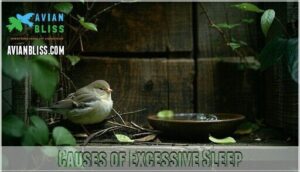
When your bird sleeps more than 12 hours daily, underlying health issues often trigger this excessive rest as the body conserves energy to fight illness or cope with stress.
Three primary factors cause this concerning behavior: infectious diseases that drain your bird’s immune system, nutritional gaps that leave them too weak for normal activity, and environmental disruptions that throw off their natural sleep-wake cycle, which can be triggered by underlying health issues.
Illness and Infection
Infections strike birds like silent thieves, stealing their energy and leaving them sleeping far more than normal.
Disease lurks in the shadows, quietly draining your bird’s vitality.
When bacteria, viruses, or fungi invade your feathered friend’s system, their body fights back by conserving energy through extended rest periods.
- Psittacosis causes lethargy and nasal discharge, with mortality reaching 30% if untreated
- Avian influenza triggers severe fatigue and ruffled feathers during viral outbreaks
- Aspergillosis creates respiratory distress and increased sleepiness in stressed birds
- Bacterial infections like Salmonella reduce alertness while spreading through contaminated sources
Bird owners should monitor their pet’s sleep patterns daily to identify potential health issues early on.
Nutritional Deficiencies
Without proper nutrition, your bird’s body can’t maintain normal energy levels, leading to increased sleep as it conserves what little fuel remains.
Vitamin deficits in A, D, and B-complex vitamins directly impact energy metabolism, while mineral imbalances affect cellular function.
Malnutrition from poor dietary choices creates nutrient absorption problems, preventing your feathered friend from getting essential nutrients even from quality food sources, which can be attributed to poor dietary choices and ultimately affects the bird’s overall health due to nutrient absorption problems.
Environmental Changes
Your bird’s environment dramatically impacts sleep patterns.
Temperature fluctuations, improper lighting effects, excessive noise, poor air quality, and incorrect humidity levels disrupt natural bird sleep patterns.
Moving cages, introducing new pets, or seasonal changes trigger stress-induced sleeping bird behavior.
Environmental factors like drafts, toxins, or inconsistent day-night cycles cause sleep disruptions that mimic illness symptoms.
Recognizing Illness Symptoms
When your bird’s sleeping more than usual, it’s often your first clue that something’s wrong with their health.
Recognizing the subtle signs of illness early can mean the difference between a quick recovery and a serious health crisis.
Respiratory Symptoms
Excessive sleep often signals serious health problems, especially when paired with breathing troubles.
Watch for open-mouth breathing, which affects 60% of birds with respiratory disease.
Tail bobbing with each breath indicates respiratory distress requiring immediate veterinary attention.
Audible wheezing, clicking sounds, or nasal discharge can point to lung infection or avian influenza.
These respiratory symptoms demand urgent care.
Digestive System Warning Signs

Your bird’s digestive system acts like a canary in a coal mine – warning you early when something’s wrong.
Digestive issues often appear before other illness symptoms, making these changes critical warning flags you can’t afford to miss.
- Regurgitation patterns – Frequent vomiting or bringing up undigested food signals serious digestive problems or infections
- Appetite changes – Sudden food refusal, excessive eating, or picking at seeds without swallowing indicates digestive distress
- Beak deformity development – Progressive changes in beak shape often accompany underlying digestive health issues
- Feather plucking behaviors – Self-destructive plucking frequently stems from digestive discomfort or nutritional malabsorption
Changes in Droppings
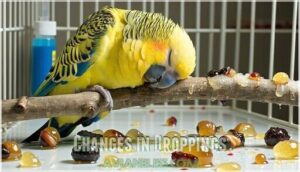
Your bird’s droppings tell a story about internal health that you can’t ignore.
Looking at the provided paragraph about bird droppings and the tone of the content, here’s an engaging blockquote:
**Your bird’s waste reveals hidden health secrets before symptoms appear.
Normal droppings contain three distinct parts, but illness creates telltale changes in droppings color, poop consistency, and stool texture that signal serious problems requiring immediate fecal analysis.
| Normal Droppings | Illness Indicators |
|---|---|
| Dark green/brown solids | Yellow, red, or black stool texture |
| Clear/white urine output | Bloody or cloudy urine |
| White uric acid caps | Absent or discolored caps |
| Formed, moist consistency | Watery, dry, or mucus-filled |
When excessive sleeping accompanies droppings changes, your bird needs urgent veterinary care for proper bird disease diagnosis and treatment of underlying bird health issues.
Veterinary Care and Diagnosis
When your bird sleeps more than 12 hours daily, professional veterinary evaluation becomes essential for accurate diagnosis.
An avian veterinarian will perform thorough testing, including blood chemistry panels and diagnostic imaging, to identify underlying metabolic disorders, infections, or organ dysfunction that may be causing the excessive lethargy.
Blood Tests and Imaging

When your avian veterinarian suspects illness, blood tests and imaging become your bird’s diagnostic lifeline.
These medical scans reveal hidden health issues that behavioral changes alone can’t pinpoint.
Your vet will likely recommend:
- Blood Analysis – Complete blood count detects infections and anemia causing fatigue
- Diagnostic Imaging – X-rays reveal respiratory problems and organ abnormalities
- Avian Radiology – Shows air sac changes and abdominal masses
- Ultrasounds – Examine soft tissues and detect fluid accumulation
- Medical Scans – Monitor treatment progress and recovery.
These diagnostic tests provide the roadmap for effective treatment.
Diagnostic Tools and Techniques

Precision guides effective treatment when veterinarians deploy specialized diagnostic tools for your feathered friend.
Blood tests reveal infections, organ dysfunction, and nutritional deficiencies through thorough lab analysis.
Imaging tools like radiographs and CT scans detect internal abnormalities invisible during physical examination.
Diagnostic kits identify specific pathogens causing bird illness symptoms.
Medical scans combined with detailed medical history create complete diagnostic pictures, enabling targeted treatment plans for your pet’s recovery, which involves effective treatment.
Importance of Early Diagnosis

Catching bird illness early transforms what could become a life-threatening crisis into a manageable health issue.
Your feathered friend’s recovery hinges on swift diagnostic timing and proper medical intervention when excessive sleepiness appears.
Critical diagnostic timing benefits:
- Health monitoring within 48 hours – Early symptom identification increases recovery rates to over 70% compared to delayed treatment
- Disease detection through blood panels – Thorough testing reveals treatable metabolic or infectious causes in over 50% of bird sleep disorders
- Medical intervention protocols – Prompt bird illness diagnosis prevents progression from excessive sleepiness to organ failure or neurological complications
Recognizing respiratory issues is essential for identifying potential health problems in birds.
Treatment and Prevention
Once your bird receives proper diagnosis from an avian veterinarian, implementing the right treatment approach becomes essential for recovery.
Treatment typically involves a combination of targeted medication, dietary adjustments, and environmental improvements to address the underlying cause of excessive sleep.
Medication and Therapy
Once veterinary diagnosis confirms your bird’s illness, targeted medication becomes the cornerstone of recovery.
Antibiotics combat bacterial infections with over 80% success rates when started early, while antiviral drugs tackle viral causes.
Pain management medications like meloxicam provide relief, and behavioral therapy addresses stress-related sleep issues through environmental enrichment and socialization techniques, which can lead to successful recovery.
Nutritional Changes and Supplements
Your bird’s recovery depends on proper nutrition that targets nutritional deficiencies.
A balanced diet with high-quality pellets, fresh vegetables, and limited seeds provides essential nutrients, minerals, and vitamins.
Nutrient supplements and vitamin boosters may be necessary for severe cases.
Food variety ensures mineral richness while avoiding over-supplementation that could worsen symptoms.
Additionally, using the right bird food supplements can be vital for maintaining healthy health, which involves understanding bird food options.
Environmental Modifications
Beyond dietary adjustments, your bird’s sleep environment requires careful attention.
Environmental factors directly impact recovery from excessive sleep patterns.
Key environmental modifications include:
- Lighting Adjustments: Maintain 10-12 hours of darkness with UV lighting during active periods
- Temperature Control: Keep consistent 65-75°F range to prevent metabolic stress
- Humidity Levels: Maintain 40-60% humidity using humidifiers or dehumidifiers
- Noise Reduction: Create quiet zones away from household disturbances and traffic
- Air Quality: Verify proper ventilation while eliminating drafts and toxic fumes
These cage environment changes support natural circadian rhythms and reduce stress-induced sleep disorders.
Proper UV lighting systems are essential for simulating a natural environment.
Emergency Care and Monitoring
When your bird shows emergency symptoms alongside excessive sleep, immediate veterinary intervention becomes critical for survival.
Understanding which warning signs require urgent care and having proper monitoring tools ready can mean the difference between recovery and tragedy.
Red Flags and Emergency Symptoms
Five emergency symptoms demand immediate veterinary attention when your bird shows excessive sleeping.
Severe lethargy with open-mouth breathing, sudden changes in droppings, or complete loss of appetite signals critical care needs.
Respiratory distress, including tail bobbing or wheezing, represents avian distress requiring urgent intervention.
Birds showing no response to gentle stimulation face life-threatening illness, and it is crucial to address these symptoms with immediate veterinary attention.
Creating an Avian First Aid Kit
Preparation beats panic when avian emergencies strike.
Your Bird Emergency Kits should contain sterile gauze, saline solution, and styptic powder for Avian Wound Care.
Include a small towel for restraint, digital thermometer, and syringe for medication administration.
Pack First Aid Supplies like antibiotic ointment and cornstarch for bleeding control.
Document bird symptoms documentation forms and your vet’s contact information for streamlined bird vet visit preparation during critical moments.
Having an Avian First Aid kit is essential for providing immediate care and is a key part of Avian Wound Care.
Critical Care and Follow-up
When your bird faces bird illness emergency situations, swift emergency response becomes your lifeline.
Intensive therapy under vet guidance requires strict bird monitoring protocols during critical care phases.
Follow up care appointments track recovery progress, ensuring symptoms don’t resurface.
Your vigilant bird emergency care approach—checking breathing patterns, appetite changes, and energy levels—helps veterinarians adjust treatment plans for ideal healing outcomes.
Recognizing avian emergency signs is vital, and understanding emergency care basics can substantially improve your bird’s chances of recovery.
Frequently Asked Questions (FAQs)
Is a lack of sleep bad for a bird?
Yes, lack of sleep is harmful for birds.
Sleep deprivation weakens their immune system, disrupts hormonal balance, and affects cognitive function.
Birds need 10-12 hours of quality sleep nightly for ideal health and well-being.
Do birds sleep a lot?
Like feathered dreamers wrapped in nature’s blanket, birds do sleep substantially more than many realize.
You’ll find most birds sleep 10-12 hours daily, with young birds needing even more rest for proper development and growth.
Why is my bird sleeping a lot?
Your bird’s excessive sleeping could signal illness, infection, nutritional deficiencies, environmental stress, or age-related changes. Birds sleeping over 12 hours daily need immediate veterinary evaluation for proper diagnosis.
Why is my bird snoozing so much?
Excessive snoozing often signals illness, stress, or environmental issues.
You’ll want to check for discharge, weight loss, breathing changes, or altered droppings.
Schedule an avian vet visit immediately if sleeping exceeds 12 hours daily, as this could indicate a serious issue.
How many hours a day do birds sleep?
Like a natural clock, your bird’s sleep patterns follow rhythms tied to daylight.
Healthy adult birds typically sleep 10-12 hours nightly, while young birds require more rest.
Excessive sleep beyond 12 hours daily may signal illness.
Why is my bird so lethargic?
Lethargy in birds typically signals illness, infection, nutritional deficiency, or environmental stress.
Monitor eating habits, droppings, and breathing patterns.
Schedule an immediate avian veterinary exam since early intervention improves recovery rates substantially.
Why is my bird sleeping so much all of a sudden?
Sudden excessive sleep often signals illness, infection, or stress in your bird. Schedule an urgent veterinary appointment if this behavior persists over 48 hours, as early diagnosis improves recovery rates substantially.
Why is my bird lethargic all of a sudden?
Illness, infection, or stress can trigger sudden lethargy in birds. Check for discharge, breathing changes, or appetite loss. Schedule an immediate avian veterinary exam for proper diagnosis and treatment.
How to tell if your bird has a respiratory infection?
Look for nasal discharge, labored breathing, wheezing, or tail bobbing while breathing.
You’ll notice voice changes, open-mouth breathing, and decreased activity levels.
Watch for fluffed feathers and sitting low on perches consistently, which can indicate issues with labored breathing.
How do you tell if a bird is sleeping or sick?
Like distinguishing between a tired child and a sick one, watch for subtle clues: healthy sleeping birds maintain normal posture, respond to gentle sounds, and show regular breathing patterns.
Sick birds often fluff feathers, sleep excessively, and exhibit labored breathing.
Conclusion
While early detection prevents serious complications, delayed recognition of bird sleeping excessively possible illness transforms minor health issues into life-threatening emergencies.
You’ve learned to identify respiratory distress, digestive changes, and behavioral shifts that accompany excessive sleep patterns.
Trust your instincts when something feels wrong. Your bird depends on your vigilance for survival.
Monitor sleep duration, watch for accompanying symptoms, and contact an avian veterinarian immediately when concerning changes occur. Quick action saves lives.
- https://www.thesprucepets.com/common-diseases-in-pet-birds-390443
- https://www.birdspot.co.uk/bird-brain/why-do-birds-sleep-with-one-eye-open
- https://www.sleepfoundation.org/stages-of-sleep
- https://www.mayoclinic.org/healthy-lifestyle/adult-health/in-depth/sleep/art-20048379
- https://parrotdiseperch.com/east/find-an-avian-veterinarian