This site is supported by our readers. We may earn a commission, at no cost to you, if you purchase through links.
 A good bird illness symptoms guide helps you spot trouble before it’s too late.
Watch for fluffed feathers, changes in droppings, or a bird that suddenly sits quietly instead of chattering.
Breathing problems, weight loss, or odd head tilts are red flags, too.
You know your bird’s habits best—trust your gut if something feels off.
Early action can mean the difference between a quick recovery and a serious emergency.
Keep a health journal and weigh your bird regularly.
Sometimes, the smallest signs speak volumes.
Stick around for practical tips on what to do next and how to keep your bird thriving.
Table Of Contents
- Key Takeaways
- Bird Illness Detection
- Physical Symptoms Guide
- Emergency Symptoms Care
- Preventative Measures
- Common Bird Illnesses
- Frequently Asked Questions (FAQs)
- What are bird diseases & symptoms?
- How do I know if my bird is sick?
- How do you know if a pet bird has health problems?
- How do you know if a bird has a respiratory infection?
- How do you identify a common backyard bird disease?
- How do you know if a bird is infected?
- How do birds act when they are sick?
- How do I know if my bird is unwell?
- What does a bird look like when it’s sick?
- What is the most common disease in birds?
- Conclusion
Key Takeaways
- Watch for subtle changes like fluffed feathers, odd droppings, or sudden quietness—these are early signs your bird might be sick.
- Weigh your bird weekly and keep a health journal to catch problems before they become emergencies.
- Take immediate action if you see red flags like breathing trouble, rapid weight loss, or head tilts; call your vet right away.
- Prevent illness by giving a balanced diet, keeping the cage clean, and scheduling regular vet checkups.
Bird Illness Detection
Birds hide illness until they’re critically sick, making early detection essential for their survival.
Spotting the smallest changes can save your bird’s life—early detection is your best defense.
You’ll need to watch for subtle changes in behavior, breathing, and droppings every single day to catch problems before they become life-threatening emergencies.
Daily Observation Techniques
Every morning, watch your bird’s breathing patterns for any labored or open-mouth breathing signs.
Check their droppings for color, consistency, and frequency changes. Observe activity levels throughout the day, noting decreased movement or unusual perching habits.
Monitor vocalization patterns, as quieter birds often signal distress. Track appetite changes during feeding times for early bird illness detection, and watch for labored breathing signs.
Monitoring Weight Changes
Regular weighing helps catch bird illness symptoms early.
Use a digital scale with gram accuracy for precise bird weight monitoring.
Weigh your bird weekly at the same time, ideally morning before feeding.
A weight loss of 10% signals emergency veterinary care.
Consider using a specialized scale option for accurate measurements.
Weight fluctuation causes include illness, stress, or diet changes.
Track readings in your health journal alongside supplement impact observations for thorough bird health monitoring.
This practice allows for the identification of potential issues, enabling prompt action to ensure the well-being of your bird.
Recognizing Behavioral Changes
Since birds are masters of disguise when they’re unwell, you’ll need to watch for subtle behavioral changes that signal trouble ahead.
Notice shifts in their daily patterns, social interactions, and responses to familiar activities.
Here are 5 key behavioral changes to monitor:
- Activity Reduction – Your normally energetic bird sits quietly for extended periods or sleeps more than usual
- Isolation Signs – They withdraw from family members or avoid their favorite spots in the cage
- Aggression Increase – Sudden biting, territorial behavior, or irritability when handled
- Vocalization Changes – Unusually quiet periods or changes in their typical chatter patterns
- Repetitive Actions – Excessive preening, head bobbing, or other compulsive behaviors that seem out of character
Watch for loss of appetite and bird lethargy alongside these bird illness symptoms.
Maintaining a Health Journal
Tracking your bird’s health patterns through detailed observation creates a foundation for early detection.
You’ll spot subtle changes that might otherwise go unnoticed.
Recording daily behaviors, droppings consistency, and environmental factors helps veterinarians identify trends during checkups.
Consider using a dedicated health resource for detailed record-keeping.
| Daily Records | What to Track |
|---|---|
| Symptom Tracking | Behavioral changes, lethargy levels |
| Medication Log | Dosages, times, bird’s response |
| Dietary Changes | Food intake, preferences, appetite |
| Environmental Factors | Temperature, humidity, cage cleanliness |
| Behavioral Patterns | Vocalization, activity, social interaction |
Physical Symptoms Guide
When your bird shows physical symptoms, you need to recognize the warning signs quickly.
These visible changes in your bird’s body and appearance often signal serious health problems that require immediate attention.
Respiratory Issues
Respiratory distress strikes quickly in birds, demanding immediate attention. You’ll notice breathing difficulty through visible chest movements and tail bobbing during rest.
Watch for these critical warning signs:
- Open-mouth breathing or wheezing sounds
- Nasal discharge with swollen sinuses
- Loss of voice or hoarse vocalizations
- Frequent sneezing with head shaking
Respiratory infections from Aspergillosis, Air Sac Mites, or toxic inhalants require urgent veterinary care. Understanding that wild birds carry viruses can also help prevent transmission.
Prevention includes avoiding Teflon fumes and maintaining proper ventilation for ideal bird respiratory care.
Feather Appearance Changes
Your bird’s feathers tell a story about their health.
Feathers reveal hidden health secrets—watch for changes in color, texture, or grooming to spot illness early.
Healthy birds maintain sleek, colorful plumage through regular preening, while sick birds often display telltale changes that signal trouble ahead.
| Healthy Feather Signs | Warning Signs |
|---|---|
| Smooth, vibrant plumage | Fluffed feathers constantly puffed |
| Clean, well-groomed appearance | Dull plumage lacking natural sheen |
| Intact feather structure | Stained feathers around face/vent |
Watch for ruffled feathers, tattered feathers from poor grooming, or feather loss beyond normal molting.
Feather plucking indicates stress or illness requiring immediate attention.
Droppings Abnormalities

Watch your bird’s droppings color, consistency, and frequency daily – they’re health indicators you can’t ignore.
Healthy droppings contain dark feces, white urates, and clear urine.
Red or black signals bleeding, while green suggests liver problems.
Diarrhea in birds, blood presence, or undigested food requires immediate vet attention.
Abnormal droppings often appear before other symptoms.
Vocalization Changes
Listen carefully to your bird’s voice changes.
Quietness in normally chatty birds often signals pain or illness.
You’ll notice distress calls replacing cheerful songs, reduced mimicking abilities, and altered vocalizations that sound strained or hoarse.
Increased vocalization can indicate discomfort, while sudden silence suggests your feathered friend needs attention.
These behavioral changes in birds are early sick bird symptoms requiring veterinary evaluation.
Emergency Symptoms Care
When your bird shows emergency symptoms, you’re dealing with a life-threatening situation that requires immediate action.
These critical warning signs can progress rapidly, making every minute count in saving your feathered companion’s life.
Severe Lethargy Treatment
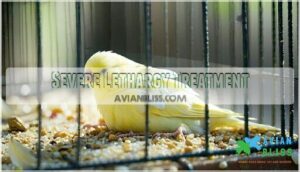
When severe lethargy strikes your feathered friend, immediate action becomes vital for survival.
This emergency symptom signals your bird’s body is shutting down and requires intensive supportive care.
- Warming Techniques – Raise ambient temperature to 80-85°F using heating pads or hospital cages
- Isolation Protocols – Separate the lethargic bird from healthy companions to reduce stress
- Fluid Therapy – Offer warm water via syringe if bird can’t drink independently
- Medication Options – Follow veterinary guidance for prescribed treatments during bird illness treatment
Bleeding and Trauma Response
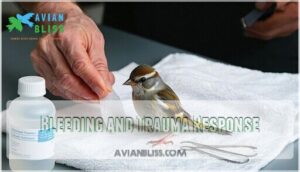
When accidents happen, swift action prevents life-threatening complications.
Apply direct pressure using clean gauze to stop bleeding within five minutes. Clean wounds gently with saline solution, stabilize fractures without moving them, and maintain warmth to prevent shock.
Contact your avian veterinarian immediately for proper pain management.
| Emergency Type | Immediate Action | Veterinary Timeline |
|---|---|---|
| Active Bleeding | Apply direct pressure with gauze | Within 30 minutes |
| Open Wounds | Clean with saline, cover gently | Within 1 hour |
| Visible Fractures | Stabilize without moving | Within 2 hours |
| Head Trauma | Keep bird calm and still | Immediately |
| Internal Injuries | Warmth, minimal handling | Within 15 minutes |
Respiratory Distress Signs
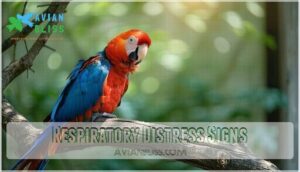
Your bird’s respiratory system can fail quickly when distress strikes. Recognizing these critical warning signs saves precious time during emergencies when every second counts.
- Labored breathing with visible chest movements and open-mouth breathing
- Tail bobbing that matches each breath rhythm
- Wheezing sounds accompanied by nasal discharge
Bird respiratory distress escalates rapidly, making immediate veterinary intervention essential for breathing difficulties.
Addressing potential issues like avian fungal infections can improve outcomes.
Neurological Symptoms Response
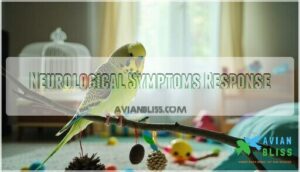
While respiratory problems are clearly visible, neurological symptoms in birds often appear suddenly and require immediate action.
Watch for head tilts, seizures, or loss of balance – these signal serious brain involvement requiring urgent veterinary evaluation.
| Symptom | Immediate Response | Emergency Priority |
|---|---|---|
| Seizures | Dim lights, reduce noise, avoid restraint | Critical – contact vet immediately |
| Head trauma | Keep bird still, monitor breathing | High – seek care within hours |
| Balance loss | Lower perches, prevent falls | Moderate – schedule urgent visit |
Toxin exposure often triggers these neurological symptoms.
Lead poisoning from cage materials or zinc from galvanized wire can cause paralysis management challenges.
Your bird’s posture changes dramatically – they may circle, fall, or show repetitive movements.
Quick seizure first-aid involves creating a quiet, safe space while you contact your avian veterinarian for guidance.
Preventative Measures

Prevention is your strongest defense against bird illness—establishing proper care routines now saves lives later.
Smart preventative measures include maintaining ideal nutrition, creating a clean environment, scheduling regular vet visits, and quarantining new birds to protect your flock’s health, which is a key part of prevention.
Balanced Diet Importance
After addressing critical emergencies, proper nutrition becomes your bird’s foundation for health.
A balanced diet supports immune function and prevents many illnesses before symptoms appear.
Your bird’s nutritional needs include these key elements:
- High-quality pellets – provide complete nutrition for organ function and energy levels
- Fresh vegetables – boost immune support and nutrient absorption
- Limited fruits – offer vitamins while preventing nutritional deficiencies
- Clean water daily – maintains feather health and overall bird health.
Seed-only diets lack essential nutrients, weakening your bird’s natural defenses and creating long-term health problems.
Optimal Cage Environment
Three key factors create a healthy cage environment that prevents illness.
First, make certain proper Cage Size – your bird needs room to spread wings fully without touching bars.
Temperature Control matters greatly; maintain 65-75°F consistently, avoiding drafts and sudden changes.
Choose Safe Materials like stainless steel or powder-coated bars, avoiding zinc or galvanized metals that cause poisoning.
It’s essential to research appropriate cage dimensions for your bird’s species.
Add Enrichment Items including natural wood perches of varying diameters and safe toys for mental stimulation.
Placement Matters – position the cage away from kitchens, bathrooms, and high-traffic areas where fumes and stress accumulate.
Regular Veterinary Checkups
Annual wellness exams with an avian veterinarian provide early detection through thorough bird veterinary evaluation.
Schedule yearly checkups for preventative care, including diagnostic testing and vaccination schedules.
Your vet will assess overall health, catch problems before symptoms appear, and discuss proper nutrition.
While cost considerations matter, regular vet checkups prevent expensive emergency treatments later, and professional bird veterinary care beats waiting for visible illness signs.
Quarantining New Birds
New birds need a 30-day quarantine period in a separate room to prevent disease spread to your existing flock.
Place the quarantine cage away from other birds but where you can monitor daily for signs of illness.
This observation period allows stress reduction while protecting your healthy birds.
Understanding avian parasite basics is also essential during this time.
Proper quarantine is your first line of defense in disease prevention and responsible bird care.
Common Bird Illnesses
Understanding specific bird illnesses helps you recognize symptoms faster and respond appropriately.
Common conditions like psittacosis, avian influenza, and nutritional deficiencies each present unique warning signs that require different treatment approaches.
Psittacosis Symptoms
Psittacosis, known as parrot fever, spreads through infected bird droppings and feather dust.
Watch for nasal discharge, sneezing, and respiratory distress in your bird.
Green-tinted diarrhea signs often indicate liver involvement.
Lethargy effects include fluffed feathers and reduced activity.
Discharge from eyes may accompany respiratory infections, making early detection essential for treatment success.
Avian Influenza Signs
Avian influenza strikes with devastating speed, leaving bird owners scrambling to recognize the warning signs.
This zoonotic disease creates a perfect storm of respiratory distress and systemic failure.
Watch for these critical avian influenza symptoms:
- Swelling symptoms around the head, comb, and wattles
- Weakness indicators including lethargy and inability to perch
- Respiratory distress with open-mouth breathing and nasal discharge
Preventative measures include strict quarantine protocols for new birds and immediate veterinary consultation when these bird illness signs appear.
Pet birds are at a higher risk of contracting the disease, especially if they’ve contact with wild birds.
Nutritional Deficiencies Effects
Poor bird nutrition creates a domino effect throughout your feathered friend’s body.
Seed-only diets lack essential vitamins, causing feather abnormalities like discoloration and brittle plumage.
You’ll notice weakness signs including muscle wasting and poor growth in young birds.
Organ damage develops silently—liver disease and kidney problems emerge from chronic malnutrition.
Most concerning, immune suppression leaves your bird vulnerable to infections that healthy birds easily fight off.
A common issue is vitamin A deficiency which can lead to squamous metaplasia.
Respiratory Issues Treatment
Respiratory infections require immediate veterinary attention and thorough supportive care. You’ll need to provide temperature control by keeping your bird warm at 80-85°F using heating pads.
Humidified air helps ease bird breathing difficulties – use a humidifier or steam from hot water. Medication options include antibiotics prescribed by your vet for bacterial respiratory problems.
Oxygen therapy may be necessary for severe cases. Monitor your bird’s respiratory care closely, verifying they rest in a quiet, stress-free environment while receiving treatment.
To guarantee accuracy in diagnosis, serology tests importance should be considered, ensuring the best possible respiratory care for your bird.
Frequently Asked Questions (FAQs)
What are bird diseases & symptoms?
Birds can get sick from infections, mites, or poor diet.
Watch for fluffed feathers, odd droppings, breathing trouble, or quietness.
Sudden weight loss, discharge from eyes or nose, and lethargy are red flags needing quick action.
How do I know if my bird is sick?
About 70% of sick birds show no clear signs until it’s serious.
Watch for fluffed feathers, less activity, odd droppings, or sudden quietness.
Weigh your bird often—sudden weight loss means it’s time for the vet.
How do you know if a pet bird has health problems?
Watch for fluffed feathers, odd droppings, or sudden quietness.
If your bird stops playing, loses weight, or breathes with effort, it’s time to call the vet.
Quick changes often mean something’s wrong.
How do you know if a bird has a respiratory infection?
If your bird is breathing with its mouth open, tail bobbing with each breath, wheezing, or has discharge from the nose or eyes, it’s likely dealing with a respiratory infection.
Seek a vet’s help right away.
How do you identify a common backyard bird disease?
Like a canary in a coal mine, sudden changes in droppings, fluffed feathers, or unusual quietness can signal disease.
Monitor appetite, weight, and breathing daily.
Quick action and a vet visit can prevent bigger problems.
How do you know if a bird is infected?
You’ll notice changes like fluffed feathers, quietness, or watery droppings.
If your feathered friend stops eating, loses weight, or sits low in the cage, it’s time to call the vet—don’t wait.
How do birds act when they are sick?
You’ll see fluffed-up feathers, less energy, or changes in droppings.
Sometimes, they sit at the cage bottom, act quiet, or stop playing.
Breathing may look heavy, and sudden weight loss is a serious warning.
How do I know if my bird is unwell?
Watch for fluffed feathers, quietness, watery droppings, or sudden weight loss.
If your feathered friend skips meals, sleeps more, or sits on the cage bottom, it’s time for a vet visit—don’t delay.
What does a bird look like when it’s sick?
Imagine your bird suddenly turning into a puffball statue—fluffed feathers, droopy wings, and barely moving.
You’ll spot dull eyes, messy plumage, odd droppings, quietness, or open-mouth breathing.
These are clear red flags for illness.
What is the most common disease in birds?
Psittacosis, also called parrot fever, tops the list for pet birds.
It’s caused by bacteria and spreads fast.
You’ll spot symptoms like nasal discharge, diarrhea, and tiredness.
Quick vet care and hygiene are essential.
Conclusion
Caring for your bird means noticing subtle changes before they become major concerns.
A strong bird illness symptoms guide helps you catch early warning signs, like odd droppings or quiet behavior.
Don’t ignore small clues—your quick action can prevent bigger problems.
Weigh your bird, keep a journal, and trust your instincts.
If you spot anything unusual, call your vet right away.
Staying alert and informed keeps your feathered friend thriving and guarantees a happier, healthier life together, which is the key to a happier and healthier life.
- https://cdn.ymaws.com/www.aav.org/resource/resmgr/pdf_2019/AAV_Signs-of-Illness-in-Comp.pdf
- https://monvet.com/en/signs-illness-in-birds/
- https://www.morningsideveterinary.com/respiratory-infections-birds/
- https://www.petmd.com/bird/conditions/digestive/c_bd_Vitamin_A_Deficiency
- https://www.nadis.org.uk/disease-a-z/poultry/diseases-of-farmyard-poultry/part-5-respiratory-diseases/