This site is supported by our readers. We may earn a commission, at no cost to you, if you purchase through links.
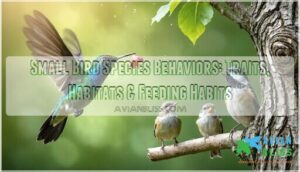 Small bird species behaviors reveal nature’s incredible diversity in action.
You’ll witness hummingbirds hovering at flowers with rapid wingbeats, while chickadees cache seeds for winter survival.
Sparrows display complex social hierarchies through chirps and body language, and wrens defend territories with surprisingly loud songs.
These tiny creatures demonstrate remarkable intelligence through problem-solving, tool use, and memory skills.
Their feeding strategies range from acrobatic insect-catching to cooperative foraging in mixed flocks.
Migration patterns showcase their navigation abilities, with some species traveling thousands of miles using celestial cues.
Each species has evolved unique behavioral adaptations that maximize their survival in specific environments, creating fascinating patterns you can observe.
These patterns are a result of evolved traits that help the birds thrive in their respective habitats, making them a joy to study and observe.
Table Of Contents
- Key Takeaways
- Small Bird Characteristics
- Bird Habitat Distribution
- Small Bird Diet Feeding
- Bird Social Interactions
- Ecological Bird Roles
- Frequently Asked Questions (FAQs)
- What are the behaviors of birds?
- What are stereotypical behaviors in birds?
- Do small birds have emotions?
- What are the unusual behavior of birds?
- How do small birds survive harsh winter weather?
- What predators pose greatest threats to small birds?
- How long do most small bird species live?
- When is peak breeding season for small birds?
- How do small birds navigate during long migrations?
- Conclusion
Key Takeaways
- You’ll observe remarkable feeding diversity – from hummingbirds visiting 1,000+ flowers daily for nectar to chickadees consuming 100% of their body weight in insects during breeding season, showcasing specialized adaptations for survival
- Small birds demonstrate complex social behaviors through territorial defense, intricate courtship rituals, and sophisticated communication systems with some species producing over 1,000 distinct vocalizations
- These tiny creatures serve as ecological powerhouses by controlling insect populations, dispersing seeds across landscapes, and supporting pollination networks that maintain ecosystem balance
- Their survival strategies reveal evolutionary mastery through memory-based caching (storing thousands of seeds), seasonal dietary shifts, and navigation abilities using celestial cues and magnetic fields during migrations spanning thousands of miles
Small Bird Characteristics
When you observe small birds, you’ll notice they’re packed with fascinating features that help them survive.
These tiny creatures display remarkable diversity in size, colors, and specialized body parts that match their lifestyles perfectly.
Physical Features
You’ll discover that small birds showcase remarkable diversity in their physical traits.
Their compact bodies hide intricate details that make each species unique, from specialized beaks to shimmering feathers that catch sunlight like nature’s tiny jewels.
- Plumage Iridescence – Feathers shimmer with metallic blues, greens, and purples that change with viewing angle
- Beak Morphology – Curved nectar-feeding tubes, seed-cracking cones, and insect-probing needles match dietary needs perfectly
- Wing Shape – Rapid-beating hummingbird wings versus broad sparrow wings reveal flight strategies and lifestyle choices
- Feather Structure – Downy underlayers provide insulation while outer feathers create waterproof barriers and flight surfaces
Size Variations
Beyond their colorful feathers, you’ll find fascinating bird size variations across species.
Size Dimorphism appears between males and females, while Regional Size differences reflect climate adaptations.
Chickadee small size and sparrow compact bodies showcase evolutionary efficiency. Wren tiny dimensions demonstrate specialized niches, though Dwarfism Cases and Gigantism Cases rarely occur.
American Robins thrive in diverse habitats, showcasing adaptability.
Evolutionary Pressures shape these bird size classification patterns perfectly.
| Species | Length (inches) | Weight (ounces) |
|---|---|---|
| Bee Hummingbird | 2.0 | 0.07 |
| Winter Wren | 3.5 | 0.3 |
| Goldcrest | 3.3 | 0.2 |
| House Sparrow | 5.5 | 1.0 |
| American Robin | 7.9 | 2.7 |
Plumage Colors
You’ll notice how small bird species characteristics showcase stunning visual diversity through their plumage colors.
Males often display sexual dimorphism with vibrant reds and oranges, while females exhibit tawny, earth-toned color camouflage for protection.
Iridescent plumage creates shimmering effects that vary by light angle.
Feather pigments produce regional variations across populations, helping bird species characteristics adapt to local environments and supporting specific bird behavior patterns within ecosystems.
The combination of these traits allows for sexual dimorphism to be clearly observed in many species.
Beak Adaptations
Beak morphology reveals nature’s engineering prowess in small birds.
You’ll find specialized structures perfectly adapted for specific bird diets and foraging techniques.
- Nectar feeding hummingbirds possess elongated, needle-like beaks with specialized tongues that extend deep into flowers
- Seed cracking finches develop robust, cone-shaped bills that generate impressive pressure for breaking tough shells
- Insect foraging warblers sport thin, pointed beaks ideal for plucking tiny prey from bark crevices and leaves
Bird Habitat Distribution
You’ll discover small birds in remarkably diverse environments, from dense forests to bustling city centers.
Their distribution patterns reveal fascinating adaptations that let them thrive in woodlands, gardens, urban parks, and during impressive seasonal migrations, showcasing their ability to adapt to various settings, and their diverse environments.
Forest Habitats
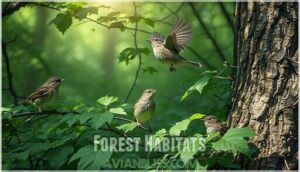
You’ll often find small bird species thriving within forest biodiversity, where canopy layers provide essential nesting sites and abundant food availability.
Woodland habitats offer natural predator avoidance through dense vegetation and varied elevations. Small bird nesting occurs across different forest levels, from understory shrubs to towering trees.
Forest ecosystems support diverse bird foraging techniques, allowing species to exploit unique food sources within their preferred vertical zones. Larger forests support greater bird diversity, which is a key factor in maintaining healthy ecosystems and promoting bird diversity through the preservation of natural habitats.
Garden Habitats
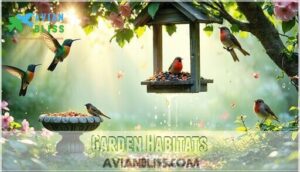
When you’re creating backyard ecosystems, small bird species transform your space into a living sanctuary.
Urban gardens become magnets for diverse bird behaviors when you implement smart planting strategies.
Bird feeders strategically placed throughout garden habitats attract various species year-round. Consider various feeder designs to attract different species.
Garden biodiversity flourishes as these feathered visitors pollinate flowers and control pests, making your outdoor retreat their home.
Urban Environments

You’ll find small bird species thriving in cities despite urban challenges.
These adaptable creatures navigate noise pollution by adjusting their songs to higher frequencies.
While habitat loss and food scarcity create obstacles, many birds exploit new opportunities like park feeders and building ledges for nesting.
Their remarkable urban adaptation showcases resilience, transforming concrete jungles into unexpected homes through creative human interaction and resourceful behaviors.
Migration Patterns

Throughout the Americas and beyond, you’ll witness incredible migratory patterns that showcase nature’s precision.
Migration triggers like photoperiod changes and temperature drops below 10°C prompt mass departures.
These small bird species use sophisticated navigation methods, including magnetic field detection and celestial cues.
Stopover ecology reveals birds gaining 10-20% body weight during strategic rest periods.
Climate change increasingly affects migration capabilities, advancing spring arrivals by 1.7 days per decade while creating habitat mismatches.
Small Bird Diet Feeding
You’ll discover that small birds maintain incredibly demanding feeding schedules, with some species like hummingbirds consuming nectar every 10-15 minutes to fuel their high-speed metabolisms.
Their diverse diets range from protein-rich insects and spiders to energy-packed seeds and fruits, with many species switching their food preferences seasonally to match what’s available in their environment, which involves high-speed metabolisms and a need for energy-packed nutrients.
Nectar Consumption
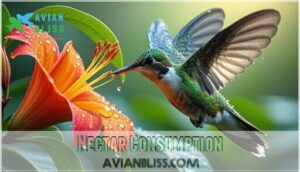
You’ll discover nectar sugar provides essential energy for tiny powerhouses like hummingbirds.
Nature’s aerial acrobats fuel their high-speed lives with liquid gold from flowers.
These bird distinctive feeding behaviors showcase remarkable energy expenditure – visiting over 1,000 flowers daily.
Coevolutionary relationships between birds and plants create fascinating floral preferences, with ideal nectar containing 20-25% sugar content.
Understanding the ideal sugar concentration is key for providing supplemental food sources.
This specialized nectar feeding drives vital pollination ecology, as birds pollinate numerous plant families while sustaining their high-energy lifestyles, which is a result of their unique relationship with floral preferences and need for essential energy.
Insect Foraging
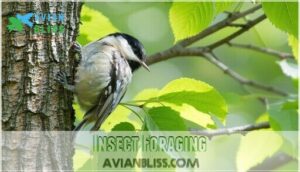
While nectar provides quick energy, you’ll notice small birds also excel at insect hunting through specialized foraging techniques.
These insectivorous diet experts use gleaning, sallying, and flycatching strategies for efficient foraging.
Their prey selection varies seasonally – chickadees consume 100% of their body weight in insects daily during breeding season.
Bird foraging strategies adapt to habitat, with insectivore adaptations like fine beaks targeting specific seasonal insects effectively.
Seed Eating

You’ll watch seed eaters like finches display remarkable cracking techniques with their specialized beaks.
These small bird diet experts prefer nyjer and sunflower seeds, skillfully extracting nutrition from tough shells.
Winter diet survival depends on seed caching behaviors, where birds store thousands of seeds in bark crevices.
You can find quality finch feed at many online retailers.
This finch seed eating also promotes seed dispersal, supporting forest regeneration through their specialized seed diet habits.
Fruit Consumption
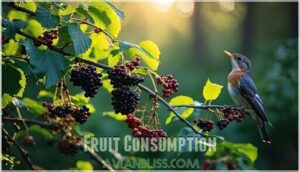
You’ll notice small birds have fruit preferences that change throughout the year.
Seasonal availability drives their choices, with fermented fruits sometimes causing intoxication in spring.
These bird feeding habits support essential seed dispersal for plants.
- Berry selection: Small bird species prefer soft, colorful fruits like elderberries and serviceberries
- Nutritional benefits: Fruits provide essential sugars and vitamins for energy and health
- Foraging techniques: Birds use specialized methods to access different fruit types efficiently
- Ecological impact: Small bird diet includes fruits that promote forest regeneration through dispersal
Bird Social Interactions

You’ll discover that small birds create complex social worlds through their songs, calls, and behaviors.
From territorial disputes marked by aggressive displays to intricate courtship rituals that strengthen pair bonds, these tiny creatures demonstrate sophisticated communication systems that rival larger species, showing complex social structures.
Melodious Songs
Through dawn’s chorus, you’ll hear songbirds create nature’s symphony with remarkable song complexity.
These melodious songs serve multiple functions—territorial defense, mate attraction, and social bonding. Each species develops regional dialects, making bird communication uniquely local.
During breeding season, males intensify their vocal learning, producing more elaborate breeding songs. Songbird vocalizations can include over 1,000 distinct sounds, showcasing incredible bird songs diversity across species, with a remarkable ability to create nature’s unique melodies.
Aggressive Behavior
While songs create harmony among birds, their fierce side emerges when protecting what’s theirs.
You’ll witness territorial defense as small birds chase intruders from feeding areas and nesting sites. Resource competition drives aggressive encounters, especially during breeding season.
Dominance displays include raised crests, puffed feathers, and sharp calls. Nesting aggression intensifies when eggs or chicks face threats, triggering bold confrontations with larger species, which can lead to a display of fierce side.
Mating Rituals
You’ll find that mating rituals in small birds showcase remarkable complexity during breeding season.
Courtship feeding strengthens pair bonds as males offer food to potential mates, and dance displays include synchronized wing flaps and aerial loops.
Vocal complexity reaches extraordinary levels with over 1,000 distinct variations, and mutual preening reinforces partnerships.
Territory defense becomes essential for securing prime nesting sites and attracting quality partners, and birds also exhibit complex social structures during this time, showcasing their complex social behavior and remarkable complexity in a breeding season.
Social Structure
Across species, you’ll observe fascinating bird social structure variations that shape daily survival.
Small birds form tight-knit communities through flock dynamics, where territory defense becomes essential during breeding seasons.
Communication calls coordinate group movements while pair bonding strengthens through cooperative breeding efforts.
These avian social interactions demonstrate how social birds navigate complex relationships within their flocking behavior systems, showcasing cooperative breeding efforts and the importance of territory defense.
Ecological Bird Roles

You’ll discover that small birds aren’t just pretty creatures flitting through your yard—they’re ecological powerhouses working around the clock.
These tiny aviators pollinate flowers, control insect populations, and maintain nature’s delicate balance through their specialized adaptations and remarkable flight abilities.
Pollination Support
You’ll discover hummingbirds are nature’s tiny powerhouses for plant reproduction.
These small bird species create essential connections through nectar transfer and pollen dispersal during floral visitation.
Their specialized feeding supports plant reproduction across diverse ecosystems, making them essential pollinators.
- Ruby-throated hummingbirds hovering at trumpet-shaped cardinal flowers, their beaks perfectly sized for deep nectar access
- Tiny bodies covered in golden pollen dust after visiting bright orange bee balm clusters
- Iridescent feathers catching sunlight as they dart between native honeysuckle blossoms
- Rapid wing beats creating a soft hum while transferring pollen between delicate morning glory blooms
- Multiple bird species diversity working together, from Anna’s hummingbirds to broad-tailed varieties, each adapted for specific flower shapes, showcasing diverse ecosystems and plant reproduction.
They exhibit unique characteristics, such as rapid wing beats, which enable them to fly and maneuver with precision, making their role in pollen dispersal even more critical.
Ecosystem Balance
You’ll discover small birds maintain ecosystem balance through interconnected roles.
These keystone species control insect populations, disperse seeds across landscapes, and support pollination networks.
Their feeding habits create stable food webs while promoting habitat health.
When you observe avian diversity in your area, you’re witnessing nature’s pest control system at work, ensuring ecological balance through natural processes.
Flight Capabilities
You’ll witness nature’s most impressive engineering when observing small birds’ flight capabilities.
Small birds defy physics with wings that beat impossibly fast, turning air into their personal highway.
Their specialized flight muscles generate extraordinary power, enabling hovering ability and precise aerial maneuvers that seem to defy physics.
- Wing beats: Hummingbirds achieve 50-80 beats per second, creating the rapid wing movement necessary for stationary flight
- Flight speed: Small birds reach remarkable velocities during migration endurance journeys spanning thousands of miles
- Bird flight aerodynamics: Streamlined bodies and optimized bird flight patterns maximize efficiency while minimizing energy expenditure
These adaptations showcase bird flight maneuverability at its finest.
Birds also utilize lift and thrust to stay aloft.
Adaptation Strategies
Many small bird species master survival through sophisticated bird adaptations.
You’ll witness their remarkable caching behavior as chickadees store thousands of seeds for winter.
These bird behavior patterns include dramatic dietary shifts from insects to fruits seasonally.
Territory defense becomes fierce during breeding, while vocal complexity reaches extraordinary levels—some species produce over 1,000 distinct calls.
Allopreening strengthens social bonds, ensuring these bird survival strategies work across diverse bird habitats.
Frequently Asked Questions (FAQs)
What are the behaviors of birds?
You’ll observe birds exhibiting diverse behaviors including melodious songs for territorial marking and mate attraction.
Intricate foraging strategies, social flocking patterns, elaborate courtship displays, nest construction, aggressive dominance signaling, and remarkable migration patterns spanning continents are also exhibited by birds, showcasing their diverse behaviors.
What are stereotypical behaviors in birds?
Like busy choreographers directing an endless ballet, you’ll see birds perform predictable rituals daily.
They’ll follow set feeding schedules, establish territorial boundaries, engage in specific mating displays, build nests in familiar patterns, and migrate along inherited routes with clockwork precision.
Do small birds have emotions?
Research suggests small birds likely experience basic emotions.
They show fear responses, pair bonding behaviors, and stress reactions similar to mammals.
They demonstrate excitement during mating, anxiety around predators, and contentment while foraging together.
What are the unusual behavior of birds?
Like tiny acrobats performing impossible stunts, birds display fascinating unusual behaviors.
You’ll witness tool use, mimicry, dancing courtships, caching thousands of food items, and some species even getting intoxicated from fermented fruits, which includes mimicry.
How do small birds survive harsh winter weather?
Small birds survive winter through clever strategies you’d find impressive: they cache up to 10,000 food items.
They switch from insects to energy-rich seeds and berries, grow extra feathers for insulation.
They also huddle together in communal roosts to share body heat and cache food for survival.
What predators pose greatest threats to small birds?
You’ll find cats, hawks, and owls are your biggest worries.
Domestic cats kill billions of small birds yearly, while raptors like Cooper’s hawks specialize in backyard hunting.
Snakes also raid nests for eggs and chicks.
How long do most small bird species live?
Studies show 80% of small birds live under 5 years in the wild. You’ll find most songbirds, finches, and chickadees survive 2-4 years, though some species reach 8-10 years with ideal conditions.
When is peak breeding season for small birds?
You’ll find most small birds hit their breeding groove during spring and early summer, typically March through July.
This timing perfectly matches when food becomes abundant and weather conditions favor raising young successfully.
How do small birds navigate during long migrations?
You’ll find that small birds use multiple navigation tools during migration.
They rely on the sun’s position, star patterns, Earth’s magnetic field, and geographical landmarks like coastlines and mountain ranges to guide their incredible journeys, utilizing the sun’s position as one key factor.
Conclusion
Like tiny feathers scattered by wind, small bird species behaviors weave intricate patterns across our natural world.
You’ve discovered how these remarkable creatures adapt through specialized feeding techniques, navigate vast distances, and communicate through complex social systems.
Their behaviors demonstrate millions of years of evolutionary refinement, from hummingbirds’ precision hovering to chickadees’ memory-based caching strategies.
Understanding small bird species behaviors enriches your appreciation for nature’s complexity and helps you become a more observant wildlife enthusiast in any environment, allowing for a deeper connection with the natural world and its complex social systems.
- https://ourhabitatgarden.org/home/creatures/birds/behaviors/
- https://celebrateurbanbirds.org/faq/what-do-birds-eat/
- https://blog.nwf.org/2015/01/love-is-in-the-air-courtship-behavior-in-backyard-birds/
- https://www.allaboutbirds.org/news/how-do-birds-fall-in-love-a-look-at-courtship-displays/
- https://www.feathersnapcam.com/blog/post/mating-and-courting-behavior