This site is supported by our readers. We may earn a commission, at no cost to you, if you purchase through links.
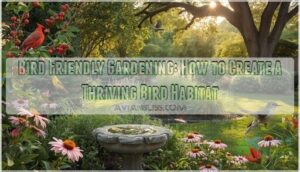
Most gardeners don’t realize that suburban and urban landscapes have become critical refuges for bird populations facing habitat loss across North America, with residential yards now supporting over 60% of breeding bird diversity in many regions. When you transform your garden into a bird-friendly habitat through strategic native plantings, layered vegetation structures, and sustainable water features, you’re not just attracting colorful visitors—you’re participating in a vital conservation network that helps migratory species complete their journeys and resident birds thrive year-round becomes Most gardeners don’t realize that suburban and urban landscapes have become critical refuges for bird populations facing habitat loss across North America, with residential yards now supporting over 60% of breeding bird diversity in many regions. When you transform your garden into a bird-friendly habitat through strategic native plantings, layered vegetation structures, and sustainable water features, you’re not just attracting colorful visitors—you’re participating in an essential conservation network that helps migratory species complete their journeys and resident birds thrive year-round. The key lies in understanding how birds use different garden elements throughout the seasons, from the dense evergreen thickets that provide winter shelter to the berry-laden shrubs that fuel autumn migrations. By designing with ecological relationships in mind rather than simply scattering birdseed, you’ll create a self-sustaining habitat where native plants support the insects, seeds, and fruits that birds have evolved to depend on.
Table Of Contents
- Key Takeaways
- Planning Your Bird-Friendly Garden
- Choosing Native Plants for Birds
- Providing Food and Shelter
- Adding Water Features for Birds
- Maintaining a Healthy Bird Habitat
- Frequently Asked Questions (FAQs)
- How do I create a bird friendly garden?
- What plants are good for birds in the garden?
- How to build a bird friendly garden?
- What is the best bird attractor?
- How do I keep cats away from birds?
- When should I clean my bird bath?
- What plants are toxic to birds?
- How close can feeders be to windows?
- Do bird houses need specific entrance holes?
- How do I protect birds from window collisions?
- Conclusion
Key Takeaways
- Residential yards now support over 60% of breeding bird diversity in many North American regions, making suburban gardens critical conservation refuges that function as biological bridges connecting fragmented habitats for both migratory and resident species.
- Creating effective bird habitat requires layered vegetation structures from ground covers to tall trees, native plant species that support insects and natural food sources, and clean water features—all maintained without pesticides that would eliminate the caterpillars and invertebrates essential for feeding nestlings.
- Strategic native plant selection based on your specific microclimate zones (sun exposure, soil moisture, drainage patterns) transforms yards into self-sustaining ecosystems where oaks, serviceberries, and berry-producing shrubs provide year-round food while evergreen thickets offer critical shelter and nesting sites.
- Maintaining bird-friendly gardens means leaving seedheads standing through winter for natural food sources, retaining dead trees (snags) that provide essential cavity-nesting habitat, building brush piles for shelter, and removing invasive species that crowd out the native plants local bird populations have evolved to depend upon.
Planning Your Bird-Friendly Garden
Before you plant a single seed or shrub, you’ll need to take a hard look at what your garden space actually offers and what it lacks. Understanding your site’s sun exposure, soil moisture, and natural contours will determine which native plants can thrive and attract the birds you want to support.
For instance, sunny slopes with well-drained soil are perfect for nectar-rich wildflowers that draw species like the Allen’s hummingbird during migration and breeding season.
Start by evaluating these three essential elements of your garden’s foundation.
Assessing Sun, Shade, and Soil Conditions
Before you choose native plant species that transform your space into one of the region’s essential wildlife corridors, you’ll need to conduct thorough soil assessment and shade mapping to understand your garden’s unique potential.
Observe sun patterns throughout the day, noting areas receiving full sun (six-plus hours), partial sun (three to six hours), or shade (under three hours), as these zones directly influence microclimate analysis and determine which birdfriendly habitats you can establish through strategic garden zoning and native plant gardening.
Mapping Garden Space and Microclimates
Once you’ve documented sun exposure, your next step in ecosystem planning and garden design is to create a labeled sketch recording permanent features—buildings, trees, fences—that anchor microclimate analysis and climate zones. Map slopes, low points, and sheltered pockets where water collects or drainage accelerates, then color-code these garden mapping zones so native plant species placement becomes logical, transforming raw soil assessment data into actionable wildlife corridors and bird-friendly habitats.
- Track daily sun exposure across the yard to create full sun, partial shade, and deep shade zones.
- Note soil moisture differences after rainfall to mark well-drained and clay or compacted pockets.
- Record wind exposure in openings and sheltered areas using simple observations over one week.
- Map topography features such as slopes and low points influencing water flow and frost pockets. Strategic planning can be informed by understanding key.
- Create a labeled sketch showing permanent structures to anchor your native plant gardening microclimate zones.
Creating Layered Plantings for Birds
Your mapped zones now set the stage for vertical structure—the layered canopy that transforms flat lawn into habitat complexity.
Stack tall trees above medium shrubs, ground covers below, weaving plant diversity across height to create microclimate creation and dispersed nesting sites. This stratified native plants approach mimics woodland edge ecology, drawing more species into your birdfriendly garden than any scattered plant selection for wildlife or standalone bird feeders ever could.
To further support wildlife, incorporating techniques based on layering plants for wildlife ensures habitat diversity and natural pest control.
Choosing Native Plants for Birds
Native plants form the backbone of any successful bird habitat, providing the food sources and shelter that local species have evolved to depend on.
These plants also influence where birds choose to build their nests, offering safe locations within branches, shrubs, and dense foliage.
When you choose plants that are indigenous to your region, you’re not just creating a garden—you’re rebuilding the natural ecosystem that sustains everything from caterpillars and pollinators to the birds that rely on them.
Planting native species rebuilds the ecosystem that sustains caterpillars, pollinators, and the birds that depend on them
The following sections will guide you through selecting the right trees, shrubs, flowers, and seed-bearing plants to transform your yard into a thriving avian sanctuary.
Selecting Local Trees and Shrubs
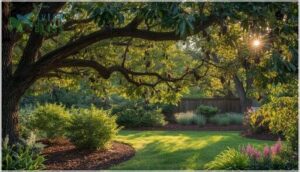
Selecting native trees and shrubs adapted to zone 7 conditions in Ashburn transforms your yard into a habitat powerhouse that nurtures local avian populations through all seasons. You’ll want to prioritize species like native oaks (Quercus spp.), maples (Acer spp.), and serviceberries (Amelanchier spp.) that tolerate hot summers, occasional drought, and winter lows near 0°F while providing acorns, seeds, and berries that sustain songbirds year-round.
- Match soil compatibility by testing drainage and pH levels between 5.5 and 7.5 before purchasing
- Plan for mature canopy spread with 10 to 15 feet setback from structures and utilities
- Select disease-resistant cultivars that host caterpillars while minimizing pesticide needs for bird-friendly garden success
Nectar-Rich Flowers for Hummingbirds
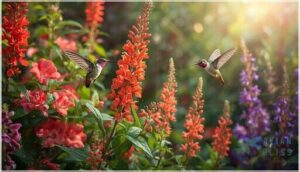
Hummingbirds zero in on tubular blooms bursting with nectar, particularly red and orange flowers that signal high-energy rewards in your bird friendly garden.
You’ll attract ruby-throats and other pollinators by planting cardinal flower (Lobelia cardinalis), trumpet vine (Campsis radicans), native salvias (Salvia spp.), beebalm (Monarda), and penstemon species that deliver concentrated sugar solutions while supporting caterpillar populations that feed nestlings throughout summer months.
Berry and Seed-Producing Plants
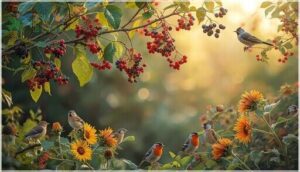
Berry crops transform your garden into a year-round avian cafeteria, with native plants like elderberry (Sambucus), serviceberry (Amelanchier), and California toyon berries (Heteromeles arbutifolia) fueling fruit production that nourishes thrushes, waxwings, and cedar-waxwings through seed dispersal cycles that strengthen local bird populations and garden ecology.
While attracting seed-eating birds such as finches and sparrows to persistent seedheads that sustain biodiversity during winter scarcity, creating resilient plant pollination networks.
Providing Food and Shelter
Your garden becomes a true bird sanctuary when it consistently offers what birds need most: reliable food throughout the year and safe places to rest, nest, and hide from predators.
The plants you choose determine whether birds visit occasionally or make your yard their permanent home, so understanding how to provide both sustenance and protection is essential. Here’s how to structure your plantings to meet these critical needs across all four seasons.
Planting for Year-Round Food Sources
You’ll want to think beyond the typical summer harvest and choose native plants that provide food across all seasons, supporting bird populations when they need it most.
Plant cool-season crops like kale alongside perennial fruiting species such as berry bushes, then incorporate nectar-rich flowers (sunflowers, salvia) with staggered bloom times to maintain biodiversity and food source diversity while supporting pollinator networks essential for sustainable gardening and seedeating birds year-round.
Creating Shelter With Evergreens and Thickets
Dense hedges and evergreen windbreaks act as lifelines for birds seeking refuge from predators and harsh weather, with native plant species like juniper, pine, and holly providing year-round shelter within bird-friendly habitats.
You can design a roosting thicket by layering diverse evergreen shrubs at varying heights, creating wildlife corridors and connectivity that allow songbirds to move safely between feeding areas and protective cover while supporting broader ecosystems.
Preserving Dead Trees and Natural Roosts
Standing dead trees, known as snags in wildlife conservation circles, transform your garden into a vibrant roosting habitat where woodpeckers, owls, and cavity-nesting songbirds find essential shelter and abundant insect prey within the tree decay process.
- Retain stable snags to provide natural nesting boxes and reduce dependence on artificial structures in bird friendly gardens
- Monitor dead wood management practices to balance safety concerns with wildlife preservation near pathways and structures
- Preserve hollow trunks and decaying limbs that support diverse insect populations critical to snag ecology
- Designate buffer zones around retained dead trees to maintain wildlife habitat while protecting high-traffic areas
- Recognize that standing dead wood supplies long-term roosting sites and foraging platforms for multiple bird species
Adding Water Features for Birds
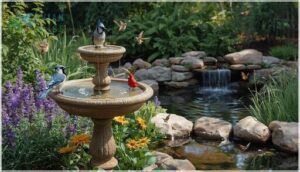
Water is just as essential to birds as food and shelter, drawing everything from songbirds to hummingbirds into your garden throughout the year. Whether you install a simple bird bath or create a small pond with shallow edges, you’re offering birds a critical resource they need for drinking, bathing, and cooling off during hot weather.
The following sections will guide you through selecting, installing, and maintaining water features that keep your feathered visitors coming back.
Installing Bird Baths and Small Ponds
A birdbath or small pond transforms your garden into a critical water source that draws species from blocks away.
When constructing these features, you’ll want to choose flexible pond liners on smooth, compacted sand underlayment to prevent punctures, while shallow zones (1 to 4 inches deep) with gradual slopes guarantee bird bath safety and easy access for even the smallest visitors seeking refuge.
Maintaining Clean and Safe Water Sources
After you install your birdbath or pond, consistent upkeep protects avian visitors from disease transmission and ensures your water features for wildlife remain safe havens rather than pathogen reservoirs. Regular water testing confirms total coliform levels stay at zero per 100 mL, while mechanical filtration systems paired with UV sterilizers remove sediment and inactivate bacteria without chemical additives that might compromise BirdFriendly Habitats.
- Replace water every two to three days to prevent mosquito breeding and bacterial growth
- Scrub surfaces with a stiff brush and rinse thoroughly to remove biofilm and algae
- Position your BirdFriendly Fountain or birdbath away from overhanging branches that drop debris
- Implement source protection by fencing livestock away from ponds to prevent waste contamination
Enhancing Water Areas With Aquatic Plants
Beyond routine cleaning, you can transform your water source into a resilient Aquatic Ecosystem by introducing Native Aquatics like cattails (Typha latifolia) and pickerelweed (Pontederia cordata), which filter nutrients to improve Water Quality while providing insect habitat critical for Gardening for Wildlife.
This approach to Pond Management mirrors principles of Wetland Restoration, establishing layered BirdFriendly Habitats where Native Plant Species and Ecosystems support wildlife habitat year-round.
Maintaining a Healthy Bird Habitat
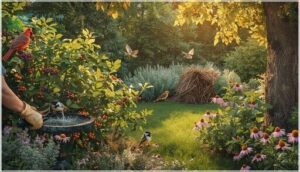
Once you’ve built a welcoming garden for birds, the real work begins in keeping it healthy and functional throughout the year. Your habitat won’t thrive on autopilot—it needs thoughtful care that protects the insects, seeds, and shelter birds depend on.
The following practices will help you maintain a space where local bird populations can flourish season after season.
Avoiding Pesticides and Chemicals
Eliminating pesticides from your garden protects the very insects that sustain breeding birds and their nestlings, creating a truly chemical-free sanctuary rooted in sustainable practices and environmental sustainability. Instead of broad-spectrum chemicals that compromise organic gardening principles, you’ll want to implement these ecofriendly gardening approaches:
- Deploy natural barriers such as row covers and floating fabric to exclude pests without toxins
- Introduce beneficial insects (Coccinellidae, lacewings) for biological pest control
- Practice crop rotation and companion planting to disrupt pest life cycles naturally
- Hand-pick visible pests during early morning hours when they’re less mobile
These sustainable gardening practices support native plant conservation while maintaining healthy, insect-rich habitats that local avian populations depend upon throughout their annual cycles.
Removing Invasive Weeds
Just as toxic chemicals harm birds, invasive species disrupt ecosystem balance and accelerate habitat loss, crowding out the native plants that sustain biodiversity conservation.
You’ll need sharp weed identification skills to spot these ecological troublemakers early, then remove them by hand or with targeted tools while protecting surrounding natives. Apply a three- to four-inch mulch layer afterward for soil remediation, suppressing future invaders while enriching your bird sanctuary through natural decomposition and moisture retention.
Retaining Seedheads and Brush Piles
After removing invasive weeds, embrace Winter Habitat Creation by leaving seedheads on native plants like coneflowers and goldenrod—they’ll feed finches and sparrows through late winter while reducing yard waste by thirty to fifty percent.
Build a compact Brush Pile Management structure three to six feet wide using mixed branch sizes, creating Bird Shelter Strategies that support Ecosystem Maintenance and Biodiversity Conservation for your wildlife habitat.
Seasonal Garden Care for Birds
Throughout the year, Seasonal Pruning and seasonal garden planning support Bird Migration and Garden Renewal by delaying major cuts until after nesting, leaving berry-laden shrubs intact through winter, and rotating feeders to broaden foraging patterns—practices that strengthen Wildlife Conservation, Ecosystem Balance, and your bird watching success.
While providing food and water for birds in a thriving, self-sustaining wildlife habitat created through thoughtful gardening for birds.
Frequently Asked Questions (FAQs)
How do I create a bird friendly garden?
You create a bird-friendly garden by selecting native plants that provide food and shelter.
Install clean water sources, layering vegetation from trees to ground cover, and avoid pesticides to maintain ecosystem balance.
What plants are good for birds in the garden?
Your bird friendly garden thrives with native plants like serviceberry, elderberry, and salvia, which supply nectar, berries, and seeds while attracting pollinators and supporting local plant species that sustain diverse wildlife year-round.
How to build a bird friendly garden?
Start by mapping your garden’s sun, shade, and soil drainage zones, then layer native trees, shrubs, and perennials that supply food, shelter, and water sources year-round while avoiding pesticides.
What is the best bird attractor?
A clean water source attracts the widest variety of species, supporting daily drinking and bathing behavior, while native shrubs and layered plantings create essential shelter, food, and nesting sites that encourage year-round visits.
How do I keep cats away from birds?
Install motion sensors and fencing strategies around bird feeders and nesting boxes.
Plant cat deterrents like rue (Ruta graveolens), and use predator protection measures including elevated feeding stations for maximum bird safety in wildlife gardening.
When should I clean my bird bath?
You’ll want to scrub your bird bath at least weekly during warm months to prevent algae buildup, though daily water changes during heavy use keep things fresh and support bird conservation in your backyard birdwatching space.
What plants are toxic to birds?
Several common ornamental plants, including yew (Taxus species), oleander (Nerium oleander), azaleas (Rhododendron species), and dieffenbachia, pose serious risks to avian visitors.
They all contain cardiotoxic compounds or irritant compounds that trigger poisoning symptoms in birds.
How close can feeders be to windows?
Like a reflection that deceives migrating warblers, glass can trap your feathered visitors in fatal confusion.
Position bird feeders at least 5 feet from windows to reduce collision risk and improve glass visibility for safer bird watching.
Do bird houses need specific entrance holes?
Yes, cavity nesters require specific entrance hole diameters—Eastern bluebirds need 1½ to 1¾ inches, chickadees prefer 1⅛ to 1¼ inches, while house sparrows exploit larger openings, potentially excluding desirable species from your bird-friendly gardening efforts.
How do I protect birds from window collisions?
Apply exterior window decals or films with patterns spaced at 2 inches by 2 inches to reduce window strikes by up to 95 percent, preventing wildlife collisions while maintaining your home’s visual appeal.
Conclusion
Your garden’s greatest gift goes beyond the beauty of birdsong—it becomes a biological bridge that connects fragmented habitats across your region, allowing warblers, thrushes, and finches to find the resources they’ve evolved to depend on.
Bird friendly gardening transforms ordinary yards into conservation corridors where native plants, clean water, and chemical-free practices create ecosystems that sustain both resident and migratory species through every season’s challenges and rewards.