
This site is supported by our readers. We may earn a commission, at no cost to you, if you purchase through links.
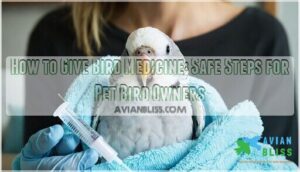 When you’re figuring out how to give bird medicine, start by wrapping your bird in a soft towel—think of it like a tiny burrito, but with feathers.
Hold your bird gently, keeping wings and feet tucked in. Use an oral syringe or dropper to measure the right dose. Aim the tip at the side of the beak, not straight down the throat, to avoid choking.
Go slow, letting your bird swallow at its own pace. Afterward, offer comfort and a favorite treat. Giving medicine can ruffle feathers, but with patience, you’ll both get the hang of it.
Curious about stress-free techniques?
Table Of Contents
- Key Takeaways
- Bird Medication Basics
- Giving Bird Medicine
- Pre Medication Preparation
- Administering Bird Medicine
- Post Medication Care
- Frequently Asked Questions (FAQs)
- How to give birds medicine?
- Is it safe to give a bird liquid medication?
- How do you give a bird a syringe?
- How do you take care of a bird after taking medicine?
- Can a bird eat a double dose of medication?
- How should I administer liquid medication to my parrot?
- How to restrain a bird for medication?
- How to feed a sick bird with a syringe?
- What do you give a bird when they are sick?
- How to give a tablet to a bird?
- Conclusion
Key Takeaways
- Wrap your bird in a towel like a burrito – This keeps wings and feet secure while leaving the head exposed for safe medication access.
- Use a needleless syringe positioned at the side of the beak – Aim toward the right side of the throat, never straight down, to prevent choking and aspiration.
- Go slow and let your bird swallow between doses – Rushing can cause choking, so give small amounts and wait for your bird to swallow naturally.
- Always consult your vet for proper dosage and watch for side effects – Never guess at medication amounts, and monitor your bird closely for breathing issues or behavioral changes after treatment.
Bird Medication Basics
Administering medication to your pet bird requires understanding their unique needs and following proper safety protocols.
Birds have a normal body temperature of 104-105°F and each has distinct temperament traits that affect how they’ll respond to treatment, so always consult your veterinarian before giving any medication.
Every bird’s unique personality means your medication approach needs to match their temperament for success.
Normal Body Temperature
Birds maintain body temperatures between 106°F and 109°F, roughly 4-8 degrees higher than humans.
Understanding temperature regulation helps you recognize fever symptoms and hypothermia risks during bird medication. Species variation affects normal ranges—songbirds run hotter than waterfowl. Environmental impact matters too, as desert birds tolerate extreme heat better.
Your bird vet monitors these baselines for proper avian medicine dosing and bird health assessment. Recent studies show that heat tolerance varies substantially across species.
Unique Temperament Considerations
Understanding each bird’s personality helps create a smoother medication experience.
Some birds are naturally calm while others get anxious easily.
Building trust through gradual exposure reduces fear during handling.
Use positive reinforcement like treats to make the process less stressful.
Recognizing your bird’s temperament allows you to adjust your approach, making administering medicine safer and more effective for everyone involved.
Teaching them to accept medicine can help reduce stress and fear and create a more fear-free environment with less stress.
Importance of Veterinary Consultation
Every bird has its own quirks, but in matters of bird medication, don’t play doctor at home.
An avian veterinary expert provides an expert diagnosis, proper dosage, and customized treatment for your pet.
Avoid self-medication—guesswork can lead to prevent complications or bird medication side effects.
Trust your veterinarian for safe bird medication dosage and peace of mind.
Giving Bird Medicine
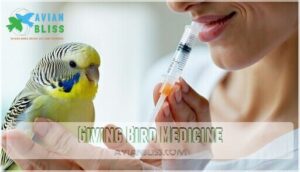
Administering bird medication requires patience and the right approach. Your feathered friend won’t simply swallow a pill like other pets, so you’ll need to master liquid delivery techniques that keep both of you safe and stress-free.
Most veterinarians recommend liquid medications because they’re easiest to control and measure. You can mix some medicines with food or water, though this isn’t always reliable since birds often detect the change and refuse to eat or drink.
Here’s what works best for medicating birds:
- Direct oral administration using a needleless syringe for precise dosing
- Food mixing with favorite treats to mask medication taste
- Water supplementation for flock situations (less reliable for individual dosing)
- Injectable methods reserved for severe cases under veterinary supervision
Bird medication compliance improves when you stay calm and move slowly. Some owners explore herbal remedies or nutritional support as alternative therapies, but always consult your vet first.
Digestive issues can sometimes require specific bird medications to resolve the underlying problem. Remember, successful medicating birds depends on your technique and their comfort level with the process.
Pre Medication Preparation
Before giving your bird medication, you’ll need to gather the right tools and calculate the proper dose.
Getting these basics right makes the actual administration much smoother and safer for both you and your feathered friend, as it ensures a correct and smooth process.
Consult Veterinarian for Dosage
Before anything else, you’ll need professional guidance on bird dosage and medication specifics.
Your veterinarian will determine the exact dosage based on your bird’s weight, species, and condition.
They’ll also check for medication interactions and explain treatment duration.
Don’t guess – dosage accuracy matters tremendously for your feathered friend’s safety and recovery.
Prepare Medication and Tools
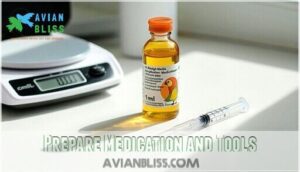
Before administering bird oral medication, gather your essential supplies for safe tool preparation.
You’ll need a small 1ml needleless syringe for precise dosage calculation, ensuring scale accuracy when measuring your bird’s weight.
Shake the medication thoroughly and remove air bubbles from the syringe.
Prepare everything in advance – medication storage should be at room temperature, and having your bird syringe ready minimizes stress during the actual administration process, ensuring a smoother experience with precise dosage calculation.
Weighing The Bird for Accurate Dosage

Getting the right dose starts with accurate weighing. Your bird’s weight determines medication safety, so precision matters more than you might think.
- Scale Accuracy: Use a digital scale that measures to the nearest gram for small birds.
- Bird Size: Place smaller birds in a clear plastic container to reduce stress during weighing.
- Weighing Frequency: Weigh before each medication cycle to account for weight changes.
- Stress Reduction: Work in a dimly lit, quiet area to keep your bird calm.
- Weight Changes: Monitor for fluctuations that could indicate health issues requiring dosage adjustments. Significant weight loss can be an indicator of underlying health problems requiring immediate veterinary attention.
Choosing The Right Syringe

Once you’ve weighed your bird, selecting the right syringe guarantees accurate bird dosage calculation.
Choose a 1ml needleless syringe with a cone-shaped tip for precise bird medication administration. The oral syringe’s material safety and volume accuracy matter most for effective treatment.
Many owners find it useful to source a bird-specific 1ml syringe for accurate dosing.
| Syringe Feature | Best Choice |
|---|---|
| Syringe Size | 1ml/cc for accuracy |
| Tip Shape | Cone-shaped for control |
| Needleless Options | Always use needle-free |
| Material Safety | Medical-grade plastic |
Administering Bird Medicine
Now that you’re ready to give your bird medicine, proper technique makes all the difference between success and stress.
You’ll need to hold your feathered friend securely while delivering the medication safely into their beak, using a method that ensures success.
Holding The Bird Correctly
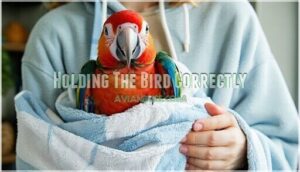
With your supplies ready, proper bird handling becomes your next focus.
Think of yourself as creating a safe cocoon – your bird needs to feel secure without being squeezed.
Here are three key bird restraint techniques:
- Towel Technique – Wrap your bird snugly in a soft towel, leaving only the head exposed for easy access
- Barehand Method – Cup your palm around the bird’s back while your thumb and fingers gently secure the head
- Breathing Comfort – Keep hands away from the chest area to guarantee your bird can breathe freely
A Secure Grip means firm but gentle control.
You’re aiming for that sweet spot where your bird can’t escape but isn’t panicked.
Minimizing Stress starts with confidence – birds pick up on your energy, so stay calm and move deliberately.
For an alternative, consider using a specialized bird wrap for added security.
Injecting Medicine Into The Beak

Once you’ve secured your bird, position the syringe on the left side of the beak, aiming toward the right side of the throat. This Syringe Placement guarantees Esophagus Access while providing Aspiration Prevention.
Gently lift the upper Mandible Lifting to facilitate bird medication swallowing. Insert the syringe tip barely into the mouth and use Flow Control for safe bird injection.
| Placement Tips | Safety Focus | Technique Notes |
|---|---|---|
| Left side of beak | Avoid trachea entry | Aim toward throat’s back |
| Minimal insertion depth | Prevent aspiration risk | Use steady, gentle pressure |
| Target esophagus opening | Guarantee proper swallowing | Monitor bird’s response closely |
Preventing Choking and Spillage
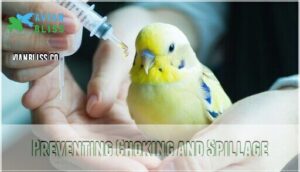
As you inject medicine into your bird’s beak, keep the head slightly raised—think “chin up”—to help the swallowing reflex kick in.
Go slow with the syringe; fast injection speed can lead to bird choking or even aspiration risks, like aspiration pneumonia.
Watch the dosage volume, and let your bird swallow before giving more, as patience beats a messy spillage.
Monitoring for Adverse Reactions
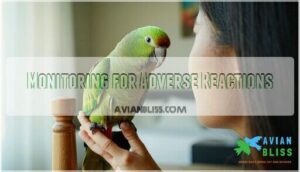
After giving your bird medicine, watch closely for any signs that something’s wrong. Your feathered friend mightn’t show problems right away, so stay alert for the next few hours.
Stay nearby after medicating—sometimes the first signs of trouble show up when you least expect it.
- Breathing troubles: Look for panting, wheezing, or unusual chest movements that signal bird breathing difficulties
- Behavioral changes: Notice if your bird becomes unusually quiet, refuses food, or acts differently than normal
- Physical symptoms: Check for vomiting, diarrhea, or loss of balance that might indicate toxicity signs
These side effects can pop up minutes or hours later – delayed symptoms are tricky that way. If you spot allergic reactions like swelling or severe bird stress, contact your vet immediately. Sometimes dosage adjustment is needed, and catching bird medication complications early prevents serious problems. Trust your instincts about your bird’s condition.
Post Medication Care

After giving your bird medicine, you’ll want to help it recover from the stressful experience. Proper post-medication care can make future treatments easier and keep your feathered friend comfortable.
Providing Comfort and Warmth
After medication, your feathered friend needs comfort like a warm hug.
Create a Quiet Environment by dimming lights and reducing noise. Gentle Cleaning with a damp cloth removes any spilled medicine from feathers.
Provide warmth using a heating pad or cozy blanket. Consider using a specialized heating device for ideal comfort.
This bird comfort approach helps with Reducing Stress and promotes healing through Safe Handling and Positive Reinforcement techniques.
Reducing Stress and Anxiety
After making sure your bird is cozy, focus on stress reduction.
Use Calming Techniques like gentle talking or soft music.
Positive Reinforcement—think a favorite treat—can help with bird medication stress management.
Minimize Restraint and keep a Comfortable Environment.
Gradual Exposure to the syringe or medicine routine helps with avian anxiety, making bird medication calm administration much easier for both of you.
Recognizing behavioral signs of stress is essential for their well-being.
Monitoring for Side Effects
Once your bird has calmed down, keep a close eye out for Behavioral Changes, Appetite Loss, Feather Changes, or Breathing Difficulty.
Watch for Vomiting Signs too. Jot down anything odd and check daily weight.
Good bird care means noting even small shifts. If you spot anything worrying, contact your avian vet.
Medication safety always beats guessing games.
Rewarding The Bird for Cooperation
Your bird’s cooperation deserves recognition through positive reinforcement. Offering a favorite bird medication treat immediately after successful medication creates positive associations, making future sessions easier. The timing of rewards matters most for building trust effectively.
- Select high-value treats like millet spray or sunflower seeds that your bird rarely gets otherwise
- Engage in bird medication play or gentle bird medication talk sessions to rebuild your bond after stressful medication times
- Create bird medication positive association by consistently pairing the medicine routine with something your bird loves, avoiding punishment entirely
Frequently Asked Questions (FAQs)
How to give birds medicine?
Like threading a needle in a hurricane, medicating birds requires steady hands and patience.
You’ll hold your feathered friend in a towel, position a needleless syringe along the left beak side, and slowly inject medicine toward the right throat, allowing gradual swallowing, which is a process that demands patience.
Is it safe to give a bird liquid medication?
Yes, liquid medication is safe for birds when given properly.
You’ll need to administer it slowly using a needleless syringe, positioning it carefully to avoid the bird’s airway and prevent choking or aspiration pneumonia.
How do you give a bird a syringe?
Sarah’s cockatiel initially panicked when she approached with the syringe, but wrapping him gently in a towel helped.
Hold your bird securely, insert the syringe from the beak’s side, and slowly dispense medication while allowing time to swallow.
How do you take care of a bird after taking medicine?
After giving your bird medicine, gently wipe its beak and feathers with a warm, damp cloth.
Offer comfort through quiet talking or a favorite treat.
Monitor for adverse reactions and provide a stress-free environment to help recovery.
Can a bird eat a double dose of medication?
Double doses can poison your feathered friend, while proper dosing keeps them healthy. Never give extra medication without your vet’s approval—birds’ small bodies can’t handle overdoses safely.
How should I administer liquid medication to my parrot?
Wrap your parrot securely in a towel, keeping its head exposed.
Insert the syringe from the right side of the beak, aiming toward the throat.
Administer slowly, letting your bird swallow between doses, this is a slow process that requires patience.
How to restrain a bird for medication?
Hold your bird securely with a soft towel, covering wings and feet while keeping the head exposed.
Support the body close to yours, ensuring the bird can breathe comfortably without restricting chest movement.
How to feed a sick bird with a syringe?
Like a gentle shepherd guiding vulnerable sheep, you’ll need steady hands and patience.
Hold your bird securely in a towel, position the syringe along the left beak side toward the right throat, and inject slowly, allowing swallowing between drops, which requires patience.
What do you give a bird when they are sick?
Sick birds need veterinary-prescribed medications delivered through liquid suspensions, medicated food, or water additives.
You’ll consult your vet for proper dosage, frequency, and administration methods based on your bird’s specific condition.
How to give a tablet to a bird?
Ironically, you can’t actually give a bird a tablet directly.
Instead, you’ll need to crush the pill into powder and mix it with food or dissolve it in liquid medicine for safe administration.
Conclusion
Like nurturing a delicate flower through a storm, learning how to give bird medicine requires gentle persistence and careful attention.
You’ve now mastered the essential steps: proper restraint, accurate dosing, and safe administration techniques.
Remember that practice makes perfect, and each experience builds your confidence.
Your feathered friend will appreciate your calm approach and steady hands.
With these skills, you’re well-equipped to provide the medical care your bird needs while maintaining trust and minimizing stress for both of you.
- https://lafeber.com/vet/wp-content/uploads/Medicating_your_bird.pdf
- https://www.petplace.com/article/birds/general/how-to-medicate-your-bird
- https://www.youtube.com/watch?v=UbSLuPA19oU
- https://birdsupplies.com/blogs/news/how-to-train-your-bird-to-take-medicine-and-supplements
- https://toltrazurilshop.com/albendazole-for-birds-deworming-dosage-guide/