This site is supported by our readers. We may earn a commission, at no cost to you, if you purchase through links.
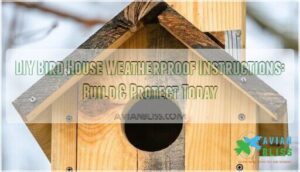 Creating weatherproof DIY bird house weatherproof instructions starts with selecting cedar or pine lumber and applying exterior wood stain to all surfaces.
You’ll want to angle your roof at 45 degrees for proper water runoff and drill small drainage holes in the floor corners.
Use galvanized screws instead of nails—they won’t rust and loosen over time.
Before assembly, seal all wood joints with exterior wood glue to prevent moisture infiltration.
The entrance hole size matters too: 1.25 inches for chickadees, 1.5 inches for wrens.
Smart builders know there’s more to weatherproofing than just wood treatment.
Table Of Contents
- Key Takeaways
- Birdhouse Design Basics
- Weatherproofing Techniques
- Building Birdhouse Steps
- Birdhouse Installation Tips
- Maintenance Requirements
- Frequently Asked Questions (FAQs)
- What is a good DIY Birdhouse plan?
- How do you make a modern Birdhouse?
- How do you waterproof a birdhouse?
- How do you keep a birdhouse healthy?
- How do you build a birdhouse without bending down?
- Can I make a birdhouse for birds in my lawn?
- How do you weatherproof a birdhouse?
- Do I need to put anything inside a birdhouse?
- How to make a bird house step by step?
- How to winterize a birdhouse?
- Conclusion
Key Takeaways
- Choose weather-resistant materials – Use cedar or pine lumber and apply exterior wood stain to all surfaces, then seal joints with exterior wood glue to prevent moisture infiltration.
- Design proper drainage and ventilation – Drill small drainage holes in floor corners and angle your roof at 45 degrees for effective water runoff that keeps the interior dry.
- Use galvanized hardware – Install galvanized screws instead of nails since they won’t rust or loosen over time, ensuring your birdhouse stays structurally sound through weather changes.
- Match entrance holes to target species – Cut 1.25-inch holes for chickadees or 1.5-inch holes for wrens to attract specific birds while keeping larger, unwanted species out.
Birdhouse Design Basics
Building a successful birdhouse starts with understanding that different bird species have specific requirements for entrance hole sizes, internal dimensions, and overall design features.
You’ll need to select weather-resistant materials like cedar or cypress and plan species-appropriate measurements before cutting your first piece of wood.
Choosing Right Materials
When picking out materials for your DIY birdhouse, consider wood durability—cedar and cypress offer natural insulation and resist rot.
Watch for toxicity concerns, especially with treated woods; avoid anything that could harm the birds.
Compare cost and aesthetic appeal, too. A popular choice is cedar birdhouse wood for its resilience.
After all, a weatherproof birdhouse shouldn’t just last—it should look good and keep its residents safe.
Species Specific Designs
Designing DIY birdhouse plans for specific bird species guarantees you’ll attract your target visitors.
Bluebird houses need 5×5 inch floors with 8-inch depths, while Wren dimensions require smaller 4×4 inch bases.
Martin colonies demand larger 6×6 inch cavities in multi-unit structures.
Robin shelves offer open platforms instead of enclosed boxes.
Cardinal nests prefer secretive, sheltered designs.
Your weatherproof birdhouse design should match each species’ unique nesting preferences perfectly.
Consider the optimal birdhouse placement to increase the likelihood of occupancy and attract the desired bird species to your target visitors with the right birdhouse design.
Entrance Hole Sizes
Your birdhouse entrance hole size directly impacts which species you’ll attract and how well you’ll protect against predators.
For Eastern Bluebirds, cut a 1½-inch round hole or 1⅜ x 2¼-inch vertical oval.
Western and Mountain Bluebirds need 1-9/16 inch rounds.
Smaller holes work as predator deterrents – chickadees thrive with 1-1/8 inch openings that exclude House Sparrows, which is a key factor in attracting the right species.
Weatherproofing Techniques
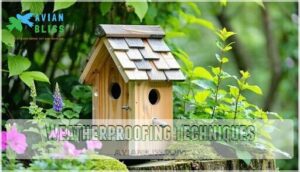
You’ll keep your birdhouse dry and sturdy by choosing the right wood, pitching the roof steeply, and letting water drain out.
It mightn’t get you a medal, but your backyard birds will stay comfortable through storms.
Wood Selection
Natural woods like cedar, redwood, and Douglas fir offer superior weather resistance for your DIY birdhouse project.
Cedar’s natural oils repel pests while keeping joints tight with galvanized screws.
Avoid treated lumber containing harmful chemicals that damage eggs.
Pine works but requires faster assembly to prevent warping.
Wood filler seals gaps before applying wood stain for enhanced wood durability and weatherproof protection.
**For ideal insulation, consider cedar for birdhouses.
Roof Pitch Importance
Your birdhouse roof’s pitch acts like an umbrella, determining how well water flows away from your feathered tenants. A 30° angle creates maximum Water Runoff while protecting the structure.
Here’s your roof pitch checklist:
- Overhang Length: 1.5 inches front, 0.75 inches sides for maximum protection
- Joint Prevention: Build seamless roofs to block water entry points
- Ventilation Gap: Keep front board 0.25-0.50 inches short for airflow
- Material Choice: Select cedar or cypress for natural weather resistance
This roof pitch guarantees your birdhouse drainage works effectively while maintaining proper birdhouse ventilation for a truly weatherproof design.
Drainage Holes
Water pooling inside your DIY birdhouse spells disaster for nesting birds.
You’ll need to drill drainage holes in the floor to prevent flooding and promote water evaporation. Proper hole placement and size guarantee effective birdhouse drainage while preventing clogging from debris.
| Hole Placement | Hole Size | Species Impact |
|---|---|---|
| Floor corners | 1/4 inch diameter | All cavity nesters |
| Center bottom | 3/8 inch diameter | Larger species |
| Multiple spots | 1/8 inch diameter | Small songbirds |
| Edge positioning | 5/16 inch diameter | Weatherproof design |
Building Birdhouse Steps
Now you’ll tackle the hands-on construction phase where precise measurements and careful assembly create a weatherproof sanctuary for your feathered visitors.
Following these step-by-step instructions guarantees your birdhouse withstands harsh weather while providing a secure nesting environment.
Cutting Wood Pieces
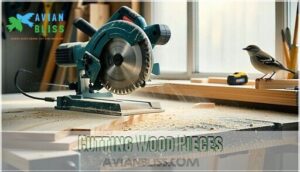
Once you’ve selected your DIY birdhouse materials, precise measurements become your blueprint for success.
Wood piece sizes must match your target species’ requirements exactly. Accurate wood cuts guarantee proper assembly and weatherproofing.
Here are three cutting essentials:
- Cutting tool selection – Use a miter saw for clean, square cuts on all birdhouse construction pieces
- Wood piece angles – Cut roof panels at 30-degree angles for ideal water runoff
- Sanding rough edges – Smooth all cut wood pieces to prevent injuries during assembly
Consider using the best miter saw for accurate cuts.
Assembling Birdhouse
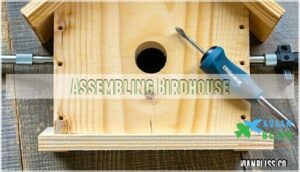
After cutting your wood pieces, you’ll start the assembly process. Begin by applying exterior-grade wood glue to the edges before joining panels—this creates stronger joint stability than screws alone.
Attach the back panel to both side pieces first, ensuring perfect panel alignment. Use clamps to hold everything steady while you drive screws through pre-drilled holes for clean screw placement.
Using the right screws, like galvanized screws, prevents rust and ensures a durable structure, which is crucial for the overall stability of your project.
Adding Roof Panels
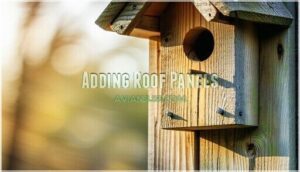
Your birdhouse roof design matters—a sloppy fit invites trouble.
Aim for a slanted, overhanging roofline to shoo rain away.
Secure attachment keeps things snug, meaning squirrels won’t set up shop.
Choose sturdy roofing materials, avoid leaky joints, and mind your roof overhang.
A well-angled roof does more than look sharp; it’s key for weatherproof, safe birdhouse roof construction.
Birdhouse Installation Tips
You’ll want to pick the perfect spot for your birdhouse—too low and you might find a squirrel calling it home.
Too high and you’ll need a ladder just for a peek.
Proper placement, height, and direction give your feathered tenants both a safe refuge and a better shot at raising their young.
Placement Location
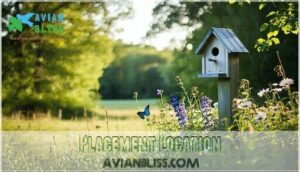
Perfect birdhouse placement tips start with understanding your target species’ habitat considerations.
Position your structure near the edge of woods or open meadows where birds naturally forage.
Predator avoidance means avoiding areas with heavy foot traffic or pet activity.
Morning sunlight exposure helps warm the interior, but afternoon shade prevents overheating.
Wind protection comes from placing houses on the sheltered side of trees or structures.
Consider nesting competition by spacing multiple houses appropriately for your chosen species, ensuring effective predator avoidance.
Mounting Height
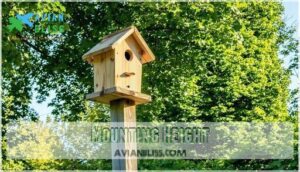
Mount your birdhouse 6-10 feet high for ideal birdhouse placement and predator avoidance.
Different species have unique preferences—chickadees prefer 5-15 feet while Purple Martins need 10+ feet.
This height guarantees accessibility for maintenance while providing stability and reducing weather exposure.
Consider also the prevailing wind direction when choosing a location.
Install predator guards below mounting points, as birdhouse protection depends on proper elevation that deters ground predators yet remains reachable.
Directional Placement
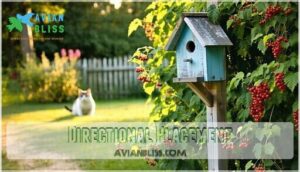
Once you’ve determined the right mounting height, you’ll want to take into account wind direction and weather patterns.
Position your birdhouse entrance away from prevailing winds and driving rain – typically facing southeast works well.
This birdhouse placement strategy protects nesting birds from harsh elements while providing morning sunlight exposure.
Choose a sheltered spot that offers habitat considerations like nearby food sources, but avoid placing too close to feeders for predator avoidance.
Maintenance Requirements
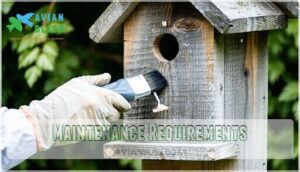
Your new weatherproof birdhouse won’t maintain itself, and proper upkeep determines whether birds return year after year.
Regular maintenance involves three key tasks: following a seasonal cleaning schedule, inspecting for wear and damage, and reapplying protective sealants when needed.
Cleaning Schedule
After each nesting season ends, you’ll need to roll up your sleeves for annual cleaning to keep your feathered tenants healthy.
Your birdhouse needs post-season cleaning to keep future residents healthy and happy.
Proper birdhouse maintenance prevents disease and parasite buildup that could harm future residents.
Here’s your essential birdhouse cleaning guide:
- Annual Cleaning – Remove old nesting materials immediately after birds fledge
- Nest Removal – Clear out twigs, feathers, and debris completely
- Disinfecting Solutions – Use diluted bleach solution for thorough sanitization
- Parasite Control – Eliminate mites and other harmful organisms
- Safety Precautions – Wear gloves and masks during cleaning process
Inspecting Wear
Like any outdoor structure, your birdhouse faces constant weather challenges that gradually weaken its defenses.
Check joint integrity annually for loose connections, examine wood surfaces for rot detection, and assess sealant condition around seams.
Look for hardware rust on screws and hinges, plus evaluate structural stability by gently testing the mounting system.
Regular birdhouse maintenance prevents minor wear from becoming major damage, ensuring birdhouse longevity and durability for years of successful nesting seasons.
Reapplying Sealant
After years of weather exposure, you’ll need to refresh your birdhouse’s protective barrier.
Start with surface preparation using fine-grit sandpaper to remove old residue and mold. Choose bird-safe sealant types like linseed oil or non-toxic polyurethane spray for maximum weather resistance.
Apply thin coats to exterior surfaces only, allowing proper drying between applications. Consider using eco-friendly options like non-toxic preservatives for longevity.
Reapply sealant every 1-3 years depending on exposure conditions to maintain longevity factors and guarantee continued birdhouse waterproofing techniques effectiveness.
Frequently Asked Questions (FAQs)
What is a good DIY Birdhouse plan?
Build a basic cedar birdhouse with a 25-inch entrance hole, slanted roof, and drainage holes. You’ll attract chickadees and wrens while keeping larger birds out. Cedar naturally resists decay.
How do you make a modern Birdhouse?
You don’t need complicated plans—half a cedar fence picket creates sleek, contemporary birdhouses.
Cut clean geometric shapes, sand smooth edges, and assemble with minimal hardware for that modern aesthetic you’re after.
How do you waterproof a birdhouse?
Apply raw linseed oil or clear lacquer sealant to your birdhouse’s exterior surfaces.
Use cedar or cypress wood for natural weather resistance.
Pitch the roof at 30° with proper overhangs, and add drainage holes at the bottom.
How do you keep a birdhouse healthy?
Studies show 85% of birdhouse failures stem from poor maintenance.
You’ll keep your birdhouse healthy by cleaning it annually after nesting season, inspecting for damage, reapplying weatherproof sealant every few years.
Placing it away from feeders to reduce predator risks is also crucial for the birdhouse’s overall health.
How do you build a birdhouse without bending down?
You’ll want to construct your birdhouse at waist-height using a sturdy workbench or table.
Pre-drill all holes while materials are flat, then assemble using clamps to hold pieces steady as you work.
Can I make a birdhouse for birds in my lawn?
Like giving birds a tiny apartment on your lawn, you can build a birdhouse using untreated wood, proper entrance holes, and solid construction.
Hang it on a post or tree, and you’ll soon enjoy feathered neighbors.
How do you weatherproof a birdhouse?
You’ll want to use cedar or cypress wood, then seal the exterior with raw linseed oil or clear lacquer.
Add drainage holes in the floor, make certain of proper roof overhang, and reapply sealant every few years.
Do I need to put anything inside a birdhouse?
Most birds naturally provide their own nesting materials, so you shouldn’t add anything inside your birdhouse.
Leave it completely empty – birds will bring twigs, grass, and soft materials to create their perfect nest.
How to make a bird house step by step?
Cut wood pieces to size, then assemble using exterior-grade glue and screws.
Start with back and sides, add bottom with drainage holes, attach front panel with entrance hole, and finish with angled roof for water runoff.
How to winterize a birdhouse?
Clean your birdhouse thoroughly after nesting season, removing old materials and debris.
Apply weatherproof sealant to exterior surfaces, check for cracks or damage, and make certain drainage holes remain clear for winter moisture protection.
Conclusion
Building the perfect sanctuary doesn’t happen overnight, but these DIY bird house weatherproof instructions will set you up for success.
Your feathered friends deserve a home that’ll weather any storm.
Remember to check your handiwork annually—tighten screws, inspect drainage holes, and reapply wood stain as needed.
With proper maintenance, your weatherproof creation will provide safe nesting spots for years.
Start your project today and give local birds the protection they need.
- http://www.earthdesign.ca/bibu.html
- https://www.reddit.com/r/woodworking/comments/18rjlir/birdhouse_toolsmaterials_selection/
- https://www.gizmoplans.com/how-do-you-waterproof-a-wooden-birdhouse/
- https://www.familyhandyman.com/project/how-to-build-a-birdhouse/
- https://www.audubon.org/magazine/how-keep-nest-boxes-turning-lethal-extreme-heat