This site is supported by our readers. We may earn a commission, at no cost to you, if you purchase through links.
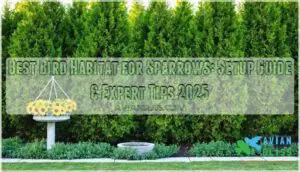 You’ll create the best bird habitat for sparrows by planting dense hedges like conifers or privet near feeding areas.
Sparrows thrive when you combine shelter with food sources, so hang feeders filled with sunflower hearts right next to these thick bushes.
They need water within 30 feet of cover, plus nesting spots in shrubs 3-10 feet high.
Native plants that produce seeds work like magic, while avoiding pesticides keeps their insect prey abundant.
The secret lies in mimicking their natural preferences for edge habitats where open feeding areas meet protective cover, creating an ideal environment with dense hedges.
Table Of Contents
- Key Takeaways
- Sparrow Bird Habitat
- Best Bird Houses
- Sparrow Nesting Boxes
- Creating Sparrow Friendly
- Optimizing Sparrow Habitat
- Frequently Asked Questions (FAQs)
- What is the best bird house for a House Sparrow?
- What kind of habitat do sparrows live in?
- Will sparrows use bird houses?
- Where is the best place to put a sparrow nesting box?
- What seasonal changes affect sparrow habitat quality?
- How do urban environments impact sparrow behavior?
- Which sparrow species require different habitat approaches?
- What time of year should habitat improvements begin?
- How do weather patterns influence sparrow migration timing?
- Conclusion
Key Takeaways
- Create edge habitats by combining dense hedges with open feeding areas—you’ll give sparrows the perfect balance of shelter and foraging space they need to thrive.
- Position feeders strategically near thick shrubs or conifers so sparrows can quickly dart to safety while accessing sunflower hearts and other preferred seeds.
- Provide water within 30 feet of cover using shallow bird baths (1-2 inches deep) and clean them twice weekly to prevent disease spread.
- Plant native species that produce natural seeds and avoid pesticides—you’ll create a sustainable food web that supports both sparrows and their insect prey.
Sparrow Bird Habitat
Creating the perfect sparrow habitat requires understanding their specific environmental needs and preferences.
You’ll want to focus on four key elements: providing dense shrubs for cover, offering diverse seed sources, ensuring clean water access, and creating suitable nesting opportunities in protected areas.
Success in sparrow habitat comes from balancing shelter, food, water, and nesting in protected spaces.
This approach will help ensure that the sparrows have everything they need to thrive, by addressing their need for protected areas.
Natural Environment
Everyone knows sparrows thrive in diverse natural environments, from urban parks to rural meadows.
You’ll find these adaptable birds flourishing in mixed habitats that combine open grasslands with scattered trees and shrubs.
Climate change and pollution effects increasingly challenge traditional sparrow environments, making habitat conservation essential for maintaining ecosystem balance.
Their natural sparrow habitat includes areas with varied vegetation heights, providing essential sparrow shelter and nesting opportunities while supporting overall biodiversity impact and maintaining a healthy ecosystem balance.
Food Sources
You’ll discover that sparrows thrive on diverse seed variety, including millet, sunflower seeds, and nyjer.
Natural foraging supports their sparrow diet through insect abundance during breeding season.
Strategic food placement near cover enhances your sparrow habitat’s appeal.
Winter feeding becomes essential when natural sources diminish, making your bird habitat a reliable sanctuary for these adaptable birds throughout harsh months.
Water Availability
Water sources are the lifeblood of any successful sparrow habitat.
**Shelter and sustenance create the foundation every sparrow community needs to flourish.
You’ll need shallow bird baths with 1-2 inch water depth, ensuring easy access for these small birds. Clean your water features twice weekly to prevent disease spread.
During winter, consider heated bowls to maintain water access when temperatures drop. Position multiple water sources throughout your sparrow-friendly space for ideal attracting sparrows success, utilizing shallow bird baths.
Nesting Sites
Beyond water, sparrows need secure nesting sites to establish their best bird habitat.
You’ll want to provide options that match their natural preferences and protect them from predators.
Understanding sparrow nesting requirements helps create successful urban sparrow habitat and rural sparrow habitat environments.
Sparrows nesting success can increase with proper nest box design.
Consider these nesting safety priorities:
- Natural Materials – Offer twigs, grass, and soft fibers in accessible locations
- Cavity Dimensions – Guarantee proper entrance holes (1.25 inches) to prevent site competition
- Microclimate Factors – Position your sparrow house away from harsh winds and direct afternoon sun
Best Bird Houses
You’ll find that selecting the right bird house transforms your yard into a sparrow sanctuary, with specific designs and materials making all the difference in attracting these social birds.
The best sparrow houses feature proper ventilation, drainage, and entry hole sizes that welcome house sparrows while keeping larger birds out.
Types of Bird Houses
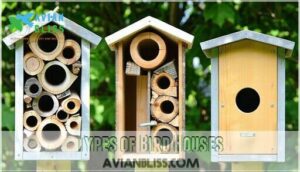
When you’re attracting sparrows to your garden, you’ll find several house types that cater to their colonial nature.
Multi-compartment "terrace" houses work wonderfully, letting multiple pairs nest side-by-side like tiny neighborhoods.
Standard cavity boxes with round entrances and predator guards offer excellent safety.
High-rise apartment-style designs maximize your vertical space while providing house ventilation and material durability for long-lasting sparrow nesting success.
Consider a bird box terrace for communal nesting.
Materials and Designs
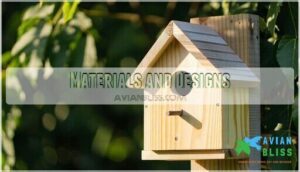
For sparrow conservation success, you’ll want untreated cedar or pine that offers exceptional material durability and natural insulation properties.
These natural materials resist rot while providing proper ventilation design through their breathable structure.
Your sparrow garden benefits when design aesthetics blend with function—earth-tone finishes keep predators away while attracting sparrows naturally.
To further enhance longevity, consider using naturally rot-resistant wood.
Avoid metal or plastic that creates temperature extremes, and skip treated lumber that’s toxic for your sparrow feeder visitors.
Size and Shape Considerations
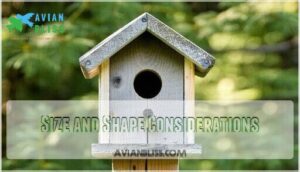
When choosing dimensions for your sparrow garden, remember that size matters for sparrow behavior and species preferences.
Proper measurements guarantee sparrow conservation success and encourage natural sparrow food foraging.
- Entrance Diameter: 1.25 inches accommodates most sparrow species while excluding larger competitors
- Floor Dimensions: 4×4 inches provides adequate space for nesting and movement
- Cavity Volume: 6-8 inches deep allows comfortable roosting without excess space
- Height Above Ground: Mount 5-6 feet high with proper Shape Orientation facing away from prevailing winds
Installation and Maintenance
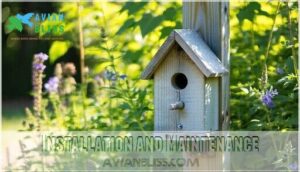
Proper mounting techniques guarantee your bird house stays secure year-round.
Install houses 5-8 feet high on poles with predator deterrents like baffles. Clean boxes twice yearly after nesting season ends.
Check for damage monthly and repair loose screws immediately. Make seasonal adjustments by adding ventilation holes during summer heat.
These sparrow care practices protect sparrow species while supporting natural sparrow behavior patterns and ensure the overall well-being of the bird house.
Sparrow Nesting Boxes
Choosing the right nesting box transforms your yard into sparrow paradise, but proper specifications matter more than fancy designs.
You’ll need precise measurements, strategic placement, and the correct entrance hole diameter to attract these social birds while keeping larger species away.
Ideal Location
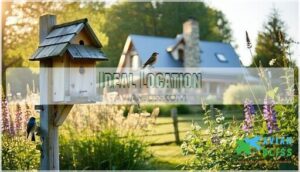
You’ll want to position your sparrow nesting boxes where morning sunlight exposure warms them gently, while nearby structures provide wind protection from harsh weather.
Height placement around 5-8 feet keeps boxes safe from ground predators yet accessible for sparrow identification and care.
Choose spots away from heavy human activity but close enough for protecting sparrows through regular monitoring—your feathered friends need the best habitat balance.
Box Size and Design
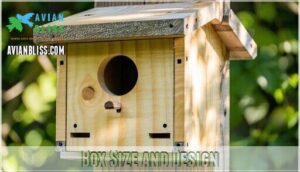
Something sparrows truly appreciate is thoughtful design that mimics their natural preferences.
Internal dimensions of 150mm wide, 200mm high, and 120mm deep provide ideal space for multiple broods. Rectangular shapes work best, with drainage holes preventing moisture buildup and ventilation slots ensuring airflow.
Consider nesting box dimensions for optimal comfort. These specifications create comfortable nesting conditions while protecting sparrows from predators through careful entrance shape planning.
Entrance Hole Size
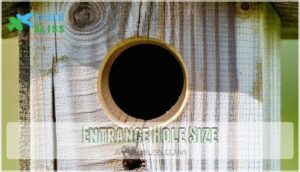
When selecting entrance holes for sparrow nesting boxes, you’ll want the ideal diameter of 1.25 inches to accommodate house sparrows while preventing larger birds from entering.
This superior Hole Size Variation protects sparrows from competitors, though Multiple Hole Design isn’t advantageous since sparrows prefer single entrances.
The best Hole Placement Height sits 6-7 inches from the floor, creating the most protective environment for nesting families.
Mounting and Installation

Mount your sparrow nesting box 5-6 feet high using superior hardware selection for secure attachment.
Position at a slight downward angle for weather protection, ensuring the highest quality mounting prevents wobbling.
Consider predator deterrent options on the pole to protect nesting sparrows.
Choose galvanized screws or brackets for best durability.
Face the entrance away from prevailing winds and afternoon sun for top-quality habitat conditions.
Creating Sparrow Friendly
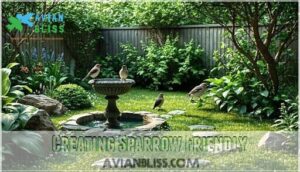
You’ll transform your yard into a sparrow paradise by selecting the right combination of native plants, water sources, and natural materials.
Creating an ideal habitat requires understanding which specific elements attract these birds and support their year-round survival needs, forming a complete and natural environment.
Native Plant Species
Your sparrow-friendly garden becomes a haven when you choose local flora that matches your region’s natural ecosystem.
Native plant species create superior habitat restoration opportunities while offering excellent seed collection sites for hungry sparrows.
Here’s what makes your heart sing about native plants:
- Little bluestem grass sways like nature’s curtain, hiding precious nests
- Black-eyed Susan flowers become tiny treasure chests of nutritious seeds
- Serviceberry shrubs offer sweet fruit that’ll make sparrows do happy dances
- Oak trees support thousands of caterpillars – sparrow baby food at its best
Plant diversity enriches your soil naturally while providing year-round food sources.
These examples show how native species outperform ornamental alternatives, creating definitions of true wildlife hospitality through soil enrichment and sustainable habitat management.
Insect Attracting Plants
Why should you care about attracting beneficial insects?
Plant diversity creates the best native insect habitats, supporting pollinator gardens that naturally provide pest control.
Examples include coneflowers, black-eyed Susans, and native grasses.
These plants achieve superior performance in comparison to non-natives, boosting your sparrow habitat’s achievement through increased insect populations that serve as essential protein sources.
Water Features
Three water features create the best sparrow habitat: shallow bird baths with one-inch water depth, dripping fountains, and ground-level basins.
Consider various bird bath styles to suit different sparrow preferences.
Clean your water source weekly to prevent disease spread, and install winterizing features like heated elements for year-round access.
Position multiple water features throughout your environment to accommodate territorial birds, ensuring they have access to clean water at all times.
Rock and Soil Usage
Provide good drainage by creating a well-structured foundation that includes proper Soil Composition and Rock Placement. Well-drained soil is essential for thriving native plants that sparrows love, giving you the best advantage for attracting these birds.
Mix coarse sand with native soil to improve mineral content and create effective Drainage Solutions that prevent waterlogging. Strategic rock arrangements offer Erosion Control while maintaining your habitat’s healthy state.
Examples of effective materials include river rocks and decomposed granite, which create the ideal way to balance moisture retention with proper drainage for superior sparrow habitat conditions.
Optimizing Sparrow Habitat
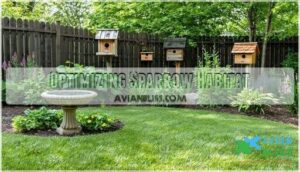
You’ll achieve sparrow habitat success by focusing on four key areas that directly impact their survival and breeding success.
These strategic optimizations create the perfect balance between safety, food availability, and nesting opportunities that sparrows need to thrive in your yard.
Reducing Pesticide Use
You’ll dramatically improve sparrow habitat by embracing organic gardening methods that protect these essential birds.
Pesticides reduce sparrow populations by up to 57%, making safe alternatives essential for healthy ecosystems.
Best practices for pesticide-free sparrow habitat:
- Integrated pest management – Use natural predators and crop rotation instead of chemicals
- Targeted spraying – Apply organic solutions only when necessary, avoiding broad applications
- Manual weed removal – Hand-pull weeds rather than using herbicides that eliminate food sources
- Native plant diversity – Create complex landscapes that naturally suppress pests while providing sparrow food
This advantage becomes clear quickly – gardens avoiding chemicals show healthier sparrow populations with better breeding success examples.
Minimizing Predator Attraction
Keeping sparrows safe means thinking like their enemies first.
Position bird houses away from fence lines where cats prowl, and trim dense shrubs that provide ambush cover.
Your habitat concealment should offer quick escape routes rather than dead-end hiding spots.
Deterrent strategies work—motion-activated sprinklers discourage ground predators while maintaining a healthy environment.
Predator-proof design gives sparrows the advantage they need for competition survival in suitable safe zones.
Providing Supplemental Food
You’ll want to offer sparrows the highest quality seed choices throughout the year, with black oil sunflower seeds being your best option.
Different feeder types provide distinct advantages – tube feeders work well for seeds while platform feeders suit natural foods like mealworms.
Winter feeding becomes critical when insects disappear, making summer supplements less necessary since sparrows find abundant natural foods during warmer months.
Sparrows, as ground-foraging birds, also enjoy millet seeds nutrition and need proper nutrition.
Creating Sparrow Friendly Fencing
Your fence materials make all the difference in creating safe fencing for sparrows.
Height matters—keep fences under 40 inches so these small birds can easily fly over.
The best predator deterrents include smooth, barbless wires that won’t injure sparrows while maintaining habitat excellence.
When planting near fences, choose native species that provide natural shelter.
This comparison shows clear advantage: two-rail designs with wide spacing allow safer passage than dense mesh barriers, providing a clear advantage with safe fencing.
Frequently Asked Questions (FAQs)
What is the best bird house for a House Sparrow?
You’ll want a compact birdhouse that’s perfectly suited, expertly crafted, and thoughtfully designed for House Sparrows.
Choose one with a 25-inch entrance hole, shallow 4×4-inch floor, and easy-access cleaning features for ideal nesting success.
What kind of habitat do sparrows live in?
Sparrows thrive in diverse habitats including urban parks, suburban gardens, farmlands, and grasslands.
You’ll find them near human settlements where they access food sources like seeds, grains, and insects while utilizing shrubs and trees for nesting and shelter.
Will sparrows use bird houses?
Only 30% of sparrow species actually use birdhouses regularly.
You’ll have better luck attracting house sparrows since they’re cavity nesters, but most sparrows prefer building nests in dense shrubs or trees instead.
Where is the best place to put a sparrow nesting box?
Position your sparrow nesting box 5-8 feet high on a sturdy pole or tree, facing away from prevailing winds.
You’ll want morning sun exposure with afternoon shade, plus nearby shrubs for cover and protection from predators.
What seasonal changes affect sparrow habitat quality?
Like a musical score changing with the seasons, your sparrow habitat transforms dramatically throughout the year.
Winter requires dense shelter and reliable food sources, while spring demands nesting materials and protection from predators during breeding season.
How do urban environments impact sparrow behavior?
Urban environments reshape sparrow behavior dramatically.
You’ll notice they adapt foraging patterns, become bolder around humans, alter nesting sites to buildings, change territorial displays, and shift daily rhythms to match city noise patterns.
Which sparrow species require different habitat approaches?
Like a master gardener tending different flower varieties, you’ll find each sparrow species needs its own special care.
House sparrows thrive in dense shrubs near buildings, while song sparrows prefer wetland edges with thick cover, and white-throated sparrows need forest undergrowth, indicating that each type has unique requirements for special care.
What time of year should habitat improvements begin?
Early spring’s your golden window—start habitat improvements in February through April when birds scout nesting territories.
Ensuring food sources and shelter are established before breeding season kicks into high gear.
How do weather patterns influence sparrow migration timing?
Weather patterns act as nature’s GPS for sparrows, with temperature shifts, wind patterns, and daylight changes triggering their internal migration clocks, helping them time departures perfectly.
Conclusion
Studies show sparrows can increase their survival rates by 40% when you provide the right habitat setup.
Creating the best bird habitat for sparrows doesn’t require complex planning—just thoughtful placement of key elements.
You’ll see remarkable results when you combine dense hedges with nearby feeders, fresh water sources, and native plants.
Remember, sparrows prefer edge habitats where they can quickly dart between cover and open feeding areas.
Your efforts will transform your yard into a thriving sparrow sanctuary.
- https://www.allaboutbirds.org/guide/House_Sparrow/lifehistory
- https://www.youtube.com/watch?v=GM1Jn1vMG8Y
- https://wildlifesos.org/house-sparrow-the-ultimate-urban-dweller/
- https://www.arkwildlife.co.uk/blogs/wildlife-guides/house-sparrow-identification-habitat-and-food
- https://celebrateurbanbirds.org/learn/birds/focal-species/house-sparrow/