This site is supported by our readers. We may earn a commission, at no cost to you, if you purchase through links.
 Your canary’s labored breathing could signal serious trouble. Canary labored breathing causes include tracheal obstructions from pus or foreign objects, respiratory infections affecting lungs and air sacs, air sac mites, and bacterial or fungal diseases.
Environmental factors like air pollution, overheating, and allergens also trigger breathing problems. Watch for open-mouth breathing, wheezing, tail bobbing, and nasal discharge.
Poor nutrition weakens their immune system, making them vulnerable. Quick action matters since canaries hide illness well, and by the time you notice symptoms, they’re often quite sick.
Understanding these warning signs and underlying causes can mean the difference between a quick recovery and a heartbreaking outcome.
Table Of Contents
- Key Takeaways
- Canary Breathing Basics
- Respiratory Distress Signs
- Causes of Labored Breathing
- Environmental Factors
- Prevention and Treatment
- Frequently Asked Questions (FAQs)
- Do Canaries have respiratory problems?
- What should I do if a canary has a respiratory problem?
- Why is my Canary not feeling well?
- Why is my Canary sick?
- Why is my Canary so stressed?
- Why is my Canary limping?
- Why is my canary breathing heavy?
- Why does my bird keep breathing heavily?
- What to do when your bird is struggling to breathe?
- What is the respiratory disease in canaries?
- Conclusion
Key Takeaways
- Watch for emergency breathing signs – Open-mouth breathing, tail bobbing, and wheezing indicate serious respiratory distress that requires immediate veterinary attention, as canaries hide illness until it’s advanced.
- Environmental toxins threaten your bird’s airways – Cigarette smoke, cleaning chemicals, aerosols, and dusty conditions can trigger breathing problems in your canary’s delicate respiratory system.
- Multiple diseases cause labored breathing – Air sac mites, bacterial infections, fungal diseases like aspergillosis, and tracheal obstructions from food particles can all compromise your canary’s breathing.
- Prevention saves lives through proper care – Maintain a clean cage environment, provide balanced nutrition with fresh foods, ensure good ventilation, and establish regular check-ups with an avian veterinarian.
Canary Breathing Basics
Your canary’s breathing system works like a one-way highway, moving air efficiently through their body in a single direction.
This unique setup means healthy canaries rarely gasp for air, making any breathing trouble a red flag that needs your immediate attention.
Unidirectional Airflow
Unlike mammals’ back-and-forth breathing, your canary’s unidirectional airflow creates a one-way highway for oxygen.
This avian lung design maximizes oxygen exchange efficiency, supporting their high metabolic rate and flight energetics.
Air flows continuously through specialized air sacs, making canaries incredibly efficient breathers.
However, this same system makes canary respiratory disease and breathing problems particularly dangerous, as any disruption affects their entire oxygen supply chain.
Respiratory System Anatomy
Your canary’s respiratory system works like a sophisticated air pump.
The keel (breastbone) and breathing muscles create unidirectional airflow, pushing air through specialized air sacs and lungs in one continuous cycle. Unlike mammals, your bird doesn’t need separate inhaling and exhaling phases.
Here’s how your canary’s bird respiratory system operates:
- Air sacs function – Nine interconnected air sacs store and move oxygen-rich air through the lungs continuously
- Keel movement – The prominent breastbone moves down and forward, powered by breathing muscles to expel carbon dioxide
- Unidirectional airflow – Fresh oxygen flows in one direction while waste gases exit, maximizing efficiency
Normal Breathing Rate
Within your feathered friend’s chest, a remarkable respiratory system works tirelessly.
Healthy canaries breathe 60-100 times per minute, though captive rates often drop due to less flying activity.
Age variation and individual differences affect each bird’s resting BPM.
Understanding normal respiratory rates helps you spot canary breathing problems early, preventing serious canary respiratory disease and maintaining essential canary respiratory health in labored breathing birds.
Addressing issues such as common fungal exposure is vital for prevention.
Respiratory Distress Signs
When your canary shows signs of respiratory distress, you’ll notice clear warning signals that demand immediate attention.
These symptoms include open-mouth breathing, wheezing, tail bobbing, and stress-related panting that can quickly escalate into life-threatening emergencies.
Open Mouth Breathing
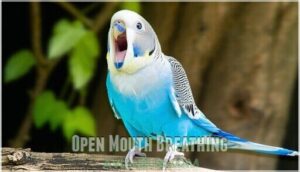
When your canary breathes with an open mouth, it’s signaling oxygen deprivation and potential airway swelling.
Open-mouth breathing in canaries signals a respiratory emergency requiring immediate veterinary attention.
This emergency response indicates your bird can’t get enough air through normal nasal breathing. Open mouth breathing often accompanies cyanosis** signs like blue-tinged skin around the beak.
Canary breathing problems requiring this gasping behavior suggest serious respiratory distress. Dyspnea in canaries manifests when airways narrow from infection or obstruction.
Bird labored breathing through an open beak means your canary gasping air desperately needs immediate intervention.
Wheezing and Panting
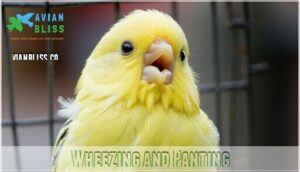
When your canary’s breathing becomes audible, you’re hearing distress signals that demand immediate attention.
Wheezing sounds indicate respiratory infections, while panting mechanisms show your bird’s struggle for adequate oxygen.
- Wheezing sounds – High-pitched whistling during breathing signals airway inflammation
- Panting – Rapid, shallow breathing with visible chest movement indicates oxygen deprivation
- Audible breathing – Any breathing sound you can hear suggests respiratory compromise
- Gasping motions – Exaggerated breathing efforts show advanced respiratory distress
- Sound variations – Different wheezing patterns help identify specific respiratory conditions
Tail Bobbing

You’ll notice tail bobbing when your canary’s body moves rhythmically with each breath.
This pronounced movement happens because your bird’s working harder to breathe, using extra muscles for respiratory support.
Tail bobbing with dyspnea signals serious respiratory distress requiring immediate attention.
Severity Assessment and Diagnostic Tests help determine Underlying Conditions causing this labored breathing pattern.
Swift Supportive Therapies improve your canary’s Prognosis Factors substantially.
Air sac mites can obstruct airways, so monitoring your bird is essential; learn more about bird tail bobbing.
Stress and Fright

When something suddenly spooks your feathered friend, you’ll notice sudden gasping and rapid breathing.
Bird stress from fights or feeling trapped triggers this response.
Create a calm environment by using cage covering techniques – simply drape a blanket over their home.
Calming techniques include moving them to a quiet environment away from stress triggers.
These reducing triggers methods help normalize breathing within minutes.
Causes of Labored Breathing
When your canary struggles to breathe, several underlying causes could be threatening their health. Understanding these causes helps you respond quickly and potentially save your bird’s life.
Tracheal Obstruction
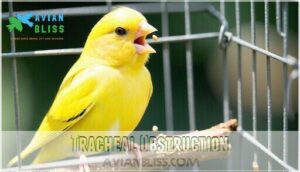
Blocked airways can turn your canary’s breathing into a life-threatening emergency. Seeds, hulls, or food particles commonly lodge in the trachea, while infections can cause dangerous swelling that restricts airflow.
One common cause can be vitamin A deficiency, especially in birds on all-seed diets.
- Choking Hazards: Millet seeds and hulls frequently cause tracheal obstruction
- Swelling Causes: Infections create inflammation that narrows airways dangerously
- Emergency Procedures: Immediate veterinary care is essential for object removal
- Aspiration Risks: Foreign bodies require professional extraction to prevent fatality
Respiratory Diseases
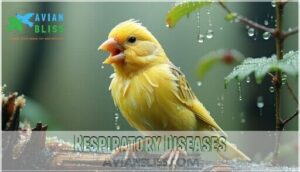
Respiratory diseases hit canaries hard, causing severe breathing problems that can turn fatal quickly.
You’ll spot bacterial infections like Avian Influenza through inflammation and airway swelling, while fungal infections such as aspergillosis create white plaques in air sacs.
Aspergillosis, a common issue, is a fungal respiratory infection in birds.
| Disease Type | Common Causes | Key Symptoms |
|---|---|---|
| Bacterial Infections | Klebsiella, Chlamydia psittaci | Nasal discharge, facial swelling, lethargy |
| Fungal Infections | Aspergillosis from moldy bedding | White mucous plaques, labored breathing |
| Viral Infections | Canarypox, Paramyxovirus | Conjunctivitis, tremors, rapid decline |
These canary respiratory illnesses often overlap in symptoms, making professional diagnosis essential for proper aspergillosis treatment and recovery.
Air Sac Mites
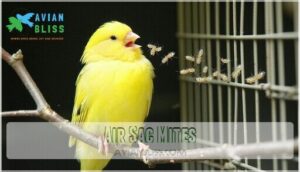
When these microscopic parasites invade your canary’s respiratory system, they’ll cause serious breathing problems that demand immediate attention.
Air sac mites complete their lifecycle in just six days, spreading through direct contact and contaminated surfaces.
These tiny parasites multiply fast—spreading through direct contact in just six days, making quick treatment essential.
You’ll notice excessive salivation, weight loss, and wheezing sounds as mites block airways.
Diagnosis methods include visualizing moving spots in the trachea, while ivermectin treatment effectively eliminates infestations when administered promptly by an avian vet consultation.
Affected birds may also display signs of cyanosis, indicating oxygen deprivation.
Bacterial Infections

When bacteria invade your canary’s respiratory system, they can quickly cause life-threatening breathing problems.
Mycoplasma gallisepticum, Klebsiella pneumonia, and Pseudomonas aeruginosa are common culprits behind canary labored breathing.
These bacterial infections create inflammation in airways, making each breath a struggle.
Your avian veterinarian will prescribe specific antibiotic treatment based on culture results, while probiotic support helps restore healthy gut bacteria during recovery.
Fungal Infections

Aspergillus fungus thrives in dirty cages, creating dangerous spore exposure that attacks your canary’s delicate respiratory system.
Weakened immunity makes birds vulnerable to aspergillosis, causing severe breathing difficulties.
Environmental control and antifungals become your bird’s lifeline.
- Aspergillus symptoms include tail bobbing, open-mouth breathing, and lethargy
- Antifungal treatments like itraconazole require extended therapy periods
- Environmental control prevents fungal infections through proper cage sanitation
Environmental Factors

Your canary’s environment plays a vital role in their respiratory health, and several common household factors can trigger breathing problems.
From cigarette smoke and strong cleaning chemicals to overheating and dust buildup, these environmental stressors can quickly overwhelm your bird’s delicate airways.
Air Pollution
Everyone knows air pollution spells trouble for your canary’s delicate respiratory system.
Indoor pollutants like cigarette smoke, cleaning chemicals, and aerosols trigger immediate respiratory symptoms. Chemical exposure from scented candles or air fresheners causes wheezing and labored breathing.
Industrial emissions seeping indoors worsen air quality, leading to chronic avian respiratory illness and persistent canary respiratory issues, which can be triggered by immediate respiratory symptoms.
Overheating
Hot temperatures send your canary into heat stress mode. You’ll spot heatstroke signs like fluffed feathers, drooping wings, and legs spread wide for airflow.
Move your bird to shade immediately and try cooling methods like room-temperature misting or a damp towel. High humidity makes overheating worse, so make certain proper ventilation is provided.
Water availability becomes critical during temperature fluctuations—your canary needs constant access to fresh drinking water.
Allergies and Irritants
Twenty common allergens can trigger breathing trouble in your canary.
Dust allergies from cleaning, mite feces, and pollen cause sneezing and wheezing.
Smoke exposure from cigarettes damages delicate airways instantly.
Chemical irritants like aerosols and scented products create toxic fumes.
Even candles release particles that overwhelm their efficient respiratory systems, causing avian respiratory symptoms and serious bird breathing difficulty requiring immediate canary health issues attention.
Poor Nutrition
Poor nutrition weakens your canary’s immune system, making breathing problems worse.
Seed-only diets lack vitamin A and E, causing nutritional deficiencies that affect respiratory health.
Vitamin deficiency and mineral imbalance lead to malnutrition effects like increased susceptibility to infections.
Diet supplementation with fresh fruits and vegetables prevents canary health issues and reduces bird breathing difficulties from malnutrition.
Prevention and Treatment

When your canary shows breathing problems, quick action can save their life. You’ll need to stabilize them first, then get professional help and make long-term changes to prevent future issues.
First Aid and Stabilization
Your canary’s breathing crisis requires immediate action. Move them to a quiet, warm space (80-90°F) and remove any fumes or irritants.
Provide fresh water but avoid handling—stress kills. Document symptoms like gasping, tail bobbing, or wheezing for your vet.
Consider emergency first aid supplies for such situations. These calming techniques and cooling procedures stabilize respiratory distress until professional help arrives.
Veterinary Care
When your canary’s breathing becomes labored, seeking professional veterinary care isn’t just smart—it’s essential.
An experienced avian veterinarian can quickly identify the root cause and provide targeted treatment that could save your bird’s life.
- Emergency Vet visits for severe respiratory distress, open-mouth breathing, or collapsed birds
- Diagnostic Testing including blood work, radiographs, and endoscopy to pinpoint infections or obstructions
- Medication Options like antibiotics, antifungals, or anti-inflammatory drugs formulated to your canary’s specific condition
- Nebulization Therapy delivering medication directly to airways for faster, more effective treatment
- Specialist Referrals to certified avian specialists for complex cases requiring advanced diagnostic measures
Sanitizing Environment
Beyond veterinary treatment, maintaining a spotless living space prevents reinfection and protects your feathered friend’s delicate respiratory system.
Clean cages weekly, quarantine new birds for 30-45 days, and replace contaminated accessories immediately.
| Daily Tasks | Weekly Tasks | Monthly Tasks |
|---|---|---|
| Fresh water changes | Complete cage disinfection | Deep clean perches |
| Remove droppings | Wash food dishes | Replace worn toys |
| Check air quality | Sanitize accessories | Inspect ventilation |
Proper hygiene practices create a fortress against respiratory threats.
Daily tasks like removing bird droppings are essential for maintaining a safe environment.
You’ll spot problems faster in clean environments, and your canary’s immune system won’t waste energy fighting preventable infections.
Dietary Considerations
After cleaning up your canary’s space, take a closer look at their diet.
A balanced diet isn’t just birdseed—mix in fresh veggies, fruits, and high-quality pellets to avoid Vitamin Deficiencies and Mineral Imbalances.
Hydration Importance can’t be overstated. Skip toxic foods like avocado, and consider supplement needs if your vet suggests.
Good nutrition keeps labored breathing at bay.
Regular Check-ups
Stay on top of your canary’s health by scheduling routine exams with an avian vet.
Early detection is your secret weapon—catching issues before they snowball. Regular veterinary visits and checkups mean you’re not flying blind.
Preventative care, health monitoring, and professional advice all work together to keep your canary singing strong. Don’t skip those appointments, as early detection is crucial for maintaining your canary’s health.
Frequently Asked Questions (FAQs)
Do Canaries have respiratory problems?
Yes, you’ll find that canaries are quite prone to respiratory issues due to their delicate breathing systems.
Their efficient unidirectional airflow makes them sensitive to infections, pollutants, and stress-related breathing problems.
What should I do if a canary has a respiratory problem?
Move your canary to a calm, well-ventilated area immediately. Provide fresh water and monitor closely. If breathing doesn’t improve within minutes, contact an avian veterinarian urgently for proper treatment.
Why is my Canary not feeling well?
Your canary’s illness could stem from respiratory infections, air sac mites, stress, overheating, poor air quality, or nutritional deficiencies.
Watch for labored breathing, lethargy, or appetite changes requiring immediate veterinary attention.
Why is my Canary sick?
Is your feathered friend struggling to breathe?
Your canary’s illness likely stems from respiratory infections, air sac mites, stress, overheating, or environmental irritants like dust and smoke affecting their delicate airways.
Why is my Canary so stressed?
Loud noises, temperature changes, overcrowding, cage moves, new pets, or poor lighting can trigger stress. You’ll notice fluffed feathers, hiding, decreased appetite, or excessive vocalization when your bird feels overwhelmed.
Why is my Canary limping?
Like a bird grounded from flight, your canary’s limping likely stems from foot injuries, perch problems, arthritis, or infections. Check for swelling, cuts, or stuck debris between toes.
Why is my canary breathing heavy?
Heavy breathing in your canary signals serious trouble—stress, overheating, respiratory infections, or heart problems need immediate attention. Move to a calm, cool area and contact your vet quickly.
Why does my bird keep breathing heavily?
When your bird’s breathing resembles a marathon runner’s finish line struggle, several urgent causes demand attention.
Respiratory infections, overheating, stress, air sac mites, or heart problems can trigger heavy breathing, requiring immediate veterinary care.
The causes of heavy breathing in birds are critical and necessitate prompt veterinary care.
What to do when your bird is struggling to breathe?
Immediately move your bird to a quiet, stress-free area with fresh air. Provide clean water and monitor closely. If breathing doesn’t improve within minutes, contact an avian veterinarian urgently.
What is the respiratory disease in canaries?
Your canary’s respiratory woes aren’t just sniffles—they’re serious business.
Common diseases include air sac mites, aspergillosis, canarypox, and bacterial infections like Mycoplasma.
These conditions cause wheezing, tail-bobbing, and open-mouth breathing requiring immediate veterinary care.
Conclusion
Your feathered friend’s breathing troubles shouldn’t be taken lightly.
Understanding canary labored breathing causes empowers you to act swiftly when respiratory distress strikes.
From tracheal obstructions to environmental toxins, multiple factors can compromise your bird’s delicate respiratory system.
You’ve learned the warning signs and prevention strategies.
Remember, canaries mask illness until it’s advanced, so vigilance is essential.
Create a clean environment, provide proper nutrition, and establish a relationship with an avian veterinarian.
Quick intervention saves lives.
- https://www.morningsideveterinary.com/respiratory-infections-birds/
- https://forums.avianavenue.com/index.php?threads%2Fcanary-breathing-very-heavily.257043%2F
- https://www.mspca.org/angell_services/avian-respiratory-emergencies/
- https://pmc.ncbi.nlm.nih.gov/articles/PMC9681979/
- https://birdsupplies.com/blogs/news/149260295-bird-breathing-problems