This site is supported by our readers. We may earn a commission, at no cost to you, if you purchase through links.
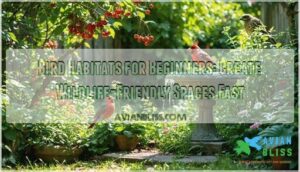 Creating bird habitats for beginners starts with three essentials: food, water, and shelter.
You’ll need native plants that produce seeds and berries, plus a reliable water source like a shallow dish or birdbath.
Add shrubs and trees for nesting spots and protection from predators.
Different birds have specific needs—cardinals love dense bushes while hawks prefer tall perches.
Choose plants suited to your climate and avoid pesticides that harm insects birds eat.
Position feeders near cover but away from windows.
Even small spaces work if you layer vegetation at different heights.
The secret lies in understanding which birds visit your area and what makes them stay, with a focus on providing the right environment.
Table Of Contents
- Key Takeaways
- Bird Habitat Basics
- Creating Bird Friendly Spaces
- Bird Species Habitat Needs
- Designing Bird Habitats
- Maintaining Bird Habitats
- Frequently Asked Questions (FAQs)
- What are the requirements for a bird’s habitat?
- What is the best habitat for birds?
- How do you create a bird habitat?
- What kind of bird is best for beginners?
- How do seasonal migrations affect habitat planning?
- What materials make the best nesting boxes?
- How close should different habitat types be?
- Which predators threaten backyard bird populations most?
- How do light pollution levels impact birds?
- Conclusion
Key Takeaways
- You’ll need three essentials to start: native plants for food, reliable water sources like birdbaths, and shelter through shrubs or trees for nesting and protection.
- Choose plants suited to your climate and avoid pesticides – native species support local ecosystems better and provide the insects birds need for protein during breeding season.
- Position feeders strategically near cover but away from windows, and create layered vegetation at different heights to attract diverse species with varying habitat needs.
- Start small and monitor regularly – even small spaces work when you understand which birds visit your area and adjust your setup based on what attracts them to stay, using reliable water sources and local ecosystems to support the birds.
Bird Habitat Basics
Bird habitats come in four main types that support different species with unique needs.
You’ll find birds thriving in forests, wetlands, urban areas, and backyard spaces where they can access food, water, shelter, and nesting sites.
Forest Habitats
Forest layers create distinct bird habitats from ground to canopy.
You’ll find different bird species at each level.
Ground-dwellers like thrushes prefer the forest floor.
Mid-story birds include warblers and flycatchers.
Canopy density affects light penetration and food availability.
Old-growth forests support specialized woodland bird habitats.
Forest fragmentation creates edge effects that alter bird identification patterns within natural ecosystems.
Wetland Habitats
Wetlands serve as nature’s nurseries for countless bird species.
These water-rich environments support marsh ecology through diverse plant communities and abundant food sources.
Wetland birds like herons and ducks depend on clean water quality for survival.
You’ll find these coastal habitats teeming with life during migration seasons.
Swamp conservation efforts protect these critical bird habitats for future generations of waterfowl and wading birds to ensure the long-term survival of species that depend on marsh ecology.
Urban Habitats
Cities offer surprising opportunities for urban birds despite challenges like noise pollution and artificial lighting.
You can help urban conservation efforts by creating spaces that work. City birdhouses and balcony gardens make real differences for backyard birds.
Here are four ways to support urban birds:
- Install bird feeders in protected spots away from windows and traffic
- Add bird baths with shallow water that’s changed regularly
- Plant native plants in containers or small garden spaces
- Position feeders strategically to minimize exposure to artificial lighting at night
Urban environments present unique obstacles but also unique solutions. Small actions create big impacts for city wildlife.
Backyard Habitats
Your backyard offers prime real estate for attracting birds with the right setup.
Install bird feeders filled with quality seeds and position bird houses in quiet corners for nesting sites.
Add bird baths for drinking water and plant native plants that provide natural food sources.
Create shelter options using shrubs and trees while implementing predator control measures to keep backyard birds safe and thriving.
Consider diverse vegetation layers for nesting and hiding, which provides a natural and thriving environment.
Creating Bird Friendly Spaces
You can transform any outdoor space into a bird haven by focusing on four essential elements that meet their basic survival needs.
Start with native plants, clean water sources, appropriate feeders, and pesticide-free environments to create an ecosystem that attracts and sustains local bird populations year-round, utilizing these elements to meet their basic needs for survival, with clean water being a crucial component.
Planting Native Vegetation
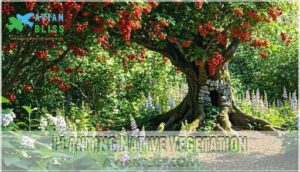
Native plants create the foundation of thriving bird habitats. These species support local ecosystems better than exotic alternatives. They provide natural food sources and nesting sites that birds recognize instinctively.
Native plants speak the language birds understand – offering familiar food and shelter that feels like home.
- Research regional plant species – Contact your local extension office for native seed selection recommendations
- Test soil health – Guarantee proper pH levels and drainage for ideal plant establishment
- Focus on layered planting – Include trees, shrubs, and ground cover for diverse habitat restoration
- Choose berry-producing varieties – Native fruit trees and bushes sustain birds year-round in your bird garden
Installing Bird Feeders
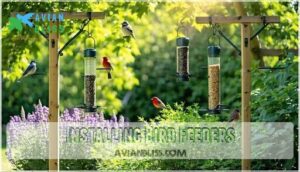
Strategic feeder placement transforms your bird garden into a bustling wildlife hub.
Position feeders within three feet or beyond thirty feet from windows to prevent collisions. Choose tube feeders for finches and chickadees, hopper feeders for cardinals and blue jays.
Mount feeders five feet high for squirrel proofing. Clean feeders biweekly with bleach solution to prevent disease transmission among visiting birds.
Gardeners should also consider growing native plants to provide natural food sources and create a bird-friendly habitat with native plants.
Providing Water Sources
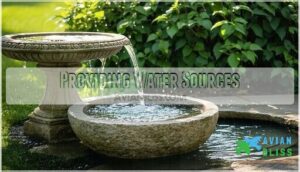
Water sources are magnets for attracting birds beyond what feeders alone provide.
You’ll want to offer multiple Water Source Types like shallow birdbaths, dripping fountains, and ground-level dishes.
Place these water sources 3-10 feet from cover for safety.
Cleaning Water Sources weekly prevents disease spread.
During winter, heated Water Source Placement keeps water available when natural sources freeze.
Many options are available if you need a birdbath.
Preventing Algae requires regular water changes and shade positioning.
Reducing Pesticide Use
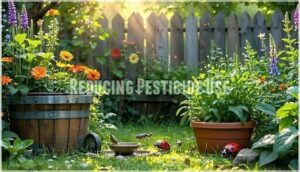
Choosing organic gardening methods protects birds from harmful chemicals that threaten their survival.
Pesticides contaminate insects that birds eat, leading to bird habitat loss and environmental impact on natural predators.
- Switch to integrated pest management – Use beneficial insects and birds as natural predators instead of chemicals
- Apply organic gardening techniques – Compost, mulching, and companion planting strengthen plants naturally
- Select safe alternatives – Neem oil, diatomaceous earth, and soap sprays target pests without harming birds
- Support habitat restoration – Healthy ecosystems balance pest populations through bird habitat conservation
- Practice bird habitat protection – Avoid spraying during nesting seasons to guarantee bird habitat preservation
Bird Species Habitat Needs
Different bird species need specific habitat features to survive and thrive in your space.
You’ll want to understand what cardinals, owls, blue jays, and hawks require before creating areas that attract these common backyard visitors.
Cardinal Habitat Requirements
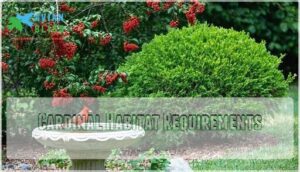
Cardinals need your help creating the perfect backyard retreat. These bright red beauties thrive when you provide dense shrubs for nesting and protection. Plant native understory species like dogwood and sumac within 1-15 feet of open areas.
Create a colorful cardinal paradise with dense shrubs and native plants for perfect backyard nesting spots.
| Habitat Feature | Cardinal Preference | Success Factor |
|---|---|---|
| Nesting Sites | Dense shrubs 1-15 feet high | Thick foliage coverage |
| Food Sources | Seeds, berries, insects | 70% seeds, 30% protein |
| Territory Defense | Mixed edge habitats | Open/cover balance |
Cardinals avoid dense forests and deserts. They need reliable water sources and native fruiting plants.
To encourage nesting, consider the nest box placement for ideal conditions. Reduce pesticide use to maintain insect populations for breeding season protein.
Create layered vegetation with both cover and open spaces for perfect Northern Cardinal habitat requirements.
Owl Habitat Requirements
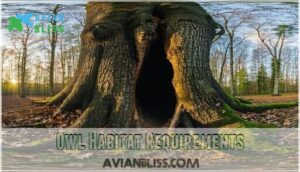
Owls need specific nesting cavities in mature trees or abandoned structures for successful breeding.
These woodland bird habitats must provide dense roosting sites for daytime shelter.
Prey availability directly impacts owl populations, requiring nearby open areas with healthy rodent communities.
Habitat fragmentation threatens these bird species by reducing territory size.
Conservation efforts focus on preserving deadwood and large snags essential for owl habitat requirements, including preserving mature trees and ensuring healthy rodent communities.
Blue Jay Habitat Requirements
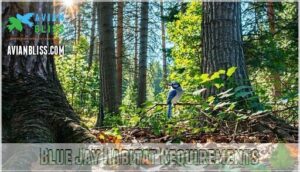
Blue Jay habitat requirements center on mixed woodlands with oak trees.
They prefer oak, pine, and beech trees for shelter and acorn collection.
Blue Jays require dense shrubs for nesting materials like twigs and rootlets.
They need large territories spanning 7-9 acres for nesting.
Food sources include insects, seeds, and nuts.
Urban bird habitats work when mature trees provide adequate cover and feeding opportunities.
Hawk Habitat Requirements
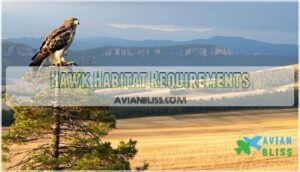
Hawks need open hunting grounds with elevated perches for spotting prey.
Red-tailed Hawks thrive when you provide:
- Territory Size: Large areas spanning several acres for hunting
- Nesting Sites: Tall trees or cliffs offering secure platforms
- Prey Availability: Open fields supporting rodents and small mammals
These raptors require habitat connectivity between roosting needs and hunting zones for successful breeding and survival.
Designing Bird Habitats
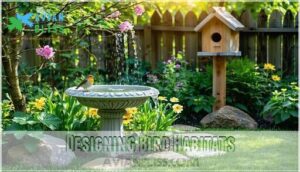
You’ll need to match your habitat design to your local climate and native bird species for the best results.
Success depends on selecting region-appropriate plants, adding reliable water features, and creating layered landscapes that offer food, shelter, and nesting sites year-round, which includes providing year-round support.
Considering Climate and Region
Your local climate shapes which Regional Bird Species will thrive in your backyard.
Climate Change Impact affects Habitat Suitability as temperatures shift northward.
Consider Seasonal Variations when planning—spring rainfall boosts breeding success while winter demands shelter.
Microclimate Considerations matter too, as Native plants increase bird abundance by 60% compared to exotic landscaping in similar zones.
Birdhouses in hotter climates need well-ventilated designs to guarantee bird comfort, especially on South-facing slopes that warm faster, attracting early foragers.
Choosing The Right Plants
Native plants beat exotic ones for bird habitat diversity and adaptation.
Choose species that produce berries and offer seasonal blooms year-round. This creates natural shelter needs while supporting bird habitat management.
Mix trees, shrubs, and ground cover for plant diversity. Consider sourcing native bird plants to enhance your local ecosystem.
Native options require less water and attract local insects that birds need for protein.
Incorporating Water Features
Water attracts more birds than any other single feature you can add.
Install shallow birdbaths, dripping fountains, or small ponds to create bird habitat enhancement. Moving water prevents mosquitoes and draws species year-round.
Clean water features weekly to maintain bird habitat diversity. Consider heated elements for winter water access in cold climates.
Creating a Diverse Landscape
Diversity matters when building bird habitats for different species.
Multiple layers from ground cover to canopy trees create microclimates that support various beginner birds through seasonal changes.
- Vertical structure – Include shrubs, understory plants, and tall trees to maximize habitat connectivity
- Edge effects – Blend open spaces with dense vegetation for bird habitat adaptation opportunities
- Microclimates – Create sunny and shaded areas supporting diverse bird habitat planning needs
Maintaining Bird Habitats
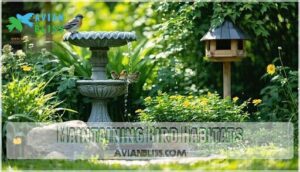
Once you’ve created your bird habitat, regular maintenance keeps it thriving year-round. Proper upkeep guarantees birds return season after season while protecting the ecosystem you’ve built.
Monitoring Bird Populations
Tracking birds helps you understand how well your habitat works.
Use citizen science apps like eBird to record what you see.
Watch for population trends over months and years.
Count different species during regular birdwatching sessions.
This data analysis shows your habitat impact and conservation effectiveness.
Simple monitoring reveals which improvements attract more beginner birds to your space, and helps you see the habitat impact.
Managing Invasive Species
Why let invasive species turn your bird sanctuary into their playground? These unwelcome guests cause serious ecosystem impacts through habitat loss and reduced native biodiversity.
Use mechanical control methods like hand-pulling small infestations. Apply targeted herbicides for larger invasions.
Implement prevention strategies by cleaning equipment between sites. Support native recovery through restoration plantings.
Practice biosecurity measures to prevent spread. Monitor your bird habitat regularly to catch invasions early and protect conservation status from anthropogenic threats.
Maintaining Feeders and Water Sources
Proper feeder hygiene prevents disease spread among visiting birds. Clean feeders monthly with diluted bleach solution. Replace water every few days to maintain freshness. Effective cleaning solutions promote safe bird habitats.
- Feeder Hygiene: Scrub feeding ports and perches to remove bacteria buildup
- Water Freshness: Change birdbath water twice weekly during warm weather
- Pest Control: Position feeders away from ant trails and use baffles
Winterizing feeders helps birds survive harsh conditions when natural food becomes scarce.
Creating a Sustainable Ecosystem
A sustainable ecosystem requires patience and long-term thinking.
You’re building a home that supports itself naturally.
Balance native plants with bird habitat restoration techniques.
Mix tree layers, shrubs, and ground cover to create biodiversity support.
Avoid chemicals that disrupt ecological balance.
Let natural processes guide your conservation practices.
Your sustainable gardening efforts will create lasting bird habitat enhancement for generations.
Frequently Asked Questions (FAQs)
What are the requirements for a bird’s habitat?
Birds build homes where food flows freely. You’ll find they need shelter for nesting, clean water sources, suitable food supplies, and safe spaces from predators and harsh weather conditions.
What is the best habitat for birds?
You’ll find diverse habitats work best since birds need food sources, water access, shelter options, and nesting sites.
Mixed environments with trees, shrubs, and open spaces support the widest variety of species effectively.
This was reorganized for better readability with diverse habitats.
How do you create a bird habitat?
Transforming your yard into nature’s sanctuary begins with three key elements: you’ll need fresh water sources like shallow dishes or birdbaths.
Native plants that provide seeds and berries, plus shelter through dense shrubs or birdhouses for nesting safety.
What kind of bird is best for beginners?
For beginner birdwatchers, you’ll want to start with common, easily identifiable species.
Cardinals, Blue Jays, and American Robins are perfect choices.
They’re colorful, active during daylight hours, and frequent backyard feeders regularly.
How do seasonal migrations affect habitat planning?
Does nature throw you a curveball when your feathered visitors disappear overnight?
You’ll need flexible habitat designs that support both resident species and seasonal travelers.
Plant native flowers that bloom at different times throughout the year to provide continuous food sources.
What materials make the best nesting boxes?
Cedar, pine, and hardwoods work best for nesting boxes.
You’ll want untreated, rough-cut lumber that’s at least three-quarters inch thick.
Cedar naturally resists weather and insects, making it perfect for long-lasting homes birds love, with hardwoods being a great option as well.
How close should different habitat types be?
You’ll want different habitat types within 50-100 feet of each other.
Birds need easy access to food, water, shelter, and nesting spots without traveling far.
This proximity reduces energy costs and predation risks.
Which predators threaten backyard bird populations most?
A neighbor’s cat killed three cardinals at my feeder last spring.
Cats pose the biggest threat to backyard birds, killing billions annually.
Dogs, hawks, and window strikes also reduce populations substantially.
How do light pollution levels impact birds?
Light pollution disrupts your bird neighbors’ natural behaviors.
Artificial lights draw migrating birds off course, causing exhaustion. Bright areas force birds to choose poor-quality feeding spots.
You’ll see confused birds wasting energy around streetlights instead of resting. Many cities now implement Lights Out programs to mitigate this issue with Lights Out initiatives.
Conclusion
Backyard bird watchers report 35% more species when they create layered habitats instead of simple feeding stations.
You’ve learned that successful bird habitats for beginners require three key elements: food sources, water features, and shelter options.
Start small with native plants and a basic birdbath. Add feeders near protective cover.
Layer vegetation at different heights to attract various species. Monitor your space regularly and adjust based on which birds visit.
With patience and proper planning, you’ll transform any outdoor area into a thriving bird sanctuary.
- https://join.birds.cornell.edu/page/150611/donate/1?ea.tracking.id=WXXXXX03C
- https://www.allaboutbirds.org/news/living-bird-latest-issue/
- https://www.merriam-webster.com/dictionary/environment
- https://web.archive.org/web/20130617183344/http://www.birdlife.org/news/pr/2009/05/red_list.html
- http://news.bbc.co.uk/2/hi/science/nature/8045971.stm