This site is supported by our readers. We may earn a commission, at no cost to you, if you purchase through links.
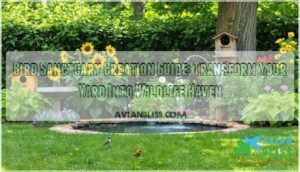 Creating your own bird sanctuary transforms your yard into a wildlife haven while providing essential habitat for local species.
Start by selecting native plants like sunflowers, coneflowers, and berry-producing shrubs that offer natural food sources. Install water features such as shallow bird baths or small fountains for drinking and bathing.
Place nesting boxes at appropriate heights, typically 5-15 feet depending on target species. Eliminate pesticides that harm insects birds rely on for protein.
Create brush piles and maintain dead tree snags for shelter and nesting sites. Consider your local climate and bird migration patterns when planning.
The right combination of food, water, shelter, and nesting space creates an ecosystem that supports dozens of species year-round.
Table Of Contents
- Key Takeaways
- Creating Bird Sanctuary
- Bird Habitat Design
- Attracting Bird Species
- Maintaining Bird Sanctuary
- Community Engagement Strategies
- Frequently Asked Questions (FAQs)
- How to establish a bird sanctuary?
- What qualifies as a bird sanctuary?
- How to create a backyard wildlife sanctuary?
- What makes a town a bird sanctuary?
- How much does bird sanctuary insurance cost annually?
- What permits are needed for larger sanctuaries?
- How to handle injured birds legally?
- What seasonal migration timing affects sanctuary planning?
- How to manage sanctuary finances and funding?
- Conclusion
Key Takeaways
- Focus on the four essentials – You’ll need to provide food sources, clean water features, proper shelter, and safe nesting spaces to create a thriving bird habitat that attracts diverse species year-round.
- Choose native plants over exotic ones – Native species support 35 times more insects than non-natives, creating abundant protein sources for birds while requiring less maintenance and water than foreign plants.
- Plan strategically for predator protection – Position feeders 10+ feet from hiding spots, install nesting boxes on poles rather than trees, and maintain clear flight paths to reduce predation by 35%.
- Maintain consistent cleaning schedules – Clean feeders weekly and bird baths every 2-3 days to prevent disease transmission, while monitoring your sanctuary’s success through regular bird counts and species identification.
Creating Bird Sanctuary
You’ll create a thriving bird sanctuary by focusing on four key elements: checking local regulations, selecting an ideal location, choosing native plants, and establishing reliable food sources.
These research-backed steps transform any yard into a certified wildlife habitat that attracts diverse bird species year-round, creating a thriving bird sanctuary.
Assessing Local Regulations
Before establishing your bird sanctuary, you’ll need to navigate local zoning ordinances and building codes.
Over 70% of municipalities require permits for wildlife projects. Check HOA restrictions first – they often limit structure heights and habitat modifications.
Contact your city’s planning department about environmental permits and noise regulations. Some areas restrict bird feeders or nesting boxes in residential zones, requiring conditional use permits for sanctuary development, which may involve conditional use permits and understanding of local zoning ordinances.
Choosing Right Location
Your bird sanctuary location determines success or failure before you even start. Choose a spot that offers natural advantages rather than fighting against your environment.
Consider these three essential factors:
- Sunlight exposure – Select areas with morning sun and afternoon shade, protecting birds from harsh midday heat while ensuring adequate warmth for feeding activity.
- Water access – Position your bird habitat within 50 feet of existing water sources or where you can easily install irrigation for water features and native plants.
- Wind protection – Identify naturally sheltered areas near existing vegetation or structures that provide windbreaks, reducing stress on visiting birds while maintaining good air circulation.
Selecting Native Plants
You’ll discover freedom in choosing plants that match your local ecosystem.
Regional Plant Guide resources from Local Nurseries help identify bird-friendly plant species with proper Soil Compatibility.
Native plants support 35 times more insects than non-natives, creating abundant food for birds.
Native plants create the ultimate bird buffet – transforming your yard into a natural insect factory that feeds hungry visitors.
Focus on Plant Diversity with Seasonal Blooms patterns.
Bird-attracting plants matched to your area boost bird-friendly gardening success dramatically.
Providing Food Sources
Three food sources create year-round bird nutrition.
Natural foraging areas with native berry bushes provide essential nutrients.
Strategic bird feeder placement near shelter offers consistent seed variety during harsh months.
Winter feeding becomes critical when insects disappear.
Plant flowers that attract insects for protein-rich meals.
Black oil seeds are high in calories, making them ideal for winter.
Combine multiple food placement strategies to support diverse bird species throughout seasons.
Bird Habitat Design
Creating effective bird habitats requires strategic placement of essential elements that meet birds’ survival needs.
You’ll need to position water features, nesting boxes, and shelter areas while implementing predator deterrents to establish a thriving avian ecosystem, which includes creating a complete and effective bird habitat.
Water Feature Installation
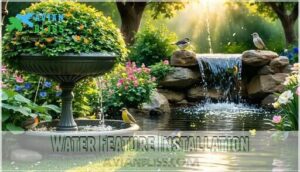
Water transforms your space into a bird magnet. Install shallow bird baths within ten feet of shrubs for predator protection.
Moving water features attract 60-80% more species than static sources. Consider fountain selection with bubblers to prevent mosquito breeding.
Stream creation and waterfall design add visual appeal while supporting diverse bird habitat needs. A key element is selecting the right bath.
Birdbath heaters maintain winter access for year-round bird sanctuary development success.
Nesting Box Placement
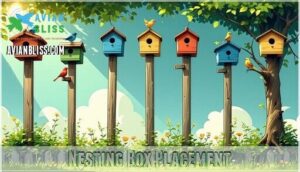
Strategic nesting box placement transforms your yard into a thriving bird sanctuary. Proper positioning guarantees maximum occupancy while protecting vulnerable nestlings from predators and harsh weather conditions.
**Turn any backyard corner into a bird paradise with smart placement—your feathered friends will thank you.
- Height Considerations: Mount boxes 5-10 feet high to balance predator protection with maintenance accessibility
- Directional Facing: Position entrances southeast for morning sun exposure while avoiding harsh afternoon heat
- Species Needs: Match entrance hole sizes – 1 inch for wrens, 1.25 inches for chickadees, 1.5 inches for bluebirds
- Spacing Requirements: Maintain 50-100 yards between boxes to prevent territorial disputes among nesting pairs
- Predator Prevention: Install on poles rather than trees to reduce mammalian predation by 35%. Consider using a pole predator guard for enhanced protection.
Creating Sheltered Areas
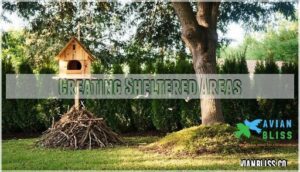
Birds need safe spaces to rest and escape harsh weather.
Dense shrubs create natural canopies that block wind and rain. Stack fallen branches into brush piles for quick hiding spots.
Install wooden roosting structures near feeders for overnight shelter. Plant evergreen trees as wind breaks around your sanctuary’s edges.
These thermal cover options help birds survive temperature extremes while supporting year-round bird sanctuary establishment and development. They provide a way to create a safe haven, utilizing natural canopies to ensure the well-being of the birds.
Minimizing Predator Access
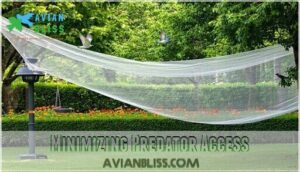
Protecting your feathered visitors requires smart predator control measures that don’t compromise their freedom.
Cats, hawks, and other threats can quickly turn your sanctuary into a hunting ground without proper bird protection strategies.
- Netting Options – Install fine mesh over feeding areas while maintaining 6+ feet clearance for flight paths
- Fencing Strategies – Create 4-foot barriers around ground-feeding zones using wildlife conservation-approved materials
- Habitat Placement – Position feeders 10+ feet from cover where predators hide, near escape routes for avian protection
- Visual Barriers – Use reflective tape and predator deterrents to create wildlife conservation zones that discourage hunting
Attracting Bird Species
Once you’ve designed your habitat with proper shelter and water features, you’ll need specific strategies to draw diverse bird species to your sanctuary.
Research shows that combining native plants, strategically placed feeders, and pesticide-free practices creates an irresistible environment that can attract over 50% more bird species than conventional yards.
This approach can lead to a significant increase in the variety of birds visiting your yard, making it a true sanctuary.
Using Bird-Friendly Plants
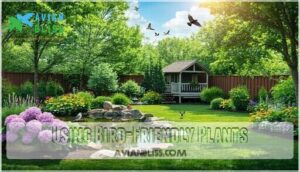
Native plantings reveal your yard’s potential as a bird magnet. Choose species that produce berries and seeds year-round.
Elderberry, serviceberry, and native grasses create natural seed sources while providing shelter provision. These bird-friendly plants support attracting pollinators too.
Layered plantings from ground cover to canopy trees maximize bird habitat restoration in your bird sanctuary design.
Installing Bird Feeders
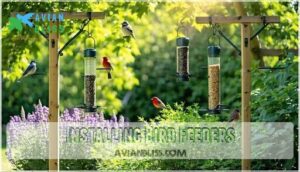
Place bird feeders strategically throughout your sanctuary to maximize avian activity.
Install multiple feeder types containing diverse seed varieties to attract different species.
Position feeders near natural cover but maintain clear sight lines for bird safety.
Consider different bird feeder styles to cater to various bird preferences.
Implement squirrel deterrents like baffles or caged designs.
Establish a weekly cleaning frequency to prevent disease transmission and maintain ideal bird feeding conditions for your developing sanctuary.
Creating Bird Baths
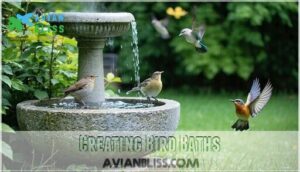
Water sources reveal your backyard’s potential for attracting diverse bird species.
Position shallow basins 2-3 feet high near shrubs for quick escape routes. Use rough-textured bath materials like concrete or stone for secure footing.
Maintain 1-2 inch water depth – deeper areas drown smaller songbirds. Clean every 2-3 days to prevent algae buildup and disease transmission.
During winter, heated bird baths keep water accessible when natural sources freeze, supporting year-round wildlife activity.
Reducing Pesticide Use
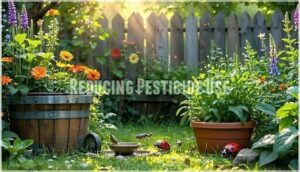
Chemical pesticides regularly poison birds and destroy their food sources.
Switching to organic gardening methods and safe alternatives like beneficial insects protects feathered visitors.
Natural predators such as ladybugs eliminate pests without harming birds.
Integrated pest management reduces chemical dependency by 40% while supporting habitat diversity essential for bird sanctuary creation strategies and birdfriendly gardening success.
Implementing IPM can lead to increased bird abundance.
Maintaining Bird Sanctuary
Once you’ve established your bird sanctuary, ongoing maintenance guarantees healthy populations and thriving ecosystems year-round.
Proper upkeep involves systematic cleaning routines, population monitoring, invasive species control, and consistent food provisioning to support diverse bird communities, ensuring healthy populations.
Regular Cleaning Schedule
Clean feeders weekly with hot, soapy water to prevent disease spread.
Scrub bird baths every three days, replacing water completely. Remove fallen seeds and droppings from ground areas daily.
Disinfect nesting boxes monthly using diluted bleach solution. Sterilize cleaning tools between uses to maintain proper bird sanctuary management and preserve healthy habitats for returning species, ensuring a clean environment for healthy habitats.
Monitoring Bird Population
Population counts reveal your sanctuary’s true success story.
Record bird species weekly using identification guides and note arrival times throughout seasons.
Track which areas attract different birds and document behavior patterns.
This data analysis helps you understand migration patterns and habitat health changes over time.
Remote sensing technologies can further enhance data collection efforts.
Citizen science apps make recording easier while contributing to broader bird conservation research efforts.
Managing Invasive Species
While invasive species threaten bird sanctuary health, strategic management protects native habitats effectively.
Early species identification prevents 85% of major outbreaks through regular surveillance programs.
- Species Identification – Train volunteers to recognize invasive plants before significant spread occurs
- Removal Methods – Manual extraction achieves 90% density reduction in targeted areas
- Prevention Strategies – Install barriers and educate visitors to reduce introductions by 35%
- Long-Term Monitoring – Schedule quarterly assessments to maintain ecosystem management success
Ensuring Continuous Food Supply
Multiple seed types maintain year-round nutrition balance in your bird sanctuary.
Sunflower seeds attract cardinals while nyjer feeds goldfinches.
Clean feeders weekly to prevent mold growth.
Plant native berry bushes and nectar-rich flowers for natural food sources.
Monitor water quality in bird baths daily.
Strategic seed selection guarantees diverse bird species visit consistently throughout seasons, ensuring a natural food supply.
Community Engagement Strategies
Your sanctuary becomes a community hub when you share its wonders with others through organized events and programs.
Building local partnerships amplifies conservation impact while creating lasting educational experiences for visitors of all ages.
Organizing Bird Watching Events
Once your sanctuary thrives, organize Bird Tours to share your success.
Event Planning connects neighbors with backyard birds through structured Nature Walks.
- Schedule weekly bird counts during peak migration periods
- Partner with local Wildlife Guides for species identification workshops
- Host dawn walks when bird activity peaks naturally
These bird watching gatherings strengthen bird conservation efforts while building community support for birdfriendly gardening practices.
Creating Educational Programs
Develop structured curriculum design that targets local bird species through hands-on activities.
Teacher training workshops boost program quality by 67%, while interactive lesson plans improve retention rates by 36%.
Student engagement soars when combining citizen science projects with Cornell Lab of Ornithology resources.
Program evaluation through pre-and post-surveys documents 39% knowledge gains, supporting effective bird conservation efforts and sanctuary management practices.
Collaborating With Local Schools
Teaching partnerships facilitate hands-on learning through bird habitat restoration.
Contact local schools to design Educational Workshops matching science curriculum standards.
Cornell Lab of Ornithology provides free resources for teachers.
Student Volunteers gain real experience while supporting Community Outreach goals.
Schedule birdfriendly gardening sessions where kids plant native species.
Host fundraiser events combining education with community engagement.
These School Partnerships create lasting environmental stewards.
By promoting wildlife conservation efforts, we can inspire a new generation of nature lovers and protect local ecosystems, supporting community engagement and environmental stewards.
Developing Volunteer Opportunities
Recruiting helpers transforms your sanctuary into a community hub.
Partner with local gardening clubs for Volunteer Recruitment and Event Planning. Create structured programs that match skills with tasks like habitat monitoring and educational tours.
These Partnership Building efforts expand your Community Outreach while supporting wildlife conservation.
- Weekend maintenance crews – Organize monthly clean-up sessions where volunteers remove invasive plants and refresh water sources
- Educational docents – Train community members to lead guided tours and teach visiting groups about native bird species
- Fundraiser coordinators – Establish teams to manage charity events and Donation Management for sanctuary equipment purchases
Frequently Asked Questions (FAQs)
How to establish a bird sanctuary?
Choose your habitat, provide four essentials, plant native species, install feeders, maintain water sources.
You need food, water, shelter, and safety.
Native plants attract local birds naturally while creating nesting spots.
What qualifies as a bird sanctuary?
You’ll need protected habitat with adequate food sources, water features, nesting sites, and minimal human disturbance. Legal designation requires government approval, management plans, and ongoing conservation commitments to qualify officially.
How to create a backyard wildlife sanctuary?
Plant native species, install water features, and provide shelter options. You’ll create food sources, nesting spots, and safe corridors. Native plants support local ecosystems while water attracts diverse wildlife naturally.
What makes a town a bird sanctuary?
Towns earn bird sanctuary status through official designation protecting birds within corporate limits.
and meeting specific habitat, community engagement, and bird safety goals.
that typically require establishing protective ordinances and conservation programs.
How much does bird sanctuary insurance cost annually?
Insurance costs for bird sanctuaries range from $2,000-$10,000 annually depending on sanctuary size, location, visitor numbers, and coverage levels.
You’ll need general liability, professional liability, property insurance, and workers’ compensation.
Contact specialized nonprofit insurers for accurate quotes customized to your operation.
What permits are needed for larger sanctuaries?
Federal and state wildlife permits verify your sanctuary’s freedom to operate.
You’ll need migratory bird permits from U.S. Fish & Wildlife Service plus specific state licenses for non-profit sanctuaries.
To maintain compliance, understanding migratory bird permits is vital for sanctuary owners, as it ensures they have the necessary permits to operate legally.
How to handle injured birds legally?
You’ll need both federal and state wildlife rehabilitation permits to legally handle injured birds.
Veterinarians must transfer birds to permitted rehabilitators rather than keeping them.
Understanding the rules for migratory bird permits is essential for compliance with the laws regarding injured birds.
What seasonal migration timing affects sanctuary planning?
Like rivers following ancient paths, migratory birds navigate predictable seasonal highways twice yearly.
You’ll need to plan your sanctuary around spring arrivals (March-May) and fall departures (August-October), matching habitat resources to peak migration periods for maximum conservation impact.
How to manage sanctuary finances and funding?
You’ll need diversified revenue streams: grants from conservation foundations, membership fees, educational program income, and corporate sponsorships.
Create detailed budgets tracking operational costs versus income.
Consider endowment fundraising for long-term sustainability.
Conclusion
Successfully establishing your bird sanctuary creation guide requires patience and dedication to environmental stewardship.
You’ll witness remarkable transformations as native species discover your thoughtfully designed habitat.
Regular maintenance guarantees sustainable ecosystems while monitoring helps track population changes.
Your efforts support declining bird populations through strategic habitat restoration.
Within months, you’ll observe increased biodiversity as various species establish territories in your sanctuary.
This thorough bird sanctuary creation guide provides the foundation for creating lasting positive environmental impact in your community, fostering a sense of environmental stewardship.
- https://www.greenjaylandscapedesign.com/blog/designing-a-bird-sanctuary-part-one-site-development-storm-water-darien-ct/
- https://www.nwf.org/Native-Plant-Habitats/Create-and-Certify
- https://www.bbg.org/article/a_bird-friendly_garden
- https://bowerandbranch.com/blogs/native-trees-and-plants/how-to-build-a-bird-sanctuary-in-your-backyard
- https://gardens.si.edu/gardens/urban-bird-habitat/