This site is supported by our readers. We may earn a commission, at no cost to you, if you purchase through links.
 When you notice your bird suddenly biting, screaming excessively, or plucking feathers, you’re not dealing with simple "bad behavior."
These actions often signal underlying health issues like pain from arthritis, nutritional deficiencies, or environmental stress that only an avian vet can properly diagnose.
Your feathered friend can’t tell you they’re hurting, so they communicate through behavioral changes instead.
Understanding whether you’re seeing natural instincts versus problematic habits makes all the difference in treatment.
Simple environmental adjustments like proper cage size, adequate sleep, and mental stimulation can transform aggressive birds into happy companions.
Professional guidance helps distinguish between medical concerns requiring immediate attention and behavioral issues that respond well to training techniques.
Table Of Contents
- Key Takeaways
- Avian Behavior Issues
- Causes of Bird Biting
- Common Bird Behavior Problems
- Species Specific Behavior Issues
- Recognizing Stress in Birds
- Training and Behavior Management
- Seeking Professional Help
- Frequently Asked Questions (FAQs)
- What are some common bird behavior problems?
- What causes a bird to be aggressive?
- What causes a bird to act out?
- How do you deal with avian stress?
- Do parrots have behavior problems?
- How does stress affect a bird?
- What are the most common bird behavior problems?
- How to correct bad bird behavior?
- When should I see a veterinary behaviorist?
- Should I consult an avian vet?
- Conclusion
Key Takeaways
- You’re dealing with communication, not misbehavior—when your bird bites, screams, or plucks feathers, they’re telling you something’s wrong, often indicating pain, nutritional deficiencies, or environmental stress that requires professional evaluation.
- Your bird’s environment directly shapes their behavior—proper cage size (1.5 times wingspan), adequate sleep, mental stimulation, and social interaction prevent most behavioral problems before they start.
- You can’t punish your way to better behavior—positive reinforcement, consistent training, and addressing underlying causes work far better than corrections for transforming problematic behaviors into healthy ones.
- You need professional help when problems persist—an avian vet can identify medical causes while a certified behaviorist provides specialized training techniques, and 85% of behavior problems stem from preventable factors.
Avian Behavior Issues
If you’ve ever wondered why your feathered friend suddenly turned into a tiny dinosaur with attitude, you’re not alone.
Understanding the difference between normal bird behaviors and genuine problems can save both you and your pet from unnecessary stress.
Natural Behaviors Vs Problematic Ones
Many birds exhibit natural behaviors that seem problematic in captivity but aren’t inherently wrong.
What seems like misbehavior is often just your bird being a bird.
Understanding parrot behavior helps distinguish between instinct vs. habit.
Wild bird behavior includes screaming at dawn, which captivity’s impact makes disruptive.
Your avian vet can help identify when redirecting instincts works better than defining problem behaviors as issues requiring elimination, which involves understanding the difference between instinct and habit.
Environmental Factors Influence
Your bird’s environment shapes their behavior more than you might realize.
Cage size matters—birds need space 1.5 times their wingspan to feel secure.
Sleep deprivation from too much light disrupts natural rhythms, while inadequate mental stimulation triggers destructive habits.
Nutritional impact affects mood and energy levels.
Even small habitat changes like moving their cage can create stress. Environmental factors directly influence bird behavior problems, making proper bird enrichment and setup your first line of defense against bird stress causes with a focus on proper bird enrichment.
Signs of Stress and Anxiety
Recognizing bird stress symptoms early can save your feathered friend from serious health issues.
Watch for vocalization changes like excessive screaming or unusual silence, feather damage from plucking, and appetite changes affecting eating habits.
Repetitive behaviors such as pacing, increased fear responses, and physical signs like trembling indicate your bird needs immediate attention and environmental adjustments to prevent serious health issues, including those affecting their eating habits.
Causes of Bird Biting
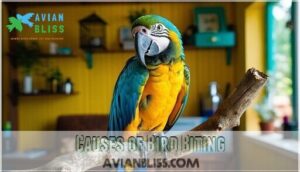
Understanding why your bird bites is the first step toward building a safer, more trusting relationship.
Biting often signals underlying health issues, fear responses, or pain that your feathered friend can’t communicate in words.
Types of Bird Bites
Understanding biting behavior starts with recognizing different types. Your bird’s bite can tell a story about their emotional state and needs.
Types of bird bites you’ll encounter:
- Warning nips – gentle pressure without breaking skin
- Fear bites – sudden, hard bites when startled or cornered
- Territorial bites – aggressive lunging behavior defending their space
- Attention-seeking bites – deliberate nips to get your reaction
Severity levels vary by species variation and bite motivation. Parrot biting often involves more pressure than smaller birds. Bite location matters too – face bites require immediate first aid, while finger nips need different responses. Sometimes, bites can be attributed to hormonal changes during puberty.
Health Issues Indicated by Biting
Sudden parrot biting often signals underlying medical conditions requiring immediate attention.
Underlying pain from arthritis or egg binding triggers defensive aggression. Nutritional deficiencies, particularly vitamin A, cause painful oral lesions leading to increased biting behavior.
Neurological disorders and liver disease manifest as mood changes and defensive responses. Heavy metal toxicity creates confusion and sudden behavioral shifts, making biting behavior a critical health indicator requiring veterinary evaluation.
Heavy metal toxicity is a serious condition that can lead to sudden behavioral shifts, and it is essential to address it promptly to prevent further complications.
Fear and Pain Signals
When your bird bites without warning, you’re witnessing clear pain or fear communication.
Your bird’s sudden bite is their emergency signal—listen to what they can’t say
Interpreting Bird Language helps you spot Subtle Stress Signs before aggression escalates. Early Intervention prevents minor discomfort from becoming major behavioral problems.
Key Pain-Related Behaviors to watch for:
- Physical signs of stress – trembling, crouching, or favoring one foot often signal hidden injuries
- Fear triggers – sudden movements away from previously enjoyed perches or toys indicate developing phobias
- Early signs of stress – changes in vocalization patterns or appetite that precede aggressive episodes
Common Bird Behavior Problems
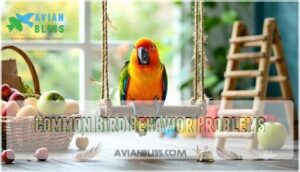
You’re not alone if your bird’s behavior has you scratching your head—over 70% of bird owners face challenging behaviors like aggression, excessive screaming, or feather plucking.
These common issues often stem from boredom, stress, or unmet needs, but understanding the root causes can help you create a happier environment for both you and your feathered friend, addressing issues like boredom.
Aggression and Vocalization
When your bird’s communication turns into chaos, you’re witnessing natural instincts gone wrong.
Bird aggression and screaming parrot behavior often stem from boredom or territorial disputes.
Understanding biting triggers helps you decode their vocalization types.
Effective aggression management involves identifying specific bird communication patterns.
Noise reduction strategies work best when you address underlying causes rather than symptoms.
Addressing this behavior can involve understanding hormonal changes and adolescence.
Feather Plucking and Self-Mutilation
While aggression grabs attention, feather plucking and self-mutilation often signal deeper distress.
These behaviors affect up to 10% of captive parrots, with underlying illnesses, social isolation, and environmental factors as primary triggers.
Three heartbreaking realities about feather mutilation causes:
- 50% stem from anxiety disorders – your bird’s emotional pain manifests physically
- Social isolation drives 65% of cases – loneliness literally hurts
- Early intervention prevents 70% of chronic cases – timing saves lives
Environmental enrichment and proper behavioral framework transform plucking treatment outcomes substantially.
Destructive Behaviors and Solutions
Beyond feather plucking, birds often channel stress into destructive behavior.
When stress builds up, your bird’s natural instincts turn against your furniture, toys, and peace of mind
Chewing furniture, shredding paper, or dismantling cage accessories signals boredom rather than misbehavior.
You can redirect behavior through supervised destruction activities and strategic cage enrichment.
Many owners find success with enrichment and stimulation.
| Destructive Behavior | Solution |
|---|---|
| Excessive chewing | Provide foraging toys and rotate weekly |
| Paper shredding | Offer supervised destruction time daily |
| Cage bar bending | Increase physical exercise and mental stimulation |
| Toy destruction | Replace with harder materials like untreated wood |
Smart parrot behavior problems require creative bird behavior modification approaches.
Species Specific Behavior Issues
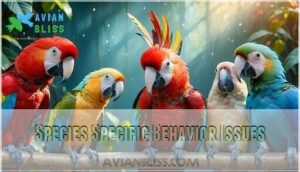
Each bird species brings unique behavioral challenges that require specialized understanding to address effectively.
While cockatoos are notorious for their dramatic feather-damaging behaviors affecting up to 30% of individuals, lovebirds also show significant plucking tendencies at 24.5%.
Each species demands customized approaches to their distinct psychological and social needs.
Parrots and Cockatoos Considerations
When you’re dealing with parrots and cockatoos, you’ll notice their Parrot Intelligence creates unique challenges.
African greys excel at problem-solving but develop feather plucking without social interaction.
Cockatoos produce abundant Cockatoo Dust and exhibit loud dawn vocalizations.
Both species need extensive Enrichment Needs to prevent Destructive Chewing and Bonding Issues that lead to serious parrot behavior problems requiring specialized training approaches.
Lovebirds and Conures Behavior
Lovebirds pack three times more territorial punch than budgies, turning cages into fortress battlegrounds.
Your conure’s 15-minute screaming concerts aren’t personal—they’re dawn and dusk nature calls.
Pair-bonded lovebirds might bite you during breeding season, while green-cheeked conures fear new environments.
Both species crave social interaction; lonely birds develop pacing and self-directed aggression. Consult your avian vet for species-specific housing needs and vocal communication strategies.
Addressing Unique Species Needs
Every bird species has distinct needs that require your understanding and patience.
Eclectus parrots need vitamin A-rich diet variations to prevent toe-tapping behaviors, while Caiques require controlled outlets for their burst play episodes.
Understanding these natural behaviors helps your avian vet create targeted treatment plans.
Species enrichment and social structures vary dramatically across parrot behavior patterns, influencing the overall avian vet approach.
Recognizing Stress in Birds
Understanding your bird’s stress signals can prevent serious behavioral problems from developing.
You’ll notice physical changes like stress bars on feathers, weight loss, and altered droppings, plus behavioral shifts such as excessive screaming, sudden quietness, or aggressive responses that weren’t there before.
Physical Signs of Stress
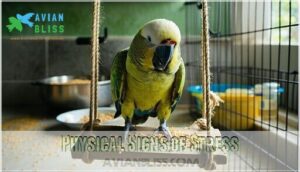
You’ll notice physical signs when stress overwhelms your bird’s system.
Feather abnormalities like stress bars appear as dark lines across feathers, while dropping changes in color or consistency signal internal distress.
Weight fluctuations happen quickly – birds can lose significant body mass within days.
Watch your bird’s body language closely: crouching, trembling, or flattened posture indicates anxiety.
Appetite loss often accompanies these stress indicators, creating a cycle that worsens your bird’s condition if left unaddressed.
Stress can also manifest as feather picking behaviors, indicating a significant problem.
Behavioral Changes and Indicators

When your bird’s usual personality shifts, you’re witnessing stress in action.
Changes in vocalization, aggressive behaviors, appetite changes, and sleep patterns reveal your feathered friend’s internal struggles.
- Vocalization Shifts – Excessive screaming or unusual silence signals distress
- Appetite Changes – Weight loss and altered eating habits indicate serious stress
- Dropping Changes – Color or consistency changes point to health concerns
- Fear Increase – Repetitive behaviors like pacing show anxiety levels rising
Environmental Stress Triggers

Beyond recognizing physical and behavioral changes in your bird, understanding what triggers stress in their environment helps you create a safer space.
Cage size, light exposure, and habitat changes substantially impact your bird’s wellbeing, while poor diet quality and lack of mental stimulation compound these environmental stressors.
| Environmental Factor | Stress Trigger | Bird’s Response |
|---|---|---|
| Cage Size | Inadequate space (less than 1.5x wingspan) | 72% increase in repetitive movements |
| Light Exposure | Artificial lighting at night | Disrupted sleep, 64% show irritability |
| Noise Levels | Ambient sounds above 70dB | 68% develop stress-related behaviors |
| Temperature | Sudden drops below 18°C | Shivering, fluffed feathers, decreased activity |
Training and Behavior Management

You can successfully modify your bird’s behavior using proven training methods that work with their natural intelligence.
The key lies in understanding positive reinforcement techniques and applying them consistently to replace problem behaviors with acceptable alternatives.
Positive Reinforcement Techniques
Positive reinforcement transforms stubborn behaviors into willing cooperation.
You’ll find success using treats, praise, or favorite activities immediately after your bird displays desired behavior.
Research shows positive reinforcement improves behavior in 70% of cases.
Follow the 5:1 rule—five positive interactions for every correction—to strengthen your bond and build trust with consistent reward schedules, which helps in building trust.
Clicker and Target Training
Through targeted guidance and consistent practice sessions, you’ll transform your bird’s behavior using these evidence-based training techniques that veterinarians recommend:
- Clicker basics: Pair the click sound with treats to create clear communication markers
- Target precision: Use a stick or finger target to redirect attention from problem behaviors
- Training consistency: Practice short 5-minute sessions daily for maximum learning retention
- Advanced techniques: Combine clicker training parrots with target work for complex behavioral modifications
Many owners find clicker training effective with their birds.
Addressing Biting and Screaming
When your bird bites or screams, redirect this behavior through positive alternatives rather than punishment.
Use environmental enrichment like foraging toys to address underlying boredom causing bird aggression.
For bite prevention, teach "step up" commands with treats.
Consider using positive reinforcement treats to motivate desired actions.
Scream management involves ignoring attention-seeking vocalizations while rewarding quiet moments, effectively transforming problematic avian behavior problems into manageable interactions through positive reinforcement and environmental enrichment.
Seeking Professional Help
When your bird’s behavior problems persist despite your best efforts, it’s time to seek professional help.
An avian veterinarian can identify underlying medical causes while a certified behaviorist provides specialized training techniques for lasting solutions.
When to Consult an Avian Vet

Professional help becomes necessary when training alone doesn’t resolve persistent bird behavior problems.
Contact an avian vet immediately if you notice sudden aggression, feather damage, vocal changes, appetite loss, or unusual postures.
These symptoms often indicate underlying health issues requiring medical attention, and an avian behavior consultation can differentiate between medical and behavioral causes, ensuring proper treatment.
Collaborating With Avian Behaviorists

When your avian vet’s expertise synergy with an avian behaviorist creates thorough treatment approaches, complex bird behavior problems find better solutions.
This collaboration combines medical knowledge with specialized behavioral insights for long-term success. Addressing a bird’s environmental and social needs can substantially improve their well-being.
Consider these communication strategies for effective owner education:
- Joint consultations – Schedule appointments where both professionals assess your bird’s needs together
- Shared progress tracking – Use coordinated record-keeping between your avian vet near me and behaviorist
- Integrated training plans – Follow combined medical and behavioral protocols during avian behavior consultation sessions
Preventing Behavior Problems With Proper Care
Building a foundation for healthy bird behavior starts with understanding that prevention beats correction every time.
You can’t just fix problems after they appear—you’ve got to create conditions where issues don’t develop in the first place.
| Care Element | Prevention Benefit | Your Bird’s Response |
|---|---|---|
| Enriched Environment | Reduces boredom by 50% | Happy, engaged companion |
| Social Interaction (4-6 hrs) | Prevents screaming issues | Trusting, bonded relationship |
| Diet Quality & Veterinary Checkups | Stops stress-related behaviors | Healthy, content bird |
| Early Intervention | Resolves 90% of problems | Peaceful household harmony |
Frequently Asked Questions (FAQs)
What are some common bird behavior problems?
Is your feathered friend driving you up the wall?
You’re dealing with feather plucking, excessive screaming, biting, or aggression – the most common behavioral issues affecting over 70% of bird owners nationwide.
What causes a bird to be aggressive?
Your bird’s aggression often stems from fear, territorial instincts, or stress.
Poor socialization, hormonal changes, pain, inadequate environment, or feeling threatened can trigger aggressive behaviors like biting and lunging toward you, which is often a result of the bird feeling threatened.
What causes a bird to act out?
Like a pressure cooker without a release valve, your bird’s acting out because they’re overwhelmed.
Boredom, stress, inadequate sleep, poor diet, lack of social interaction, or underlying health issues trigger these disruptive behaviors in captivity, which can be caused by various factors including inadequate sleep.
How do you deal with avian stress?
Create a calm environment with proper lighting, consistent routines, and enrichment activities. Address physical needs first, then use positive reinforcement training. Remove stressors and provide safe spaces for recovery.
Do parrots have behavior problems?
Absolutely, parrots definitely have behavior problems.
You’ll encounter feather plucking, excessive screaming, and biting in many pet parrots.
These issues stem from boredom, inadequate social interaction, or environmental stress affecting their well-being.
How does stress affect a bird?
Stress wreaks havoc on your bird’s body and mind.
You’ll notice feather plucking, aggressive behavior, appetite changes, and altered droppings.
Chronic stress weakens immunity, disrupts sleep patterns, and can trigger serious health complications requiring immediate veterinary attention.
What are the most common bird behavior problems?
You’ll likely encounter feather plucking, excessive screaming, biting, and aggression in your bird. These behaviors often stem from boredom, inadequate mental stimulation, or environmental stress affecting your feathered companion’s well-being.
How to correct bad bird behavior?
You can’t force a square peg into a round hole—punishment backfires with birds.
Use positive reinforcement, consistent routines, and environmental enrichment.
Replace unwanted behaviors with desired ones through patient training and rewards.
When should I see a veterinary behaviorist?
You should consult a veterinary behaviorist when your bird’s problems persist despite environmental changes, when aggressive behaviors escalate, or when self-destructive actions like feather plucking worsen substantially.
Should I consult an avian vet?
Yes, you should consult an avian vet when behavioral problems persist despite your best efforts.
They can rule out medical causes, provide specialized treatment plans, and connect you with certified behaviorists for complex issues.
Conclusion
Studies show that 85% of bird behavior problems stem from preventable environmental or health factors.
When you’re facing avian vet behavior problems, remember that your bird’s actions are their voice. Whether it’s biting, screaming, or feather plucking, these signals deserve attention, not punishment.
Professional help from an avian vet can distinguish between medical issues and behavioral concerns. With proper care, training, and environmental adjustments, most behavior problems become manageable.
Your patience and understanding will transform challenging behaviors into opportunities for deeper connection with your feathered companion, leading to a more manageable relationship.
- https://www.creaturehealth.com/2021/05/26/bird-behavior-problems/
- https://bioone.org/journalArticle/Download?urlId=10.1647%2F2010-027.1
- https://pmc.ncbi.nlm.nih.gov/articles/PMC8279392/
- https://lafeber.com/vet/behavior-and-medical-issues-in-birds/
- https://www.westminsterveterinarygroup.com/what-is-a-common-behavior-problem-in-pet-birds.html