This site is supported by our readers. We may earn a commission, at no cost to you, if you purchase through links.
 You’ll spot avian eye infection symptoms pretty quickly when they appear.
Watch for redness and swelling around your bird’s eye area, along with crusty or watery discharge that might seal the eye shut.
Your feathered friend may blink excessively, squint, or keep one eye closed more than usual.
The eye itself might look cloudy or change color, and you’ll notice your bird rubbing or scratching at the affected area.
Some birds become less active or show changes in appetite when dealing with eye discomfort.
These symptoms can signal bacterial, viral, or fungal infections, or even nutritional deficiencies like low vitamin A.
Getting a proper veterinary diagnosis matters because different causes require specific treatments, and what looks like a simple irritation might actually indicate something more serious brewing beneath the surface.
Table Of Contents
- Key Takeaways
- Recognizing Eye Infections
- Avian Conjunctivitis Signs
- Identifying Eye Problems
- Eye Infection Treatment Options
- Preventing Avian Eye Infections
- Frequently Asked Questions (FAQs)
- How do I know if my bird has an eye infection?
- How do you know if a bird has conjunctivitis?
- What are common eye disorders in birds?
- Do you need an avian vet if you have a bird eye infection?
- What is avian conjunctivitis?
- How do you know if a parrot has a bird eye infection?
- How do you know if a bird’s eye is infected?
- How do you get rid of a bird’s eye infection at home?
- Will bird conjunctivitis go away on its own?
- How long do eye infections last?
- Conclusion
Key Takeaways
- Watch for visible symptoms – You’ll spot red, swollen eyelids with thick discharge that crusts around your bird’s eyes, plus cloudy or color-changed eyes.
- Notice behavioral changes – Your bird will squint, blink excessively, scratch at their eyes, or keep one eye closed more than usual.
- Don’t wait for improvement – Eye infections rarely resolve on their own and typically worsen without proper veterinary treatment within 3-14 days.
- Seek professional diagnosis – You’ll need an avian vet to identify whether it’s bacterial, viral, fungal, or parasitic, since each requires specific prescription medications.
Recognizing Eye Infections
When you notice your bird squinting, scratching at its eyes, or showing thick discharge around the eye area, you’re likely seeing signs of an eye infection.
These symptoms can develop quickly and require prompt attention to prevent vision problems and guarantee your bird’s comfort.
Common Symptoms of Avian Eye Infections
When spotting avian eye infection symptoms, you’ll notice your bird’s eyes telling a story of discomfort.
Eye Discharge Types range from watery to thick, crusty formations around the eye area. Swollen bird eye conditions often accompany these infections, while Behavioral Changes signal your pet’s distress.
- Discharge variations: Watery bird eye secretions progress to thick, white or tan crusts
- Swelling Severity: Eyelids become puffy and red, sometimes affecting the entire head area
- Vision Impairment: Birds squint, blink frequently, or keep eyes closed due to discomfort
Redness and Swelling Around The Eye
When redness and swelling appear around your bird’s eye, you’re witnessing classic avian eye infection symptoms.
Eyelid inflammation often spreads beyond the eye itself, causing head swelling and facial edema that can indicate sinus involvement.
This conjunctivitis creates visible trauma indicators—puffy tissues that make your feathered friend look uncomfortable and squinty.
Discharge and Crusting Around The Eye
Eye discharge serves as your bird’s early warning system for infections.
Early discharge detection prevents serious complications in your feathered friend’s delicate eyes.
You’ll notice thick, white or tan discharge forming crusty deposits around the affected eye.
The discharge consistency ranges from watery to paste-like, while crusting severity increases with infection progression.
Color variations include clear, yellow, or greenish hues that may produce associated odor in advanced cases.
Regular cleaning methods using sterile saline help manage symptoms until veterinary treatment begins.
Changes in Eye Appearance and Behavior
Beyond the obvious redness, swelling, and discharge, watch for subtle behavioral shifts that signal trouble brewing.
Squinting behavior often emerges first—your bird might keep one eye partially closed or blink excessively.
Cloudy eyes develop as infections progress, creating a milky or glassy appearance that impairs vision.
You’ll notice excessive tearing, eye rubbing against perches, and distinctive head tilting as your feathered friend compensates for discomfort and visual changes.
It’s also worth noting that digestive problems can arise due to parasitic infections, which can lead to other complications, emphasizing the need to monitor for subtle behavioral shifts.
Avian Conjunctivitis Signs
You’ll recognize avian conjunctivitis by several telltale signs that affect your bird’s eyes and surrounding areas.
This eye condition stems from bacterial, viral, fungal, or parasitic infections that require prompt identification for effective treatment.
Bacterial and Viral Causes of Conjunctivitis
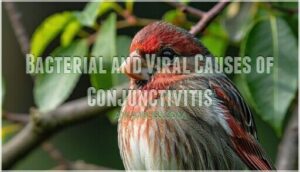
Bacterial infections dominate avian conjunctivitis cases, with Mycoplasma gallisepticum causing widespread outbreaks in house finches.
Chlamydia psittaci, E. coli, and Staphylococcus also trigger infections. Viral culprits include Avian Poxvirus and Infectious Bronchitis virus.
You’ll notice thick discharge and severe swelling with bacterial cases, while viral infections often start with watery symptoms before progressing to bacterial resistance complications.
This condition is often marked by red, swollen eyes in affected birds, typically resulting in severe swelling.
Fungal and Parasitic Infections of The Eye
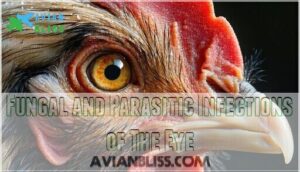
While bacterial and viral conjunctivitis respond well to targeted medications, fungal infections and parasites present unique treatment challenges.
These pathogens thrive in damp environments and require specialized care.
Watch for these key indicators of fungal and parasitic eye infections:
- Aspergillus infections – cloudy corneas with yellow-green discharge
- Candida infections – thick white crusting around eyelids
- Oxypirura mansoni eyeworms – visible under the nictitating membrane
- Environmental factors – contaminated bedding or feed sources
- Treatment challenges – longer recovery times requiring antifungal medications
Chickens can contract eyeworms by ingesting infected intermediate hosts.
Identifying Eye Problems
When you notice unusual eye symptoms in your bird, quick identification can prevent serious complications.
Professional veterinary assessment combines visual examination with specialized diagnostic tests to pinpoint the exact cause and severity of the infection.
Physical Examination and Assessment
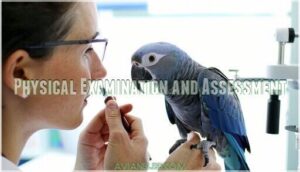
Your avian vet will start with a thorough physical examination to assess avian eye infection symptoms.
They’ll check pupil response, analyze discharge type and color, and evaluate tear production.
The vet examines corneal damage using fluorescein staining and performs pressure testing to rule out glaucoma.
This thorough eye examination helps identify the infection’s severity and guides treatment decisions.
Observing the eye closely can also reveal clues, much like identifying birds through eye features, which aids in avian eye infection symptoms assessment.
Diagnostic Tests for Avian Eye Infections
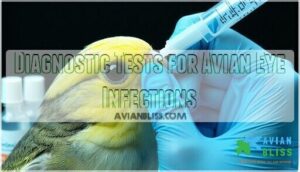
Several diagnostic tests help veterinarians determine the cause and severity of your bird’s avian eye infection.
These eye examination procedures provide essential information for proper treatment planning.
- Tear Film Analysis – Schirmer tear test measures natural eye moisture production
- Fluorescein Staining – Detects corneal ulcers using special dye under blue light
- Intraocular Pressure measurement screens for glaucoma and internal eye problems
- Cytology Techniques – Microscopic examination of discharge samples
- Advanced Sequencing – DNA testing identifies specific bacteria when cultures fail
Laboratory Identification of Pathogens
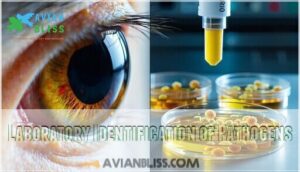
Beyond routine physical exams, your veterinarian needs precise pathogen identification to target treatment effectively.
Culture limitations often result in "no-growth" results, especially with gram-negative bacteria. Antimicrobial resistance complicates traditional approaches.
NGS technology revolutionizes diagnosis through thorough microbial DNA analysis.
| Traditional Methods | NGS Technology | MiDOG Testing |
|---|---|---|
| Culture limitations | Pathogen diversity detection | Microbial DNA quantification |
| No-growth results | NextGen Sequencing NGS | Reference databases |
| Antimicrobial resistance | Bird microbiome analysis | Precise pathogen identification |
| Limited scope | Comprehensive screening | Treatment guidance |
NGS technology revolutionizes diagnosis through extensive microbial DNA analysis was changed to thorough to maintain the same meaning and avoid using the word comprehensive.
Eye Infection Treatment Options
Once you’ve identified an eye infection in your bird, prompt treatment becomes essential to prevent complications and restore your pet’s comfort.
Your veterinarian will prescribe specific medications based on the type of infection, whether bacterial, viral, fungal, or parasitic.
Antibiotic and Antiviral Medications
Your veterinarian will prescribe specific antibiotics like tetracycline or fluoroquinolones for bacterial infections, while antiviral medications target viral causes.
Treatment duration typically ranges from 3-14 days, depending on severity. Follow dosage guidelines carefully, as antibiotic resistance is increasing in avian pathogens.
Monitor for medication side-effects and verify antiviral efficacy through prompt administration.
Anti-Inflammatory and Antifungal Treatments
Your avian vet will prescribe antiinflammatory medication like meloxicam to reduce swelling and pain.
For fungal infections, itraconazole use at 5-10mg/kg daily treats most cases, while fluconazole dosage varies by severity.
Topical steroids help with conjunctivitis but require infection control first.
Systemic inflammation needs careful monitoring during treatment to prevent fungal resistance.
Dietary Changes and Supplements for Recovery
During recovery from avian eye infection, your bird’s diet becomes medicine.
Vitamin A deficiency often triggers these infections, so boost intake with leafy greens, carrots, and sweet potatoes.
Add high-protein foods like eggs and legumes for immune enhancement.
Consider bird-specific multivitamins containing B-complex and vitamin E.
You may want to check bird eye infection diet products for specialized options.
Proper supplement dosage prevents nutritional deficiencies while supporting healing.
Preventing Avian Eye Infections
Prevention is your best defense against costly veterinary bills and your bird’s suffering from painful eye infections.
You can dramatically reduce infection risks through simple daily practices like cleaning food and water dishes, maintaining proper cage hygiene, and scheduling regular health check-ups with an avian veterinarian to ensure your bird’s health and well-being, which is crucial for prevention.
Good Hygiene and Sanitation Practices
When proper cage hygiene becomes your bird’s first line of defense, you’re preventing most eye infections before they start.
Clean cages weekly with bird-safe disinfectants, replace water daily, and remove uneaten food within hours.
Maintain good air quality through proper ventilation and quarantine new birds for thirty days.
These sanitation practices create healthy environments that protect your feathered friends. Regular grooming helps and is part of optimal bird health.
Regular Veterinary Check-Ups and Care
Schedule regular veterinary examinations every six months for Early Detection of eye problems before symptoms appear.
Your avian vet provides Professional Cleaning, monitors eye health changes, and offers Nutritional Guidance adapted to your bird’s needs.
Routine vet visits establish baseline eye health and enable prompt treatment.
Consider a bird’s health products to support your avian friend.
Preventative Care through consistent avian eye care substantially reduces bird eye infection prevention risks and supports lifelong wellness.
Providing a Healthy Environment for Birds
Creating the right environment substantially reduces your bird’s infection risk. Clean cages weekly with bird-safe disinfectants, guaranteeing proper ventilation prevents harmful bacteria buildup.
A clean environment is your bird’s best medicine against eye infections.
Good hygiene and environmental control protect your feathered friend’s delicate eyes from preventable infections. To maintain a hygienic space, consider using a specialized cage cleaner.
- Clean cage weekly – Remove waste, food debris, and replace water daily to eliminate bacterial growth that threatens eye health
- Maintain air quality – Guarantee proper ventilation and avoid chemical fumes, cigarette smoke, or aerosols near your bird’s living space
- Provide safe toys – Choose smooth, appropriately-sized toys without sharp edges that could cause eye trauma or injury
Frequently Asked Questions (FAQs)
How do I know if my bird has an eye infection?
Like checking a telegram for bad news, you’ll spot red, swollen eyelids with thick discharge crusting around your bird’s eyes.
Watch for squinting, cloudy eyes, and head scratching – these signal infection.
How do you know if a bird has conjunctivitis?
You’ll notice red, swollen eyelids with thick white or tan discharge crusting around the eyes. Your bird may squint, blink frequently, or scratch at affected eyes.
What are common eye disorders in birds?
You’ll commonly see conjunctivitis, corneal ulcers, and cataracts in birds. Conjunctivitis causes red, swollen eyelids with discharge. Corneal ulcers create cloudy patches from trauma. Cataracts blur vision as birds age.
Do you need an avian vet if you have a bird eye infection?
Yes, you absolutely need an avian veterinarian for bird eye infections.
These conditions require professional diagnosis and prescription medications like antibiotics or antifungals.
Home remedies can worsen infections and delay proper treatment.
What is avian conjunctivitis?
Avian conjunctivitis is an eye infection causing redness, swelling, and discharge in birds.
You’ll see crusty buildup, cloudy eyes, and frequent blinking.
It’s caused by bacteria, viruses, or environmental factors requiring veterinary treatment.
How do you know if a parrot has a bird eye infection?
Is your feathered friend squinting or rubbing their face?
Look for red, swollen eyelids with thick white or tan discharge crusting around the eyes.
You’ll also notice excessive blinking, cloudy eyes, and your parrot scratching at their face frequently, which can be a sign of an underlying issue, such as an infection.
How do you know if a bird’s eye is infected?
You’ll notice red, swollen eyelids with thick discharge crusting around the eye. Your bird may squint, blink frequently, or scratch at infected eyes while showing cloudy vision.
How do you get rid of a bird’s eye infection at home?
Like medieval healers with their remedies, you can’t safely treat bird eye infections at home.
You’ll need a veterinarian’s prescription antibiotics, antivirals, or antifungals depending on the cause.
Home remedies risk worsening the infection.
Will bird conjunctivitis go away on its own?
Bird conjunctivitis rarely resolves on its own and typically worsens without treatment. You’ll need veterinary care for proper antibiotics or antifungal medications to clear the infection effectively.
How long do eye infections last?
Back in the telegraph days, you’d wait weeks for news.
Nowadays your bird’s eye infection typically clears up in 3-14 days with proper veterinary treatment, depending on the underlying cause and severity.
Conclusion
Consider Sarah’s parrot, Max, who developed a cloudy left eye with yellow discharge over three days.
Initially appearing minor, the infection quickly worsened without treatment.
Recognizing avian eye infection symptoms early allows you to seek prompt veterinary care before conditions deteriorate. You’ve learned to identify key warning signs like discharge, swelling, and behavioral changes.
Quick action prevents complications and guarantees your bird’s comfort. Don’t wait when you notice these symptoms—your feathered companion’s vision depends on immediate professional attention and proper treatment.
- https://cwhl.vet.cornell.edu/disease/mycoplasmal-conjunctivitis
- https://extension.psu.edu/house-finch-conjunctivitis/
- https://poultrydvm.com/condition/conjunctivitis
- https://www.midogtest.com/blog/conjunctivitis-eye-infections-bird/
- https://www.merckvetmanual.com/bird-owners/disorders-and-diseases-of-birds/eye-disorders-of-pet-birds