This site is supported by our readers. We may earn a commission, at no cost to you, if you purchase through links.
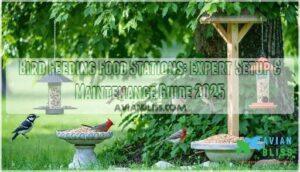 Bird feeding food stations create backyard wildlife hubs that’ll turn your yard into nature’s neighborhood café.
You’ll need tube feeders for seeds, suet feeders for woodpeckers, and platform feeders for ground-feeding birds.
Position feeders 5-10 feet from cover but away from windows to prevent collisions.
Clean feeders every two weeks with diluted bleach solution to prevent disease spread.
Fill stations with species-specific seeds like nyjer for finches or sunflower for cardinals.
Add fresh water sources nearby—birds need hydration too.
Strategic placement considers predator safety and easy refilling access.
The secret lies in understanding each species’ feeding preferences and seasonal migration patterns.
Table Of Contents
- Key Takeaways
- Setting Up Feeders
- Bird Feeding Basics
- Feeder Maintenance Tips
- Attracting Bird Species
- Feeding Station Benefits
- Frequently Asked Questions (FAQs)
- How to set up a bird feeding station?
- Why put a potato in the bird feeder?
- Where is the best place to feed birds?
- What seasonal timing works best for feeding?
- How do weather conditions affect feeding schedules?
- Which bird species visit during different seasons?
- What feeding mistakes should beginners avoid completely?
- How much daily food should stations provide?
- Conclusion
Key Takeaways
- Position feeders safely away from windows and predators, and keep them easy to access for refilling and cleaning.
- Match feeder types and seed selections to the birds you want to attract—use nyjer for finches, sunflower for cardinals, and suet for woodpeckers.
- Clean feeders every two weeks with diluted bleach and refill them regularly to prevent disease and keep birds coming back.
- Add fresh water sources and native plants nearby to create a complete, bird-friendly habitat that boosts biodiversity.
Setting Up Feeders
Setting up effective bird feeding stations requires careful planning of feeder placement, pole installation, and equipment selection to maximize avian activity.
You’ll need to take into account factors like predator protection, accessibility for maintenance, and ideal viewing angles when establishing your feeding infrastructure.
Choosing Right Feeder Type
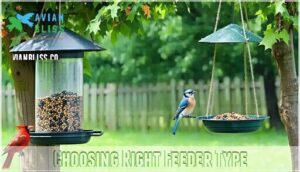
Different bird feeders attract specific species through targeted design.
Hopper feeders support larger birds like cardinals and jays with substantial seed capacity.
Tube feeders target smaller species—finches and chickadees—through multiple feeding ports.
Tray feeders accommodate diverse birds including woodpeckers and doves.
Suet feeders attract insect-eaters.
Choose durable feeder materials like metal for longevity.
When selecting a feeder, consider the bird feeder types to attract the desired bird species.
Selecting Ideal Feeder Location
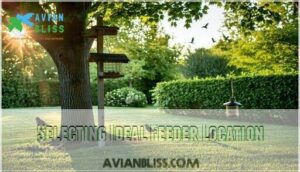
Position your bird feeders 10-15 feet from Tree Proximity for safety while providing escape routes.
Consider Yard Layout to guarantee clear sightlines from windows. Choose spots with morning Sun Exposure but afternoon shade.
Avoid areas with poor Soil Quality that create muddy conditions. Factor in Wind Direction to prevent seed scatter.
Strategic placement maximizes backyard birds visits to your bird feeding stations for ideal bird watching experiences.
Installing Feeder Poles and Hangers
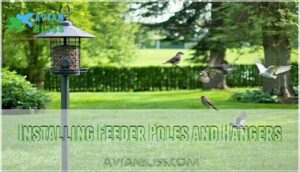
Secure pole materials like galvanized steel or powder-coated aluminum resist weather damage.
Choose shepherd’s hooks for lightweight seed feeders or sturdy mounting kits for heavier bird feeding stations.
Install anchor systems 12-18 inches deep for stability. Position feeder heights 4-6 feet above ground, following your outdoor bird feeders’ specifications.
Quality bird feeding equipment requires proper installation for long-term success. Proper installation also involves considering squirrel proofing methods to guarantee the feeders are protected from unwanted visitors, ensuring long-term success.
Bird Feeding Basics
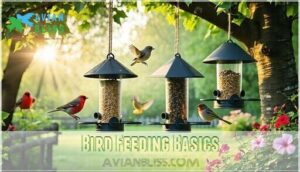
Understanding bird nutrition forms the foundation of successful feeding stations.
You’ll need proper seed selection to attract diverse species effectively.
Different birds prefer specific seed types – finches love nyjer seeds while cardinals favor sunflower seeds.
Bird behavior patterns influence feeding strategies throughout seasons.
Morning and evening hours show peak activity levels.
Wild bird food quality directly impacts bird health and return visits.
Feeder placement affects accessibility for various species sizes.
Follow these bird feeding tips consistently for ideal results, considering the importance of proper seed selection.
Feeder Maintenance Tips
Proper feeder maintenance guarantees healthy bird populations and prevents disease transmission at your feeding station.
You’ll need to establish regular cleaning schedules and monitor food quality to keep birds returning safely.
Cleaning Feeders Regularly
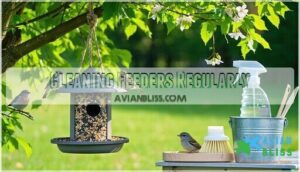
Clean your feeders every two weeks using warm soapy water and a bottle brush. Scrub away seed hulls, droppings, and mold that harbor harmful bacteria.
Rinse thoroughly, then disinfect with a diluted bleach solution.
Proper feeder sanitation prevents disease outbreaks among visiting birds.
Regular maintenance with basic cleaning tools protects bird health and extends your bird feeding supplies’ lifespan.
Effective backyard bird care requires attention to these details to guarantee a healthy environment for the birds and ensure proper feeder maintenance.
Refilling Feeders Frequently
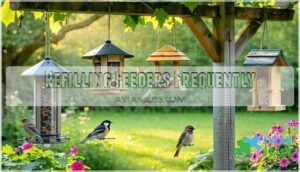
Regular refill schedules maintain bird activity levels at your feeding station. Empty feeders discourage return visits and disrupt established feeding patterns.
Monitor consumption rates to determine ideal refill frequency. Using the right bird seed refill options is vital for a well-maintained feeding station.
Essential Refill Guidelines:
- Check feeders every 2-3 days during peak seasons
- Refill when seed levels drop below 25% capacity
- Store bird seeds in airtight containers to prevent spoilage
- Track refill rates to predict consumption patterns
- Clean feeders before adding fresh bird feeding supplies
Protecting Feeders From Pests
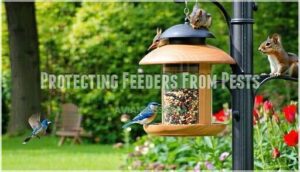
Four key strategies protect your bird feeder accessories from unwanted visitors.
Install squirrel proof baffles 4-5 feet high and position feeders 7-8 feet from launching surfaces.
Use weight-sensitive mechanisms and hot pepper treatments as effective pest deterrents.
Regular cleaning breaks scent trails that attract rodents to your bird feeding food stations.
Applying the 5-7-9 rule involves using squirrel proof methods to keep them away from feeders.
| Pest Type | Best Deterrent Method |
|---|---|
| Squirrels | Dome baffles + 8ft spacing |
| Ants | Water-filled ant moats |
| Rats/Mice | Seed catcher trays + cleanup |
| Multiple Pests | Cayenne pepper treatments |
| Climbing Animals | Metal pole bird guard systems |
Attracting Bird Species
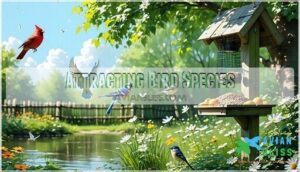
Attracting diverse bird species to your feeding station requires strategic seed selection and habitat optimization.
You’ll need to match specific seed types to target bird preferences while providing essential water sources and shelter elements that create an inviting ecosystem.
Using Right Birdseed Types
Choose bird seed types based on target species preferences.
Black oil sunflower seeds attract over 40 species with high fat content.
Nyjer seeds draw goldfinches and siskins.
Safflower deters squirrels while feeding cardinals.
White proso millet suits ground-feeders.
Quality seed storage prevents spoilage.
Match feeder capacity to consumption rates for successful bird feeding station performance.
Understanding the right bird seed types is essential for attracting specific bird species to your feeder.
Providing Fresh Water Sources
Water transforms your feeding stations into complete avian habitats.
Install shallow birdbaths with textured bottoms for secure footing.
Position water sources within ten feet of feeders but maintain clear sightlines.
Change water every two days to prevent algae and disease transmission.
Add dripping systems or fountain features to attract species through sound.
Consider rainwater collection for chemical-free hydration.
Monitor water quality weekly during peak feeding seasons.
Effective bird bath designs often incorporate proper bath maintenance to guarantee a healthy environment.
Creating Bird-Friendly Environments
Beyond traditional feeding stations, habitat design transforms your yard into a bird sanctuary.
Native plants support 96% of terrestrial birds compared to 30% from non-native landscapes.
Create multi-layered environments with these eco-friendly elements:
- Canopy trees and shrubs – Provide nesting sites and insect food sources
- Native berry bushes – Offer year-round sustenance for wildlife conservation
- Bird baths with fresh water – Essential for drinking and bathing needs
- Dense vegetation cover – Creates safe corridors between feeding stations
This approach enhances your bird feeder plans while supporting thorough wildlife conservation efforts.
Feeding Station Benefits
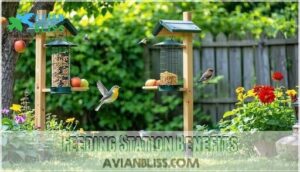
Bird feeding stations transform your yard into a thriving ecosystem hub that benefits both wildlife and homeowners. You’ll discover how these simple setups create lasting environmental and personal rewards.
Transform your backyard into nature’s perfect pitstop—where every seed counts and every visit matters.
Enhancing Yard Biodiversity
Your feeding station transforms into a biodiversity hub when you add native plants and water sources.
These habitat creation elements attract 53% more local bird species while supporting beneficial insects and pollinators.
Native plants improve soil quality and ecosystem balance, creating natural bird food recipes through seeds and insects.
This wildlife conservation approach benefits hummingbird feeders and enhances your bird watching gear effectiveness.
Supporting Local Bird Populations
Your backyard becomes a wildlife sanctuary that sustains local bird populations through critical seasons.
Transform your backyard into a sanctuary where nature thrives year-round.
Strategic feeder placement creates reliable food sources that help birds survive harsh winters and support successful breeding cycles.
- Habitat Preservation: Your feeding station compensates for lost natural food sources in urban environments
- Bird Migration: Consistent food supplies provide essential refueling stops for migrating species
- Conservation Efforts: Well-maintained feeders increase local bird survival rates by up to 52.6%
- Urban Wildlife: Strategic placement of hummingbird feeders and varied seed types supports diverse species year-round
Enjoying Birdwatching Activities
Several species gather at your feeders, creating natural bird watching opportunities right outside your window.
Position comfortable seating near feeding stations to observe Bird Behavior patterns throughout the day.
Document migration timing and Nesting Sites preferences in a simple journal.
Quality bird watching gear like binoculars enhances species identification.
Your Wildlife Conservation efforts through consistent bird feeding guides local populations while providing endless entertainment.
Effective bird seed feeding stations require consideration of squirrel proof techniques to minimize unwanted visitors, promoting a better bird watching experience.
Frequently Asked Questions (FAQs)
How to set up a bird feeding station?
Choose a quiet spot with shelter nearby.
Mount feeders at different heights – tube feeders for small birds, platform feeders for ground feeders. Space them 3-10 feet apart.
Add fresh water daily. Keep feeders clean and consistently stocked with quality seed mixtures.
Why put a potato in the bird feeder?
You shouldn’t put potatoes in bird feeders.
Potatoes contain solanine, a toxic compound that’s harmful to birds.
Raw potatoes are particularly dangerous and can cause digestive issues or poisoning in birds.
Where is the best place to feed birds?
Near trees or shrubs, position feeders 10-15 feet away for safety. Place them 5+ feet high to deter predators. You’ll create natural feeding zones.
What seasonal timing works best for feeding?
Fall and winter offer ideal feeding conditions.
Birds need consistent energy sources during cold weather and migration periods.
Start feeding in late September, continue through March, to support resident birds through harsh conditions while attracting diverse migrating species seeking reliable food sources, and provide them with a consistent energy source.
How do weather conditions affect feeding schedules?
Like nature’s rhythm responding to storms and sunshine, your feathered visitors adjust their dining habits based on weather patterns.
During harsh conditions, birds need 20-40% more calories, so increase feeding frequency and provide high-energy foods like suet and seeds.
Which bird species visit during different seasons?
During spring, you’ll spot warblers, thrushes, and flycatchers arriving from southern regions.
Summer brings resident species like cardinals and woodpeckers.
North American birds begin to head south from August through November, creating exciting fall migration opportunities before winter residents arrive.
What feeding mistakes should beginners avoid completely?
Though you might think bird feeding’s straightforward, avoid these critical mistakes: never offer bread, chocolate, or salted foods—they’re toxic.
Don’t place feeders too close together, creating territorial conflicts.
Skip irregular filling schedules that create dependency cycles, and always clean feeders weekly to prevent deadly bacterial infections.
How much daily food should stations provide?
Aim to offer enough food for your visitors to eat in a day, usually about one to two ounces per small bird.
Adjust for flock size and refill daily.
Don’t overfill—leftovers attract pests and spoil quickly.
Conclusion
Ever picture your yard as a bird feeding food station, buzzing with activity?
You can make it happen with the right feeders, seed types, and water sources.
Place feeders safely, clean them often, and refill as needed.
Use species-specific foods to attract a range of birds.
Keep the area safe from predators and pests.
With these steps, you’ll support bird health, boost biodiversity, and enjoy birdwatching right outside your window.
Start building your bird feeding food stations today.
- https://www.perkypet.com/articles/the-benefits-of-bird-feeding
- https://projectwildbird.net/2024/02/05/why-bird-feeding-is-important/
- https://www.allaboutbirds.org/news/how-to-choose-the-right-kind-of-bird-feeder/
- https://www.wilddelight.com/resources/feeder-guide/
- https://avianreport.com/food-for-backyard-birds/