This site is supported by our readers. We may earn a commission, at no cost to you, if you purchase through links.
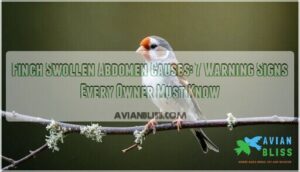 Your finch’s swollen abdomen signals serious health concerns that need immediate attention.
Common finch swollen abdomen causes include digestive infections like candidiasis or enteritis, constipation from poor diet, and reproductive issues such as egg binding.
You’ll often notice sticky droppings around the vent area and general lethargy.
Respiratory infections can also trigger abdominal swelling as your bird’s body struggles to maintain normal functions.
Diet-related problems frequently spark these symptoms, especially after egg-laying periods.
While some causes seem minor, abdominal swelling can escalate quickly in small birds.
Recognizing the subtle warning signs early makes all the difference between a treatable condition and a veterinary emergency.
Table Of Contents
- Key Takeaways
- Finch Abdomen Swelling Causes
- Respiratory Infections Role
- Digestive Issues Connection
- Reproductive Disorders Link
- Diagnostic Measures Importance
- Frequently Asked Questions (FAQs)
- How do you know if a finch has a swollen belly?
- Are finch health problems common?
- What causes respiratory infections in finches?
- Why does my Finch itch a lot?
- What happens if a finch lays an egg?
- How do you know if a finch is sick?
- Why is my finch all puffed up?
- What is a fungal infection in finches?
- What is cloacitis in finches?
- What disease does finch have?
- Conclusion
Key Takeaways
- Act fast when you notice swelling – Your finch’s swollen abdomen signals serious conditions like infections, egg binding, or digestive blockages that can become life-threatening within hours without immediate veterinary care.
- Watch for multiple warning signs together – You’ll typically see sticky droppings around the vent, lethargy, breathing changes, and reduced appetite alongside the swelling, which helps confirm it’s a medical emergency.
- Diet and hygiene prevent most causes – You can avoid many swollen abdomen issues by maintaining clean feeding equipment, providing proper nutrition with adequate fiber, and ensuring fresh water daily.
- Don’t wait to seek professional help – Home remedies won’t fix serious conditions like avian gastric yeast, egg binding, or organ dysfunction that cause abdominal swelling, so you need veterinary diagnosis and treatment immediately.
Finch Abdomen Swelling Causes
When your finch’s abdomen appears swollen, you’re likely witnessing one of several serious health conditions that require immediate attention.
These abdominal changes can signal infections, digestive problems, or reproductive issues that can quickly become life-threatening without proper treatment.
Avian Gastric Yeast Infection
This sneaky yeast infection spreads through contaminated food, hitting older finches hardest with dangerous digestive symptoms.
Your finch’s swollen belly might signal Avian Gastric Yeast (AGY), caused by Macrorhabdus ornithogaster. This sneaky infection spreads through contaminated food and mutual feeding, hitting older birds hardest.
AGY is caused by a gram positive yeast, also known as megabacteria.
Watch for these AGY symptoms:
- Weight loss despite normal appetite
- Undigested seeds in droppings
- Regurgitation and vomiting
- Lethargy with puffed feathers
Treating AGY requires Amphotericin B antifungal medication for 2-4 weeks. Preventing AGY means maintaining strict cage hygiene and quarantining new arrivals.
Candidiasis Infection
Unlike other yeast infections, Candidiasis creates a perfect storm in your finch’s digestive system.
You’ll notice white plaques coating the mouth, regurgitation after meals, and that telltale swollen crop that feels thickened.
Young finches show the most severe Candida symptoms, including slow growth and dull feathers.
Overgrowth of candida is often related to dietary and immune issues.
Treatment options include nystatin or fluconazole, while prevention tips focus on maintaining clean feeding equipment and avoiding unnecessary antibiotics.
Constipation Issues
Poor dietary fiber intake and inadequate hydration levels create a perfect storm for constipation in your feathered friend.
When peristalsis problems develop, you’ll notice finch swollen abdomen symptoms alongside vent irritation and distinctive tail bobbing movements.
This finch abdominal swelling stems from impacted waste material that can’t pass through normally, requiring immediate attention to resolve the issue.
Dietary issues include switching to fiber-rich foods and ensuring proper water access to resolve finch abdominal distension effectively, and you can also try gentle abdominal massage to provide relief, addressing the root cause of abdominal distension.
Enteritis Infection
How does rotten food lead to intestinal inflammation in your feathered friend?
Enteritis causes finch swollen abdomen through bacterial infections from poor hygiene and spoiled feed.
You’ll notice watery diarrhea symptoms, rapid weight loss, and lethargy cause your bird distress.
This intestinal inflammation creates finch abdominal swelling similar to finch ascites, requiring immediate veterinary attention to prevent fatal complications.
Cloacitis Inflammation
Inflammation of your finch’s vent can trigger significant abdominal swelling, especially after egg-laying or due to poor diet. This condition, called cloacitis, creates a perfect storm for digestive complications that affect your bird’s overall health and comfort.
- Swollen abdomen with visible distension around the vent area
- Sticky, abnormal feces clinging to feathers near the cloaca
- Straining behaviors during defecation attempts
- Redness and irritation around the vent opening
- Lethargy combined with reduced appetite and activity levels
Respiratory Infections Role
Respiratory infections don’t just affect your finch’s breathing—they can trigger abdominal swelling through secondary complications.
When aspergillus, bacterial infections, or viral conditions weaken your bird’s immune system, fluid retention and digestive disruption often follow, creating the swollen belly you’re noticing.
Aspergillus Fungal Infection
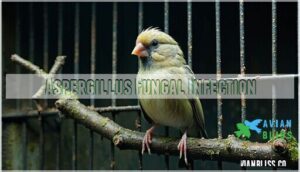
Aspergillus fungal infection creates serious health risks when your finch lives in damp conditions or faces stress.
This deadly pathogen causes rapid weight loss and severe breathing difficulty as spores infiltrate the respiratory system.
You’ll notice labored breathing, exercise intolerance, and voice changes as the infection progresses.
Proper avian respiratory infection first aid is essential.
Without prompt finch veterinary care, aspergillosis often leads to fatal outcomes through systemic organ involvement and secondary complications.
Bacterial Infections Impact

Bacterial infections pack a serious punch when they target your finch’s digestive system.
These microscopic troublemakers cause intestinal inflammation that leads to a finch swollen abdomen, creating visible distress you can’t ignore.
Watch for these telltale bacterial infection warning signs:
- Discolored diarrhea – Yellow, green, or bloody droppings signal serious trouble
- Reduced eating paired with lethargy and fluffed feathers
- Sticky feces clinging around the vent area with obvious abdominal swelling
Amoxycillin treatment effectively targets these bacterial culprits, but you’ll need veterinary guidance for proper dosing.
Following antibiotic therapy, probiotic benefits become essential for restoring healthy gut bacteria and preventing recurring finch health problems.
Viral Infections Effect
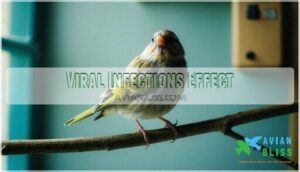
Viral threats pose serious risks to your finch’s health, with polyoma symptoms including severe abdominal distension alongside lethargy and poor growth.
Pox complications create breathing difficulties while tuberculosis impact causes rapid weight loss and swollen belly.
Chlamydia effects typically remain mild, but viral enteritis triggers dangerous fluid buildup.
These finch illness symptoms require immediate veterinary attention to prevent fatal outcomes in your bird’s avian health.
Digestive Issues Connection
Your finch’s digestive system can malfunction in ways that directly cause abdominal swelling, often before you notice other symptoms.
These internal problems range from simple blockages to serious nutritional deficiencies that compromise your bird’s entire digestive process, including serious issues.
Crop Impaction Problems
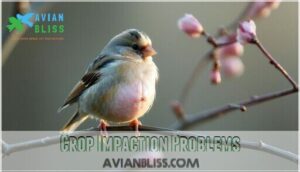
Blockages in your finch’s crop create a dangerous bottleneck that prevents food from moving through the digestive system.
When indigestible materials like string or fibrous grass accumulate, crop motility slows dramatically, causing crop emptying issues that lead to a swollen crop and finch bloated belly.
This backup often triggers secondary infections like Candida, worsening the finch enlarged abdomen you’ll notice, which is a result of the swollen crop.
Metabolic Imbalances Role

When your finch’s digestive system goes haywire, metabolic chaos often follows.
Your bird’s body struggles to process nutrients properly, creating a perfect storm for finch swollen abdomen issues.
Key metabolic warning signs include:
- Immune Weakness – Your finch can’t fight off secondary infections
- Organ Dysfunction – Liver and kidneys work overtime processing toxins
- Nutritional Deficiencies – Poor absorption leads to finch enlarged abdomen
- Enzyme Imbalance – Digestive processes break down completely
- Toxin Buildup – Waste products accumulate, causing finch fluid retention
These finch disease signs create a domino effect.
When one system fails, others compensate poorly, leading to visible finch symptoms like abdominal distension.
Addressing this may require bird medications.
Malnutrition Effects

Your feathered friend needs proper nutrition to keep their digestive system running smoothly.
Dietary deficiencies weaken immune suppression, making finches vulnerable to infections that cause fluid retention. Poor nutrition damages organs, stunts growth, and reduces feather quality.
Proper nutrition is key, so consider quality finch food. When malnourished finches can’t fight off common ailments, weight loss and swollen abdomens often follow these troubling symptoms.
Reproductive Disorders Link
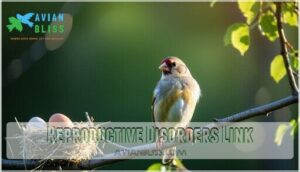
Female finches face serious reproductive complications that can cause dangerous abdominal swelling you shouldn’t ignore.
When eggs get stuck or break inside your bird’s body, fluid builds up quickly and creates life-threatening emergencies.
Egg Binding Complications
Egg binding threatens your finch when calcium deficiency weakens muscle contractions during egglaying.
This dystocia creates oviduct damage, trapping eggs that cause abdominal swelling and constipation-like straining.
Without calcium plus vitamin supplementation, peritonitis threat increases as retained eggs rupture internally.
Annual veterinary check-ups are essential for detecting hidden health problems early.
Surgical options become necessary when conservative treatments fail, making early intervention critical for your bird’s survival.
Ruptured Eggs Consequences
When eggs rupture inside your finch, the infection risk skyrockets as egg yolk creates a breeding ground for bacteria.
Ruptured eggs turn your finch’s belly into a bacterial breeding ground, making infection almost inevitable.
This peritonitis threat can cause severe organ damage, with mortality rates reaching 20% in affected birds.
The ruptured material triggers inflammation throughout the abdomen, making your finch’s swollen belly feel hot to touch.
Egglaying complications worsen when dietrelated factors weaken immunity, leading to egg yolk peritonitis and dangerous vent inflammation, which can be a significant threat to your finch’s health, especially considering the risk of severe organ damage.
Fluid Accumulation Issues
When fluid builds up in your finch’s abdomen, you’re dealing with ascites causes like heart problems, liver failure, or kidney dysfunction.
This water belly condition creates a waddling gait and labored breathing.
Finch avian health experts link this serious finch bird disease to poor circulation and organ stress.
Finch diagnosis treatment requires immediate veterinary care, as these finch common ailments often signal life-threatening finch sick bird conditions needing professional intervention, which is a life-threatening situation.
Diagnostic Measures Importance

When you notice your finch’s belly looking bigger than usual, quick action can mean the difference between a treatable condition and a serious health crisis.
Proper monitoring and knowing when to seek veterinary help will protect your bird from potentially life-threatening complications.
Monitoring Health Changes
Daily monitoring forms the backbone of early detection in finch avian health management. You’ll spot subtle changes before they escalate into serious finch bird diseases requiring urgent finch diagnosis treatment.
Key behavioral signs to track daily:
- Posture changes – drooping head or bent stance
- Activity levels – excessive sleeping during active hours
- Breathing patterns – labored or clicking sounds
- Eating habits – reduced appetite or food avoidance
- Droppings consistency – color, texture, and frequency changes
Cage inspection during your morning routine catches problems early. Many owners find a finch health monitor helpful for this purpose. This proactive prevention approach keeps your finch sick bird situations minimal and supports overall finch bird health through consistent observation.
Veterinary Consultation Need
Professional veterinary care becomes your lifeline when home monitoring reveals Emergency Signs like labored breathing or sudden behavior changes.
Expert Diagnosis through physical exams, lab tests, and imaging identifies specific finch bird diseases causing abdominal swelling.
Treatment Options range from medications to surgical intervention, while Specialist Referral connects you with avian experts.
Though Cost Factors vary, early veterinary care prevents costly complications and improves outcomes for finch medical issues.
Preventive Care Measures
Establishing proper cage hygiene and diet quality forms your first line of defense against abdominal swelling.
Clean water bowls daily, replace substrate weekly, and maintain stress reduction through adequate space.
Early detection through routine monitoring helps catch issues before they worsen.
To maintain a healthy environment, consider using proper cage cleaning.
Implement quarantine protocols for new birds to protect your existing flock’s health and ensure a clean environment with proper care.
Frequently Asked Questions (FAQs)
How do you know if a finch has a swollen belly?
When in doubt, check it out – you’ll notice your finch’s belly appears visibly enlarged, rounded, or distended compared to its normal sleek profile, often accompanied by difficulty perching comfortably.
Are finch health problems common?
Finch health problems aren’t uncommon, especially in captive birds.
You’ll encounter respiratory infections, digestive issues, parasites, and reproductive complications regularly.
Proper diet, clean housing, and veterinary care prevent most problems effectively, with proper care being key to preventing these issues.
What causes respiratory infections in finches?
Bacterial infections, viral diseases like avian pox, fungal conditions such as aspergillus, and environmental irritants typically trigger respiratory problems.
Poor ventilation, stress, damp conditions, and contaminated food or water substantially increase your finch’s infection risk, which can be related to respiratory problems.
Why does my Finch itch a lot?
Studies show 60% of finches experience itching from external parasites.
Your finch likely has mites, lice, or scaly face mites causing irritation.
Check for tiny red specks, white powdery film around the face, or crusty leg growths.
These parasites thrive in dirty conditions.
What happens if a finch lays an egg?
When your finch lays an egg, she’ll typically sit on it for about two weeks.
If it’s fertile and conditions are right, you’ll see a baby hatch.
Unfertile eggs won’t develop.
How do you know if a finch is sick?
Watch for drooping posture, fluffed feathers, labored breathing, loss of appetite, changes in droppings, reduced vocalization, and unusual lethargy.
Sick finches often stay motionless while healthy birds remain active and alert, which can be a key indicator of their health, showing unusual lethargy.
Why is my finch all puffed up?
Like a feathered balloon protecting itself from the cold, your finch puffs up when it’s sick, stressed, or chilly. This fluffing traps warm air but signals illness if prolonged.
What is a fungal infection in finches?
Fungal infections in finches are caused by organisms like Aspergillus, Candida, or skin fungi.
They create breathing problems, white powdery films, crusty leg scales, or digestive issues that’ll weaken your bird’s health substantially.
What is cloacitis in finches?
Cloacitis is inflammation of your finch’s vent area, typically caused by diet issues or following egg-laying.
You’ll notice swollen abdomen, sticky feces around the vent, and general discomfort in affected birds.
What disease does finch have?
Your finch’s swollen belly could be a million different things.
Most commonly, it’s egg binding in females, avian gastric yeast causing digestive backup, or ascites from organ dysfunction requiring immediate veterinary attention.
Conclusion
Prompt prevention proves paramount when dealing with finch swollen abdomen causes.
You’ve learned that digestive infections, respiratory problems, and reproductive issues create serious health risks for your feathered friend.
Don’t delay seeking veterinary care when you notice abdominal swelling, sticky droppings, or lethargy.
Early detection and proper treatment make the difference between recovery and tragedy.
Your finch’s life depends on recognizing these warning signs quickly and acting decisively.
- https://www.omlet.us/guide/finches_and_canaries/finch_health/diseases/
- https://vcahospitals.com/know-your-pet/common-conditions-of-birds
- https://www.ladygouldianfinch.com/a-sick-finch-symptoms-treatment.aspx
- https://ladygouldian.com/content/kristen-bacterial-infections-gouldians
- https://www.petmd.com/bird/conditions/neurological/c_bd_Polyomavirus