This site is supported by our readers. We may earn a commission, at no cost to you, if you purchase through links.
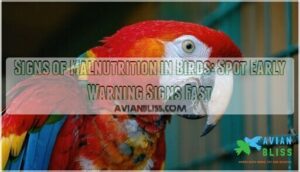 You’ll spot signs of malnutrition in birds through several key indicators.
Watch for dull, brittle feathers that break easily or excessive preening and feather plucking.
Your bird’s beak and nails may become overgrown or brittle.
Look for respiratory issues like wheezing, nasal discharge, or labored breathing.
Changes in droppings—color, consistency, or frequency—signal digestive problems.
Lethargy, loss of appetite, and weight loss are red flags.
Your bird might also develop skin issues, swollen eyes, or show weakness when perching.
Regular weight monitoring helps catch problems early, as even small losses matter substantially in birds.
These symptoms often overlap, making professional evaluation essential, especially to address issues like respiratory issues and digestive problems, which can lead to severe weight loss.
Table Of Contents
- Key Takeaways
- Recognizing Bird Malnutrition
- Malnutrition Health Issues
- Bird Malnutrition Symptoms
- Consulting Avian Veterinarians
- Preventing Bird Malnutrition
- Frequently Asked Questions (FAQs)
- What does a malnourished bird look like?
- What are the first signs of malnutrition?
- What are the symptoms of calcium deficiency in birds?
- How to tell if a bird is underweight?
- Can malnutrition cause sudden behavioral changes?
- How long before malnutrition symptoms appear?
- Are certain bird species more susceptible?
- Can malnutrition be reversed completely?
- What emergency signs require immediate veterinary care?
- Conclusion
Key Takeaways
- Watch for feather changes early – You’ll spot dull, brittle, or discolored feathers that break easily, plus excessive preening or plucking behaviors that signal nutritional deficiencies.
- Monitor daily behavior and appetite – You’ll notice lethargy, reduced vocalization, social withdrawal, and a loss of appetite before physical symptoms become severe.
- Check droppings and respiratory signs – You’ll see changes in dropping color, consistency, or frequency, along with breathing difficulties, nasal discharge, or wheezing.
- Weigh your bird weekly for early detection – You’ll catch weight loss and other malnutrition signs before they become life-threatening, making recovery faster and less expensive.
Recognizing Bird Malnutrition
You’ll notice malnutrition symptoms in your bird long before they become life-threatening if you know what to watch for.
Early detection through daily observation can mean the difference between a quick recovery and months of expensive veterinary treatment, which is crucial for a quick recovery.
Common Warning Signs
Bird malnutrition symptoms appear gradually, making early detection essential for your feathered friend’s health.
Watch for feather discoloration, where vibrant blues and greens fade to dull black or gray.
Squinted eyes, muscle atrophy around the breast, and blunted choanal papillae signal serious nutritional deficiency.
Stool changes, weight loss, and lethargy in birds require immediate veterinary attention.
Daily Check-Ins
Establishing routine daily checkins transforms bird care from reactive to proactive health management.
These simple observations help you catch nutritional problems before they become serious health crises.
- Weight Monitoring: Use a kitchen scale to track daily weight fluctuations and trends
- Behavior Changes: Watch for reduced vocalization, social withdrawal, or unusual aggression patterns
- Dropping Analysis: Check consistency, color, and frequency of waste production throughout the day
- Food Intake: Monitor appetite levels and note any sudden changes in eating habits
- Activity Levels: Observe energy levels, perching behavior, and overall engagement with environment
Importance of Early Detection
Within days, subtle signs of bird malnutrition signs can escalate into life-threatening bird health problems requiring rapid intervention.
**Malnutrition symptoms escalate rapidly—daily observation prevents life-threatening emergencies.
Early detection enables prompt action through preventative care, dramatically improving outcomes compared to waiting until severe avian nutritional deficiency develops.
Spotting bird health signs early prevents early death and costly emergency treatments.
Consistent cleaning is key, as poor sanitation practices can impact lifespan.
Malnutrition Health Issues
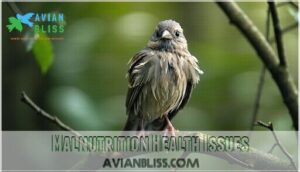
When your bird’s malnutrition progresses beyond early warning signs, you’ll notice serious health problems affecting multiple body systems.
These complications can become life-threatening if left untreated, making it imperative to recognize how nutritional deficiencies damage your pet’s feathers, breathing, digestion, and reproductive health.
Feather Problems
Poor feather condition acts like your bird’s health report card, revealing nutritional deficiencies through visible changes.
Malnourished birds develop specific feather abnormalities that signal underlying dietary problems requiring immediate attention.
- Feather Discoloration: Vibrant greens, blues, and reds fade to dull browns or blacks due to protein deficiencies
- Feather Structure: Brittle, fragile plumage breaks easily from lack of essential fatty acids and biotin
- Excessive Molting: Irregular molt patterns occur year-round instead of seasonal cycles
- Feather Picking: Birds pluck themselves when malnutrition causes itchy, inflamed skin
A deficiency in dietary iodine, essential for thyroid metabolism, can also negatively impact feather development.
Respiratory System
The respiratory system takes a serious hit when malnutrition strikes.
Vitamin A deficiency causes sinusitis and breathing difficulties, making your bird prone to air sacculitis.
You’ll notice sneezing, nasal discharge, and labored breathing.
Fungal infections like aspergillosis thrive in malnourished birds, creating life-threatening respiratory problems.
Watch for dyspnea and voice changes—they signal trouble brewing.
Birds can contract this infection from ubiquitous Aspergillus spores, commonly found in soil and moldy food, leading to serious health issues.
Digestive System
Your bird’s digestive system takes a serious hit when malnutrition strikes.
Dark green stools, chronic diarrhea, and undigested food in droppings signal trouble with digestion efficiency.
Watch for vomiting in birds and appetite loss birds – these aren’t normal.
Malnutrition disrupts gut microbiome balance, compromises liver health, and reduces bile production.
Crop issues develop alongside avian gastric yeast infections when the digestive system weakens.
Addressing potential gastrointestinal parasite infections is also essential.
Reproductive Issues
Malnourished birds face serious reproductive challenges that can affect their breeding success.
When your bird lacks proper nutrition, reproduction becomes compromised in several ways:
- Egg Binding occurs when females can’t expel eggs, creating life-threatening situations
- Thin-Shelled Eggs and eggshell problems birds experience lead to breakage and infertility causes
- Chick Weakness results from hormonal imbalance, producing offspring that struggle to survive
Cloacal prolapse may also develop from reproductive strain.
Bird Malnutrition Symptoms
As your bird’s health depends on proper nutrition, recognizing physical symptoms becomes essential for early intervention.
You’ll notice malnutrition affecting four key areas: skin condition, beak and nail growth, dropping characteristics, and overall energy levels.
Skin Issues
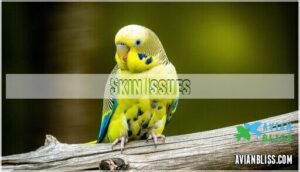
Your bird’s skin tells a story you can’t ignore.
**Feathers whisper secrets of health—listen carefully to what yours reveals.
Dry skin and scaly feet often appear before other symptoms become obvious.
Watch for itchy skin that causes constant scratching or feather picking behaviors.
Skin irritation frequently develops alongside feather dullness and poor plumage quality.
Overgrown nails accompany these changes, creating a clear pattern of nutritional decline.
Beak and Nail Problems
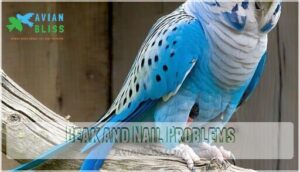
Overgrown beaks and nails serve as telltale signs your bird isn’t getting proper nutrition.
Beak overgrowth often stems from vitamin A deficiency, while nail cracking indicates calcium shortages.
Watch for beak discoloration, scaly feet, and abnormal growth patterns.
These beak deformities birds develop require immediate attention.
Poor growth birds need proper beak care to prevent stunted growth birds face daily.
Malnutrition in birds manifests through these visible changes first, often due to malnutrition and affecting overall growth.
Changes in Droppings

Five telltale signs appear in your bird’s droppings when malnutrition strikes.
Dropping color shifts from normal brown to green indicate insufficient food intake.
Watery consistency or true diarrhea signals digestive tract dysfunction from nutrient deficiencies.
Undigested food particles reveal severe malabsorption issues.
Dropping frequency decreases dramatically as malnourished birds eat less.
Volume changes reflect the body’s struggle with malnutrition in birds.
Lethargy and Loss of Appetite
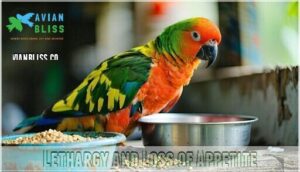
Energy decline often signals your bird’s body is struggling to maintain normal function. When appetite disappears, feeding habits shift dramatically as malnourished birds lose interest in food altogether. One potential cause can be environmental stress triggers, so consider recent changes.
Watch for these behavioral changes:
- Decreased activity levels and increased sleeping
- Reluctance to play with favorite toys
- Social withdrawal from you or other birds
- Difficulty maintaining perch grip or balance
Weight fluctuation becomes noticeable as anorexia causes muscle wasting. Birds experiencing anorexia causes related to malnutrition may stop vocalizing and appear hunched. These lethargy in birds symptoms progress quickly, making weight loss birds particularly vulnerable. Early intervention prevents bird malnutrition from becoming life-threatening.
Consulting Avian Veterinarians
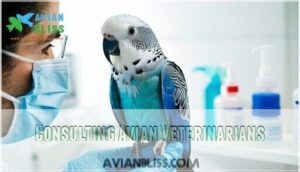
When you notice concerning changes in your bird’s appearance or behavior, an avian veterinarian becomes your most valuable partner in confirming malnutrition and creating a recovery plan.
These specialized vets can distinguish between malnutrition symptoms and other health issues, ensuring your feathered friend gets the right treatment before minor problems become life-threatening complications.
Causes of Obesity
Your bird’s weight gain often stems from multiple interconnected factors.
Seed-based diets pack excessive calories while lacking proper nutrition, creating a perfect storm for obesity in birds.
Inactivity levels compound this problem when your feathered friend spends most days in cramped quarters.
Genetic predisposition makes certain species like Amazons particularly vulnerable.
Overfeeding treats becomes problematic when well-meaning owners shower birds with high-fat snacks.
Metabolic disorders can develop, including fatty liver disease that threatens your bird’s health.
Dietary Considerations
When switching your bird to healthier foods, you’ll need strategic planning for lasting success.
Pellet conversion requires patience—mix pellets gradually with current foods over several weeks.
Consider these dietary essentials:
- Plant-based diets with 50% leafy greens, 30% vegetables, 10% grains, 10% fruits
- Seed alternatives like quinoa, brown rice, and sprouted legumes for variety
- Supplement choices targeting specific nutritional deficiencies your vet identifies
- Water quality using filtered water to avoid contaminants affecting bird nutrition.
A balanced diet prevents common avian nutrition problems while supporting peak health.
Importance of Regular Check-Ups
Annual wellness checks serve as your safety net for early detection of health problems before they become serious.
Schedule these appointments every 12 months, even when your bird appears healthy.
Your avian vet will perform dropping analysis, track weekly weight changes, and identify warning signs you might miss.
Proactive wellness through regular vet communication ensures preventative care catches issues early, potentially saving your feathered friend’s life.
It’s vital to use a pet bird vet visit checklist to guarantee thorough care and ensure you’re providing the best possible health checks for your bird, which can be a matter of life-saving importance.
Preventing Bird Malnutrition
You can prevent malnutrition by making smart dietary choices and staying vigilant about your bird’s health. Weekly weight monitoring and balanced nutrition form the foundation of effective prevention strategies.
Fresh Food Selection

After working with your vet, selecting the right fresh foods becomes your next priority.
Choose organic produce when possible to avoid pesticide residue that can harm your bird’s delicate system.
Here’s your fresh food selection guide:
- Leafy greens like kale, spinach, and dandelion provide essential vitamins and minerals
- Sprouted seeds offer concentrated nutrition and easier digestion than dry seeds
- Fresh fruits such as berries, apples, and pomegranates deliver antioxidants and natural sugars
- Colorful vegetables including carrots, sweet potatoes, and bell peppers support immune function
- Safe preparation means washing thoroughly and removing any toxic foods like avocado or chocolate
Variety importance can’t be overstated – rotating different fresh produce keeps your bird interested and guarantees thorough nutrition from their varied diet.
Owners also find specialty products available to help support their bird’s nutritional needs.
Choosing Quality Supplements

Quality bird supplements require careful selection.
Look for vet-approved products with third-party testing and clear ingredient sourcing.
Choose powdered forms over water-soluble options for better bioavailability.
Check dosage guidelines match your bird’s size and species.
Avoid supplement interactions by consulting your avian vet first.
Vet-approved options can give you peace of mind.
Mineral balance and vitamin testing guarantee nutritional supplements work effectively.
Balanced Diet Recommendations
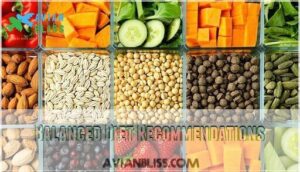
Building balanced nutrition starts with smart choices you’ll make every day. Pellet conversion forms your bird’s foundation—aim for 60-85% high-quality pellets.
Chop preparation brings dietary diversity through mixed vegetables and fruits.
Your balanced diet strategy includes:
- Foundation first: Premium pellets provide complete nutrition unlike seed-only diets
- Variety matters: Fresh chop with 50% leafy greens, 30% vegetables, 20% fruits/grains
- Smart supplementation: Choose science-backed supplement choices for specific needs
Treat moderation keeps things interesting—seeds and nuts work great for training rewards. Water quality supports everything else, so change it daily.
This balanced bird food approach prevents selective eating while ensuring your feathered friend gets varied diet benefits.
Monitoring Bird Weight
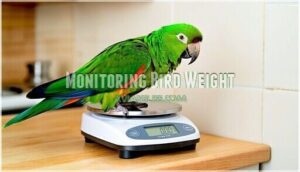
Weighing your bird weekly catches Weight Loss Signs before they become serious.
Use a kitchen scale for accurate readings and record your bird’s baseline weight when healthy.
Weekly Tracking helps you spot even small changes that signal bird malnutrition.
Most birds lose weight gradually, so Early Detection through consistent monitoring can save your feathered friend’s life.
Consider using a specialized scale for birds for accurate measurements, which is crucial for consistent monitoring.
Frequently Asked Questions (FAQs)
What does a malnourished bird look like?
You’ll notice dull, faded feathers that appear frayed or broken.
The bird’s skin looks dry and flaky, with overgrown nails and beak.
Watch for lethargy, weight loss, and changes in droppings.
What are the first signs of malnutrition?
You’ll first spot reduced activity and lethargy in your bird.
Watch for dull, ruffled feathers that lose their vibrant colors.
Your pet may eat less, become withdrawn, and show changes in droppings like discoloration or watery consistency, and these signs can indicate a problem, with lethargy being a key indicator.
What are the symptoms of calcium deficiency in birds?
Calcium deficiency in birds causes weak bones, egg binding, seizures, and tremors. You’ll notice fractures, metabolic bone disease, and poor egg production in breeding females.
How to tell if a bird is underweight?
Check your bird’s breast muscle by gently feeling along the keel bone. If it’s sharp and prominent, your bird’s likely underweight. Weekly weighing helps track changes early.
Can malnutrition cause sudden behavioral changes?
Like a storm cloud gathering on a clear day, malnutrition can trigger sudden behavioral shifts in your bird.
You’ll see mood changes, irritability, aggression, or social withdrawal as nutritional deficiencies affect hormonal regulation and nervous system health.
How long before malnutrition symptoms appear?
Malnutrition symptoms can take years to appear when you’re feeding prolonged seed-based diets. Your bird might look healthy while nutritional deficiencies slowly build up before becoming visible.
Are certain bird species more susceptible?
Some species are more vulnerable than smaller birds like finches and canaries who’ve faster metabolisms, while larger parrots can better tolerate nutritional gaps initially.
Can malnutrition be reversed completely?
Yes, you can reverse malnutrition completely with proper intervention. Recovery takes six months to a year through balanced pellets, plant-based foods, and veterinary guidance. Early detection improves success rates substantially.
What emergency signs require immediate veterinary care?
Seek immediate veterinary care if your bird shows difficulty breathing, seizures, inability to stand, severe lethargy, blood in droppings, or complete loss of appetite lasting over 12 hours.
Conclusion
Ironically, the signs of malnutrition in birds often hide in plain sight until they become severe.
You’ve learned to recognize these warning signals—from dull feathers to respiratory distress.
Early detection makes the difference between quick recovery and serious complications.
Monitor your bird’s weight regularly and watch for changes in behavior, appetite, and droppings.
When you notice multiple signs of malnutrition in birds simultaneously, contact your avian veterinarian immediately.
Prevention through proper nutrition remains your best defense.
- https://birdtricksstore.com/blogs/parrot-care-blog/malnutrition-in-parrots-and-what-to-do-about-it
- https://www.petindiaonline.com/story-details.php
- https://azeah.com/birds/vitamin-deficiency-parrots
- https://vetmed.tamu.edu/news/pet-talk/feeling-peckish-nutritional-disease-in-pet-birds/
- https://www.petmd.com/bird/conditions/digestive/c_bd_Vitamin_A_Deficiency