This site is supported by our readers. We may earn a commission, at no cost to you, if you purchase through links.
 You’ll discover exceptional urban birding locations and tips in major cities like New York’s Central Park, which hosts over 200 species annually, or San Francisco’s Golden Gate Park.
Start early morning when birds are most active, bring binoculars and a birding app, and explore parks with water features, community gardens, and cemetery grounds.
Focus on learning bird calls to cut through city noise, and watch for movement patterns in trees and shrubs.
Urban environments create unique opportunities where resident species mix with seasonal migrants, and even rooftop spaces can surprise you.
The real magic happens when you master the art of finding these hidden urban sanctuaries, where you can experience the thrill of discovering new species in unexpected places.
Table Of Contents
- Key Takeaways
- Urban Birding Hotspots
- Getting Started Birding
- Urban Birding Techniques
- Creating Bird Friendly Spaces
- Community Engagement and Conservation
- Frequently Asked Questions (FAQs)
- Is urban birdwatching beneficial?
- How many birds are in urban birdwatching?
- Are there birds in urban areas?
- What are some good places for urban bird watching?
- Can you birdwatch in the city?
- Is binoculars required for urban birdwatching?
- What are the 5 S’s of birding?
- What is the birding capital of the United States?
- What is the bird watching code?
- What not to wear when birding?
- Conclusion
Key Takeaways
- Target early morning hours (dawn-11am) when urban birds are most active and city noise is minimal, as 80% of daily sightings occur before 10am
- Focus on diverse habitat locations like parks with water features, community gardens, and green corridors that combine woodland, water, and open spaces for maximum species variety
- Master bird calls and movement patterns to cut through city noise and spot birds in dense foliage, using 7x-10x binoculars for clear urban viewing
- Create bird-friendly spaces by planting native berry-producing shrubs and trees, eliminating pesticides, and adding water features to transform any urban area into a wildlife sanctuary
Urban Birding Hotspots
You’ll discover surprising bird diversity in America’s urban centers, from San Francisco’s 499 species to Chicago’s impressive 402 recorded birds.
These city hotspots offer accessible birding adventures right outside your door, whether you’re spotting red-tailed hawks in Colorado Springs or tracking the famous Baltimore oriole in Maryland’s parks.
Top Cities for Urban Birding
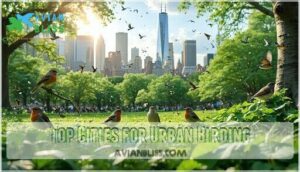
New York City leads the pack with 270+ species in Central Park alone, while Chicago’s Montrose Point boasts over 350 documented species—the highest eBird activity nationwide.
Los Angeles County delivers unmatched species richness with 550+ recorded birds, thanks to its Pacific Flyway position.
These urban birding hotspots combine habitat diversity with migration routes, creating perfect storm conditions for spotting everything from common sparrows to rare warblers during peak seasons.
Reykjavik offers birders a tranquil urban setting for observing various bird species year-round, providing a unique birding experience.
Local Bird Species and Habitats
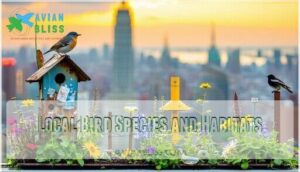
You’ll discover that urban bird habitats support remarkable species diversity through strategic adaptation.
City parks, rooftops, and gardens create microenvironments where endemic birdlife thrives alongside adaptable migrants.
Habitat diversity drives species identification opportunities, as urban adaptation allows both resident and migratory patterns to flourish in unexpected places like abandoned lots and green corridors throughout metropolitan areas.
Many species also exhibit creative use of materials when building nests in cities, showcasing their ability to thrive in new environments with strategic adaptation.
Notable Birding Locations in US Cities
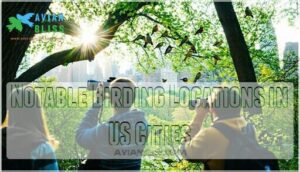
Central Park’s Ramble draws birders seeking warbler fallouts, while Montrose Point Bird Sanctuary in Chicago leads urban birding hotspots with 350+ species.
New York City’s accessible birding spans five boroughs, offering Migration Stopovers along the Atlantic Flyway.
Ballona Wetlands showcases Urban Species Diversity with California’s Endemic Birding opportunities.
These birding locations feature Habitat Restoration efforts supporting thriving city birds communities.
Birders should also consider Cape May birding for concentrated migration.
Getting Started Birding
You’ll discover urban birding requires just a few essential tools and strategic timing to maximize your bird-watching success.
The key lies in selecting the right locations where diverse species naturally congregate, from city parks with water features to unexpected green corridors between buildings, which is crucial for success.
Essential Birding Equipment

You’ll want quality bird watching binoculars with 7x-10x binocular magnification for clear urban views.
Pack a weatherproof field notebook for recording observations and sketching behaviors.
Download reliable birding apps or carry a compact bird identification guide for quick species recognition.
Consider portable stools for comfort during extended sessions, and spotting scopes with tripods for distant observations in larger parks.
Many birders find 7×10 binoculars useful for urban birding.
Best Times for Urban Birding

During spring and fall migration seasons, you’ll find peak bird activity between dawn and 11am, when urban noise levels stay low and birds actively forage.
Wake up with the sunrise—that’s when urban birds are most active and vocal.
These ideal weather windows offer the best urban birding experiences, with up to 80% of daily sightings occurring before 10am.
Late afternoon provides a secondary activity spike as birds prepare for roosting, and this pattern is a key part of the urban birding experience, especially during periods of peak bird activity.
Choosing Optimal Birding Locations
Location is everything in urban birding—you’ll find more species where habitat diversity meets accessibility.
Target spots that combine multiple features for maximum bird variety.
- Habitat Diversity: Look for areas mixing woodland, water, and open spaces within walking distance
- Greenspace Proximity: Choose parks near natural corridors that connect larger wilderness areas
- Migration Patterns: Research seasonal flyways to time visits when traveling birds pass through
- Water Features: Prioritize locations with ponds, streams, or fountains that attract diverse species year-round
Quiet zones away from heavy traffic offer better viewing opportunities and less stressed birds.
Urban Birding Techniques
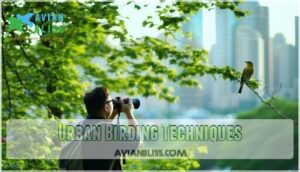
You’ll develop sharper observation skills and learn proven techniques that transform casual bird-watching into precise species identification.
These methods work whether you’re scanning Central Park’s canopy or tracking migrating warblers through downtown Chicago’s green corridors, utilizing techniques that aid in species identification.
Identifying Bird Species
While mastering urban birding requires keen observation skills, you’ll discover that identifying bird species becomes second nature with practice.
Focus on four key characteristics: size and shape, plumage variations, behavior patterns, and habitat clues.
Note distinctive field marks like wing bars, crown stripes, and bill shape. Bird songs often reveal species before visual confirmation, especially in dense city foliage where seasonal changes affect visibility and species presence.
Using Binoculars and Spotting Scopes
Once you’ve identified species, selecting the right optics transforms your urban bird watching experience.
For magnification matters, choose 7x-10x binoculars—higher power reduces field of view and increases shake in tight city spaces.
Quality lens coatings minimize urban glare from windows and concrete, while wider field of view helps track fast-moving birds between buildings.
Spotting scopes with tripods provide scope stability for detailed observations across parks and waterfronts.
Consider binoculars with waterproof and fogproof construction for unpredictable weather, ensuring a better urban bird watching experience.
Recording and Tracking Bird Sightings
Documenting your bird sightings transforms casual observations into valuable citizen science contributions.
Modern birders rely on these essential recording methods:
- Mobile apps like eBird automatically sync your bird identification data with global databases
- Field notebooks capture detailed bird observations and behavioral notes during real-time sightings
- Bird identification apps help verify species accuracy before logging encounters
- Data analysis tools reveal patterns in your personal birding records over time
Sharing sightings through platforms like eBird connects you with the global birding community while supporting conservation research efforts.
Creating Bird Friendly Spaces
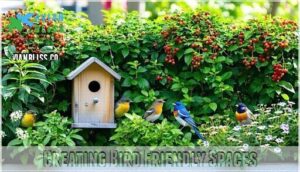
You’ll transform any outdoor space into a thriving bird sanctuary with strategic native plantings and simple habitat modifications.
Creating bird-friendly environments in urban settings requires understanding what attracts different species and implementing practical conservation measures that benefit both wildlife and city dwellers, which can be achieved by implementing practical conservation measures.
Planting Native Shrubs and Trees
Native plants transform your urban space into a bird magnet.
Choose species that provide food, shelter, and nesting materials throughout different seasons.
Berry-producing shrubs like elderberry and serviceberry attract songbirds, while oak trees support hundreds of insect species that birds love.
Consider buying native shrubs to support local ecosystems.
Layer your plantings with ground cover, understory shrubs, and canopy trees to create diverse urban bird habitats that mirror natural ecosystems.
Reducing Pesticides and Pollution
Beyond choosing the right plants, you’ll need to eliminate chemical pesticides that poison birds directly and destroy their insect food sources.
Switch to organic pesticide alternatives like neem oil or beneficial insects for pest control. Poor water quality from runoff harms urban bird habitats, so avoid lawn chemicals near water features.
Reduce noise pollution and light pollution that disrupt bird behavior. These conservation steps create healthier urban nature spaces where birds thrive naturally.
Integrated pest management increases bird abundance by 30-60% compared to conventional methods, which is a key step in conservation efforts to support urban bird habitats and promote healthier environments.
Designing Bird Friendly Urban Gardens
After reducing pesticides and pollution, you’ll want to maximize your space’s bird appeal through thoughtful garden design.
Smart planning transforms even small urban wildlife areas into thriving bird habitats that support backyard birds year-round.
Your urban birding success depends on these key design elements:
- Native Plants: Choose local species that produce seeds and berries birds recognize
- Water Features: Add shallow dishes or small fountains for drinking and bathing
- Shelter Design: Layer vegetation heights from ground cover to canopy trees
- Feeding Stations: Install multiple feeders using Safe Materials like untreated wood
Smart placement creates bird highways through urban nature corridors.
For help selecting the right varieties, consider purchasing high quality seeds.
Community Engagement and Conservation

You can turn your passion for urban birds into powerful conservation action by joining local birding clubs and participating in community events that bring together like-minded enthusiasts.
Working with city councils and conservation organizations helps create lasting policy changes that protect urban bird habitats while building the political support needed for meaningful environmental improvements, which can lead to powerful results.
Local Birding Clubs and Events
You’ll discover vibrant communities through local birding clubs and events that transform your urban birding experience.
These organizations host Club Bird Walks, maintain Event Schedules, and offer Skill Workshops averaging $26 annually.
Join Citizen Science projects and Conservation Projects that contribute to eBird monitoring while building lasting friendships with fellow enthusiasts who share your passion.
Collaborating With City Councils
When partnering with city councils, you’ll find that presenting data-driven proposals makes all the difference.
Start by documenting local bird populations and habitat needs, then propose specific green space initiatives and noise reduction strategies.
Advocate for bird-safe building codes, light pollution reduction, and wetland preservation through well-researched presentations that show economic and environmental benefits for birdfriendly cities.
Supporting these initiatives requires collaborative conservation efforts.
Promoting Urban Bird Conservation Efforts
How can you make your neighborhood more bird-friendly?
Start by advocating for Bird-safe Buildings that reduce light pollution during migration seasons.
Support community projects that preserve wetlands and create quiet zones in urban ecosystems.
Join local initiatives promoting birdfriendly cities through native plantings and pesticide reduction, transforming bird habitats in cities into thriving sanctuaries for urban birding enthusiasts.
Frequently Asked Questions (FAQs)
Is urban birdwatching beneficial?
Yes, urban birdwatching is highly beneficial.
Unlike remote wilderness birding, you’ll discover surprising biodiversity in city parks, abandoned lots, and rooftops.
It enhances environmental awareness, provides accessible nature connections, supports citizen science, and promotes urban conservation efforts.
How many birds are in urban birdwatching?
Urban birdwatching reveals hundreds of species thriving in cities.
You’ll find 200-500 species per major metropolitan area, with hotspots like San Francisco recording 499 species and Phoenix hosting 457 across diverse urban habitats, including urban habitats and major metropolitan area.
Are there birds in urban areas?
Bustling cities brim with birds! You’ll discover surprising species diversity in urban environments.
Parks, rooftops, and even busy streets host adaptable birds like sparrows, hawks, pigeons, and migratory warblers throughout the seasons.
What are some good places for urban bird watching?
City parks offer excellent birding opportunities, with Central Park hosting over 270 species. Try waterfront areas, botanical gardens, and even rooftops for diverse sightings.
Can you birdwatch in the city?
San Francisco records 499 bird species across 340 hotspots, proving you’ll find remarkable diversity right outside your door. Urban birdwatching thrives in city parks, rooftops, and overlooked corners where adaptable species flourish.
Is binoculars required for urban birdwatching?
Binoculars aren’t required, but they’ll dramatically enhance your urban birdwatching experience.
You can spot birds with naked eyes, but compact 7x-10x binoculars reveal details like plumage patterns and behaviors you’d otherwise miss, such as observing plumage.
What are the 5 S’s of birding?
Looking through your telegram like it’s 1860, the 5 S’s of birding are: Sight (visual identification), Sound (calls and songs).
Size (relative measurements), Shape (body structure and silhouette), and Situation (habitat and behavior context).
What is the birding capital of the United States?
There isn’t one definitive "birding capital" of the United States, but Texas leads with over 650 recorded species statewide.
You’ll find hotspots like Point Pelee for migration and southern Arizona for desert specialties nationwide, which makes Texas a notable location for desert specialties.
What is the bird watching code?
Bird watching etiquette involves respecting wildlife by keeping quiet distances, avoiding nest disturbance, staying on trails.
Sharing rare sightings responsibly, and following the "leave no trace" principle to protect birds and their habitats, are also crucial aspects of bird watching etiquette, including respecting wildlife by keeping quiet distances.
What not to wear when birding?
Avoid bright colors, especially red and orange, which can startle birds.
Skip noisy fabrics like nylon that rustle with movement.
Don’t wear strong perfumes or cologne that might mask natural scents birds use for communication.
Conclusion
Apparently, you’ve become quite the sophisticated urbanite, trading your hiking boots for designer sneakers while pursuing feathered friends between skyscrapers.
Urban birding locations and tips transform concrete jungles into unexpected wildlife sanctuaries where nature thrives alongside human chaos.
You’ll find that mastering these techniques opens doors to discovering remarkable biodiversity in metropolitan environments.
Start with established hotspots, invest in quality equipment, and develop keen observation skills.
Join local birding communities to expand your knowledge and contribute to conservation efforts.
Your urban adventures will reveal that cities aren’t nature’s enemy—they’re dynamic ecosystems waiting for exploration.
- https://www.lonelyplanet.com/articles/best-places-for-birding-usa
- https://www.reddit.com/r/birding/comments/1fq3ua4/which_cities_have_the_best_birding/
- https://www.birdsandblooms.com/travel/birding-hotspots/birding-every-state/
- https://dcist.com/story/23/05/16/bird-watching-dc-region-spring-summer/
- https://www.dcr.virginia.gov/insights/where-to-find-the-best-birding-in-virginia