This site is supported by our readers. We may earn a commission, at no cost to you, if you purchase through links.
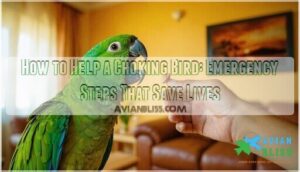 When your bird starts gasping with its beak wide open, stay calm and act quickly.
First, gently open the bird’s beak and look for visible obstructions. You can carefully remove small objects with tweezers, but never push deeper.
For larger birds, try gentle upward pressure on the keel bone while supporting the head. Don’t attempt the Heimlich maneuver on birds – their anatomy differs from mammals.
If the bird can’t breathe or you can’t remove the object within seconds, rush to an avian vet immediately. Time matters most in these emergencies.
Understanding the subtle signs and proper techniques can mean the difference between panic and confident action.
Table Of Contents
- Key Takeaways
- Bird Choking Signs
- Help Choking Bird
- Choking Causes Risk
- First Aid Techniques
- Veterinary Care Needed
- Prevention Safety Measures
- Frequently Asked Questions (FAQs)
- How to treat a choking bird?
- Why do birds choke?
- How to tell if a bird is choking?
- Can a bird choke on liquid?
- Do birds choke to death?
- Can a parrot choke to death?
- How to save a suffocating bird?
- How to tell if a bird has something stuck in its throat?
- Can birds choke on water or liquids?
- How long before choking becomes life threatening?
- Conclusion
Key Takeaways
- Recognize choking signs quickly – Watch for open-beaked gasping, loud wheezing, neck extension, and cough-like sounds that signal your bird needs immediate help.
- Use safe removal techniques – Hold your bird upside down, apply gentle pressure to the keel bone, and carefully remove visible objects with tweezers without pushing them deeper.
- Don’t attempt the Heimlich maneuver – Birds’ anatomy differs from mammals, making traditional choking techniques dangerous and potentially harmful to your feathered friend.
- Get veterinary care immediately – If you can’t clear the obstruction within seconds or your bird shows severe distress, rush to an avian vet as time is critical for survival.
Bird Choking Signs
You’ll quickly spot a choking bird by watching for specific warning signs that demand immediate attention.
These unmistakable symptoms include open-beaked gasping, loud wheezing sounds, rapid feather fluttering around the throat area, dramatic neck extension, and distinctive cough-like vocalizations.
That signal your feathered friend needs help fast, characterized by these distinctive cough-like vocalizations.
Open Beaked Gasping
When your choking bird opens its beak wide and gasps desperately, you’re witnessing respiratory distress in action.
This open-beaked gasping signals severe airway obstruction, creating hypoxia symptoms as oxygen levels drop.
The bird’s frantic breathing attempts reveal emergency response is needed immediately.
Watch for cyanosis signs around the beak area, indicating critical oxygen deprivation during this bird emergency.
Loud Wheezing Noises
When your bird is choking, you’ll hear distinct wheezing sounds that signal breathing difficulty.
These harsh, raspy noises indicate severe bird respiratory distress as air struggles through blocked airways.
Wheezing causes include lodged food or foreign objects, and the noise severity often correlates with obstruction size – louder wheezing typically means greater blockage.
These wheezing sounds demand immediate bird first aid intervention, as this avian choking emergency threatens lung health and requires swift action.
Feather Fluttering
Watch for rapid feather fluttering around your bird’s throat area during respiratory distress.
This automatic response occurs when airway obstruction creates breathing difficulties, causing visible movement patterns that signal choking bird emergencies.
Different species show varying feather condition changes and distress signals.
Observing patterns helps identify bird choking episodes requiring immediate bird first aid intervention for bird airway obstruction relief, which is crucial for bird first aid.
Neck Extension
Dramatic neck stretching signals severe bird airway obstruction.
You’ll notice your feathered friend extending their neck upward while gasping desperately for air.
This neck extension severity indicates the bird is fighting to bypass whatever’s blocking their throat.
Different neck extension variations occur—some birds crane straight up, others twist sideways.
The neck extension duration depends on obstruction size, but immediate help is essential when this distressing sign appears, as it is a clear indication of the bird’s desperate attempt to bypass whatever’s blocking.
Cough Like Sounds
Sometimes your feathered friend’s distress call isn’t a typical chirp. You’ll hear distinctive cough-like sounds when bird respiratory problems develop.
These harsh, repetitive noises signal potential bird choking or underlying respiratory distress requiring immediate attention.
Critical cough variations that demand action:
- Sharp, barking coughs – indicating severe airway obstruction
- Wet, gurgling sounds – suggesting fluid or debris blockage
- Repeated gagging attempts – showing unsuccessful clearing efforts
- Silent gasping motions – revealing complete airway compromise
Different bird species produce varying sound frequencies during respiratory emergencies. These cough-like bird choking symptoms provide diagnostic value for determining obstruction severity and location within the respiratory tract.
Recognizing these signs early is essential, as avian respiratory issues can quickly become life-threatening.
Help Choking Bird
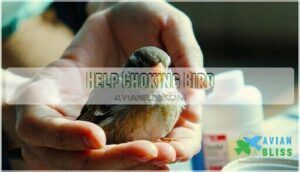
When minutes matter, stay calm and act fast to help your choking bird.
Every second counts—stay calm and save your feathered friend’s life.
First, observe if your bird is choking on solid food or liquid—liquid choking often resolves naturally.
For solid obstructions, gently hold your bird upside down to let gravity assist while carefully opening its beak.
Apply gentle pressure to the keel (breastbone) using short, inward compressions—this DIY Bird Heimlich technique can dislodge trapped objects.
Use tweezers for Safe Object Removal of visible items in the mouth, but avoid pushing objects deeper.
Support your bird’s head against your body while performing these Bird CPR Steps.
If the obstruction doesn’t clear within seconds, transport immediately to an avian veterinarian.
Remember, Post-Choking Care includes monitoring breathing patterns and preventing Aspiration Prevention by avoiding water until normal swallowing returns.
Your quick response can mean the difference between life and death for your feathered friend.
Choking Causes Risk
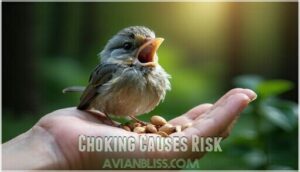
Understanding what causes birds to choke helps you prevent dangerous situations and respond quickly when they occur.
Your bird faces several choking risks, from swallowing oversized seeds to encountering foreign objects that can block their airways.
Swallowing Whole Seeds
Birds don’t chew their food like you do.
Their bird anatomy relies on digestion reliance through swallowing whole items.
When your bird grabs large seed size pieces, they can create esophagus blockage in the throat.
Crop stones help break down food, but oversized seeds bypass this system entirely.
Bird choking happens when seeds lodge in narrow passages.
Understanding bird choking signs helps prevent bird choking hazards before they become emergencies.
Foreign Objects
When your feathered friend encounters foreign objects, you’re facing one of bird choking’s most common culprits.
These items can lodge in their throat or trachea, blocking essential airways and triggering emergency situations that demand immediate action.
- Object Material: Plastic fragments, metal pieces, and wood splinters pose serious choking hazards
- Size Matters: Small beads, broken toy parts, and jewelry can easily obstruct narrow bird airways
- Toy Hazards: Inspect cage accessories regularly for loose components that could break off during play
Infections
Infections within the respiratory system can turn routine breathing into a life-threatening emergency, making bird choking more likely.
Bacterial causes often begin as minor irritations but escalate quickly. Fungal infections create thick secretions that block airways. Viral impact weakens immune responses, allowing secondary complications.
Many parrots suffer from aspergillosis affecting respiratory health.
| Infection Type | Choking Risk |
|---|---|
| Bacterial Causes | Swelling blocks airways |
| Fungal Infections | Thick mucus obstructs breathing |
| Parasitic Infections | Tissue inflammation narrows passages |
These respiratory infections compromise your bird’s ability to clear its throat naturally. Bird illness symptoms include labored breathing and unusual sounds. Prevent infections through proper hygiene and regular bird veterinary care checkups.
Tumors
Tumors pose serious choking risks for your feathered friend.
These abnormal growths can develop anywhere along the respiratory tract, with tumor location and growth rate determining severity.
Benign tumors grow slowly but still obstruct airways, while malignant tumors spread rapidly, creating immediate choking hazards.
Treatment options require prompt veterinary care for proper diagnosis and intervention.
Metabolic Diseases
Metabolic diseases create internal imbalances that increase your bird’s choking risk.
These conditions affect organ function and body chemistry, making swallowing difficult.
- Gout and kidney failure cause tissue swelling that narrows airways
- Liver disease and diabetes weaken muscles needed for proper swallowing coordination
- Calcium deficiency reduces muscle control, affecting throat function during eating
Understanding these metabolic diseases helps you recognize early warning signs and prevent dangerous choking incidents in your feathered companion.
First Aid Techniques
When your bird is choking, every second counts and you need to act fast with the right techniques.
These step-by-step first aid methods can help clear your bird’s airway and restore normal breathing before it’s too late.
Manual Dislodging
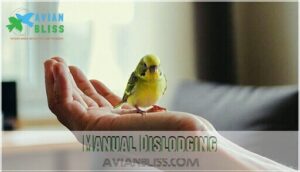
When dealing with solid objects blocking your choking bird’s airway, manual dislodging using the inversion technique can help.
Hold your bird firmly but gently, then turn it upside down to let gravity assist. Apply light keel compressions to the breastbone area.
Birds are susceptible to acute respiratory problems which require immediate attention, as seen in cases described at acute respiratory problems.
Avoid tweezers usage unless you can clearly see the obstruction. This head tilting and jaw opening method helps dislodge items naturally without excessive force, promoting a safe and gentle approach.
Heimlich Maneuver

Avoid the traditional bird Heimlich maneuver—it’s dangerous and ineffective for choking birds.
The modified technique using gentle keel pressure carries serious risks including broken bones and organ damage. Force application must be extremely cautious, as birds lack diaphragms making standard abdominal thrusts harmful.
Success rates are low compared to gravity-assisted methods. Skip this approach when helping a choking bird and use safer bird-specific rescue techniques instead.
For humans, it’s important to know when to act if someone is choking.
Jaw Manipulation
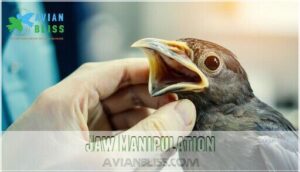
Opening a choking bird’s mouth requires gentle technique and steady hands.
Position your fingers behind the mandible’s angle for a safe grip. Lift the lower jaw upward carefully to access any visible objects.
Use gentle opening pressure to avoid injury. This proper technique creates airway access for your bird choking rescue efforts without causing trauma or stress.
Keel Pressure
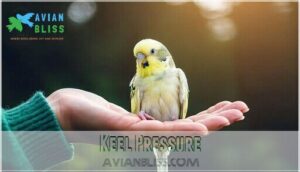
Light pressure on a choking bird’s keel can dislodge objects blocking airways. This pressure technique works by gently compressing the breastbone area.
Use extreme caution since excessive compression force can fracture the delicate keel anatomy or cause potential injuries.
- Apply quick, gentle pressure using 1-3 fingers based on bird size
- Hold the bird inverted to let gravity assist the process
- Avoid the Heimlich maneuver – it’s dangerous for birds
- Stop compressions immediately if the choking bird shows distress
Tweezers Removal
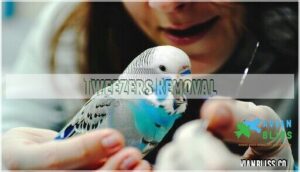
Examine your bird’s mouth for visible foreign objects using clean, sterilized tweezers. Choose tweezers with smooth, blunt tips to prevent beak damage. Size matters – select tweezers appropriate for your bird’s mouth opening.
Safe tweezers removal requires gentle, steady movements without forcing objects deeper. Proper tweezers sterilization prevents infection during bird choking first aid procedures.
You can find specialized bird tools online for this purpose.
Veterinary Care Needed
When first aid fails to clear your bird’s airway, professional veterinary intervention becomes critical for survival.
A veterinarian has specialized tools and advanced techniques that can save your bird’s life when home remedies aren’t enough.
Immediate Attention

When facing a bird choking emergency, assess the situation quickly to determine the object type causing distress.
Stay calm and take initial actions by observing your choking bird’s breathing patterns.
Call your vet immediately while helping your choking bird through this crisis.
Professional veterinary care remains essential for any bird choking emergency, as first aid for birds requires expertise beyond basic Heimlich maneuver techniques, and it is crucial for a successful outcome to have professional veterinary care.
Nebulization Therapy

Delivering medication through nebulization therapy helps your choking bird recover faster. Veterinarians use specialized nebulizer types to convert liquid medications into fine mist particles.
This medication delivery method targets the avian respiratory system directly, bypassing digestive barriers.
Holistic strategies, such as those found at Holistic strategies, can also aid recovery.
Treatment duration typically spans 10-30 minutes, repeated several times daily. Home nebulization reduces bird stress compared to frequent clinic visits for ongoing bird choking treatment.
Radiographs

Through radiographs, your veterinarian performs image interpretation and density analysis to locate obstructions in your choking bird.
These X-rays reveal foreign objects that standard examinations miss. Contrast agents may enhance visibility of soft tissue blockages.
While radiation exposure remains minimal, the diagnostic benefits outweigh risks.
Follow-up imaging tracks your bird’s recovery progress after choking treatment.
Abdominal Air Sacs Tube
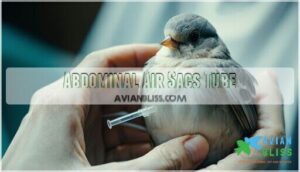
When standard breathing becomes impossible, veterinarians may insert an air sacs tube as a life-saving emergency measure.
This cannula placement involves making a small incision near your bird’s last rib and inserting tubing into the abdominal air sac.
The tube insertion provides breathing assistance by bypassing blocked airways, delivering oxygen directly while treating hypoxia until the obstruction clears.
Endoscopic Removal

When the air sac tube isn’t enough, your vet might use endoscopy for bird choking cases.
Different endoscope types work for various bird sizes – rigid scopes for larger birds, flexible ones for smaller species.
Anesthesia risks exist but procedure success rates are high with proper equipment sterilization.
Your avian veterinary team will handle airway obstruction removal carefully.
Post-op care includes monitoring breathing and preventing secondary infections.
Prevention Safety Measures
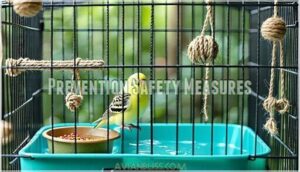
You can prevent most choking emergencies by controlling what your bird eats and plays with.
The right preparation keeps your feathered friend safe and gives you confidence to handle any crisis that might arise.
Food Size Management
Proper food sizing prevents bird choking incidents.
Cut fruits and vegetables into small, manageable pieces that match your bird’s beak size.
Choose soft foods over hard items when possible.
Introduce new foods gradually to monitor your bird’s eating habits.
Provide appropriate portions to prevent rushed eating.
Maintain dietary variety while prioritizing bird choking prevention through careful feeding methods, ensuring proper food sizing and manageable pieces.
Toy Safety Inspection
Regularly inspect bird toys to prevent choking hazards before they become deadly threats.
Check these critical safety factors:
- Material Toxicity – Verify that non-toxic materials won’t poison your bird
- Size Appropriateness – Verify pieces can’t lodge in your bird’s throat
- Structural Integrity – Look for loose parts that could break off
- Sharp Edges – Remove toys with dangerous points or rough surfaces
Replace damaged toys immediately to maintain pet bird safety.
Bird Supervision
Constant monitoring during playtime keeps your feathered friend safe from choking hazards.
Watch closely as birds explore toys and food, ready to intervene if they grab dangerous items. Playtime oversight means staying alert to risky behaviors like swallowing large pieces.
Your hazard awareness and owner education create a safe environment, helping prevent choking emergencies before they happen.
Maintaining hygiene can also contribute to avian disease prevention, which is an essential part of responsible bird ownership and overall avian health.
Calm Mindset
Maintaining calm during a choking bird emergency requires mental preparation and quick thinking.
Emergency preparedness starts with understanding that panic clouds judgment when your pet needs help most. Practice stress reduction techniques beforehand so you can focus on saving your choking bird.
Clear communication with veterinary staff becomes essential during transport. Emotional control allows proper assessment and swift action when helping a choking bird.
Regular Checkups
Schedule routine vet visits to catch choking risks before they become emergencies.
Early detection through preventative care helps identify health issues that increase choking likelihood, while expert advice guarantees your bird’s dietary needs are properly met.
- Health monitoring during checkups reveals throat abnormalities.
- Dietary needs assessment prevents inappropriate food sizes.
- Avian health screenings detect tumors or infections early.
- Bird care tips from professionals improve daily safety.
- Pet bird wellness plans reduce emergency situations.
Frequently Asked Questions (FAQs)
How to treat a choking bird?
Like a pilot clearing debris from jet engines, you’ll need swift action when your feathered friend can’t breathe.
Hold your bird upside down, gently press the keel five times, and check for visible obstructions you can remove with tweezers.
Why do birds choke?
Birds choke because they lack teeth and swallow food whole.
Large seeds, broken toys, or oversized food items can lodge in their trachea or esophagus, blocking airflow and causing choking episodes.
How to tell if a bird is choking?
Watch for gasping, wheezing, neck extension, and open-beaked breathing.
You’ll notice fluttering throat feathers, head bobbing, and cough-like sounds.
Restless pacing, drooling, and inability to swallow signal trouble requiring immediate action.
Can a bird choke on liquid?
Yes, birds can choke on liquid, especially water.
When they drink too quickly or get startled while drinking, liquid can enter their airway instead of going down properly.
However, liquid choking often resolves naturally as birds cough it up, which can be a naturally occurring process.
Do birds choke to death?
Unfortunately, birds can choke to death if airway blockages aren’t cleared quickly.
Without prompt intervention, severe choking episodes may cause loss of consciousness and death from oxygen deprivation, making immediate first aid essential.
Can a parrot choke to death?
Parrots can choke to death if airway obstructions aren’t cleared quickly.
They lack teeth, swallowing food whole, making choking possible on toys, jewelry, or large food pieces.
Immediate intervention saves lives.
How to save a suffocating bird?
Life hangs by a thread—act fast.
Hold your bird upside down, open its beak gently, and press the breastbone five times.
Remove visible objects with tweezers.
Rush to your vet immediately afterward, this is a situation where you must act fast.
How to tell if a bird has something stuck in its throat?
Watch for open-beaked gasping, neck extension, and wheezing sounds.
You’ll notice rapid throat feather movement, head bobbing, and cough-like noises.
Birds may pace restlessly or drool excessively when something’s blocking their airway, which can also cause wheezing sounds.
Can birds choke on water or liquids?
Yes, birds can choke on water and liquids.
When they drink too quickly or aspirate water, it blocks their airways.
However, liquid choking typically resolves naturally as birds cough and clear their throats on their own.
How long before choking becomes life threatening?
Birds can lose consciousness within 2-3 minutes when choking severely. You’ll notice panic, loss of balance, and weakening struggles. Don’t wait – act immediately when you see distress signs escalating.
Conclusion
What happens when every second counts and you’re the only one who can help your feathered friend?
Knowing how to help a choking bird transforms panic into purposeful action. You’ve learned the warning signs, mastered safe removal techniques, and understand when professional care is essential.
Remember to check food sizes, inspect toys regularly, and maintain calm supervision during feeding time.
Quick recognition and proper first aid can save your bird’s life. With these skills, you’re prepared to handle choking emergencies confidently and effectively.
- https://learningandyearning.com/how-to-tell-if-a-bird-is-choking/
- https://www.youtube.com/watch?v=xMSwg5bDDaI
- https://www.talkcockatiels.com/threads/choking-shes-okay-now.119138/
- https://azeah.com/birds-chickens-cockatiels-cockatoos-macaws-parakeets-other-parrots/bird-emergencies
- https://www.aavac.com.au/files/2011-13.pdf