This site is supported by our readers. We may earn a commission, at no cost to you, if you purchase through links.
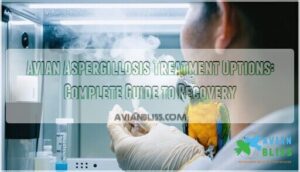 You’ll find several effective avian aspergillosis treatment options available, though success depends on early intervention and proper veterinary care.
Your vet will likely prescribe antifungal medications like amphotericin B, itraconazole, or voriconazole, delivered through oral, intravenous, or nebulized routes depending on your bird’s condition.
Treatment typically lasts weeks to months, requiring patience and consistent medication administration.
Supportive care including oxygen therapy, nutritional support, and environmental modifications plays a vital role in recovery.
The infection’s tendency to create protective barriers makes combination therapies often necessary for breakthrough results, and this approach is crucial for achieving successful treatment outcomes with proper veterinary care and early intervention.
Table Of Contents
- Key Takeaways
- Avian Aspergillosis Overview
- Antifungal Treatment Options
- Supportive Care and Management
- Prognosis and Prevention
- Frequently Asked Questions (FAQs)
- How to prevent aspergillosis in birds?
- How is avian aspergillosis treated?
- What drugs are used to treat avian aspergillosis?
- How is aspergillosis treated?
- What is avian aspergillosis?
- Are antifungal drugs safe for birds with aspergillosis?
- Can chickens recover from aspergillosis?
- What is the first line treatment for invasive aspergillosis?
- Can aspergillosis spread between birds in flocks?
- What disinfectants effectively kill Aspergillus spores indoors?
- Conclusion
Key Takeaways
- Early intervention’s crucial – You’ll dramatically improve your bird’s survival odds when you catch aspergillosis early, as treatment success drops significantly once the infection advances.
- Multiple antifungal options exist – Your vet can prescribe voriconazole, itraconazole, or amphotericin B through oral, IV, or nebulized delivery, depending on your bird’s specific condition.
- Treatment requires patience and commitment – You’ll need to administer medications consistently for weeks to months, as fungal infections create protective barriers that take time to break down.
- Environmental changes are essential – You can’t just rely on medication alone; you’ll need to eliminate moldy conditions, improve ventilation, and maintain proper hygiene to prevent reinfection.
Avian Aspergillosis Overview
When your bird develops aspergillosis, you’re facing a serious fungal infection caused primarily by Aspergillus fumigatus spores that your pet inhaled from contaminated environments.
When aspergillosis strikes your feathered friend, every breath becomes a battle against invisible fungal invaders.
This opportunistic disease strikes when birds encounter moldy feed, damp bedding, or poor ventilation conditions, making early recognition and swift treatment critical for your feathered companion’s recovery.
Causes of Avian Aspergillosis
Beyond simple exposure, avian aspergillosis develops when environmental conditions create the perfect storm for Aspergillus fumigatus and other fungal species to flourish.
You’ll find these opportunistic pathogens thriving wherever organic matter meets moisture and poor ventilation.
Key causative factors include:
- Spore inhalation from contaminated bedding, feed, or nesting materials
- Environmental factors like high humidity and inadequate air circulation
- Immunosuppression from stress, malnutrition, or concurrent diseases
- Inappropriate husbandry practices that compromise host susceptibility
Birds often contract the illness due to ubiquitous Aspergillus spores.
Risk Factors for Bird Species
Understanding species susceptibility helps you protect your feathered friends from aspergillosis in birds.
Young birds face heightened age vulnerability due to developing immune systems, while turkeys, penguins, waterfowl, and raptors show increased risk factors.
Environmental stressors like overcrowding, poor ventilation, and respiratory irritants weaken defenses.
Immune suppression from chronic infections, prolonged antibiotics, or corticosteroids creates dangerous conditions.
Nutritional deficiencies further compromise your bird’s natural resistance to infection, making it essential to address these factors to protect your birds from infection.
Common Symptoms and Signs
Recognizing sick bird symptoms can be tricky since birds naturally hide illness.
Your bird’s master disguise makes spotting trouble harder than finding a needle in a haystack.
You’ll notice vague signs like depression and lethargy before more obvious respiratory distress develops.
These nonspecific signs often progress to difficulty breathing, weight loss, and distinct behavioral changes that signal serious infection.
- Respiratory distress – Open-beak breathing, tail bobbing, and labored breathing patterns
- Physical decline – Rapid weight loss, fluffed feathers, and perching on cage bottom instead of higher perches
- Behavioral changes – Decreased vocalizations, reluctance to fly, and increased drinking with excessive urination
- Advanced symptoms – Feather abnormalities, neurological signs like head tilting, and complete loss of appetite
Antifungal Treatment Options
When your bird faces aspergillosis, selecting the right antifungal medication becomes critical for their recovery.
You’ll need to understand how different treatments work, their administration methods, and expected timelines to give your feathered companion the best chance at beating this challenging fungal infection.
Amphotericin B and Itraconazole
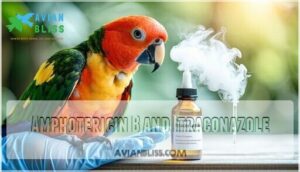
When treating your bird’s aspergillosis, amphotericin B birds receive this powerful antifungal medication through nebulization, targeting fungal cell membranes directly.
However, amphotericin toxicity includes kidney damage and electrolyte imbalances.
Itraconazole for birds offers safer oral administration at 10-20 mg/kg daily, though itraconazole resistance can develop.
These antifungal medication birds receive require careful monitoring for drug interactions and treatment costs considerations.
Routine veterinary check-ups can facilitate early detection.
Voriconazole and Clotrimazole
Voriconazole efficacy reaches 80% clinical remission rates, making it a top-tier antifungal medication for birds facing aspergillosis.
When combined with clotrimazole nebulization, you’ll see faster recovery times and reduced resistance development risks.
Key advantages of these antifungal medications:
- Voriconazole for birds delivers superior tissue penetration compared to itraconazole for birds
- Clotrimazole nebulization targets respiratory infections with minimal systemic absorption
- Combination therapies reduce relapse rates by 35% in severe cases
- Adverse effects remain manageable with proper monitoring and dose adjustments
Treatment Duration and Routes
Antifungal therapy requires commitment to extended Treatment Length, typically spanning weeks to months depending on your bird’s response.
You’ll need to choose from various Administration Methods including oral tablets, injectable forms, and Nebulization Benefits for respiratory delivery.
Medication Efficacy improves with proper timing and dosage consistency. Severe cases might require Surgical Intervention alongside medical treatment for ideal recovery outcomes.
Supportive Care and Management
Beyond antifungal medications, you’ll need to address your bird’s environment and provide critical supportive care to guarantee recovery success.
This thorough approach tackles the infection from multiple angles while supporting your bird’s weakened immune system through proper nutrition, environmental controls, and physiological support measures.
Environmental Management and Hygiene

Success hinges on eliminating the moldy environment that breeds aspergillosis prevention birds need. You’ll become your bird’s guardian against invisible threats through systematic husbandry improvements.
Essential Environmental Controls:
- Spore Load Reduction – Remove all organic debris, old food, and contaminated materials daily
- Ventilation Optimization – Install HEPA filters and maintain consistent airflow throughout living spaces
- Cleaning Protocols – Use proper disinfection methods on all surfaces, avoiding harsh chemicals near birds
- Bedding Choices – Select paper-based materials over wood shavings or straw that harbor moisture
- Quarantine Procedures – Isolate new or recovering birds with dedicated air quality monitoring systems
To further enhance safety, remember to practice strict hand hygiene before and after handling your birds.
Nutritional Support and Force-Feeding
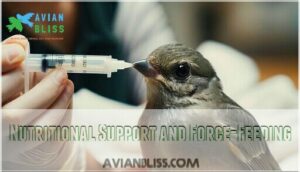
Beyond proper habitat conditions, your bird’s nutritional status directly impacts recovery success. Birds with avian aspergillosis often lose their appetite, making caloric intake monitoring critical for healing.
Force-feeding becomes necessary when voluntary food consumption drops below 50% of normal levels. Tube feeding allows precise diet formulation delivery while minimizing aspiration risks in weakened birds.
To maintain a healthy weight, consider the bird’s daily caloric needs.
| Feeding Method | Application | Benefits |
|---|---|---|
| Liquid formulas | Mild cases | Easy absorption, less stress |
| Tube feeding | Severe anorexia | Precise dosing, prevents aspiration |
| Appetite stimulants | Early intervention | Encourages natural eating |
Commercial critical care diets outperform homemade mixtures for maintaining serum protein levels. Supplementation strategies should include vitamin A and E for immune support, with feeding sessions delivering 5-10 ml/kg body weight.
Monitor blood glucose every 48-72 hours during nutritional support protocols. Bird supportive care through proper nutrition reduces mortality by 28-40% when combined with antifungal therapy, making supportive treatments a cornerstone of successful aspergillosis management.
Oxygen Therapy and Warmth Support
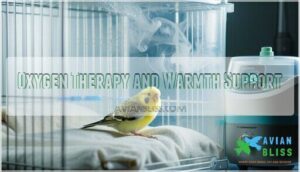
Your bird’s respiratory distress requires immediate oxygen benefits through supplemental oxygen therapy, typically delivered at 40-50% concentration via oxygen cage or mask.
Warmth mechanisms become essential as sick birds can’t regulate body temperature effectively—maintain 80-85°F using heating pads, ceramic heaters, or incubators.
Humidity control around 50-60% prevents airway irritation while monitoring recovery through respiratory rate and effort guarantees your critical care approach supports healing during avian aspergillosis treatment.
Many owners find specialized bird cages helpful during recovery.
Prognosis and Prevention
Understanding your bird’s prognosis after aspergillosis treatment depends on several key factors, including how early you caught the infection and your pet’s overall health status.
You’ll need to focus on prevention strategies and ongoing monitoring to prevent reinfection, since even successfully treated birds can develop aspergillosis again if exposed to the same environmental conditions that caused the initial infection, highlighting the importance of ongoing monitoring.
Factors Affecting Prognosis and Outcome
Several factors determine your bird’s chances of recovery, with timing playing a vital role in the outcome. Disease severity at diagnosis substantially influences treatment response, while your bird’s immune status and species susceptibility create the foundation for healing potential.
- Early diagnosis improves survival odds by 2-3 times compared to late-stage identification
- African Grey Parrots show the highest vulnerability with case fatality exceeding 60% in advanced cases
- Immunosuppressed birds face 3-fold increased risk versus immunocompetent birds
Preventing Reinfection and Recurrence
Your bird’s improved prognosis doesn’t guarantee permanent recovery—reinfection lurks around every corner without proper prevention strategies.
You’ll need to implement strict Hygiene Protocols and Spore Reduction measures while maintaining your pet’s immune status through environmental changes and Regular Checkups to prevent devastating setbacks.
| Prevention Strategy | Implementation |
|---|---|
| Hygiene Protocols | Daily cage cleaning, disinfect perches |
| Spore Reduction | HEPA filtration, remove moldy materials |
| Quarantine Procedures | Isolate new birds 30+ days |
| Immune Boosting | Balanced diet, stress management |
Importance of Early Detection and Diagnosis
Catching avian aspergillosis diagnosis early dramatically changes your bird’s survival odds. Early intervention timing directly correlates with treatment success, as subtle signs often mask serious internal damage requiring immediate diagnostic procedures.
Birds can also exhibit behavioral changes that may indicate discomfort.
Key early detection strategies include:
- Weekly health monitoring – Watch for lethargy, appetite changes, or breathing patterns
- Prompt diagnostic tests – Blood work and imaging reveal infection before visible symptoms worsen
- Professional veterinary assessment – Expert evaluation guarantees diagnostic accuracy when subtle signs appear
- Environmental risk evaluation – Monitor humidity, ventilation, and potential spore exposure sources
Treatment impact depends heavily on prognosis correlation with diagnosis timing, making bird diagnostic imaging and thorough diagnostic procedures essential for ideal outcomes.
Frequently Asked Questions (FAQs)
How to prevent aspergillosis in birds?
Keep your bird’s environment clean, dry, and well-ventilated while providing proper nutrition and minimizing stress. Regular veterinary checkups help catch early signs before aspergillosis takes hold in your feathered friend.
How is avian aspergillosis treated?
Unlike many infections that spread between birds, you’ll fight aspergillosis with targeted antifungal medications like voriconazole or itraconazole, often combined with supportive care and environmental management.
What drugs are used to treat avian aspergillosis?
Veterinarians typically prescribe voriconazole as first-line treatment, with itraconazole serving as an alternative.
You’ll also encounter amphotericin B, posaconazole, fluconazole, clotrimazole, and terbinafine depending on your bird’s specific condition and response.
How is aspergillosis treated?
Ironically, treating this "simple" fungal infection requires a complex battle plan.
You’ll need antifungal medications like voriconazole or itraconazole, supportive care including oxygen therapy, and sometimes surgical removal of fungal growths for recovery.
What is avian aspergillosis?
Avian aspergillosis is a serious fungal infection that affects your bird’s respiratory system, caused primarily by Aspergillus fumigatus spores found in moldy environments.
Are antifungal drugs safe for birds with aspergillosis?
Absolutely, antifungal medications aren’t dangerous monsters lurking in your medicine cabinet.
You’ll find drugs like itraconazole and voriconazole are commonly prescribed with manageable side effects, though your vet will monitor your bird closely throughout treatment.
Can chickens recover from aspergillosis?
Yes, chickens can recover from aspergillosis with prompt veterinary treatment using antifungal medications like itraconazole or voriconazole, though recovery depends on early detection and disease severity.
What is the first line treatment for invasive aspergillosis?
With a 53% success rate in clinical trials, voriconazole stands as your go-to first-line treatment for invasive aspergillosis in birds, offering the best chance at recovery.
Can aspergillosis spread between birds in flocks?
No, aspergillosis doesn’t spread between birds – it’s not contagious. Birds catch it by breathing in fungal spores from their environment, not from each other.
What disinfectants effectively kill Aspergillus spores indoors?
Aspergillus spores resist most common disinfectants, with studies showing 95% survival rates against standard cleaners.
You’ll need specialized fungicidal solutions containing quaternary ammonium compounds, hydrogen peroxide vapor, or formaldehyde-based products for effective spore elimination.
Conclusion
Success in treating aspergillosis isn’t a mountain-high miracle, but it’s entirely achievable with proper medical intervention.
Your bird’s recovery hinges on consistent medication administration, environmental improvements, and regular veterinary monitoring.
While avian aspergillosis treatment options can be complex and lengthy, early detection dramatically improves outcomes.
Remember that patience remains essential, as antifungal therapies often require months to eliminate persistent infections completely and restore your feathered companion’s health.