This site is supported by our readers. We may earn a commission, at no cost to you, if you purchase through links.
 You’ll find success at local parks with ponds, nature centers, and coastal areas where birds gather predictably.
City parks often host diverse species like cardinals, robins, and waterfowl that won’t flee at your approach.
Wetlands attract herons, ducks, and shorebirds year-round, while forest edges offer woodpeckers and songbirds.
Start early morning when birds are most active and vocal.
Top birding spots for beginners include places with established trails, benches for patient observation, and reliable bird activity regardless of season.
Look for locations with varied habitats—water, trees, and open spaces—within a single area.
The secret lies in choosing spots where birds feel secure enough to linger, and where you can observe them in their natural habitat with ease, making it an ideal spot for patient observation.
Table Of Contents
- Key Takeaways
- Best Birding Locations
- Choosing Right Location
- Planning Birdwatching Trip
- Birding Techniques Basics
- Getting Started Birding
- Frequently Asked Questions (FAQs)
- Where can I find a good birding spot?
- What is a good guide to birding?
- How do I find a good bird watching spot?
- How do I find a good bird guide?
- How to start birdwatching?
- Where can I find bird watching hotspots?
- Where is the best birding spot in the US?
- What colors not to wear when birding?
- What month is best for birding in Arizona?
- What binoculars should new birders buy?
- Conclusion
Key Takeaways
- You’ll find the best beginner spots at local parks, wetlands, and nature centers where birds gather predictably and won’t flee easily from your presence.
- Start early morning when birds are most active, and choose locations with diverse habitats like water sources, trees, and open spaces all in one area.
- Essential gear includes 8x magnification binoculars, field guides or the Merlin Bird ID app, and earth-toned clothing to avoid startling birds.
- Join local birding groups through Audubon chapters for mentorship, guided tours, and community support that’ll accelerate your learning curve significantly.
Best Birding Locations
You’ll find exceptional birding locations across diverse ecosystems, from coastal shores teeming with migrating shorebirds to mountain forests echoing with warbler songs.
Each habitat type offers unique species and seasonal viewing opportunities that make birding accessible and rewarding for newcomers, with diverse ecosystems providing a wide range of experiences.
Coastal Birding Hotspots

During spring migration, Cape May funnels over 400 species through its strategic location, making it perfect for beginner birdwatching.
Cape May’s strategic position creates a natural funnel where hundreds of bird species converge during migration season.
You’ll spot shorebirds along accessible beaches while learning coastal conservation principles.
Point Reyes offers 490 species across diverse seabird habitats, with wheelchair-accessible viewpoints ideal for birding photography. These easy birding locations provide excellent learning opportunities without overwhelming newcomers.
Wetland and Marsh Birding Destinations

Wetlands serve as nature’s nurseries for waterfowl and wading birds.
These marsh ecosystems support over 300 species at sites like Horicon Marsh and Bosque del Apache.
You’ll find beginner-friendly birding opportunities with boardwalks and observation platforms that make wetland photography accessible while following proper birding ethics.
- Everglades National Park – Over 360 species including herons, egrets, and ibises with guided tours
- Bosque del Apache – Thousands of sandhill cranes and snow geese during peak migration seasons
- Horicon Marsh – 33,000 acres supporting massive waterfowl gatherings and easy trail access
Mountain and Forest Birding Locations

Mountain and forest birding locations offer incredible diversity for beginnerfriendly birding adventures.
You’ll discover High-Altitude Species like Clark’s Nutcracker in Rocky Mountain National Park, while Forest Canopy Birds such as warblers populate Great Smoky Mountains’ 240+ species.
Coniferous Forest Birding yields Three-toed Woodpeckers, whereas Deciduous Forest Birding showcases Wood Thrush.
Mountain Migration Routes create spectacular viewing opportunities along accessible birding sites with well-marked trails perfect for birding tips beginners.
Desert and Grassland Birding Sites

Why venture into seemingly barren landscapes when they’re actually teeming with life?
Desert and grassland habitats offer beginnerfriendly birding opportunities with surprising diversity. Saguaro National Park in Arizona showcases arid avifauna like Gila woodpeckers and cactus wrens.
These ecosystems support unique grassland species while presenting conservation challenges. Water sources attract diverse birds, creating excellent observation points for tracking migratory patterns.
Choosing Right Location
Selecting the right location sets the foundation for successful birding adventures, especially when you’re just starting out.
You’ll want to take into account seasonal migration patterns, regional species variations, and habitat diversity to maximize your chances of spotting different birds throughout the year.
Seasonal Considerations
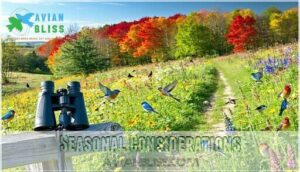
Timing matters more than you might think when you’re planning your next birdwatching adventure.
Migration patterns create peak viewing opportunities during spring and fall, when birds travel between breeding and wintering grounds.
Breeding seasons bring vibrant plumage and active behaviors, while molting periods might leave some species looking disheveled.
Weather impacts bird activity substantially—sunny, calm mornings typically offer the best conditions.
Food availability drives bird presence, so research what’s blooming or fruiting at your chosen birdwatching hotspots before you pack your birding equipment for beginners who need to understand the importance of peak viewing opportunities.
Regional Birding Variations
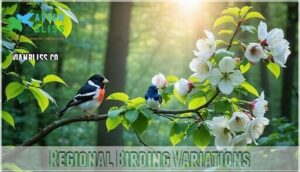
Different regions across America offer distinct birding experiences shaped by geography and climate.
Western states excel for raptor migrations, while Eastern forests harbor diverse warblers and woodpeckers. Understanding these regional patterns helps you choose beginner-friendly birding locations that match your interests and maximize species diversity.
The Appalachian avian diversity offers birdwatchers a chance to see warblers, thrushes, and hawks.
- Western Advantage: 15 of America’s top-20 hawk migration sites utilize open landscapes and ridge lines for spectacular raptor counts
- Eastern Excellence: Mixed forests and Appalachian regions support higher Warbler, Woodpecker, and Flycatcher diversity than western equivalents
- Southern Stability: Year-round populations of 40+ species versus northern sites experiencing 65% seasonal turnover due to migratory routes
- Northern Specialties: Boreal forests host unique Thrushes, Grosbeaks, and Crossbills during breeding season, with elevation impacts creating distinct habitat specificity
Habitat Diversity

Exploring ecosystem variety boosts your birding success dramatically.
Different habitats support unique species through niche partitioning, where birds occupy specific ecological roles.
Wetlands attract waterfowl, forests house woodpeckers, and grasslands host raptors.
This species richness makes diverse locations ideal birding hotspots for beginners.
Conservation efforts protect these critical habitats from habitat loss, ensuring your birding guide for beginners remains relevant for future bird identification adventures, supporting bird identification and ecological roles.
Planning Birdwatching Trip
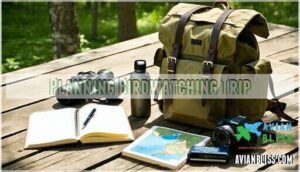
Once you’ve identified promising birding locations, you’ll need to plan the logistics of your trip carefully.
This includes researching specific destinations, timing your visit for peak bird activity, and gathering the right equipment to make your birding experience successful.
Researching Destinations
Research your chosen birding destinations using eBird Hotspot lists and local wildlife refuge websites.
Check destination accessibility through parking availability and trail conditions. Verify permit requirements for protected areas.
Local resources like visitor centers provide species guides and current sightings. Consider accommodation options near top birding spots for extended visits.
Review safety considerations including weather patterns and terrain difficulty. For affordable travel, consider Eastern Africa birding destinations, which offer budget-friendly options.
Timing and Scheduling
Once you’ve selected your destination, perfect timing makes all the difference.
Migration patterns and ideal seasons determine when you’ll see the most bird activity, while daily timing affects which species you’ll encounter.
- Spring and fall migrations offer peak birding opportunities with diverse species moving through your chosen location
- Early morning hours typically provide the highest bird activity levels before human disturbances increase
- Weather factors like clear skies after storms often concentrate birds in accessible viewing areas
Check tide charts for coastal locations and monitor weather forecasts to maximize your birding success during your planned visit.
Essential Gear and Equipment
Quality binoculars with 8x magnification are your most important investment for birdwatching gear.
Clear optics transform distant specks into detailed birds worth watching.
Entry-level models like Celestron Nature DX ED offer excellent clarity for beginners.
Pack field guides or download Merlin Bird ID app for instant identification.
Wear waterproof boots, layered clothing essentials, and carry a small backpack with water and snacks for comfortable birding adventures.
Binoculars with high-quality optics enhance the birding experience.
Birding Techniques Basics
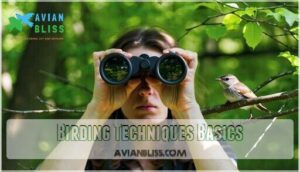
Now that you’ve picked your perfect birding destination, you’ll need to master the fundamentals of actually spotting and identifying birds in the field.
These core techniques will transform you from someone who sees "just a brown bird" into a birder who can confidently distinguish between a house sparrow and a song sparrow, applying fundamentals to improve your skills.
Bird Identification Tips
Start with size comparison – is it sparrow-sized or crow-sized? Note distinctive field marks like wing bars, eye rings, and tail patterns.
Pay attention to behavioral clues: does it hop or walk, feed on ground or in trees?
Habitat association helps narrow choices – water birds stick near wetlands, forest species prefer trees.
Distinguishing calls often provide the final clue for simple bird identification, especially with common bird species. Many birders also find bird identification apps helpful in the field.
Using Field Guides and Apps
Field guides and birding apps are your identification powerhouses.
Cross-reference field guide descriptions with live observations to boost Guide Accuracy by 30%.
Digital vs. Paper choices matter—apps offer instant updates and App Features like AI photo identification, while paper guides work everywhere.
Consider purchasing birding guides for detailed species information.
Choose birding apps with Offline Access for remote locations.
Community Sharing platforms let experienced birders verify your sightings and provide feedback.
Recording Observations and Data
Why keep scattered notes when a structured birdwatching journal transforms random sightings into valuable data?
Record species, location, time, weather, and behavior using consistent observation methods. Your journaling styles should include sketches and detailed notes for data accuracy.
A dedicated resource can enhance the experience, so consider using a specialized birding notebook. Consider sharing data through citizen science projects like eBird, where your field guide observations contribute to global research and enhance your birdwatching skills.
Getting Started Birding

You’ll find success in birdwatching by starting with beginner-friendly locations that offer abundant species and easy access.
These starter spots provide the perfect foundation for building your identification skills while connecting with local birding communities, which is key to building your skills.
Beginner Friendly Locations
Local parks often provide the perfect stepping stones for beginnerfriendly birding adventures.
Start with accessible trails that feature common species like robins, cardinals, and blue jays for easy identification.
Many locations offer guided tours and safe environments, making introductory birding less overwhelming.
These local birding hotspots help you practice essential birding tips beginners need before tackling more challenging destinations, which can be a great way to enjoy birding adventures.
Joining Local Birding Groups
Joining birdwatching groups transforms your birding experience from solo adventures into shared discoveries.
These communities welcome beginners with open arms, offering mentorship opportunities that accelerate your learning curve by connecting you with seasoned birders who share decades of field experience.
- Expert guides leading group trip planning to prime locations you’d never discover alone
- Conservation efforts where your sightings contribute to citizen science projects protecting local habitats
- Social birding events creating lasting friendships with fellow nature enthusiasts who understand your excitement over spotting a rare warbler
Birdwatching communities provide invaluable birding resources beginners need most – from equipment loans to species identification help.
Most birdwatching clubs organize regular outings accommodating various group skill levels, ensuring you’ll find your perfect pace while building confidence in this rewarding hobby.
Practicing Patience and Observation
Successful birding requires mindfulness birding techniques and quiet observation skills.
You’ll develop stronger nature connection by slowing down and using sensory awareness to notice subtle bird behaviors.
Listen for calls, watch for movement patterns, and observe feeding habits.
These birdwatching skills improve with practice and patient observation reveals fascinating bird behavior details that rushed birders miss completely.
Essential tools include binoculars for birdwatching to clearly see distant birds.
Frequently Asked Questions (FAQs)
Where can I find a good birding spot?
Like finding hidden treasure in your own backyard, you’ll discover excellent birding spots at local parks, nature reserves, and wildlife refuges.
Start with nearby wetlands, forests, or coastal areas where diverse bird species gather naturally.
What is a good guide to birding?
You’ll want a thorough field guide like Sibley’s or Peterson’s for bird identification, plus a birding app like Merlin Bird ID for instant help with sounds and photos.
How do I find a good bird watching spot?
Look for spots with diverse habitats like parks, wetlands, or nature reserves.
Check local birding groups online, use eBird maps, visit nearby wildlife refuges, and explore areas with water sources where birds gather naturally, including spots with diverse habitats.
How do I find a good bird guide?
Check local Audubon chapters, visitor centers at birding hotspots, or online resources like eBird. Many refuges offer guided walks with knowledgeable volunteers who’ll share identification tips and local insights.
How to start birdwatching?
Over 45 million Americans participate in birdwatching annually.
Start with binoculars, a field guide, and visit local parks.
Focus on bird size, colors, and behaviors for identification. Join birding groups for guidance and community support.
Where can I find bird watching hotspots?
You’ll discover premier birding hotspots through local Audubon chapters, eBird’s online database, state wildlife agencies, and birding apps like Merlin.
National wildlife refuges, state parks, and birding festivals also offer excellent locations with guided tours and fellow enthusiasts to enhance your experience.
Where is the best birding spot in the US?
Point Reyes National Seashore in California stands out as America’s premier birding destination, recording nearly 490 species—half of all North American birds in one spectacular location.
What colors not to wear when birding?
Bright colors like red, orange, and white can startle birds and make them fly away. You’ll blend better wearing earth tones like brown, green, or gray that match natural surroundings.
What month is best for birding in Arizona?
You’ll find Arizona’s prime birding season runs mid-April through mid-May during peak spring migration . This timing brings the highest species diversity as millions of songbirds move north.
What binoculars should new birders buy?
Choosing binoculars is like selecting your birding eyes—they’ll shape every feathered encounter.
You’ll want 8×32 or 8×42 models, which offer perfect balance between magnification and field of view.
Look for brands like Vortex Viper or Nikon Prostaff.
Conclusion
Surprisingly, you don’t need exotic destinations or expensive expeditions to discover amazing birds—your local park probably hosts more species than you realize.
The best top birding spots for beginners share common features: reliable bird activity, comfortable observation points, and forgiving environments where mistakes don’t matter.
You’ll develop essential skills through consistent practice at familiar locations before tackling specialized habitats.
Start exploring nearby areas with water sources, varied vegetation, and established trails.
Your birding journey begins wherever curious eyes meet patient observation.