This site is supported by our readers. We may earn a commission, at no cost to you, if you purchase through links.
 You’re facing a silent crisis as threats to local bird populations devastate species at an alarming rate.
Domestic cats kill up to 4 billion birds annually in North America, while pesticides poison food sources and light pollution disrupts migration patterns.
Urban development fragments nesting habitats, and climate change alters traditional feeding grounds.
Window strikes, invasive species, and plastic pollution compound these dangers, creating a perfect storm that’s eliminated nearly 3 billion birds since 1970.
These interconnected threats don’t just harm individual species—they signal broader ecosystem collapse that affects pollination, pest control, and biodiversity in your community.
The hidden connections between these dangers reveal surprising solutions.
Table Of Contents
- Key Takeaways
- Feline Predation Impact
- Bird Population Declines
- Habitat Loss Effects
- Environmental Threats Factors
- Conservation Efforts Needed
- Frequently Asked Questions (FAQs)
- What is the biggest threat to bird populations?
- What is causing all bird populations to decline?
- What factors affect bird populations?
- What is the #1 cause of death for birds?
- How do wind turbines affect bird mortality?
- What role does glass building design play?
- Can bird feeders increase predation risks?
- How effective are wildlife corridors for birds?
- What diseases threaten wild bird populations?
- Conclusion
Key Takeaways
- You’re contributing to 1.4 to 3.7 billion bird deaths annually by letting your cat roam outdoors, making feline predation the single deadliest threat to bird populations
- You can prevent millions of window strikes by installing bird-friendly designs like fritted glass or decals that make windows visible to flying birds
- You’re witnessing a crisis where North America has lost nearly 3 billion birds since 1970 due to habitat destruction from urban development consuming over 1 million acres annually
- You’ll make the biggest impact by keeping cats indoors, reducing pesticide use, supporting habitat restoration, and turning off unnecessary lights during migration seasons
Feline Predation Impact
Your beloved house cat retains the same hunting instincts that make wild felines such effective predators, and these drives don’t disappear just because you fill their food bowl regularly.
Even well-fed domestic cats kill an estimated 1.4 to 3.7 billion birds annually in the United States alone, making them the single largest human-related threat to bird populations.
Domestic Cats Hunting Instincts
Even when you’re spoiling your cat with the finest kibble, their feline behavior reveals an undeniable truth: hunting instincts run deeper than hunger.
Domestic cats retain powerful predatory drives that make them efficient feline predators, regardless of pet ownership practices or feeding schedules.
Here’s what drives cat predation:
- Instinctive stalking – Cats naturally track movement patterns
- Silent hunting – Soft paws enable stealthy approaches
- Quick strikes – Lightning-fast pouncing secures prey
- Play behavior – Mock hunting satisfies predatory urges
This cat behavior creates significant wildlife impact on bird populations.
The presence of outdoor cats contributes to cat predation issues that threaten local bird species.
Outdoor Cats Threat to Birds
While domestic cats possess inherent hunting instincts, outdoor cats pose a dramatically greater threat to local bird populations.
Feline predation from free-roaming domestic cats and feral cats results in staggering bird predation rates, with studies showing outdoor cats kill 1.4 to 3.7 billion birds annually in North America alone.
| Cat Type | Annual Bird Kills |
|---|---|
| Indoor cats | Nearly zero |
| Supervised outdoor |
Ground-Nesting Bird Vulnerability
Ground-nesting birds face the highest risk from nest predation, with cats discovering eggs and chicks in vulnerable locations like tall grass, shrubs, and forest floors.
These ground-nesting birds can’t escape to tree safety, making nesting success extremely low in areas with free-roaming cats.
Egg survival drops dramatically when feline predators patrol bird habitats regularly, and this is a significant threat to nesting success, especially in areas with high populations of free-roaming cats.
Urban Bird Population Risks
Cities present a deadly maze for birds, where glass towers create invisible barriers and urbanization impact fragments their natural pathways.
Your neighborhood’s skyscrapers cause millions of window collisions annually, while cat predation rates soar in densely populated areas.
Urban habitat destruction eliminates wildlife corridors, forcing bird migration routes through dangerous zones where eco friendly city planning remains rare.
Bird Population Declines
You’re witnessing one of the most dramatic wildlife crises in modern history, with over one-third of U.S. bird species now facing serious conservation concerns.
Since 1970, North America has lost nearly 3 billion birds due to mounting environmental pressures that continue accelerating across ecosystems, which is a significant crisis.
Conservation Concerns in US
Nearly 389 US bird species face conservation concerns, with biodiversity loss threatening ecosystem services nationwide.
Bird populations have plummeted 29% since 1970, prompting urgent conservation policy reforms.
Wildlife refuges and bird sanctuaries now protect critical habitats, yet habitat loss continues devastating local communities.
You’ll find conservation efforts focusing on migratory songbirds, with grassland species experiencing the steepest declines requiring immediate intervention.
Threats to Hummingbird Species
When hummingbirds face mounting pressures, their specialized nesting habits become vulnerable to disruption.
These tiny birds require specific habitat conditions for successful breeding, yet habitat loss continues destroying their traditional nesting sites.
Migration routes face increasing obstacles from development and climate change, while altered feeding patterns disrupt their pollinator role in ecosystems.
Their unique beak adaptations, perfectly evolved for specific flowers, become useless when those plants disappear, threatening local bird populations and overall bird conservation efforts.
Species at Risk of Extinction
Several species face extinction risk without immediate intervention. The Florida scrub-jay, evening grosbeak, and chimney swift appear on the "Tipping Point" list, requiring urgent bird protection measures.
Under the Endangered Species Act, 89 bird species receive federal protection, while 269 others need species conservation attention. These endangered birds highlight critical ecosystem balance threats.
Wildlife preservation efforts must address bird population decline before we lose these species forever. You can support bird extinction prevention through habitat restoration and reducing environmental pressures on vulnerable populations.
Conservation efforts rely on accurate endangered bird lists to track and protect species effectively.
Habitat Loss Effects
You’ve likely noticed fewer birds in your neighborhood, but you mightn’t realize that habitat destruction has eliminated 3 billion birds from North America since 1970.
Urban expansion consumes over 1 million acres annually, fragmenting forests and wetlands that birds depend on for nesting and feeding.
Urban Development Threats

Urban sprawl consumes over one million acres annually, creating a concrete maze that fragments bird habitats.
You’re witnessing habitat loss firsthand as urbanization transforms natural landscapes into developed areas, forcing birds into smaller, isolated patches where survival becomes increasingly difficult.
- Wildlife corridors disappear as city planning prioritizes development over green spaces
- Bird collisions with buildings increase dramatically in densely populated urban areas
- Human impact intensifies through noise pollution and artificial lighting disrupting migration patterns
- Habitat fragmentation isolates bird populations, reducing genetic diversity and breeding success
Deforestation and Bird Habitats

Beyond your backyard, deforestation destroys millions of acres annually, creating massive forest fragmentation that splits bird populations into isolated pockets.
Tree removal eliminates nesting sites for species like the Black-throated Blue Warbler, which needs mature forests to survive.
This ecosystem disruption triggers biodiversity loss as habitat destruction forces birds into unsuitable areas, making habitat restoration critical for recovering bird populations.
Climate Change Impact on Migration

Climate change disrupts migration patterns as temperature shifts force 65% of North American bird species to alter their timing by two weeks.
Weather extremes and ecosystem disruption create mismatches between arrival times and peak food availability, reducing survival rates.
Sea level rise eliminates coastal stopover habitats, while birds face increased mortality traversing new routes through unfamiliar terrain.
This disruption is a result of habitat loss effects that impact bird populations and their ability to adapt to changing environments.
Reducing Carbon Footprint Importance

You can make a real difference by embracing renewable energy and sustainable living practices.
When you choose eco friendly alternatives like solar panels or wind power, you’re directly supporting conservation initiatives that protect bird habitats.
Carbon offset programs and green initiatives help reduce your environmental footprint, while your commitment to environmental sustainability creates healthier ecosystems where birds can thrive despite ongoing climate change impacts.
Environmental Threats Factors
You’re unknowingly contributing to environmental threats that kill millions of birds each year through everyday choices and habits.
Chemical pesticides, light pollution, invasive species, and oil-related contamination create a deadly combination that’s decimating local bird populations faster than most people realize, posing significant threats to the environment, including millions of birds.
Pesticides and Pollution Effects
Toxic chemicals are quietly devastating bird populations nationwide.
You’ll find that 67 million birds die annually from direct pesticide exposure, while neonicotinoids reduce grassland species by 2.2% per 100kg used.
Air pollution, particularly ozone, drops bird counts substantially.
Heavy metals and water contamination create bioaccumulation in tissues, causing reproductive failures and long-term environmental health damage.
The decline in bird populations is largely attributed to neonicotinoid effects on their habitats and food sources, leading to significant environmental health damage.
Invasive Species Control Importance
Invasive species like brown rats and feral cats devastate local bird populations, causing extinctions on 80% of affected islands.
You can support species management programs that use targeted control methods to restore ecosystem balance.
These conservation efforts protect biodiversity by removing non-native predators that threaten ground-nesting birds and disrupt ecological balance through wildlife conservation initiatives, which are crucial for maintaining ecosystem balance.
Light Pollution and Migration

When nocturnal navigation goes haywire, you’re witnessing light pollution’s devastating impact on bird migration.
Urban lighting disrupts migration patterns, causing disorientation as artificial lights interfere with birds’ natural orientation systems.
Migratory birds mistake city lights for stars, leading to deadly collisions with buildings.
Light disruption increases bird mortality rates substantially during nighttime flights.
Oil Spills and Seabird Colonies
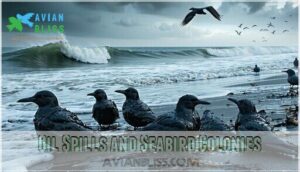
Catastrophic destruction strikes when oil spills devastate seabird colonies, killing hundreds of thousands through hypothermia and toxin ingestion.
You’ll witness marine ecosystem impact as contaminated feathers lose waterproofing abilities, while spill prevention measures and coastal conservation efforts remain vital for protecting vulnerable species from these human-caused threats requiring immediate seabird rehabilitation.
Understanding oil pollution trends is essential to address the issue effectively, particularly in terms of seabird rehabilitation and coastal conservation.
Conservation Efforts Needed
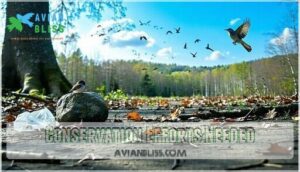
You can take meaningful action to protect local bird populations from the threats they’re facing today.
Simple changes in your daily habits, combined with support for conservation programs, create powerful protection for vulnerable species in your community, which can lead to powerful outcomes.
Keeping Cats Indoors Importance
Since cats remain nature’s most efficient bird hunters even when well-fed, keeping your pet indoors becomes the single most effective conservation action you can take.
Indoor enrichment through puzzle feeders and interactive toys satisfies feline hunting instincts while protecting vulnerable bird populations.
Responsible pet ownership means creating stimulating indoor environments that promote both feline health and bird conservation measures simultaneously.
Providing cats with cat play toys can help redirect their hunting instincts away from birds.
Supporting Conservation Programs
Beyond keeping cats indoors, you can amplify your impact through community engagement with bird conservation programs.
Conservation funding has increased 21% since 2020, supporting wildlife preservation through sustainable practices and habitat restoration projects. Effective bird conservation requires the use of proper bird conservation tools.
Here’s how you can support bird population protection:
- Join local conservation organizations that focus on creating birdfriendly habitats in your area
- Volunteer for habitat restoration projects that plant native species and remove invasive plants
- Participate in citizen science programs that monitor bird populations and migration patterns
- Donate to eco friendly initiatives that protect critical nesting and foraging areas
- Advocate for wildlife preservation policies that strengthen protection for threatened species
Reducing Plastic Use and Pollution
Plastic pollution devastates bird populations through ingestion and toxic exposure.
You can make a difference by choosing reusable bags, bottles, and containers instead of single-use plastics. This simple waste management shift reduces environmental impact substantially.
Supporting eco-friendly products and sustainable living practices helps protect wildlife through effective pollution control measures for bird conservation.
Using reusable products like those from eco friendly bags can greatly reduce plastic waste and promote sustainable living.
Participating in Local Clean-Up Efforts
Through community service and volunteer work, you’ll directly support local conservation initiatives while making bird-friendly environments possible.
Environmental stewardship through waste management creates lasting habitat protection for vulnerable species.
- Join community cleanups to remove plastic debris from nesting areas
- Volunteer with eco conservation groups for bird monitoring projects
- Organize neighborhood waste collection drives in migration corridors
- Partner with schools for educational bird conservation efforts
- Adopt local parks through municipal environmental stewardship programs
Frequently Asked Questions (FAQs)
What is the biggest threat to bird populations?
Habitat loss stands as the single greatest threat you’ll encounter when examining bird population declines.
Since 1970, you’ve witnessed nearly 3 billion birds disappear from North America, primarily due to urban development and agricultural expansion destroying their homes.
What is causing all bird populations to decline?
Like a perfect storm gathering strength, you’re witnessing multiple forces converging to devastate bird populations.
Habitat loss, climate change, building collisions, pesticide poisoning, and cat predation create this crisis, with nearly three billion birds vanishing since 1970, a situation that represents a perfect storm and involves habitat loss.
What factors affect bird populations?
Several key factors shape bird populations that you should know about.
Habitat destruction from urban development removes nesting sites, while climate change disrupts migration patterns and food availability, creating survival challenges.
What is the #1 cause of death for birds?
Cats kill more birds than any other human-related cause. You’re looking at 4 to 7 billion bird deaths annually from domestic cats alone, making feline predation the deadliest threat birds face today.
How do wind turbines affect bird mortality?
Ironically, you’d think wind turbines kill birds constantly, yet they’re responsible for less than one in 4,000 documented bird deaths from industrial activities, with 4 to 18 birds killed per turbine yearly.
What role does glass building design play?
Glass buildings create deadly invisible barriers that birds can’t detect, causing billions of collisions annually.
You can reduce this threat by installing bird-friendly designs like fritted glass, external screens, or decals that make windows visible to flying birds.
Can bird feeders increase predation risks?
Yes, bird feeders can increase predation risks by concentrating birds in predictable locations where outdoor cats easily hunt them, especially during dawn and dusk feeding times.
How effective are wildlife corridors for birds?
Wildlife corridors effectively connect fragmented habitats, allowing birds to move safely between feeding and nesting areas.
You’ll find they reduce predation risks and support migration patterns, though success varies by corridor width and native vegetation quality, which can be considered a key factor in the effectiveness of these corridors.
What diseases threaten wild bird populations?
Are deadly pathogens lurking in your backyard birds?
You’ll find avian influenza, West Nile virus, salmonellosis, and Newcastle disease threatening wild populations, causing mass die-offs and weakening immune systems across species.
Conclusion
Research reveals that one songbird species disappears from North America every eight years, highlighting the urgent nature of threats to local bird populations.
You can make a significant difference by keeping cats indoors, reducing pesticide use, and supporting habitat restoration projects.
Simple actions like turning off unnecessary lights during migration seasons and choosing bird-friendly coffee help protect vulnerable species.
Your individual efforts, combined with community conservation programs, create measurable impacts on bird survival rates and ecosystem health.
- https://nationalzoo.si.edu/migratory-birds/news/when-it-comes-pesticides-birds-are-sitting-ducks
- https://aces.illinois.edu/news/decline-us-bird-biodiversity-related-neonicotinoids-study-shows
- https://beyondpesticides.org/dailynewsblog/2025/02/study-finds-increased-offspring-mortality-in-pesticide-laden-birds-nests/
- https://abcbirds.org/program/pesticides/
- https://pmc.ncbi.nlm.nih.gov/articles/PMC8640698/