This site is supported by our readers. We may earn a commission, at no cost to you, if you purchase through links.
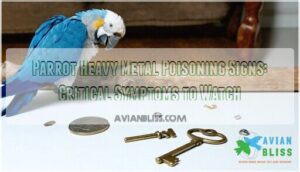 You’ll spot parrot heavy metal poisoning signs when your bird becomes unusually quiet, refuses favorite foods, or struggles to perch normally.
Watch for vomiting, diarrhea, and labored breathing – these symptoms can escalate rapidly from mild discomfort to organ failure within 24-48 hours.
Neurological symptoms like seizures, paralysis, and coordination problems signal serious toxicity from lead, zinc, or other metals found in household items.
Your parrot’s gastrointestinal system rebels with visible abdominal swelling, while respiratory distress shows through tail bobbing and unusual breathing postures.
What makes this poisoning particularly dangerous is how quickly seemingly minor behavioral changes can spiral into life-threatening emergencies, often catching owners off-guard when common household objects become silent killers.
Table Of Contents
- Key Takeaways
- Heavy Metal Toxicity Signs
- Parrot Poisoning Symptoms
- Lead Poisoning Signs
- Zinc Poisoning Symptoms
- Diagnosis and Treatment Options
- Frequently Asked Questions (FAQs)
- Can birds recover from metal poisoning?
- How do you tell if your bird has been poisoned?
- What does lead poisoning look like in birds?
- What household items commonly contain heavy metals?
- How quickly do heavy metal symptoms appear?
- Can heavy metal poisoning be completely reversed?
- What blood levels indicate heavy metal toxicity?
- Which parrot species are most susceptible?
- Conclusion
Key Takeaways
- Watch for sudden behavioral changes like unusual quietness, refusing favorite foods, or struggling to perch – these early signs can quickly escalate to life-threatening emergencies within 24-48 hours
- Look for neurological symptoms including seizures, paralysis, tremors, and coordination problems, which signal serious toxicity from lead or zinc found in common household items
- Monitor gastrointestinal signs like vomiting, diarrhea, green sticky droppings, and abdominal swelling – these symptoms indicate your bird’s digestive system is rebelling against metal toxins
- Don’t wait when symptoms appear – immediate veterinary care with blood tests and chelation therapy can save your parrot’s life, while delayed treatment often leads to permanent organ damage
Heavy Metal Toxicity Signs
Heavy metal poisoning in parrots presents distinct warning signs that you’ll need to recognize quickly for your bird’s safety.
**Time is everything when heavy metals threaten your parrot’s life.
These symptoms can appear suddenly after acute exposure or develop gradually over time with chronic poisoning.
Heavy metal poisoning in parrots presents distinct warning signs that you’ll need to recognize quickly for your bird’s safety.
These symptoms can appear suddenly after acute exposure or develop gradually over time with chronic poisoning.
parrot-heavy-metal-signs
text/markdown
Parrot Heavy Metal Poisoning Signs Introduction
Heavy metal poisoning in parrots presents distinct warning signs that you’ll need to recognize quickly for your bird’s safety.
These symptoms can appear suddenly after acute exposure or develop gradually over time with chronic poisoning.
Acute Symptoms in Parrots
When your parrot suddenly shows weakness, rapid regurgitation, or abnormal droppings, you’re witnessing acute heavy metal toxicity in action.
These neurologic signs and acute depression can appear within hours of ingestion.
Parrot poisoning symptoms like anorexia, lethargy, and gastrointestinal signs demand immediate veterinary attention—time isn’t on your side here.
Chronic Symptoms in Parrots
Unfortunately, chronic parrot heavy metal poisoning symptoms develop slowly, making early detection challenging.
You’ll notice gradual weakness and persistent weight loss as your bird’s appetite decreases.
Behavioral changes include increased feather picking, lethargy, and social withdrawal.
Over time, organ damage occurs, affecting liver and kidney function, leading to serious complications without intervention, which can result in long-term health issues.
Neurologic Symptoms
Neurologic symptoms represent the most alarming signs your parrot may display when heavy metal toxicosis affects the central nervous system.
These symptoms often progress rapidly and require immediate veterinary intervention to prevent permanent damage.
- Seizure Types: Watch for generalized convulsions, partial seizures affecting specific body parts, or subtle focal seizures that cause head tilting or eye twitching
- Ataxia Causes: Your bird may stumble, fall from perches, or show unsteady wing movements due to cerebellar damage from metal accumulation
- Paralysis Progression: Weakness typically starts in the legs and can advance upward, eventually affecting wing movement and your parrot’s ability to grip perches
- Tremor Management: Fine muscle tremors in the head, neck, or wings often worsen with excitement or stress, indicating severe neurological compromise
Gastrointestinal Signs
Something’s definitely wrong when you notice regurgitation types shifting from normal to frequent, watery episodes.
Your parrot’s droppings analysis reveals green, sticky consistency with excessive liquid. Appetite changes signal trouble—complete loss or difficulty swallowing indicates gastrointestinal tract disruption.
Crop stasis creates visible swelling, while ulceration risks increase with metal toxicity. These symptoms can also manifest as abnormal droppings, indicating potential digestive issues.
These parrot gastrointestinal signs demand immediate veterinary attention for proper parrot toxicosis signs evaluation.
Parrot Poisoning Symptoms
You’ll need to recognize heavy metal poisoning symptoms quickly to save your parrot’s life. These toxic signs can appear suddenly or develop slowly, making early detection essential for successful treatment.
Risks of Artificial Intelligence

When you’re scanning for parrot toxicosis signs, don’t let technology cloud your judgment.
AI tools can misinterpret parrot illness symptoms, amplify bias, or overlook subtle parrot behavioral changes.
Data privacy concerns, algorithmic bias, and the risk of job displacement in avian care all play a part.
Even autonomous weapons could misclassify parrot heavy metal exposure, making accuracy your best friend.
AI Ethics Considerations

When thinking about parrot heavy metal exposure, you might wonder how AI fits in.
Ethical concerns like AI Bias, Data Privacy, and Algorithmic Transparency can affect how we detect parrot illness symptoms.
If an algorithm makes Autonomous Decisions about parrot neurological signs or behavioral changes, you want honesty, not guesswork.
It’s like trusting your GPS—accuracy matters more than fancy graphics or job displacement fears, which is related to Algorithmic Transparency.
Impact on Employment
Heavy metal poisoning creates job displacement for veterinarians as they shift focus from routine care to emergency toxicosis cases.
Industry shifts demand new skill development in chelation therapy and diagnostic techniques.
Training programs now emphasize recognizing parrot anorexia lethargy, parrot neurological signs, and parrot liver damage.
Economic effects impact pet insurance coverage for parrot metal toxicity treatments requiring specialized parrot kidney damage interventions. Recognizing potential environmental stress factors is also essential for prevention.
Lead Poisoning Signs
Lead poisoning strikes fast and hits hard, making early detection essential for your parrot’s survival.
You’ll notice depression, lethargy, and watery droppings with unusual green, yellow, or reddish colors as the first warning signs.
Clinical Signs in Birds
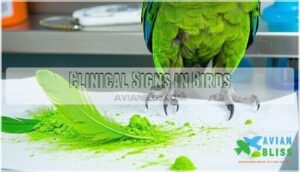
Lead poisoning devastates your parrot’s system, causing unmistakable clinical signs you can’t ignore.
Watch for parrot anorexia lethargy combined with dramatic weight fluctuations that signal internal damage.
Neurologic signs include tremors and seizures, while respiratory distress emerges as breathing becomes labored.
Behavioral changes manifest through aggressive parrot feather plucking episodes, and dropping analysis reveals green-stained urates.
Feather abnormalities develop rapidly, and these avian clinical signs demand immediate veterinary intervention.
Advanced Symptoms in Parrots
When your parrot’s lead poisoning progresses, you’ll notice increasingly severe parrot poisoning signs that signal neurologic deterioration.
These advanced neurologic signs demand immediate veterinary attention, as they indicate significant toxicity levels affecting your bird’s brain function.
- Seizures – Convulsive episodes that can last several minutes
- Head tilting – Abnormal positioning indicating inner ear or brain damage
- Increased thirst – Excessive water consumption from kidney involvement
- Feather fluffing with vomiting – Temperature regulation problems combined with digestive distress
Severe Cases and Emergency Care
Emergency situations demand swift action when severe parrot poisoning signs appear.
Seizures require immediate diazepam administration while you monitor for sepsis treatment needs.
Critical stabilization involves controlling neurological symptoms, providing fluid therapy, and managing shock intervention protocols.
Prognosis factors depend heavily on rapid avian emergency care response.
Professional avian treatment becomes absolutely essential when your bird shows advanced neurological symptoms or seizure activity.
It’s also wise to have access to emergency avian hotlines for immediate guidance.
Zinc Poisoning Symptoms

Zinc poisoning in parrots can develop rapidly, with symptoms appearing within hours of ingestion from common household items like pennies or galvanized wire.
You’ll notice passive regurgitation, lethargy, and distinctive green sticky droppings that signal your bird needs immediate veterinary attention.
Clinical Signs and Diagnosis
Zinc toxicosis diagnosis combines careful observation with scientific testing methods.
Radiographic findings often reveal metallic objects in your bird’s digestive tract, while bloodwork analysis shows elevated zinc levels above 2 ppm.
Tissue sampling through postmortem examination targets the pancreas, where zinc accumulates most heavily.
Differential diagnosis becomes challenging since parrot zinc poisoning symptoms mirror parrot lead poisoning presentations closely, requiring specific heavy metal poisoning tests for accurate avian diagnosis in complex avian toxicology cases.
Treatment and Management
After confirming zinc poisoning through blood tests, you’ll need immediate action.
Chelation therapies using CaNa2EDTA or DMSA help remove zinc from your parrot’s system. Supportive care includes fluids, heat, and controlling seizures.
Source removal through surgery may be necessary for metal pieces. Avian chelation therapy requires careful monitoring progress with repeat blood work, as long-term effects can include mineral deficiencies requiring supplementation.
Many owners find CaNa2EDTA products helpful during this process.
Prevention of Zinc Toxicity
Safeguarding your feathered friend requires vigilance around common household items that contain zinc.
You’ll need to inspect your bird’s environment regularly, removing potential sources before parrotproofing becomes a crisis management situation.
- Safe Cages: Choose powder-coated or stainless steel cages, avoiding galvanized wire that can cause zinc toxicosis
- Toy Safety: Inspect toys for metal components, bells, or hardware that might contain zinc sources in homes
- Diet Supplements: Provide balanced nutrition to support natural detoxification from potential zinc poisoning in birds
- Water Quality: Use ceramic or stainless steel bowls, avoiding coating dangers from cheap metal containers
To guarantee your parrot’s safety, consider investing in certified safe enclosures.
Diagnosis and Treatment Options
When your parrot shows heavy metal poisoning symptoms, swift diagnosis and proper treatment can save their life.
Your vet will use blood tests, X-rays, and chelation therapy to remove toxic metals from your bird’s system safely.
Chelation Therapy and Supportive Care
Effective chelation therapy uses specific chelating agents like CaEDTA or DMSA to bind heavy metals in your parrot’s bloodstream, while supportive medications address seizures and organ dysfunction.
Fluid therapy maintains hydration and enhances toxin elimination through improved kidney function.
Nutritional support prevents weight loss during recovery, ensuring your bird maintains strength throughout treatment.
Constant thirst can be one of the key poisoning indicators and is a critical sign to monitor for heavy metals and overall organ dysfunction, which can lead to severe health issues if not addressed with proper fluid therapy.
Surgical Removal of Metallic Foreign Bodies
When chelation therapy alone isn’t enough, you’ll need surgical intervention to remove metallic foreign bodies from your parrot’s digestive system.
Ventriculotomy represents the gold standard surgical technique for accessing metallic objects lodged in the gizzard.
Endoscopic options offer less invasive retrieval methods for upper gastrointestinal foreign bodies.
In cases where birds ingest foreign objects like feeding tubes, a veterinarian might perform an ingluviotomy technique to remove them.
Post-op care requires careful monitoring for complications, while anesthesia risks demand experienced avian veterinarians for safe outcomes.
Long-term Care and Monitoring
After surgical intervention, your parrot needs ongoing avian veterinary care to prevent relapse and monitor recovery.
Long-term parrot health monitoring includes regular blood tests to track metal levels, dietary adjustments to support liver function, and neurological rehabilitation exercises.
Behavior monitoring helps detect early warning signs, while liver support supplements aid healing.
This thorough bird health management approach through avian disease management protocols guarantees your feathered friend’s complete recovery.
Frequently Asked Questions (FAQs)
Can birds recover from metal poisoning?
Yes, birds can recover from metal poisoning with prompt veterinary treatment.
Early chelation therapy, supportive care, and removing the toxic source substantially improve survival chances.
Though severe cases may cause permanent damage, the key to improvement lies in prompt treatment.
How do you tell if your bird has been poisoned?
Watch for weakness, regurgitation, abnormal droppings, neurologic signs like seizures, weight loss, lethargy, and breathing changes. You’ll notice depression, feather picking, or unusual behaviors developing gradually or suddenly.
What does lead poisoning look like in birds?
Lead poisoning affects approximately 75% of pet birds with heavy metal toxicity.
You’ll notice depression, lethargy, watery droppings with green or yellow urates, regurgitation, weakness, and potential seizures requiring immediate veterinary attention.
What household items commonly contain heavy metals?
Common household items containing heavy metals that pose risks to birds include costume jewelry, galvanized wire cages, post-1982 pennies, fishing weights, stained glass, bells, and twist ties.
And old paint from pre-1978 homes.
How quickly do heavy metal symptoms appear?
Heavy metal symptoms in parrots can develop within hours for acute poisoning from large ingestions, while chronic exposure creates gradual symptoms over weeks or months of continued contact.
Can heavy metal poisoning be completely reversed?
Unfortunately, your feathered friend’s heavy metal poisoning can’t always be completely undone.
While early treatment reverses many symptoms, chronic exposure often leaves permanent neurological and gastrointestinal damage that’ll stick around forever.
What blood levels indicate heavy metal toxicity?
Blood zinc levels above 2 ppm indicate zinc toxicosis in birds. For lead poisoning, you’ll need atomic absorption spectrophotometry testing since blood levels correlate with toxicity severity and treatment response.
Which parrot species are most susceptible?
While all parrot species can fall prey to heavy metal’s silent danger, no single breed stands more vulnerable than others.
You’ll find African Greys, Amazons, Macaws, and Cockatiels equally susceptible to toxic exposure.
Conclusion
Like watchful sentinels guarding against silent threats, vigilant parrot owners hold the power to save their feathered companions from heavy metal poisoning‘s deadly grip.
You’ve learned that recognizing parrot heavy metal poisoning signs early can mean the difference between swift recovery and tragic loss.
Don’t wait when you notice behavioral changes, digestive issues, or neurological symptoms—your bird’s life depends on immediate veterinary intervention.
Prevention remains your strongest weapon against household metals that pose hidden dangers to your beloved pet, and it is crucial for preventing tragic loss.